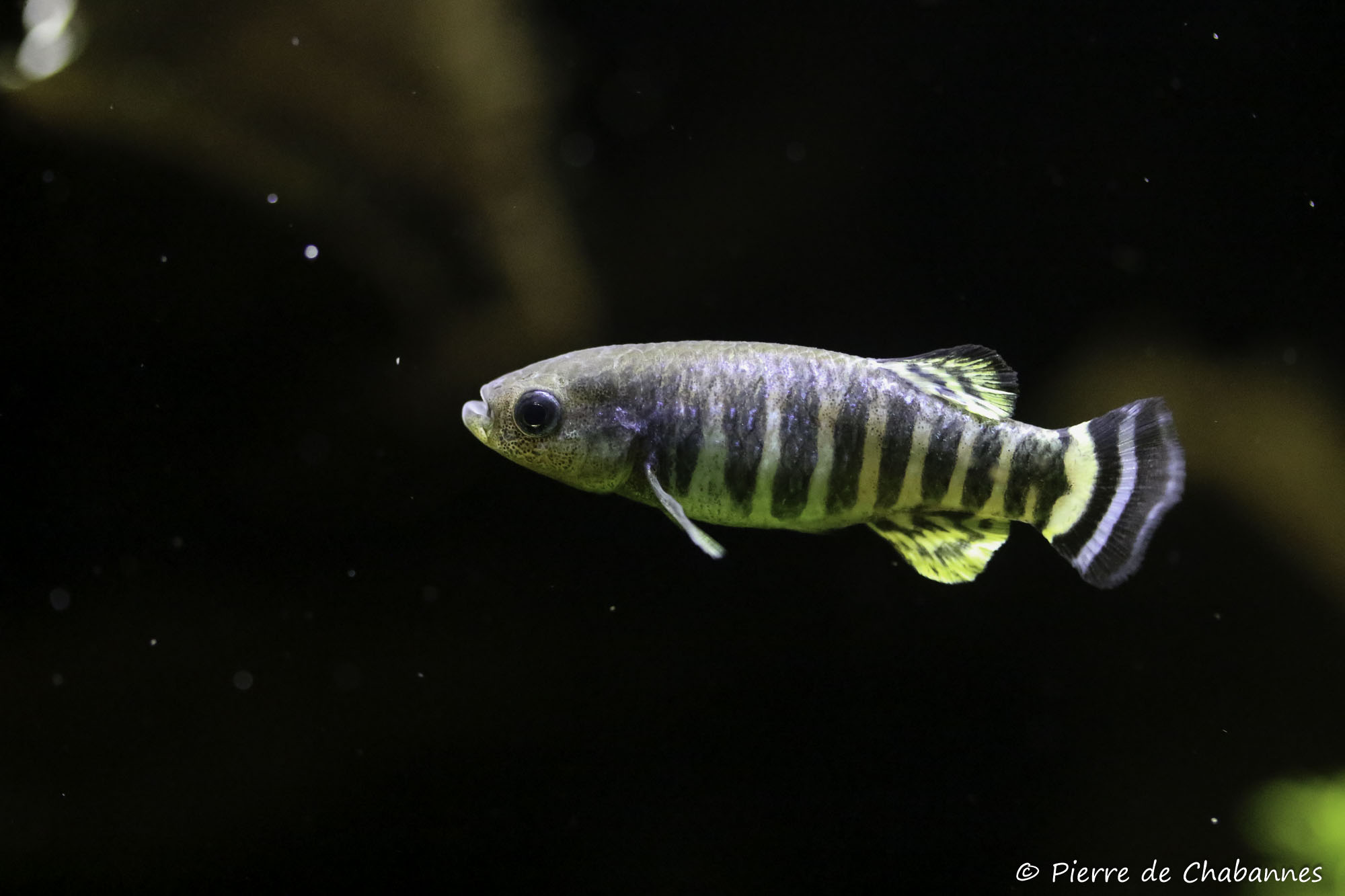
Azraq toothcarp (Aphaniops sirhani)
This tiny freshwater fish is Jordan’s only endemic vertebrate. It is entirely dependent on conservation programs for its survival.
Context
A breeding group lives in a tank in the endangered freshwater fish section of the Aquazoo Düsseldorf located in the Löbbeke Museum in Düsseldorf, Germany. This group is part of an international conservation breeding program.
Field notes
The Azraq toothcarp, also known as Azraq killifish, is a former member of the Aphanius genus, now split in a few genera, comprising some of the most endangered freshwater fishes on earth.
Thanks to the involvement of European zoos such as Kölner Zoo, Aquazoo Düsseldorf and Tiergarten Schönbrunn, many members of the Aphanius genus complex are kept and bred in captivity. Private breeders are also involved thanks to the help of breeder’s associations such as the Association France Vivipares (in France).
This species was considered difficult to keep in an aquarium. Thanks to scientific research and collaboration between zoos and private breeders, the species is now bred successfully and has been temporarily saved from total extinction thanks to this breeding effort.
Key facts
The Azraq toothcarp, as its name suggests, is endemic to the Azraq Oasis in Jordan. This oasis is part of the Wadi Sirhan valley of the Syrian desert.
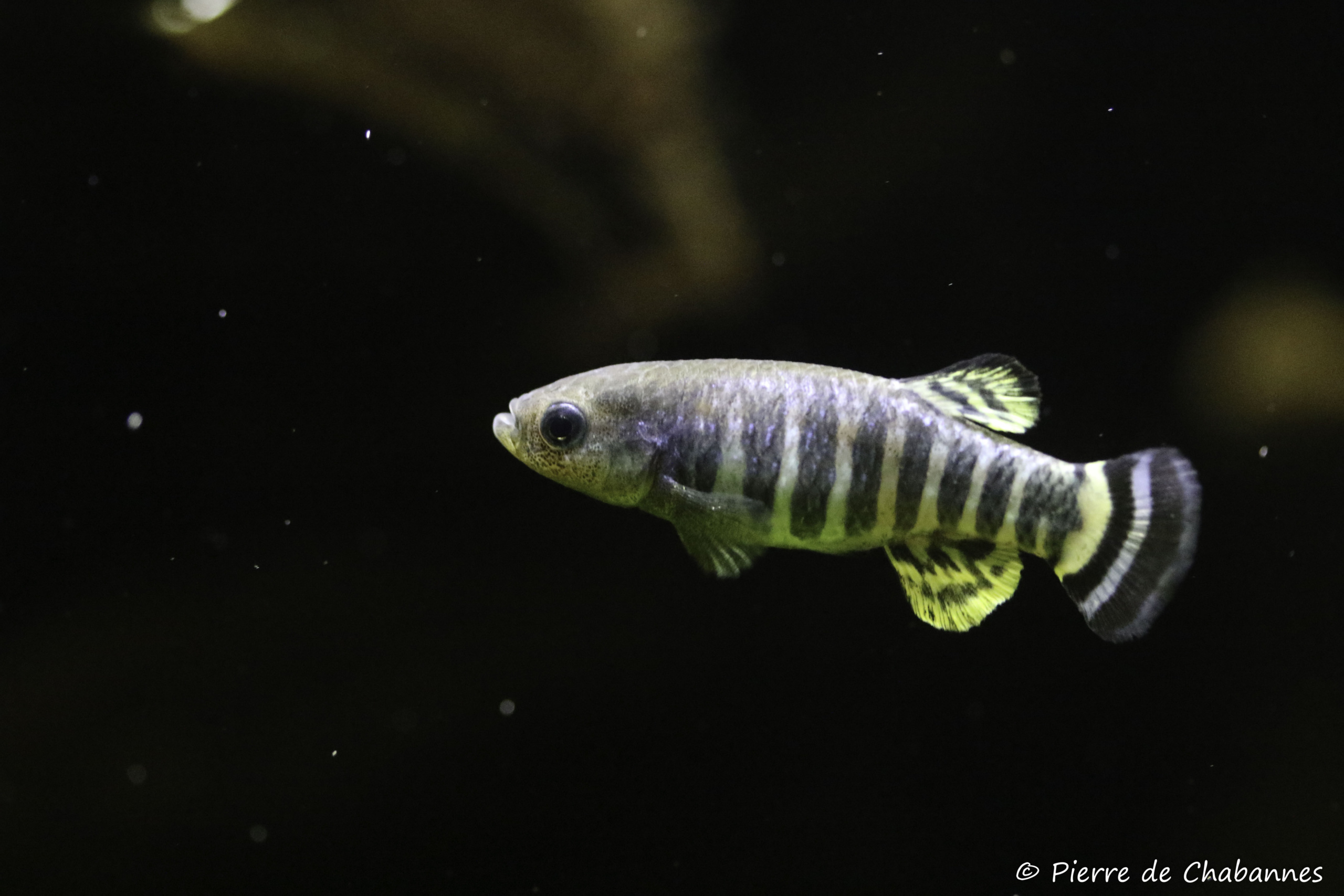
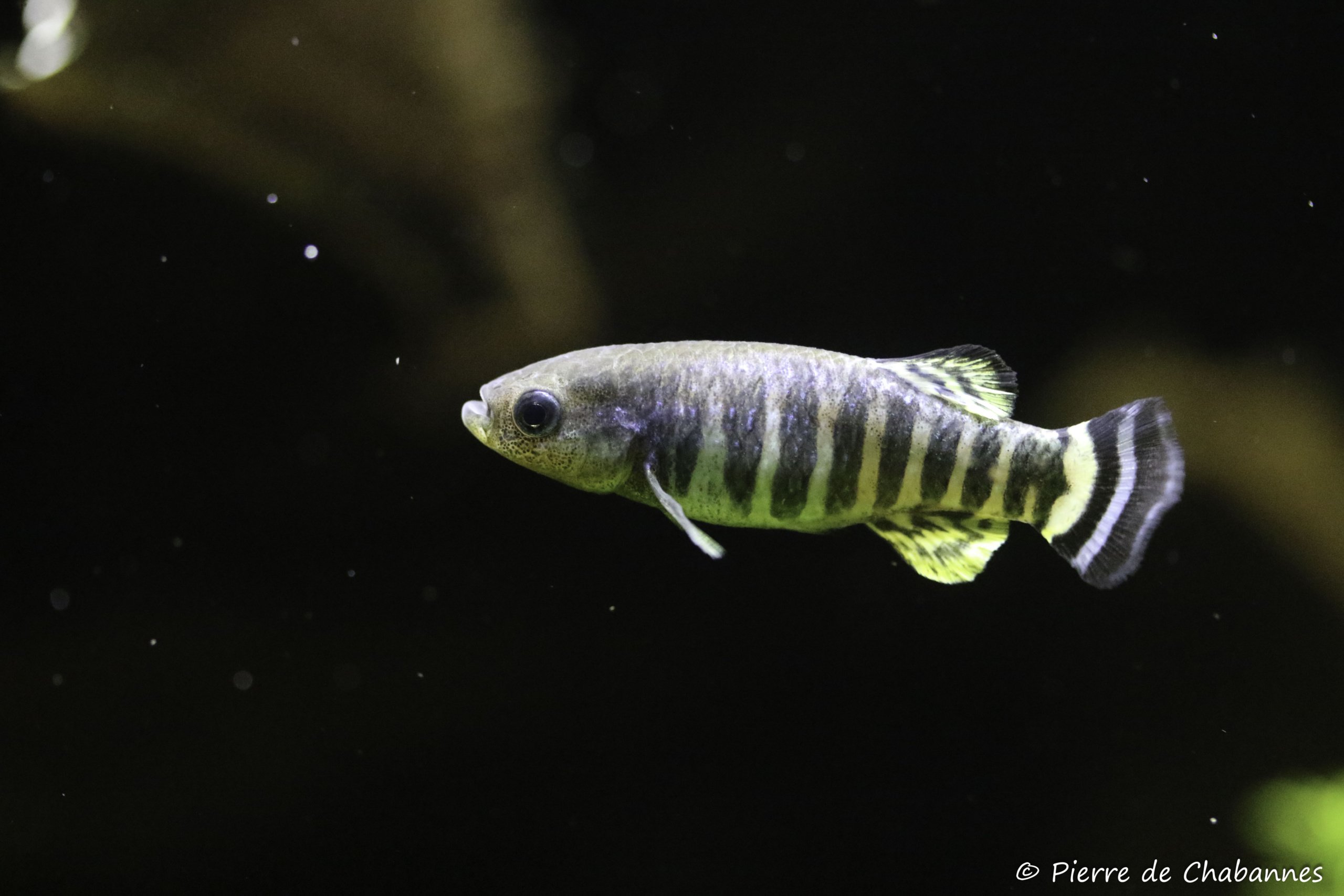
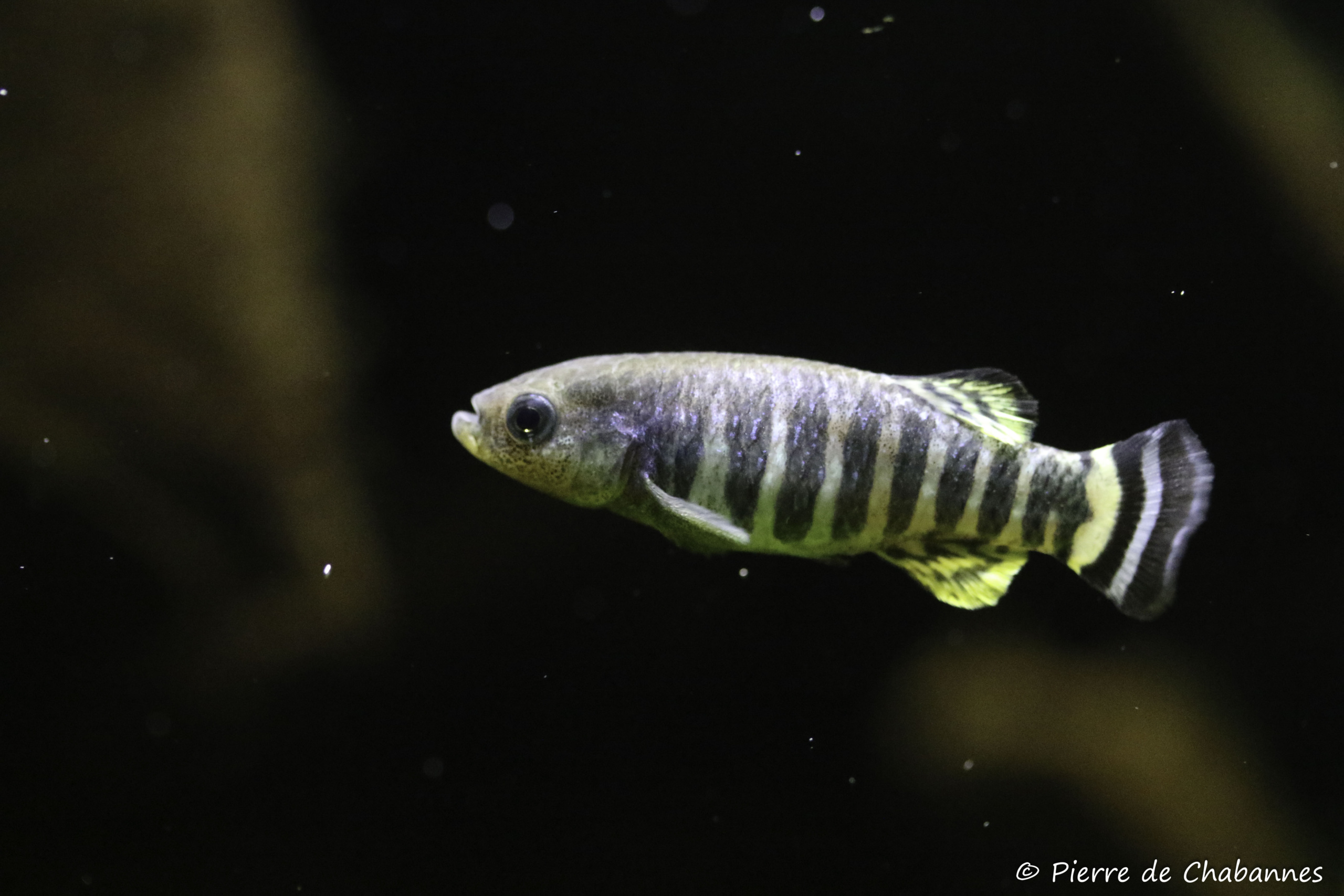
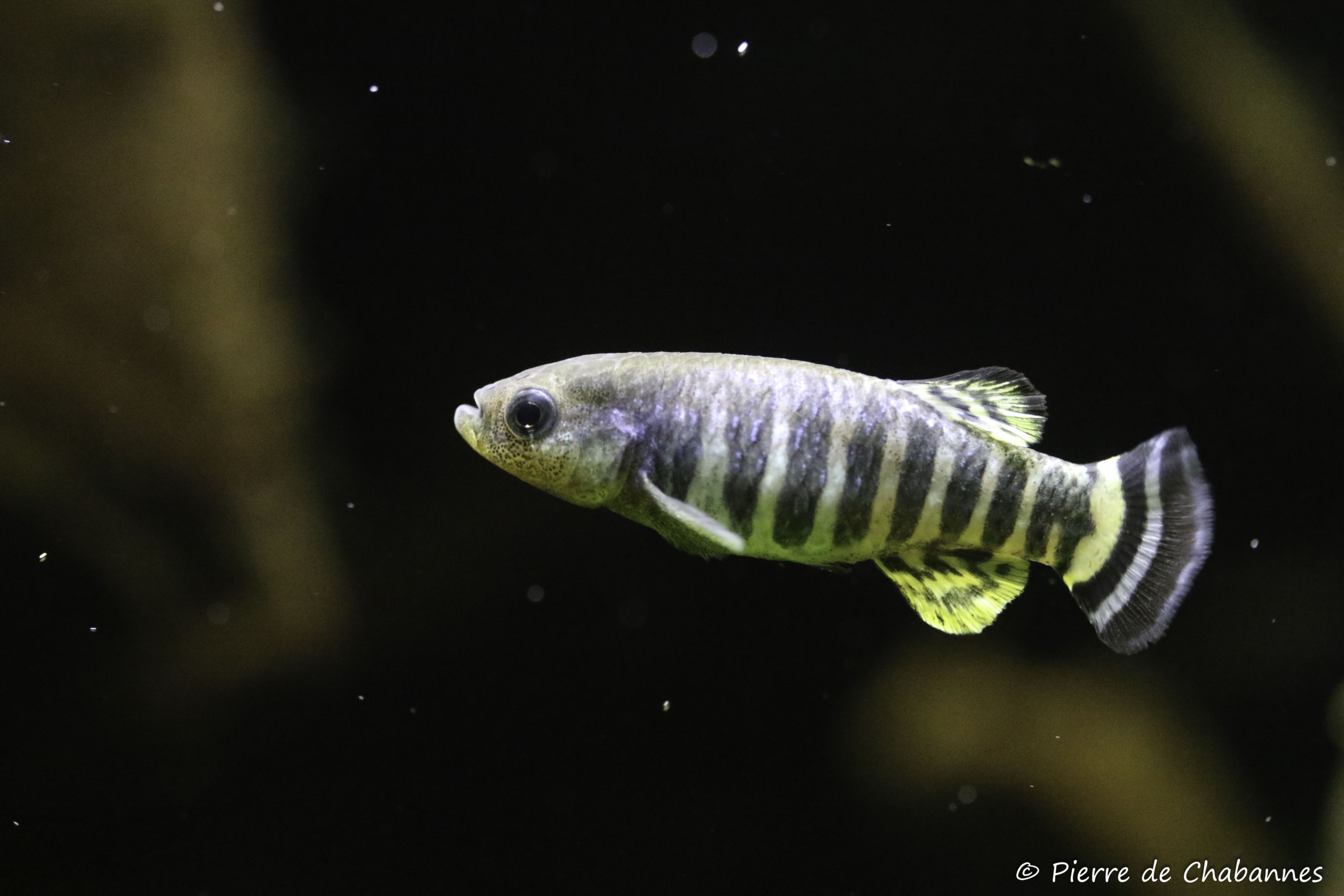
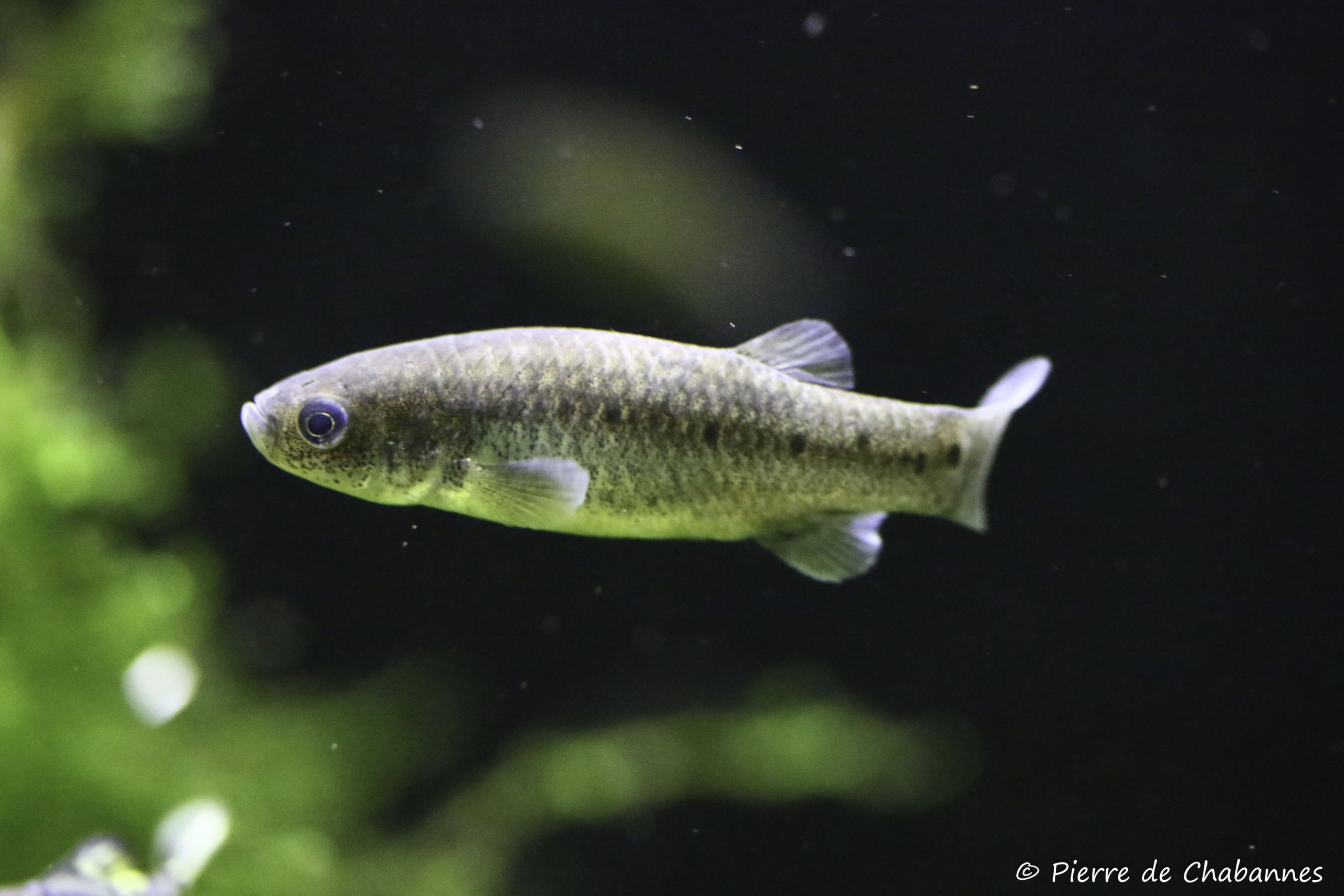
The species shows a striking sexual dimorphism with males displaying vertical yellow and black bars on their flanks as well as a yellow and black pattern on their fins. Their cheeks show a little bit of blue iridescence. Females are silvery with a horizontal row of small black spots.
During courtship, males of this species can become quite aggressive and territorial. Females can lay eggs throughout the year, attaching them with a small filament to an algae or other aquatic vegetation.
Conservation
The species is currently listed as Critically Endangered on the IUCN Red List. It was functionally extinct in the wild in the 1990s and was reintroduced in the early 2000s thanks to a captive breeding effort led by Vienna Zoo (Tiergarten Schönbrunn). To this day, the species remains totally dependent on captive breeding efforts for its survival.
The Azraq oasis was once one of the most important wetland ecosystems in the Middle East and a RAMSAR site. Unfortunately, it dried up completely in 1992 because of unsustainable pumping from the underground aquifers that are feeding the oasis, in order to provide water to the nearby city of Amman.
The wetlands have been partly restored now but are completely dependent on artificial water supply and, in recent years, the amount of water provided is insufficient to maintain the oasis in the medium term. If the artificial water supply stops, the Azraq toothcarp will be extinct in the wild within the following ten years.
Zoos and private breeders have a huge responsibility in protecting the species from total extinction by keeping it, breeding it, raising awareness and propagating it. At this time, it seems to be the only efficient and reliable way to save the species.
More photos from this observation
Other species with zoo conservation programs can be found by browsing
my Education resources.
Back to Zoo Conservation ←Previous species
“A long-term project documenting biodiversity across the world through fieldwork, zoological observations and educational content.”