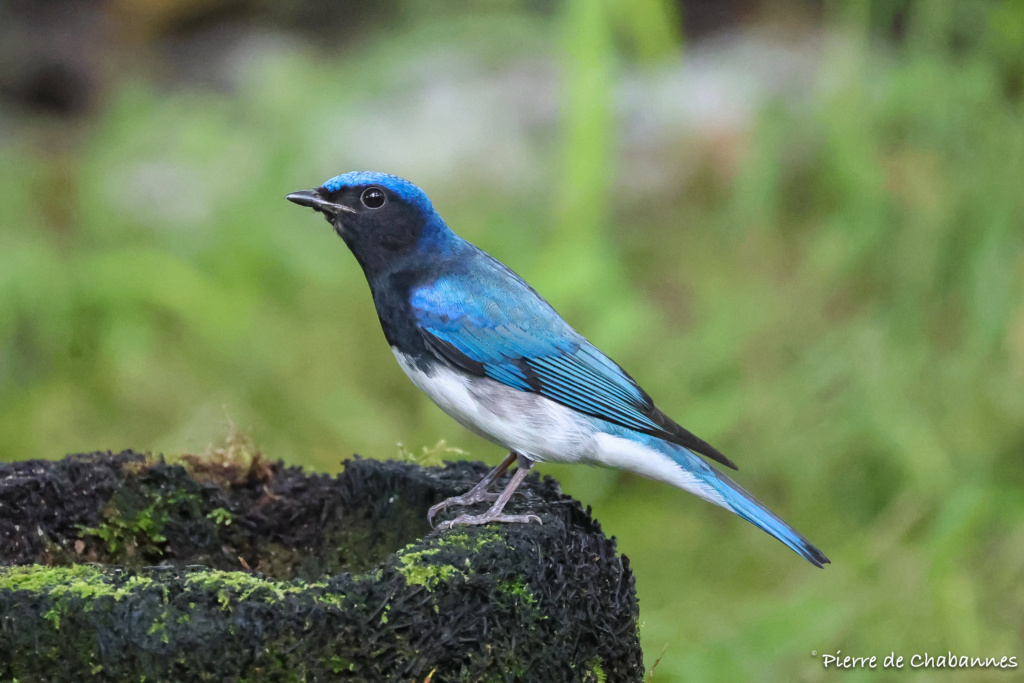
Blue-and-white flycatcher (Cyanoptila cyanomelana intermedia)
A beautiful migratory flycatcher that spends the northern winter in the forests of Southeast Asia.
Context
A single male photographed at Gunung Alab’s bird hide while feeding on worms, drinking and bathing, in Sabah, Borneo, Malaysia.
Field notes
The Blue-and-white flycatcher is one of the most attractive migratory passerines that can be encountered at Bornean bird hides. Adult males are especially striking, with deep cobalt-blue upperparts contrasting sharply with their white underparts.
The species remains difficult to observe as it is a relatively uncommon migrant in most of Southeast Asia, Borneo included. In more than 13 years of photographing wildlife in Borneo, this was my first opportunity to obtain good-quality photographs of the species.
Gunung Alab bird hide is currently one of the best places around Sabah for bird photography, especially for smaller species like passerines and barbets. The layout of the feeding station and the fact that most birds visiting the hide appear largely unafraid of humans are two of its greatest strengths.
Key facts
The Blue-and-white flycatcher breeds in northeastern Asia, including parts of China, Korea, Japan and eastern Russia, before migrating south for the winter. It is commonest in far eastern Russia and Japan.
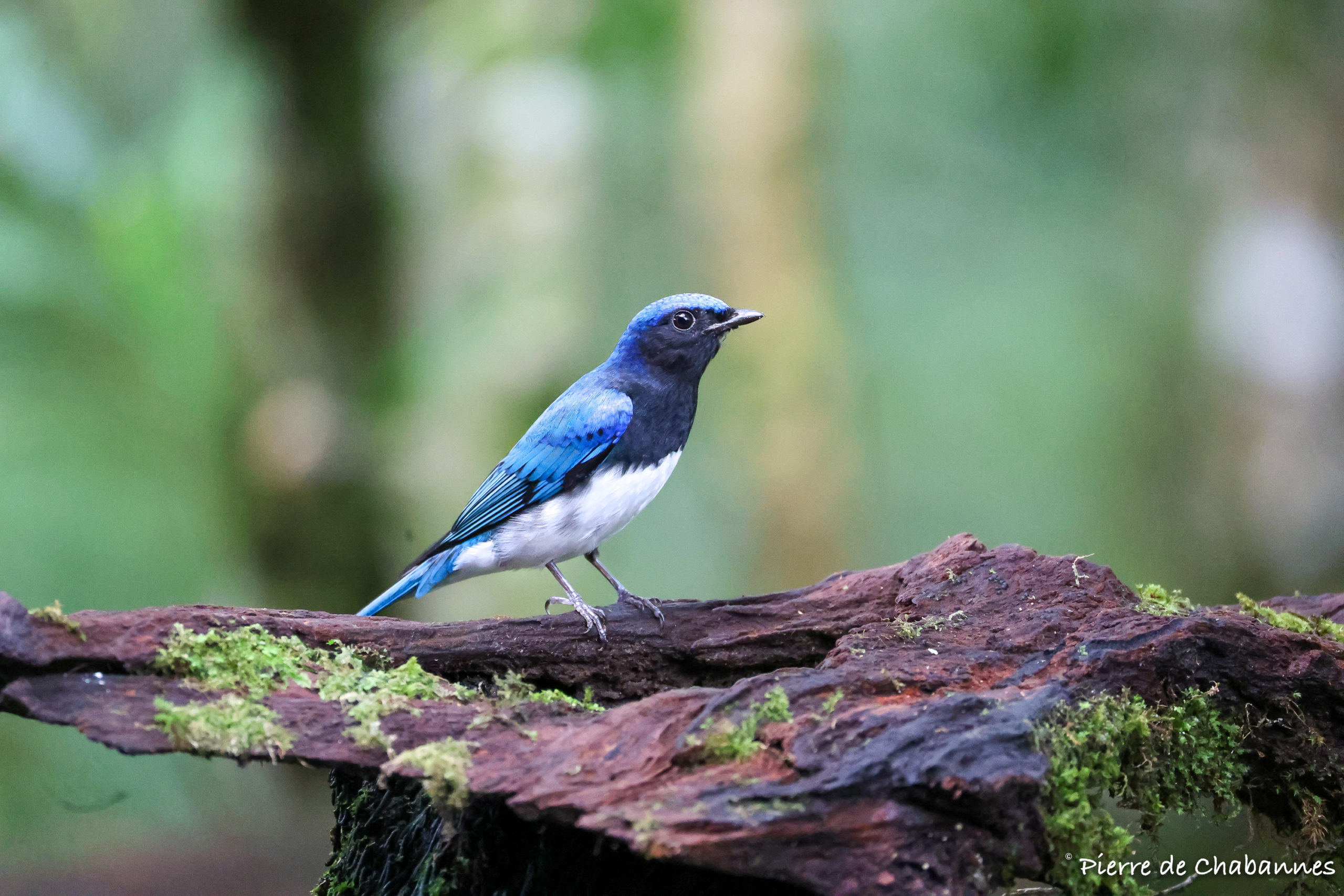
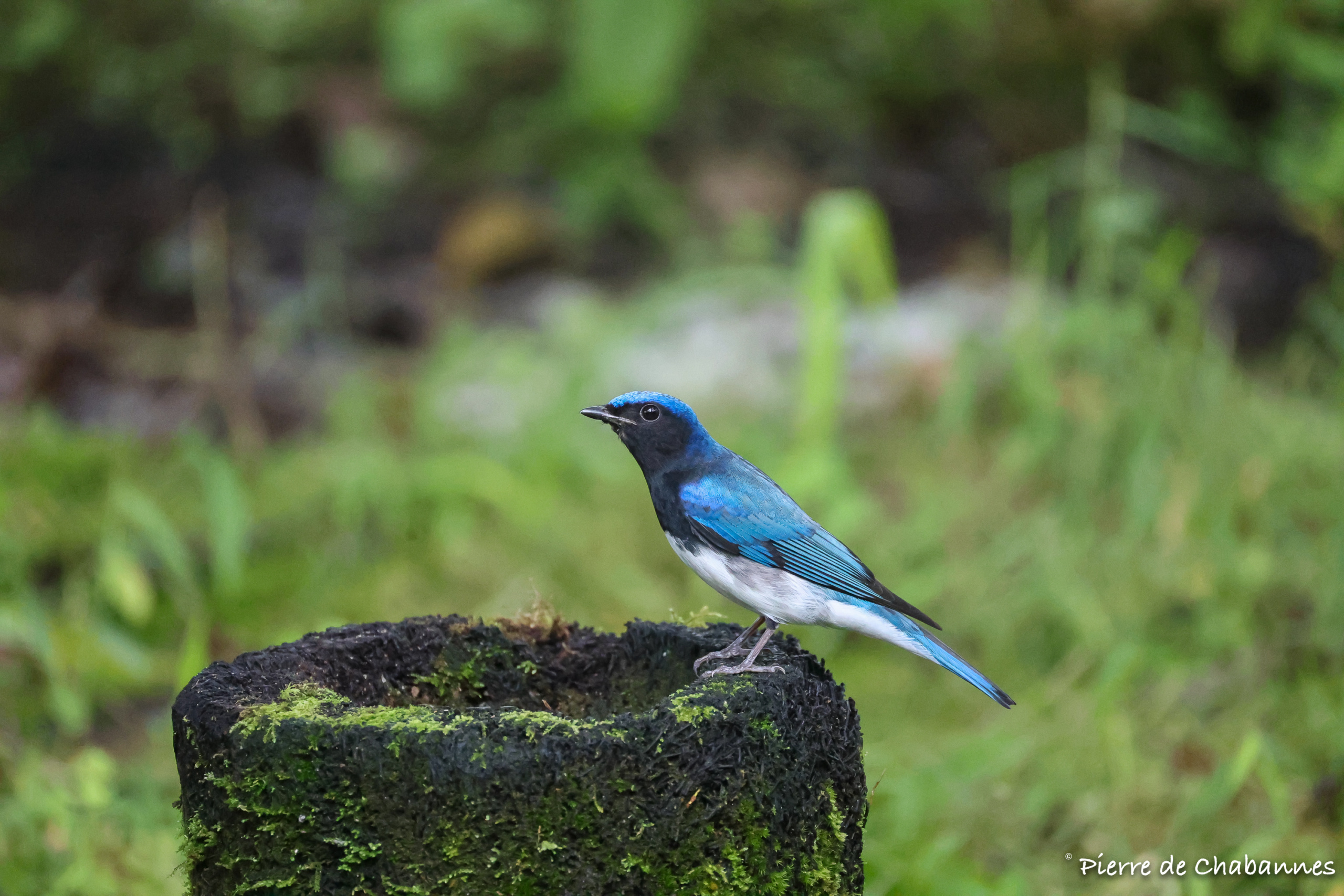
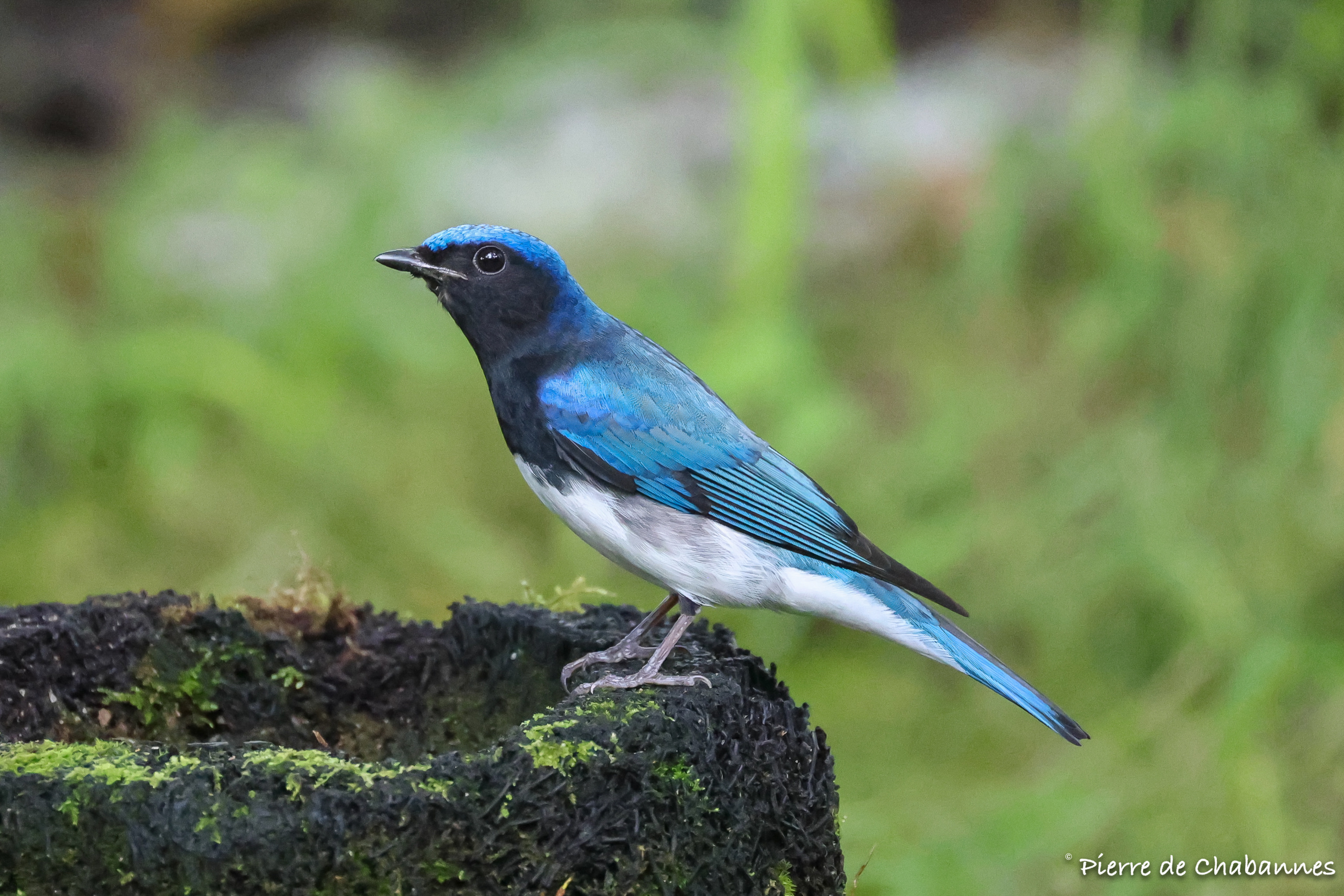
The bird photographed here is likely to belong to the subspecies intermedia, based on its matt black throat, ear-coverts and upper breast, combined with the pale blue wash visible on the throat and breast.
Males and females differ markedly in appearance. Males display brilliant blue plumage, whereas females are predominantly brown with paler underparts.
Conservation
The Blue-and-white flycatcher is currently listed as Least Concern on the IUCN Red List and remains widespread and locally common across its range.
Nevertheless, the species depends on suitable forest habitats throughout both its breeding and wintering ranges. The conservation of tropical forests in Southeast Asia is therefore important not only for resident species, but also for migratory birds that spend a significant portion of their lives in these ecosystems.
More photos from this observation
Other species from Borneo can be found by browsing my Education resources.
Back to Borneo hides ←Previous species Next species →
“A long-term project documenting biodiversity across the world through fieldwork, zoological observations and educational content.”