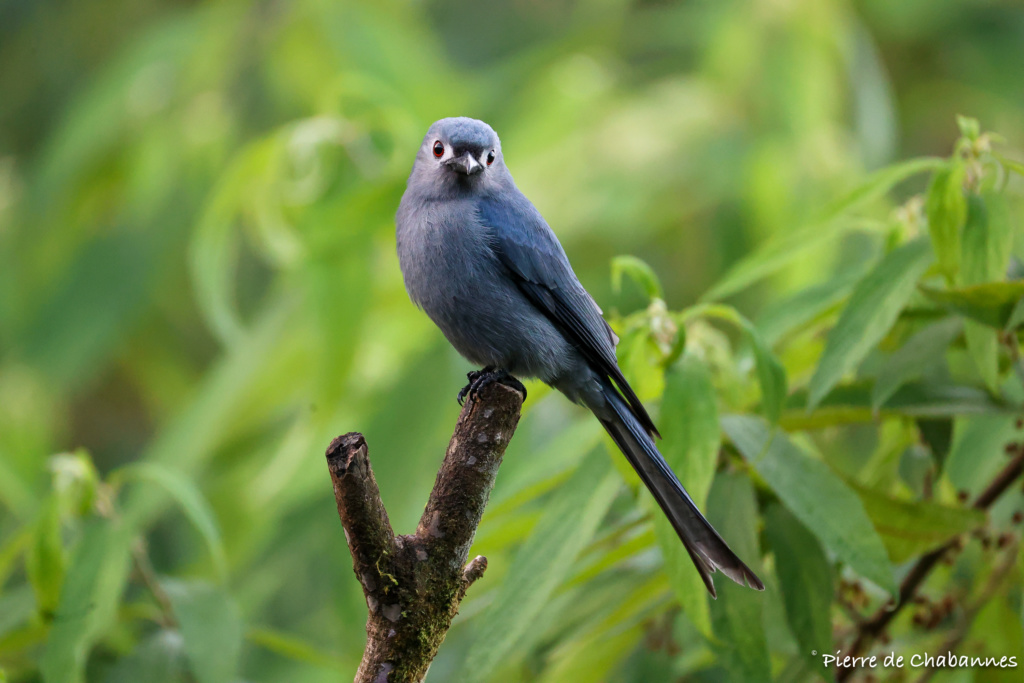
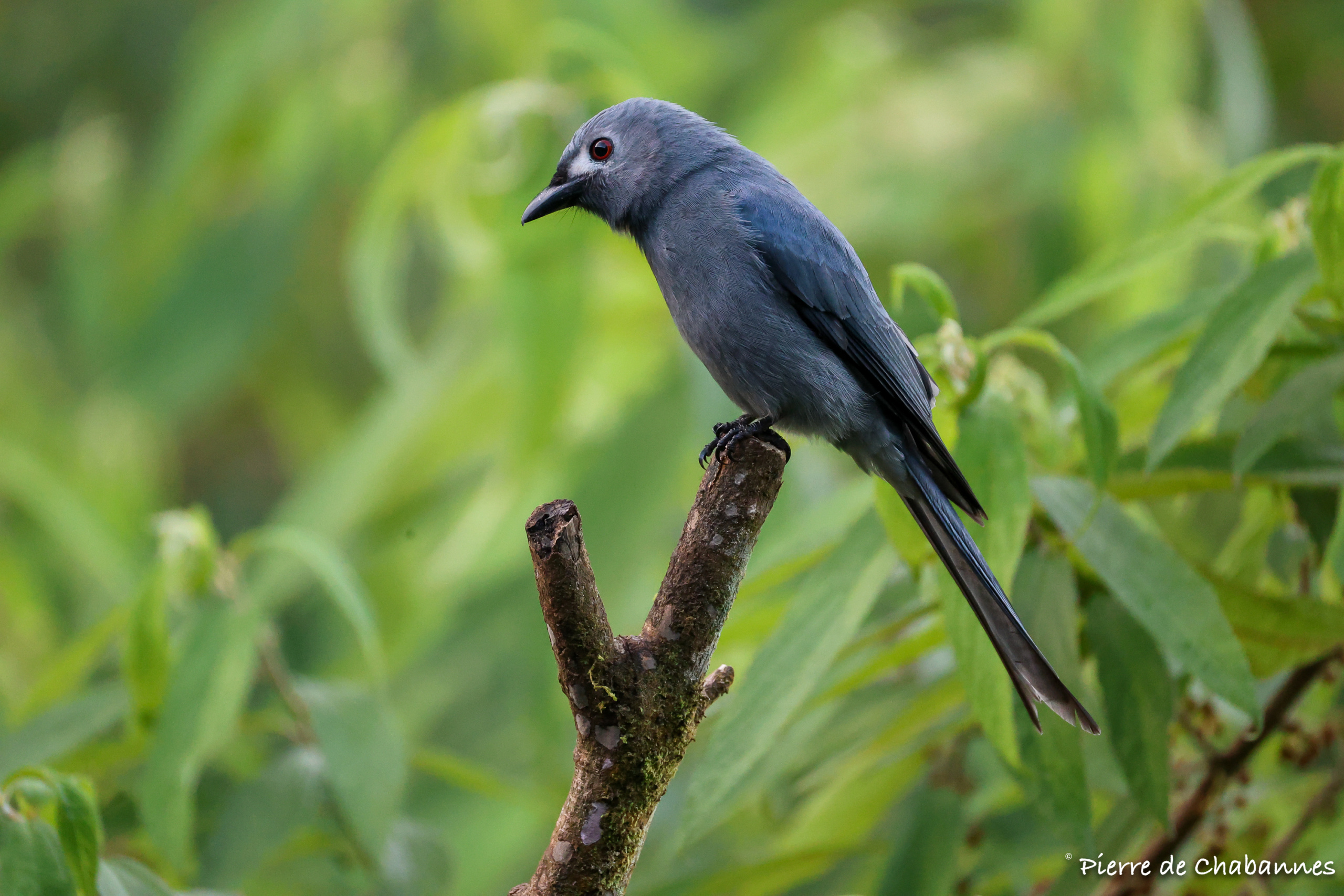
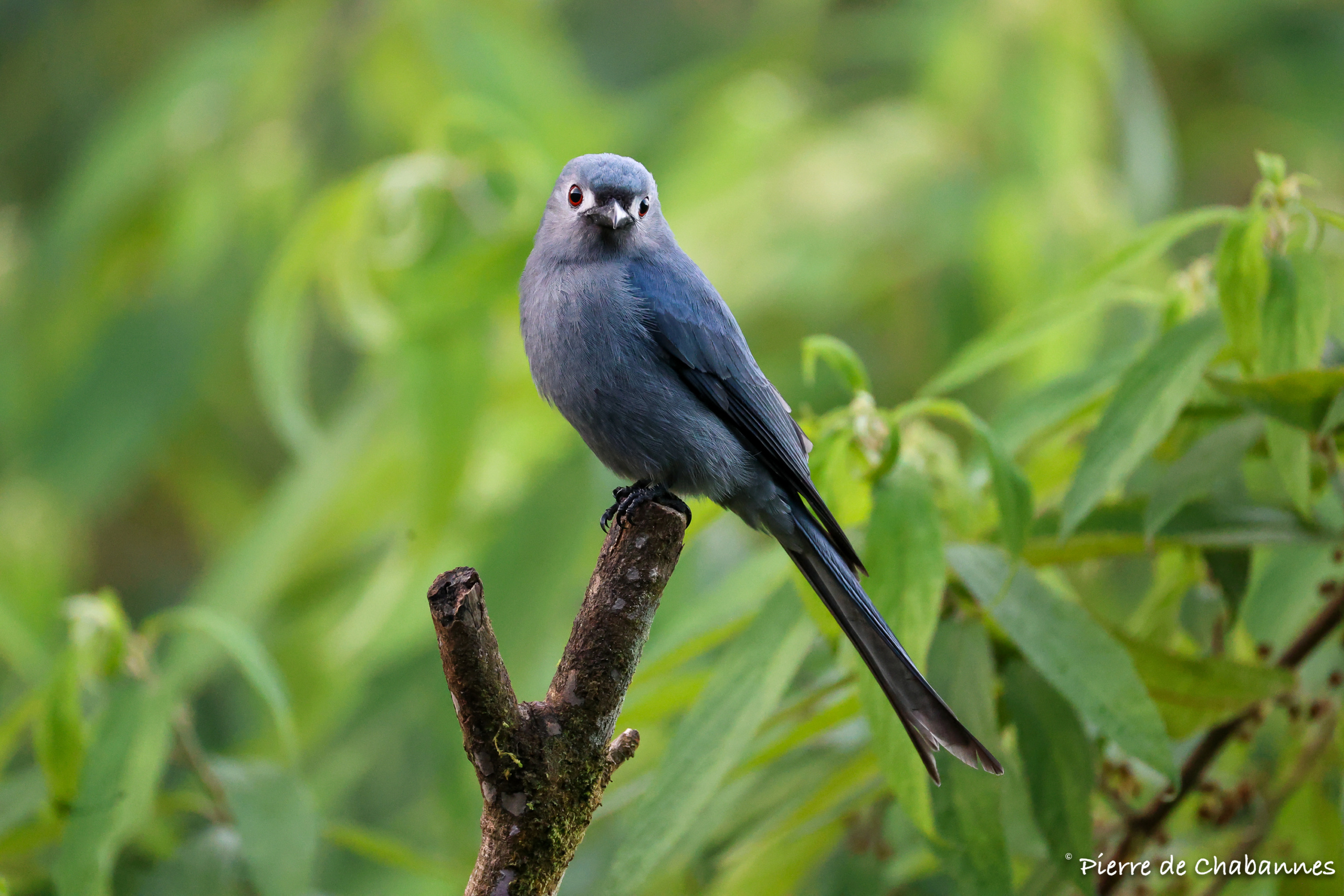
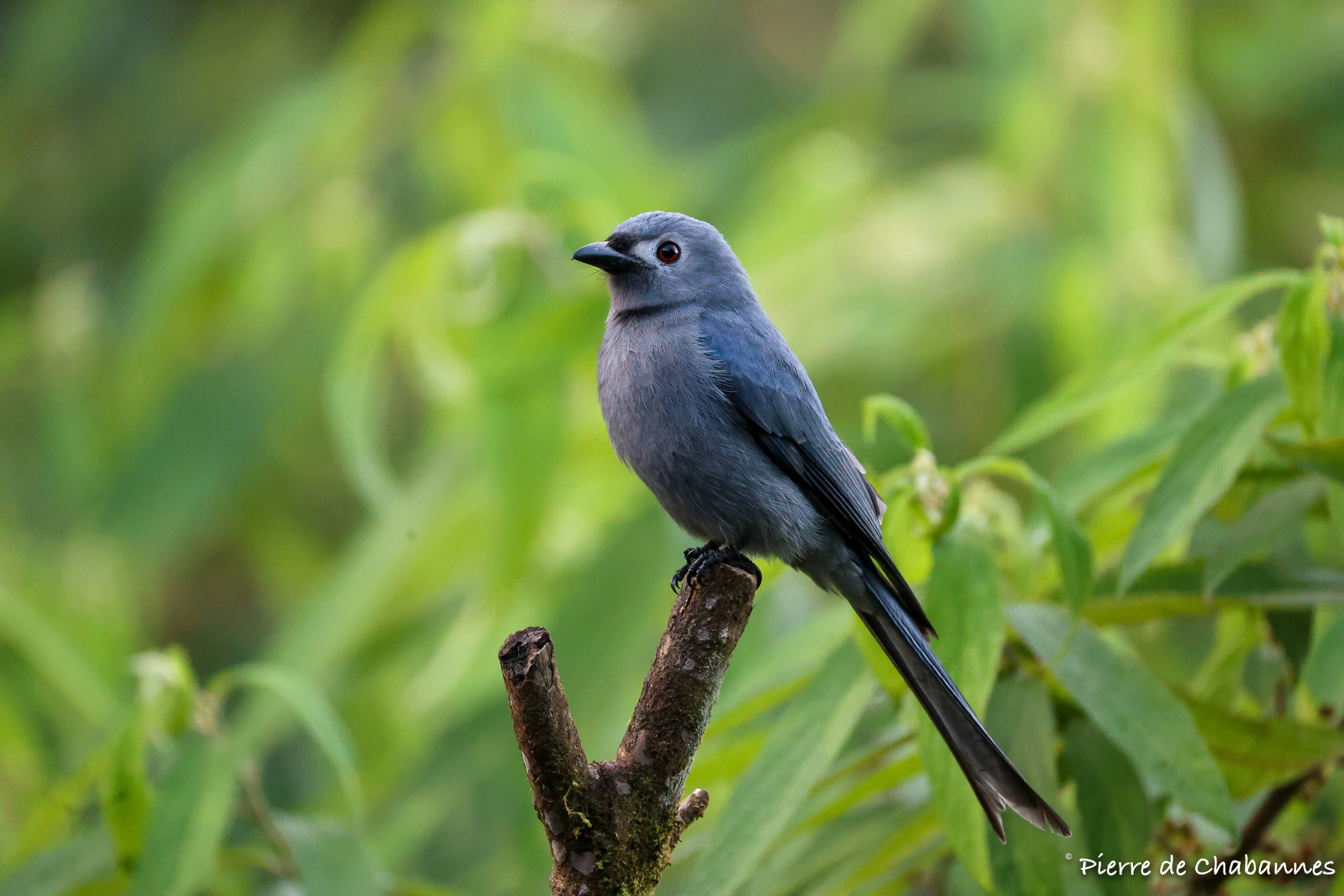
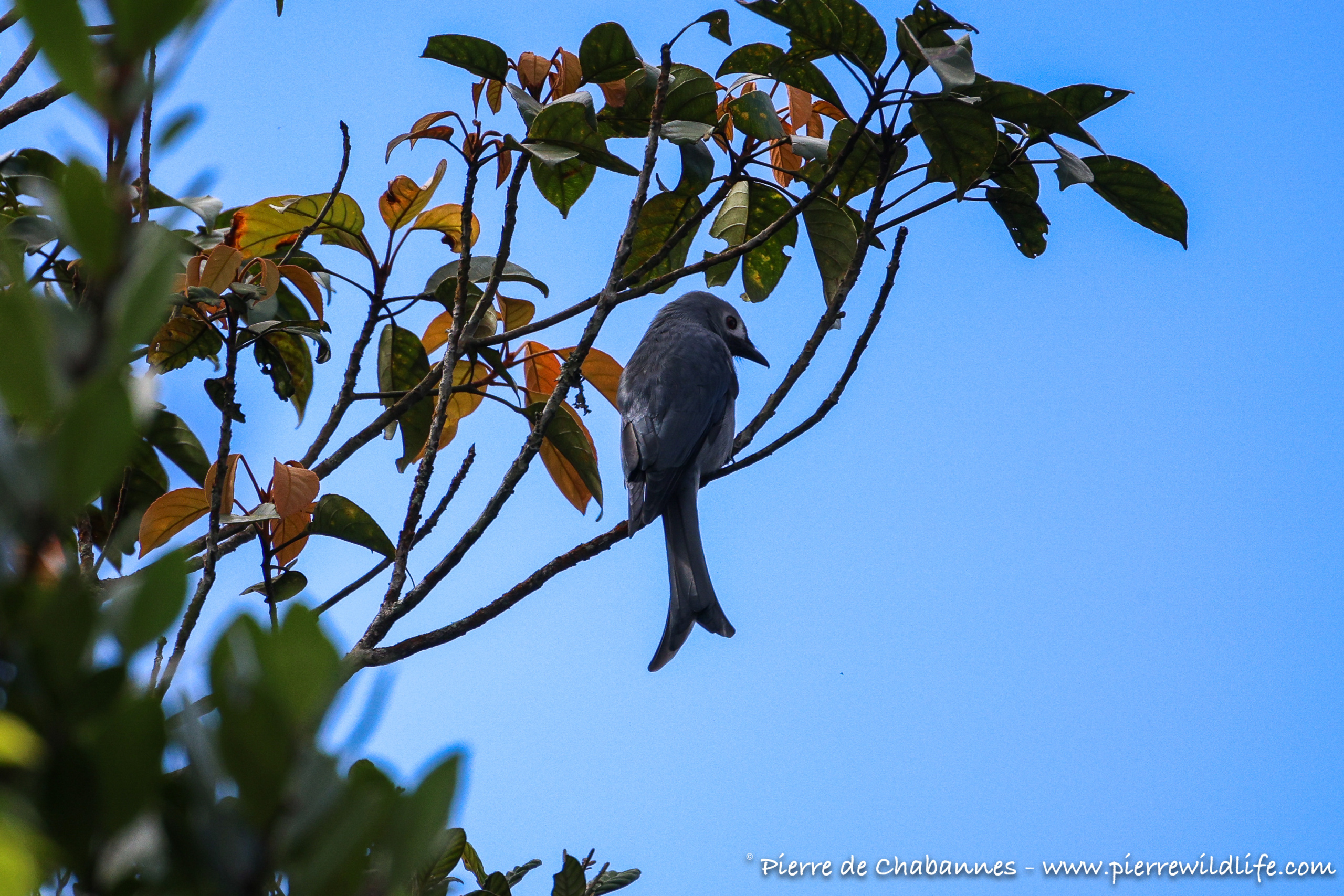
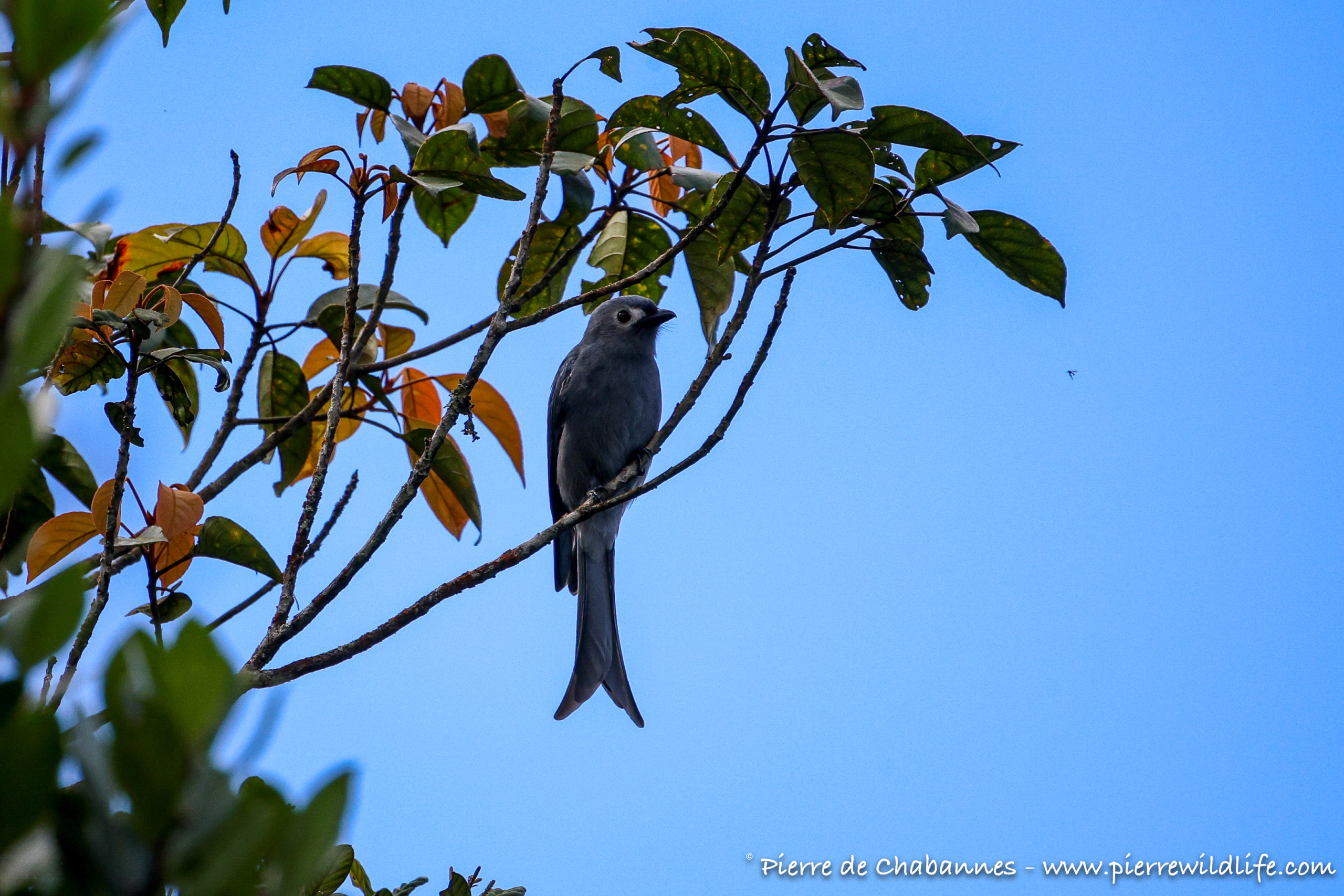
Ashy drongo (Dicrurus leucophaeus stigmatops)
A very widespread but elegant drongo species, found throughout much of Asia and easily recognizable by its unusual coloration.
Context
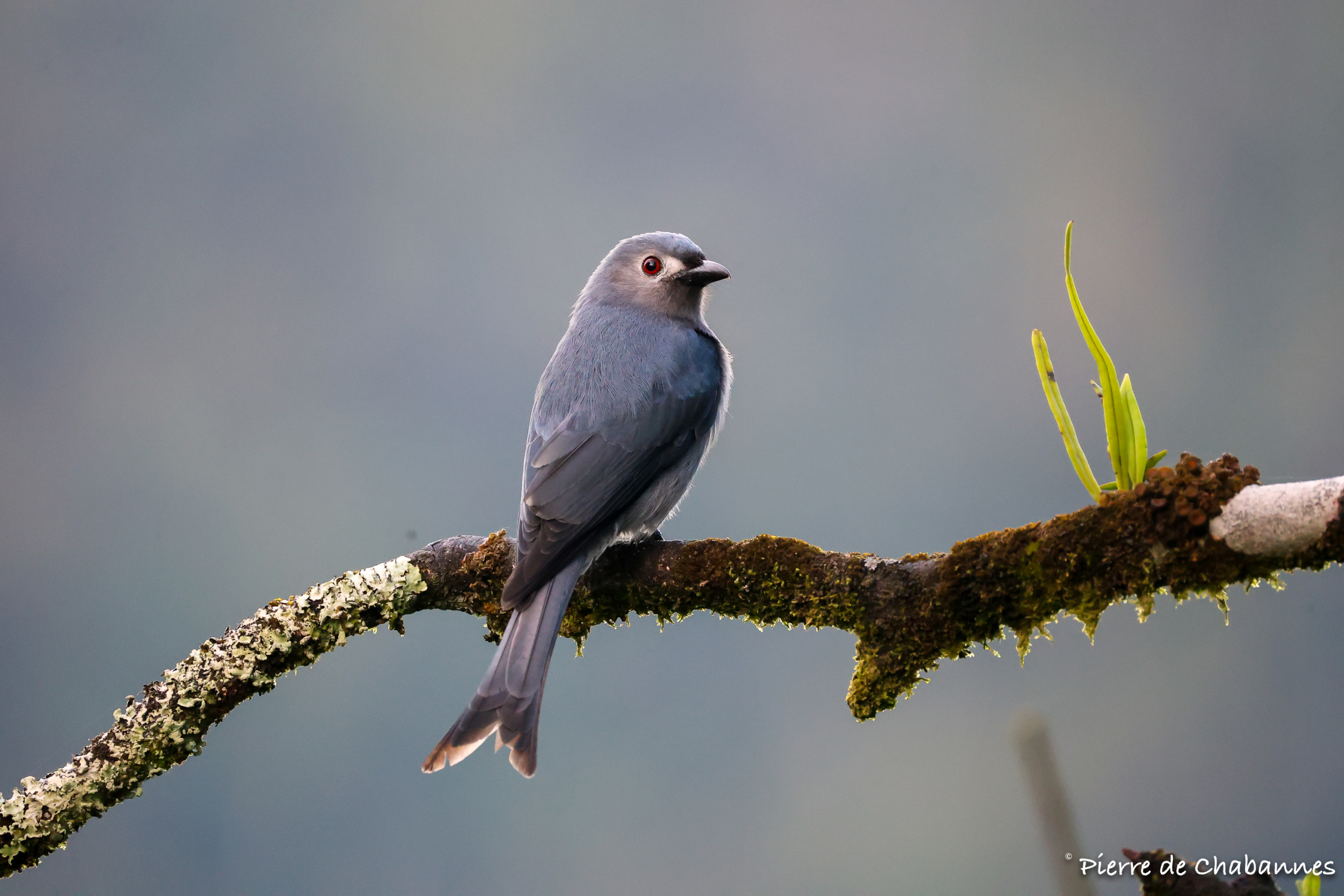
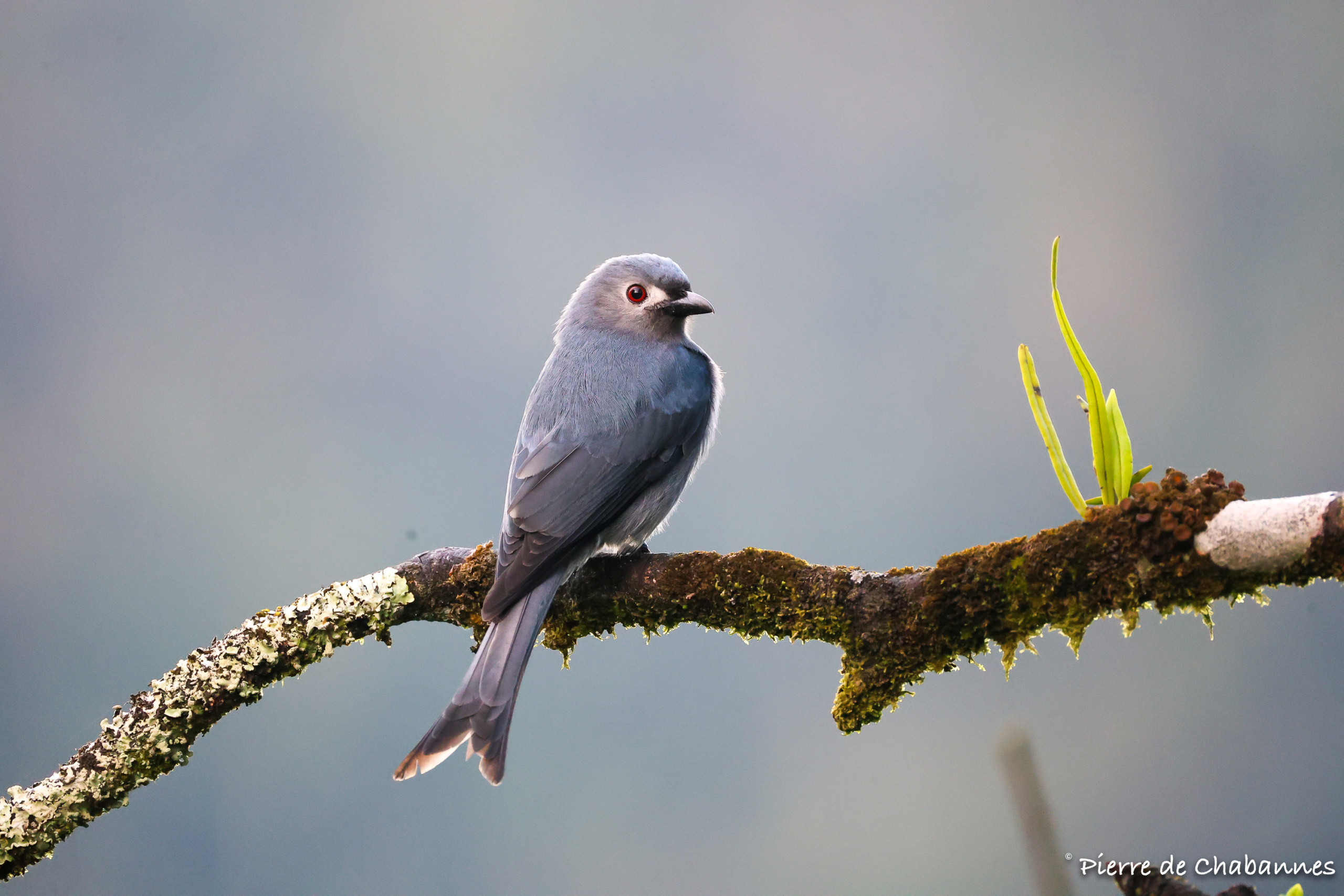
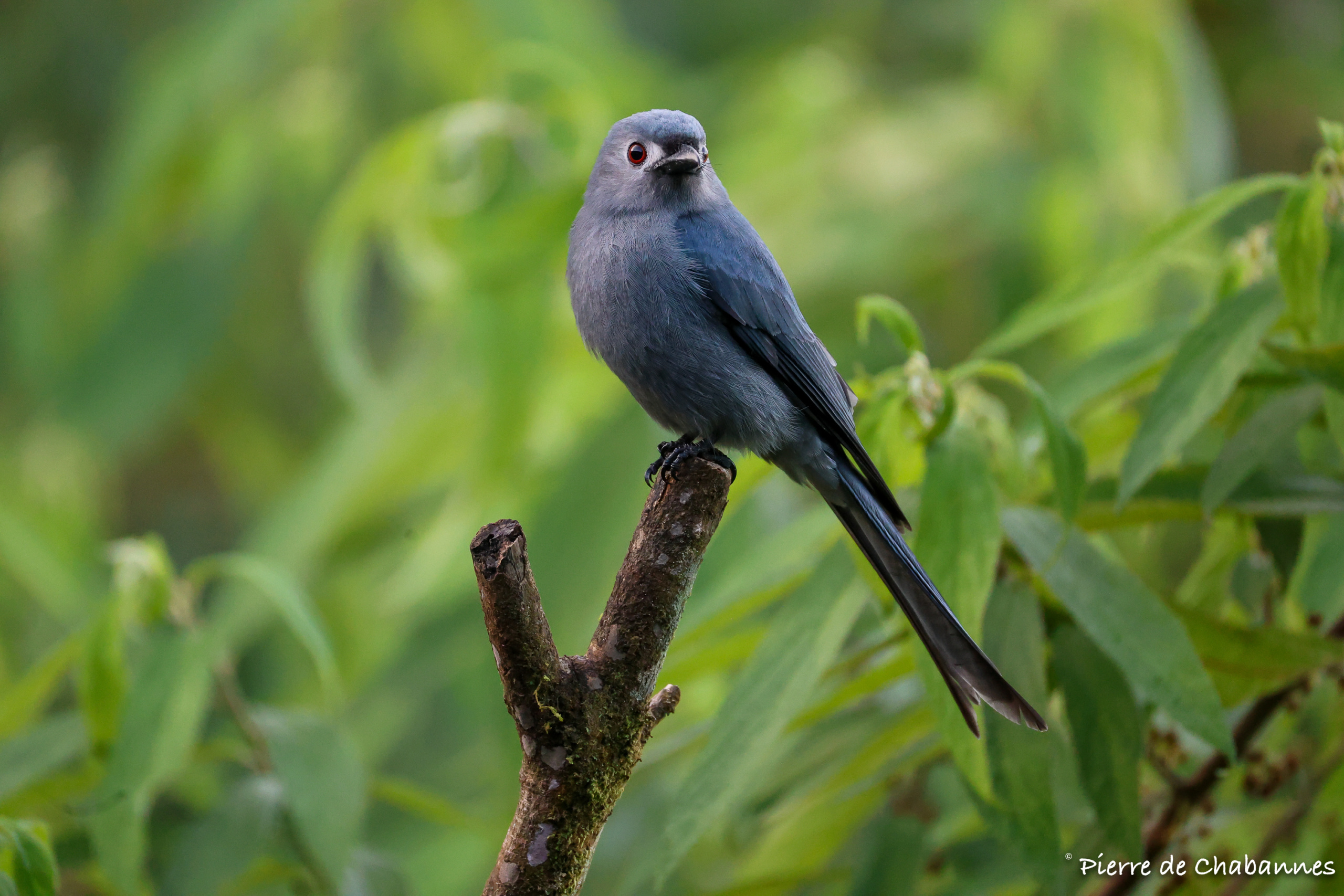
A single individual photographed perching and hunting insects at Gunung Alab Bird Hide in Sabah, Borneo (Malaysia).
Field notes
Drongos are often seen close to human settlements and open areas as they like to scan around for insects. Food remains and garbage areas provide them with many opportunities to hunt for their favorite prey.
I have seen this species all around southeast Asia and the Bornean endemic subspecies, stigmatops, pictured here, is noticeably different with its overall grey coloration and visible white eye-ring. Furthermore it differs from many other drongos by being primarily a montane bird.
Drongos are often seen around bird hides, feeding on mealworms and other live invertebrates provided by the hide keepers on a daily basis. However, they can be very territorial and chase other species away so their presence isn’t always a good sign for birders.
Key facts
The Ashy drongo is widely distributed across Asia, from the Himalayas to Southeast Asia, with numerous subspecies recognized throughout its range. Some subspecies are migratory whereas others are resident. A few subspecies like stigmatops are island endemics.
Like other drongos, it is primarily insectivorous, capturing prey both from vegetation and in short aerial sallies. It will also occasionally consume small fruits when available.
Drongos are renowned for their intelligence and aggressive behavior. Many species regularly harass much larger birds and predators, driving them away from their feeding and breeding territories.
Conservation
The Ashy drongo is currently listed as Least Concern on the IUCN Red List and remains common throughout much of its extensive range.
In Borneo, the species is particularly associated with montane forests, where it continues to occur in good numbers within protected areas such as the Crocker Range, Kinabalu Park and Mt TrusMadi regions.
More photos from this observation
Other species from Borneo can be found by browsing my Education resources.
Back to Borneo hides ←Previous species
“A long-term project documenting biodiversity across the world through fieldwork, zoological observations and educational content.”