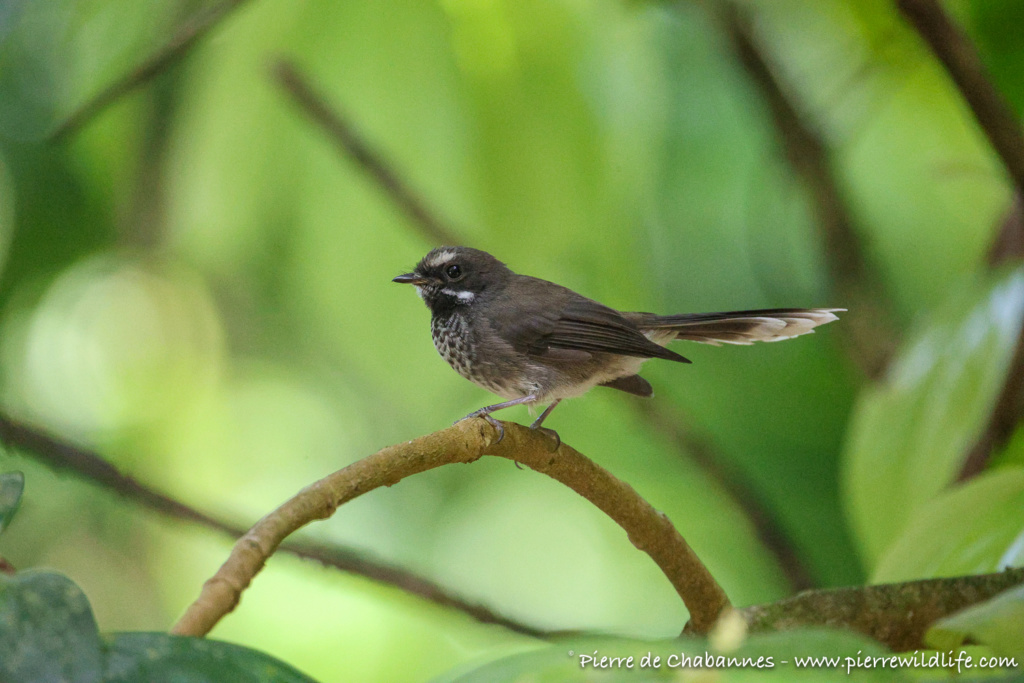
Pohnpei fantail (Rhipidura kubaryi)
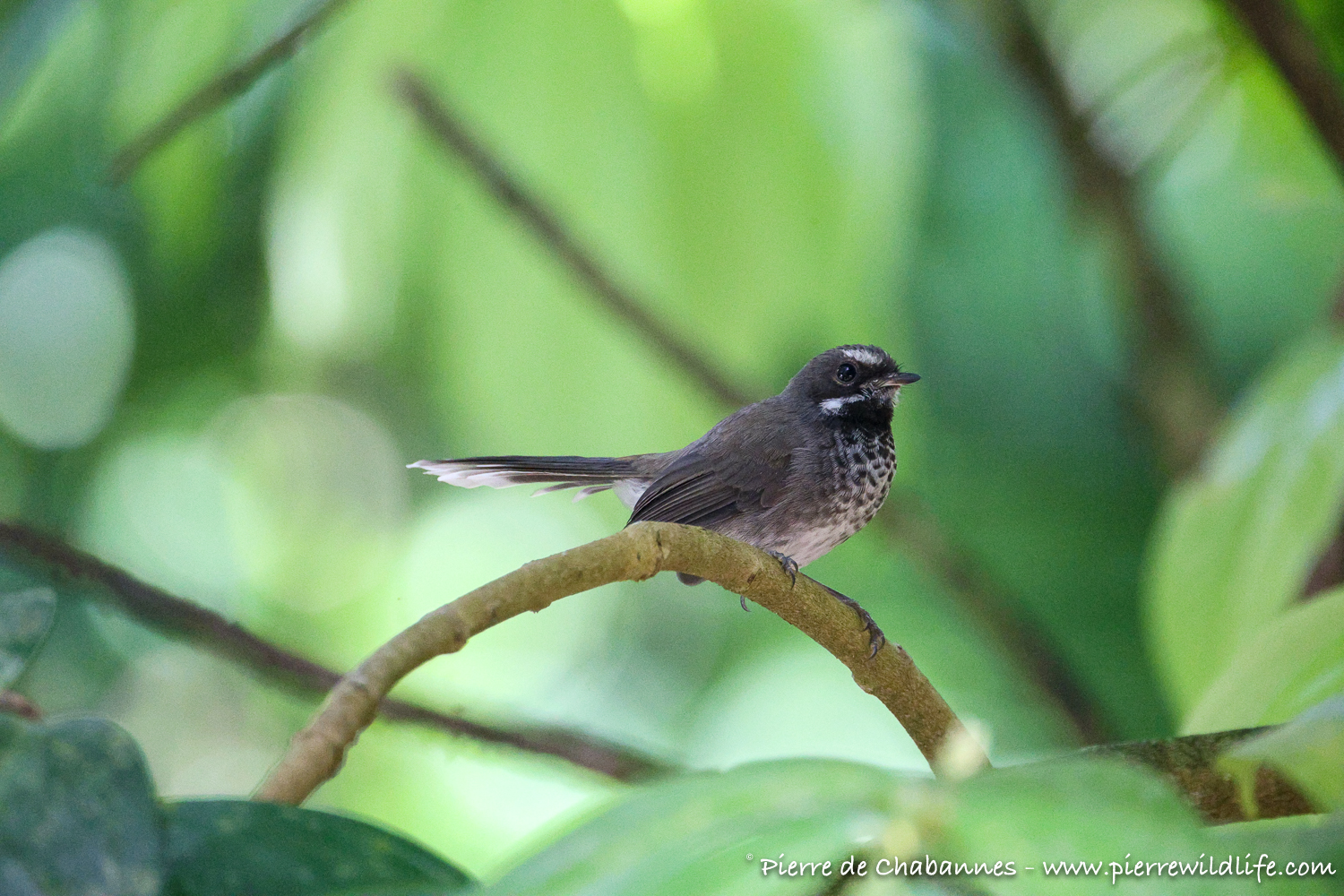
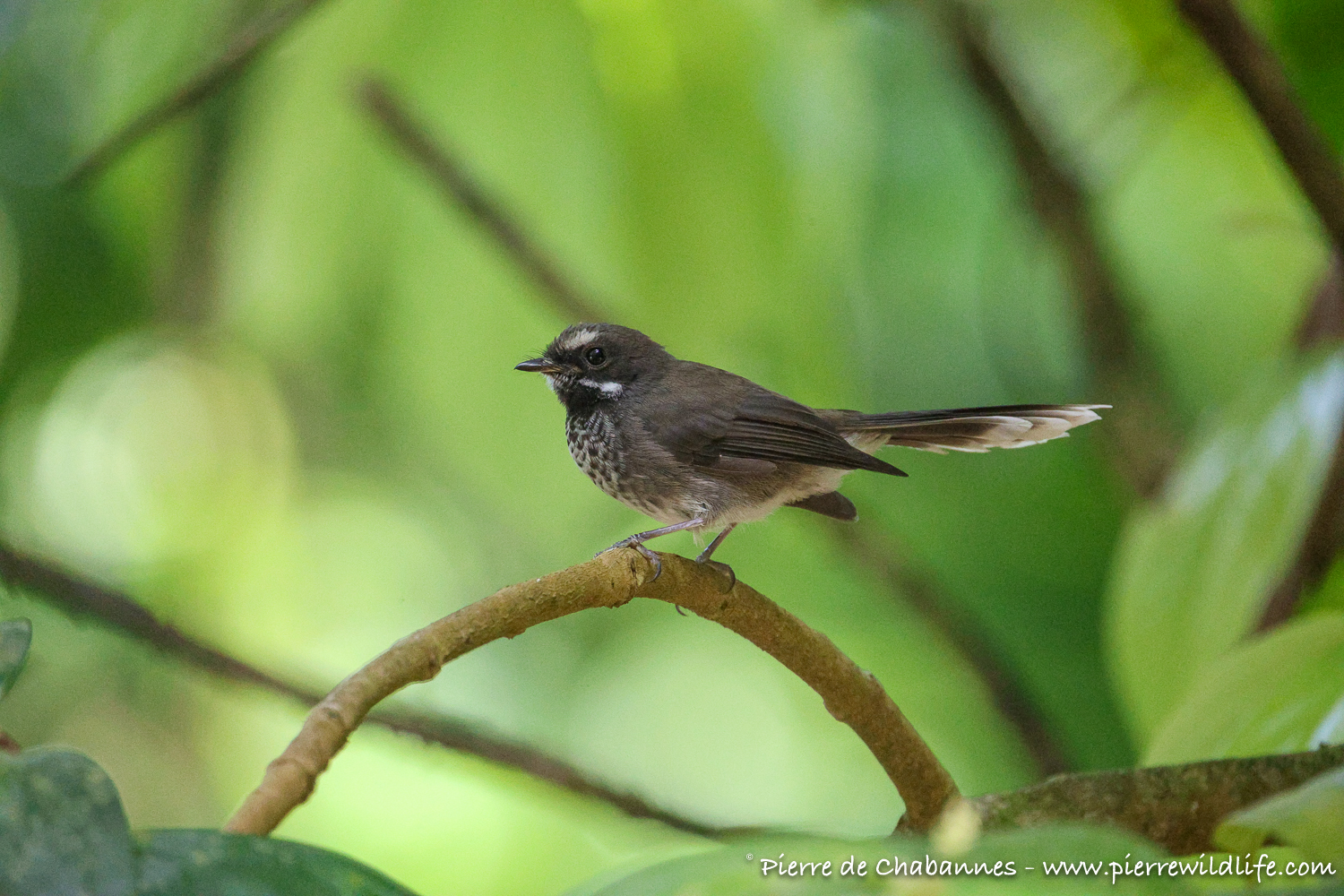
A lively bird endemic to Pohnpei, constantly flicking its tail while searching for insects among the island’s forests and gardens.
Context
Many individuals observed at about eye-level on bushes and low branches in open forests, mangrove forests, near trails and roads.
Field notes
The Pohnpei fantail wasn’t easy to find during my first two days on the island as it is more strongly associated with forests than other endemics such as the lorikeet or the kingfisher. However, it was fairly common and not shy when found in forested areas.
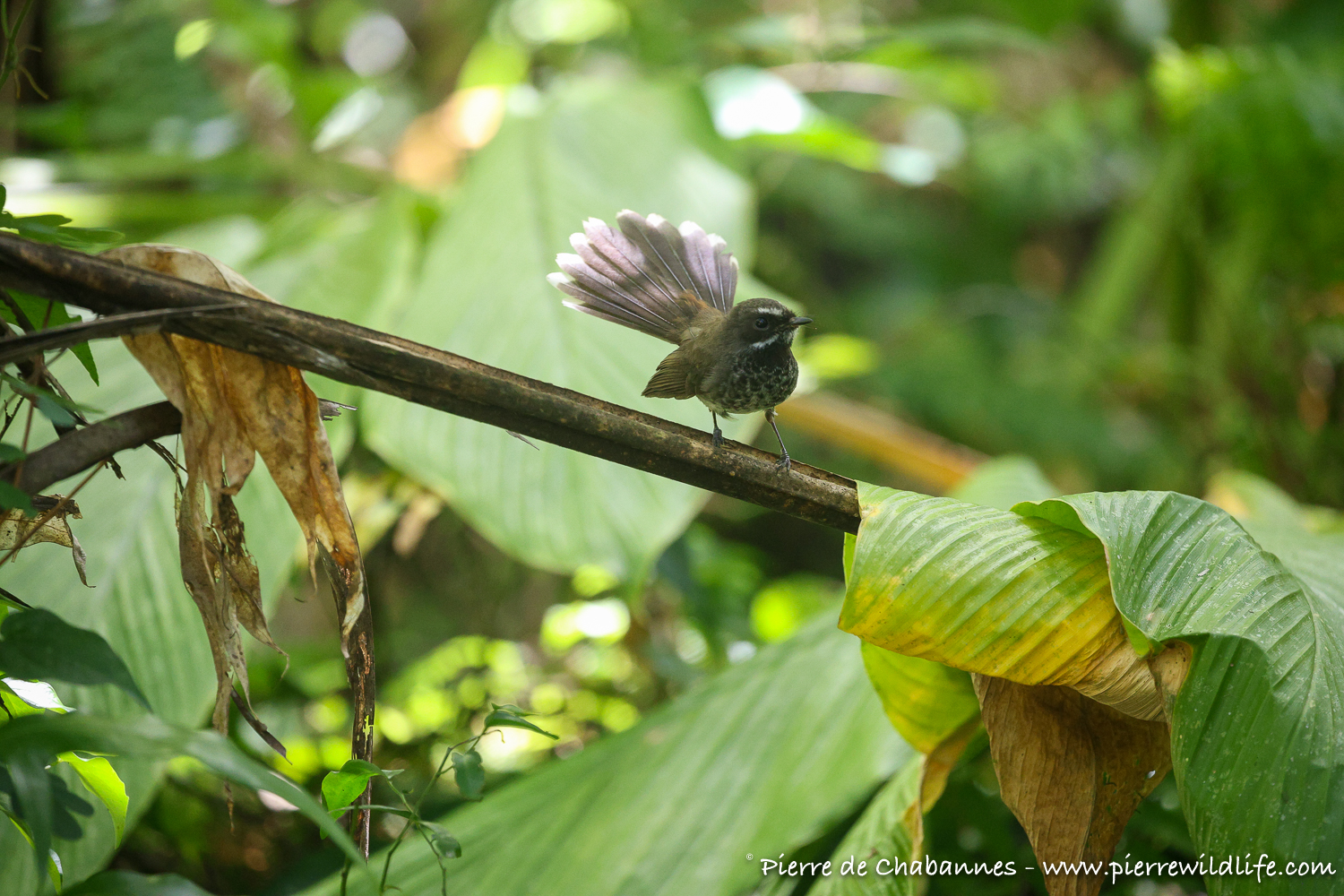
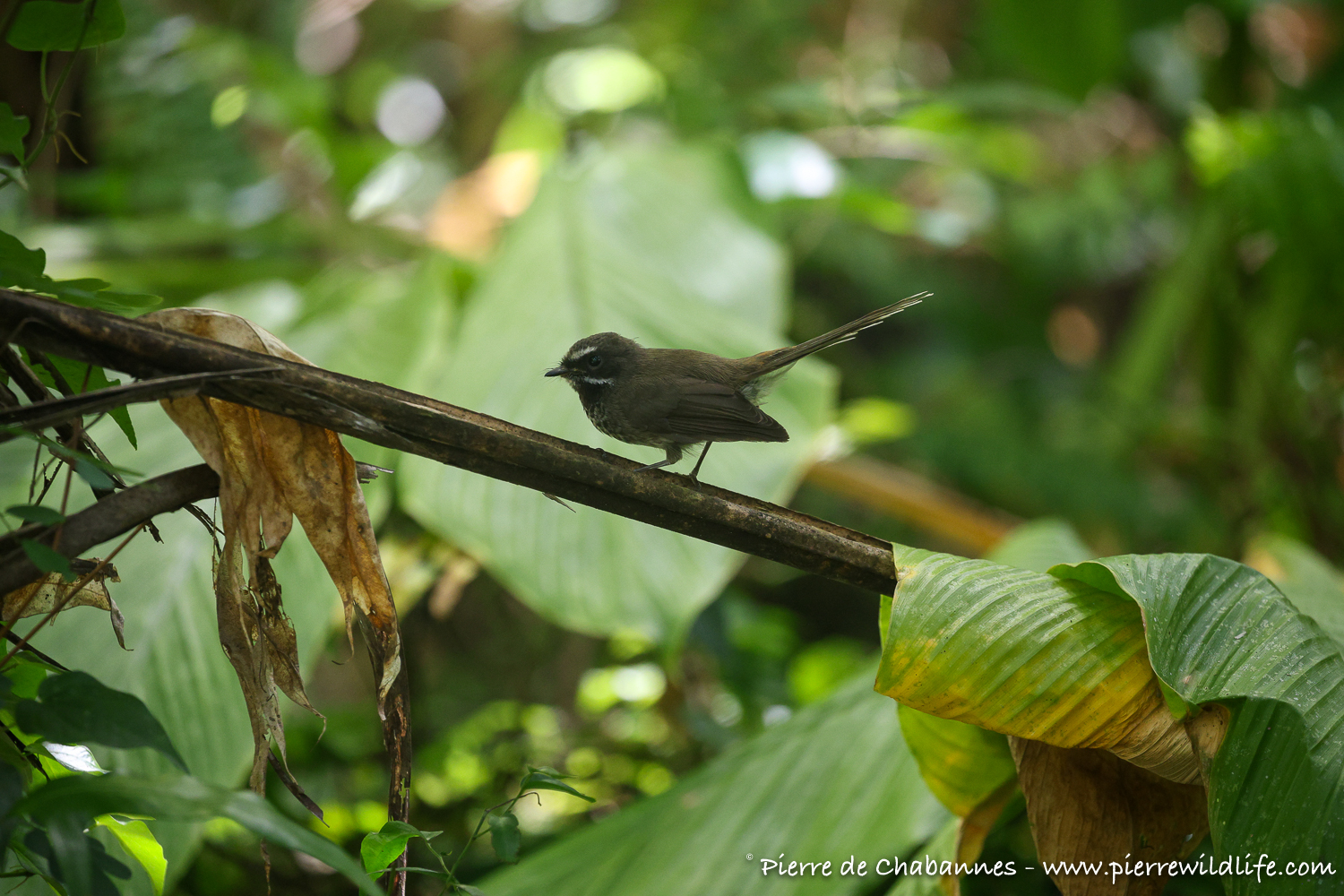
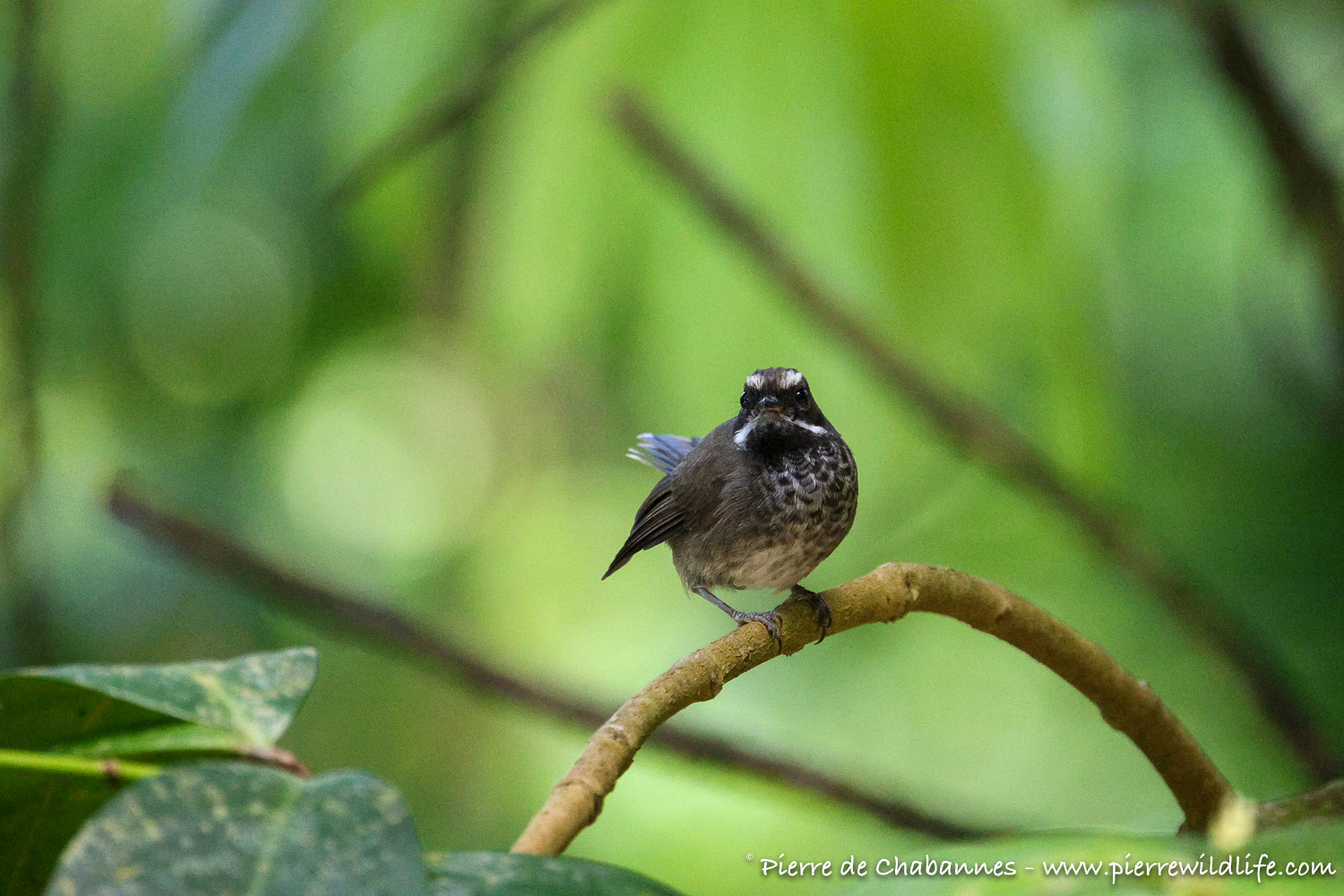
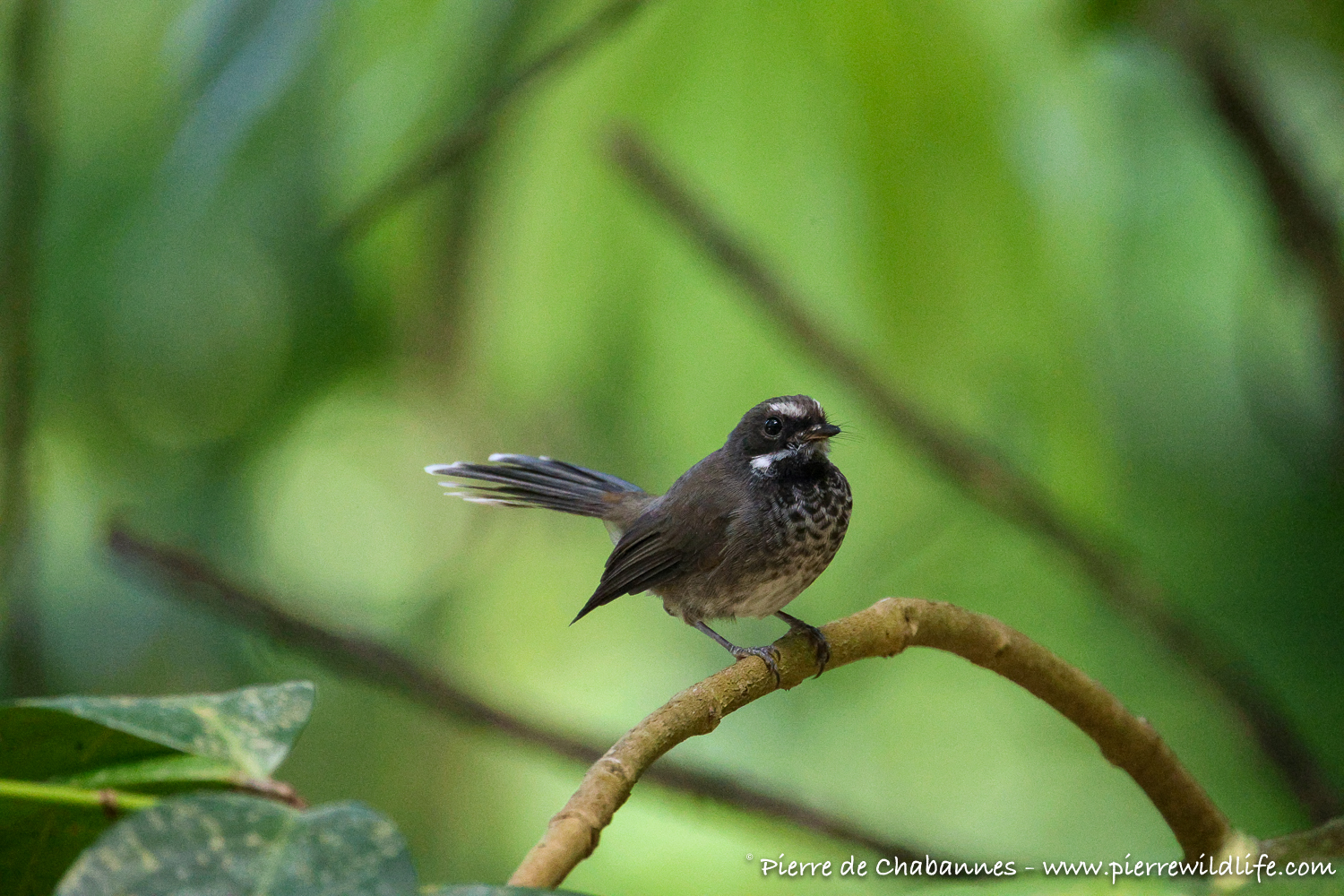
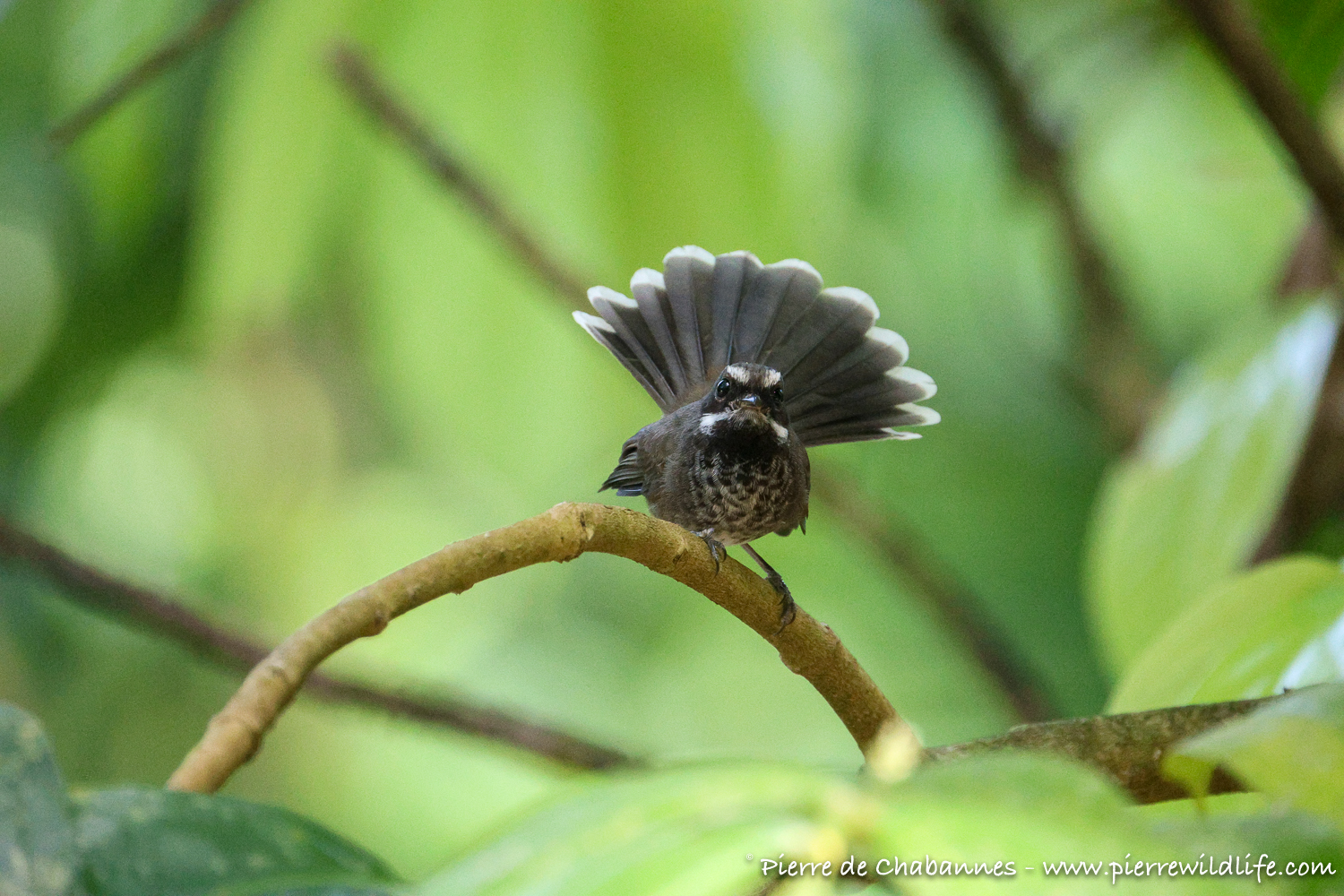
Most of the specimens I photographed were foraging for insects while flicking and fanning their tail. They were constantly on the move but two specimens cooperated really well in Nan Madol mangrove forests, likely because they are more used to people walking by.
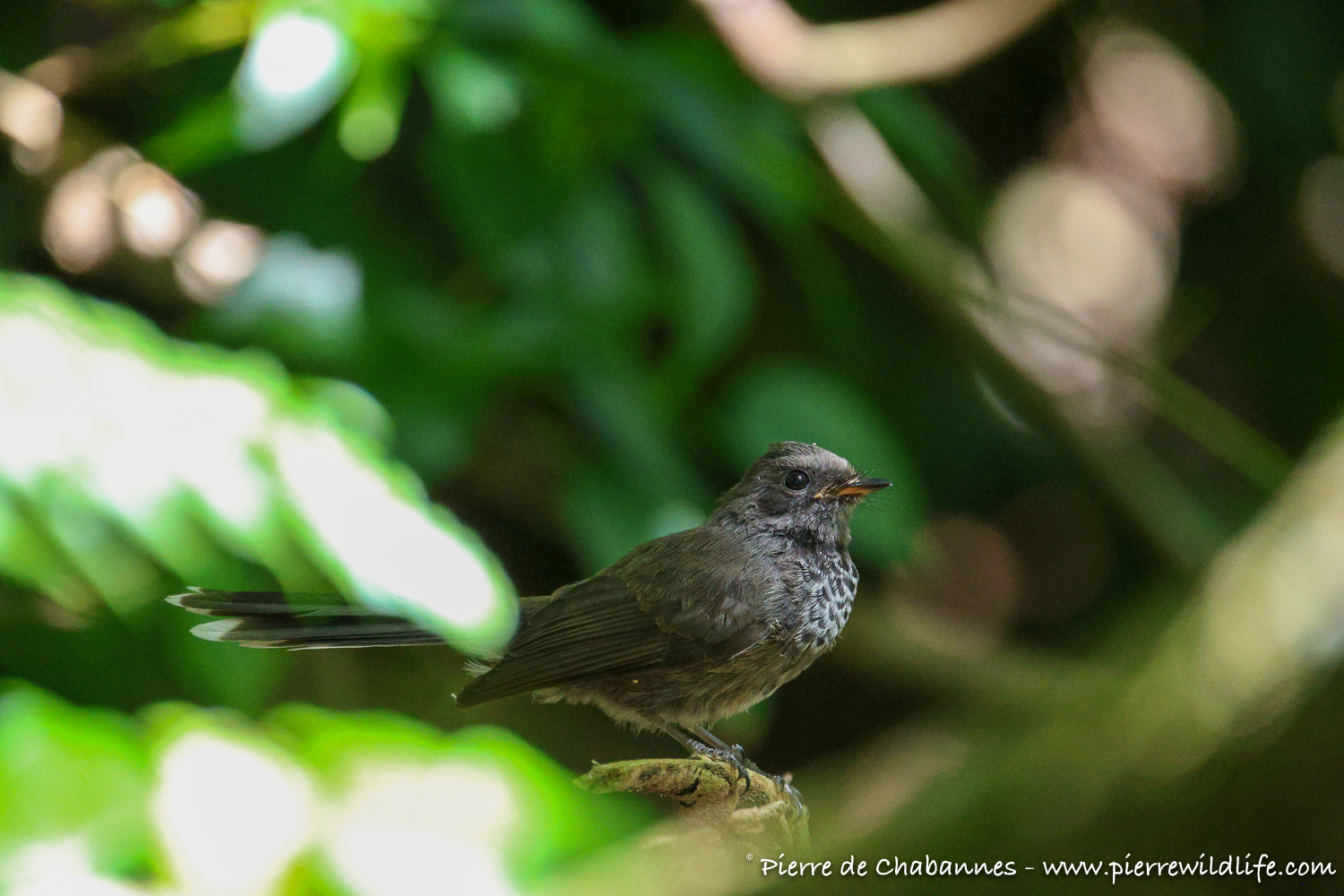
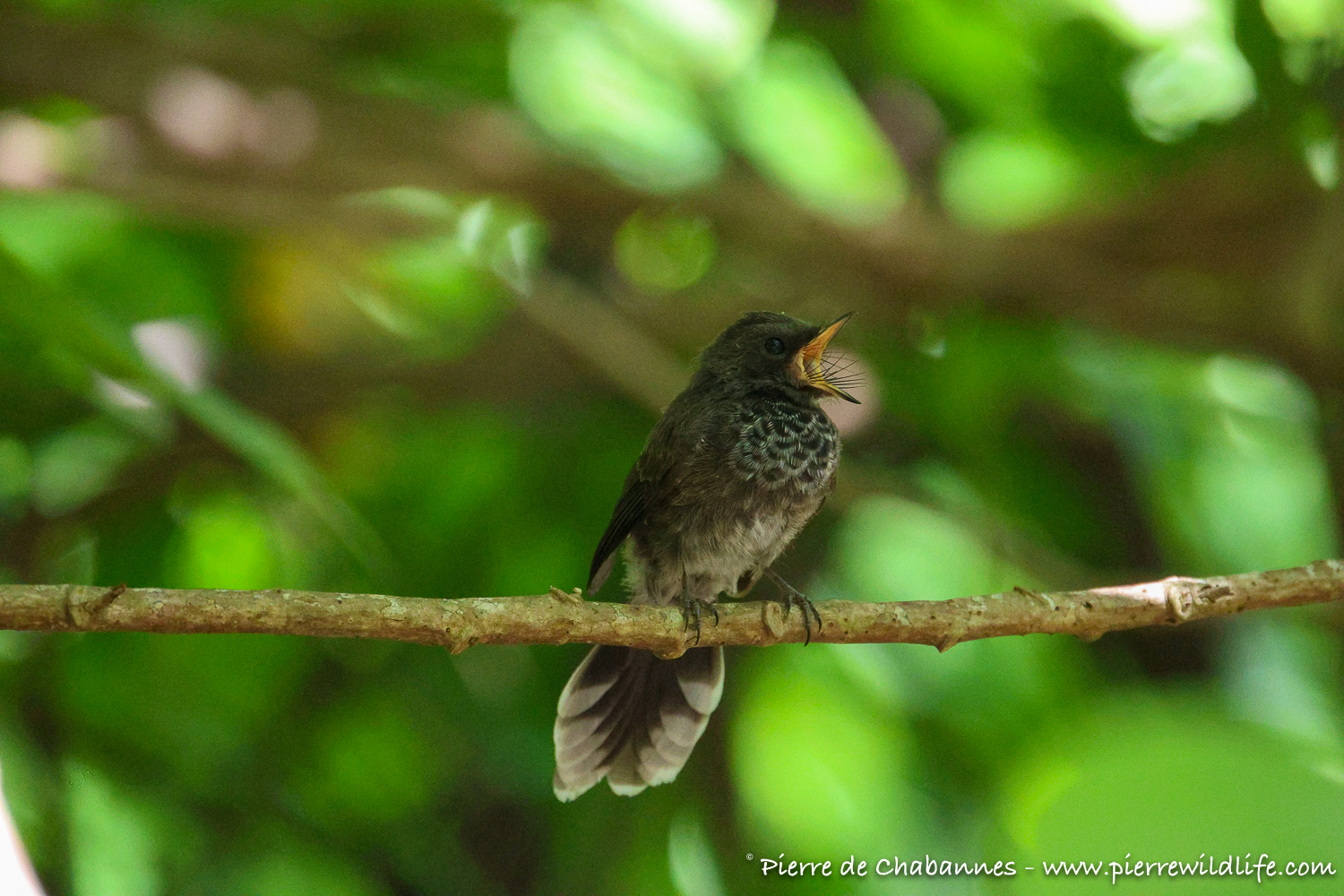
Out of all the specimens photographed (most being adults), the juveniles stood out by having a grayer breast with less conspicuous white scalloping. The white pattern on the face is also less prominent.
Key facts
As its name suggests, the Pohnpei fantail is endemic to Pohnpei and doesn’t even occur on nearby atolls.
Like most fantails, it is attracted to human settlements near or in their habitats because of the flies that they can prey on, found on human waste (food or toilet). This behavior has earned the name “Burung toilet” (the toilet bird) to fantails in Indonesia.
The species is easily recognized by its constantly fanned tail, contrasting plumage, and active foraging behavior. Its frequent tail movements are thought to help flush hidden insects from vegetation.
Conservation
The species is currently listed as Least Concern on the IUCN Red List and remains common throughout much of its range.
It is dependent on forest habitats and can withstand a certain degree of habitat degradation as long as enough trees and bushes remain available for nesting and foraging.
Protecting Pohnpei’s remaining native forests and preventing the introduction of invasive species remain essential for safeguarding the island’s unique birdlife.
More photos from this observation
Other insular species can be found by browsing my Education resources.
Back to Island life ←Previous species Next Species →
“A long-term project documenting biodiversity across the world through fieldwork, zoological observations and educational content.”