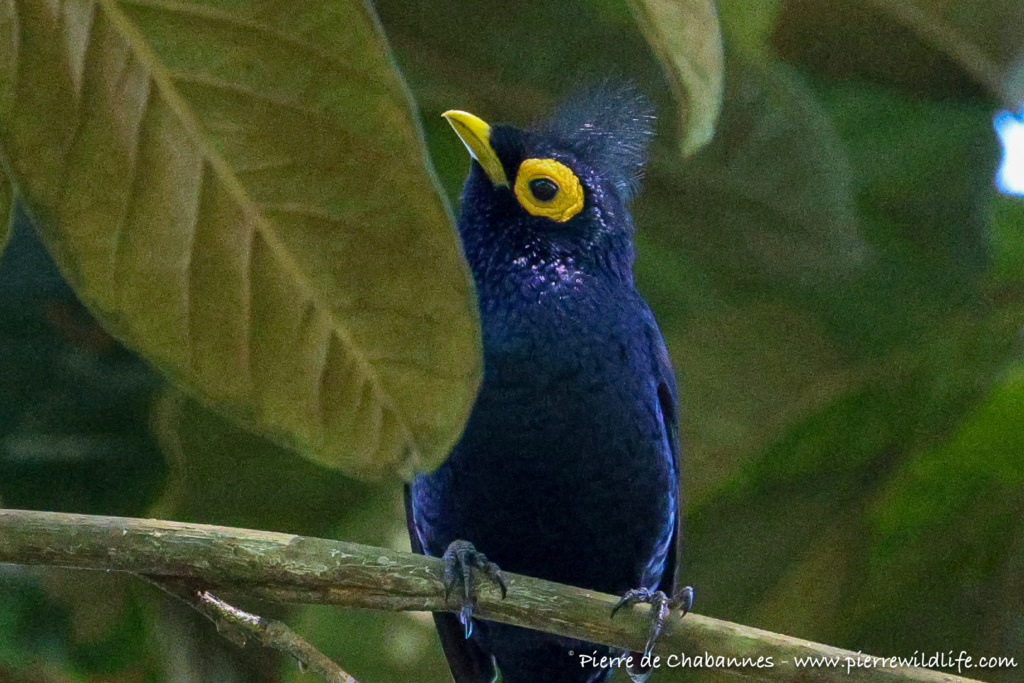
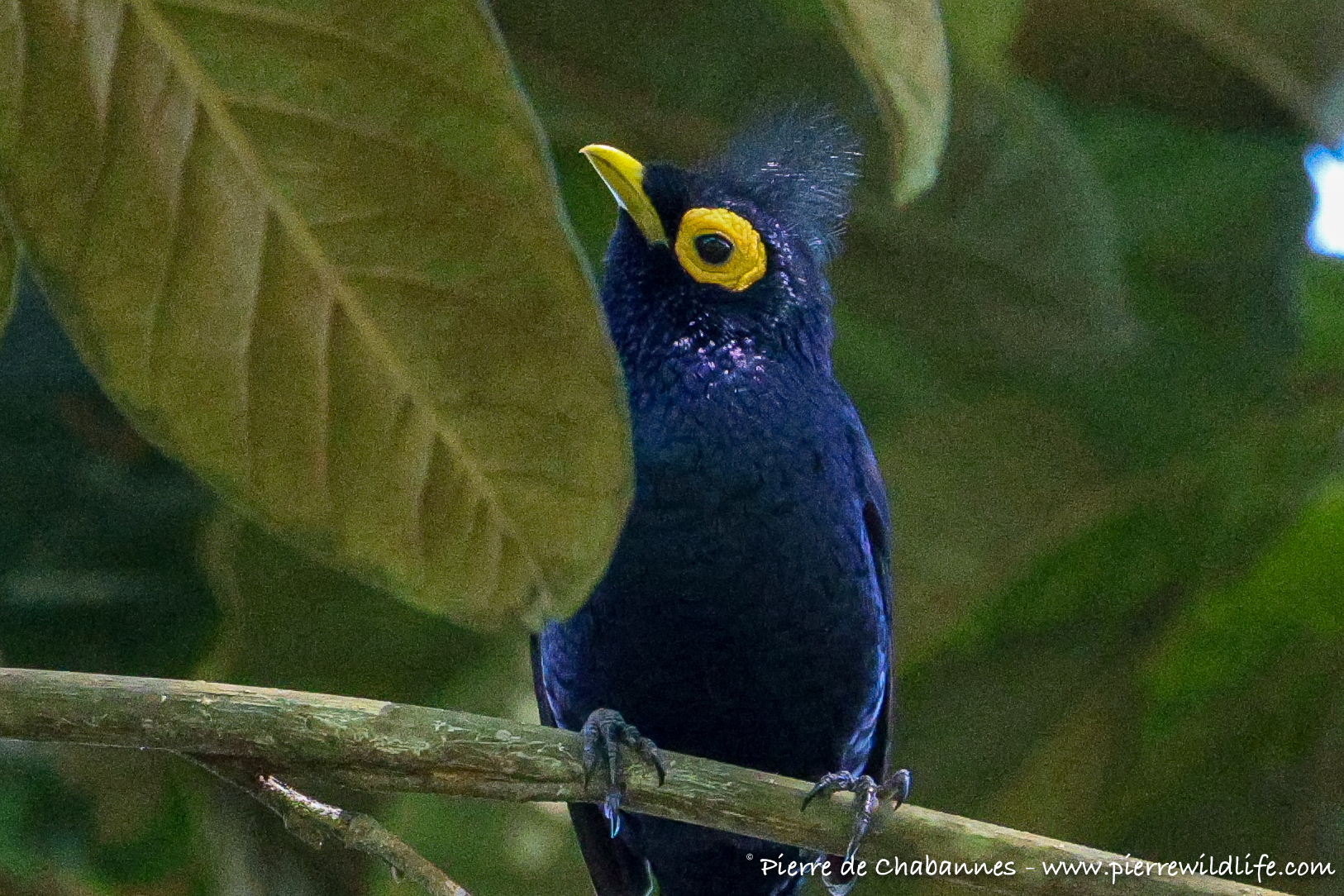
Apo myna (Goodfellowia miranda)
An unmistakable starling species, endemic to the montane forests of Mindanao.
Context
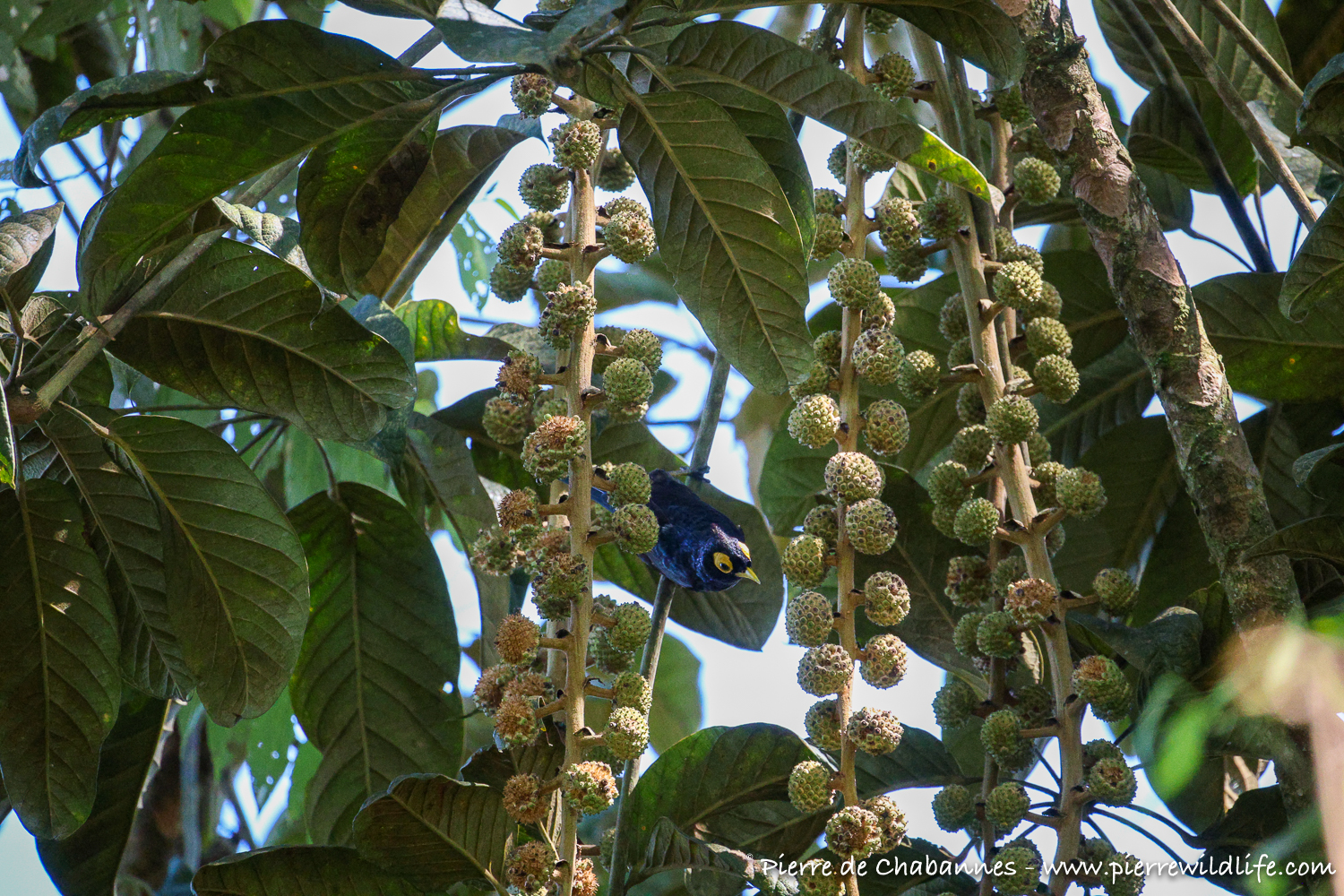
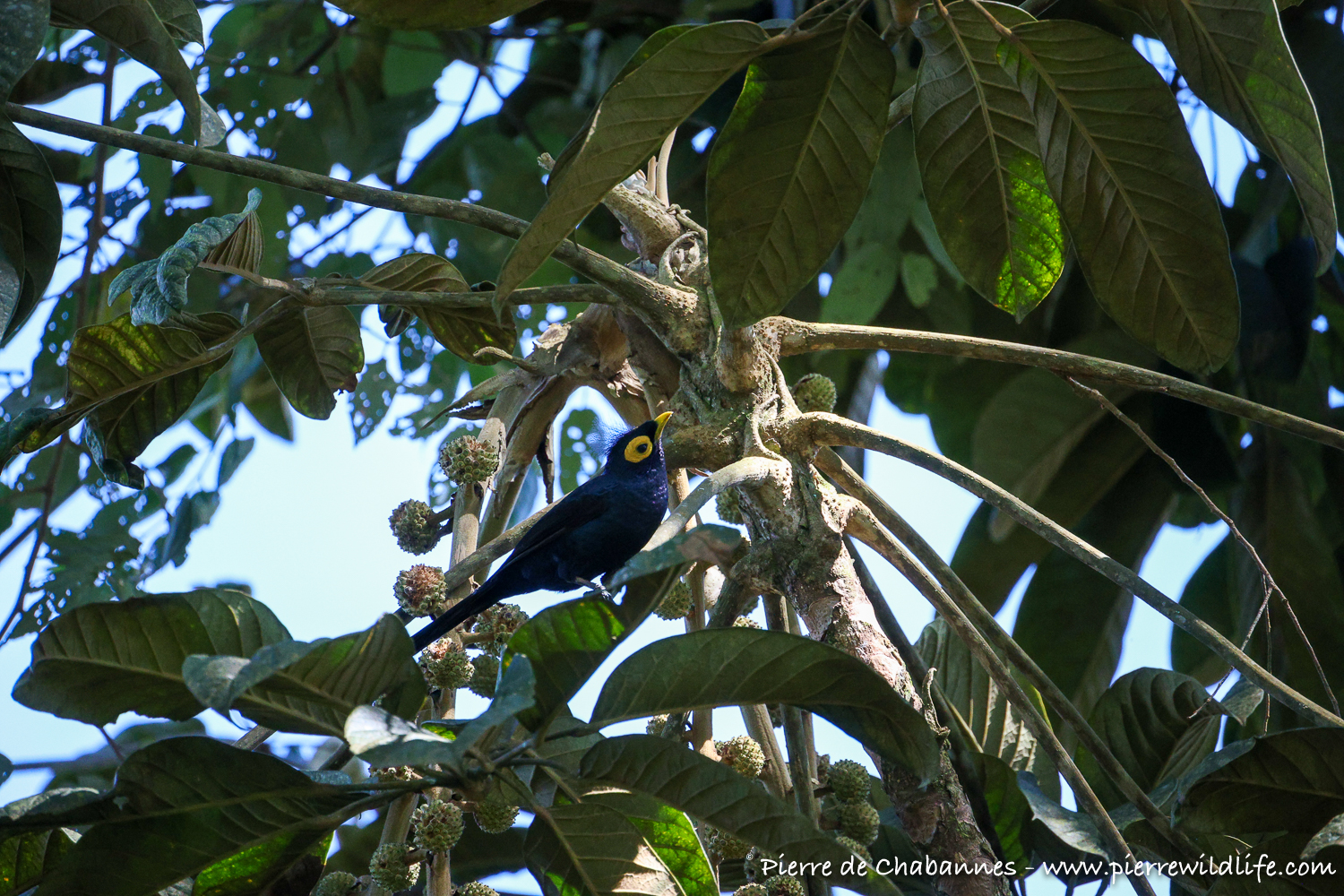
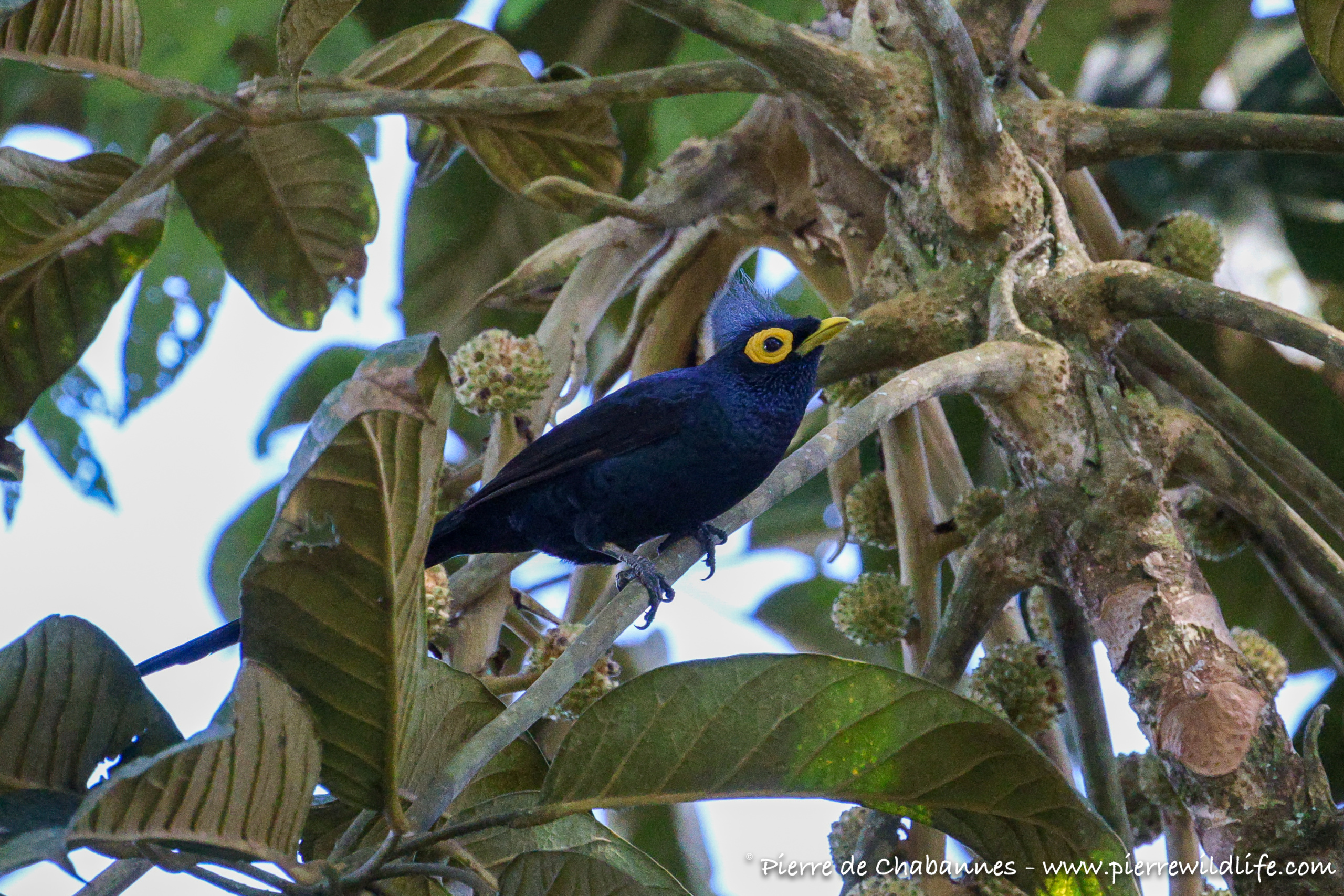
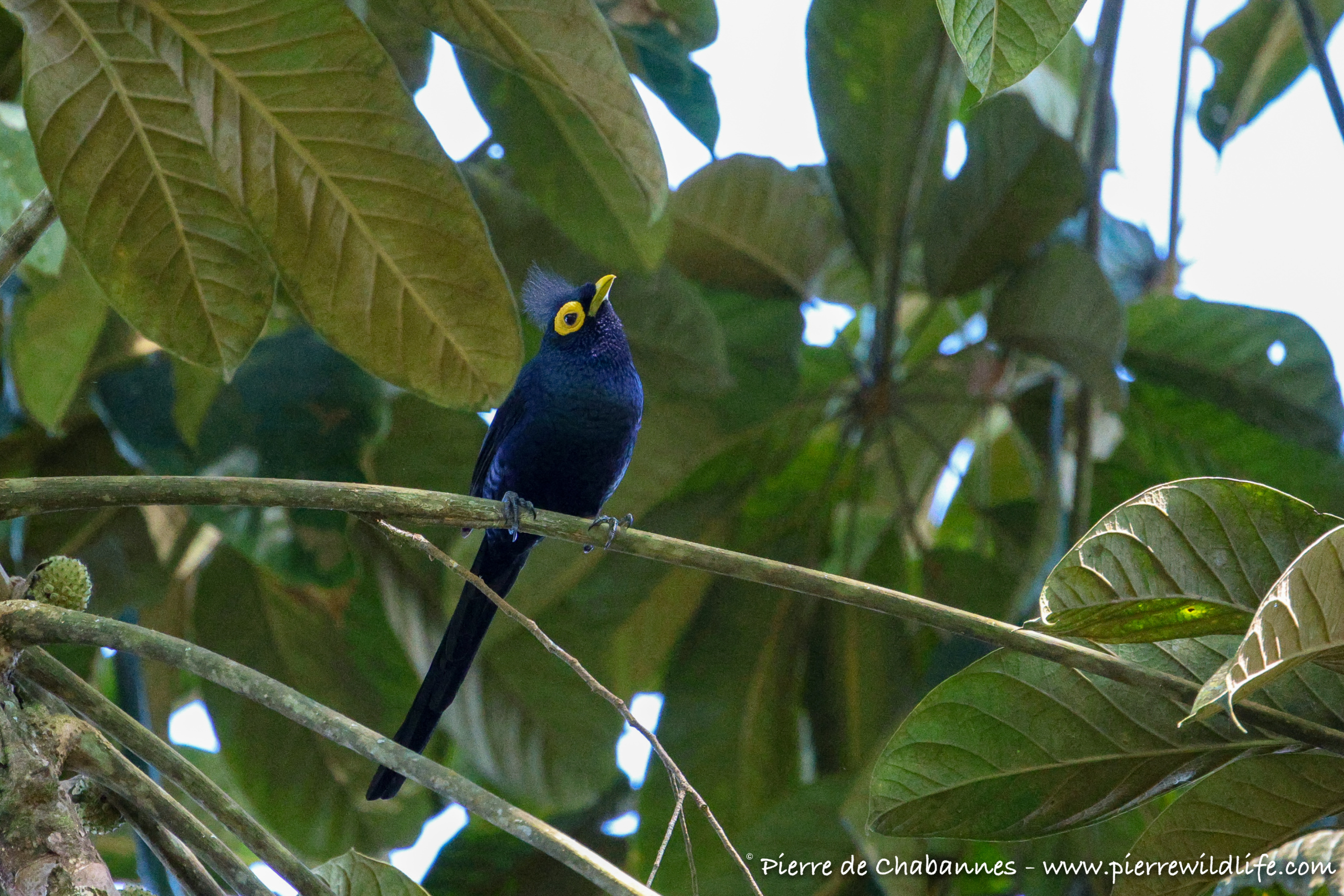
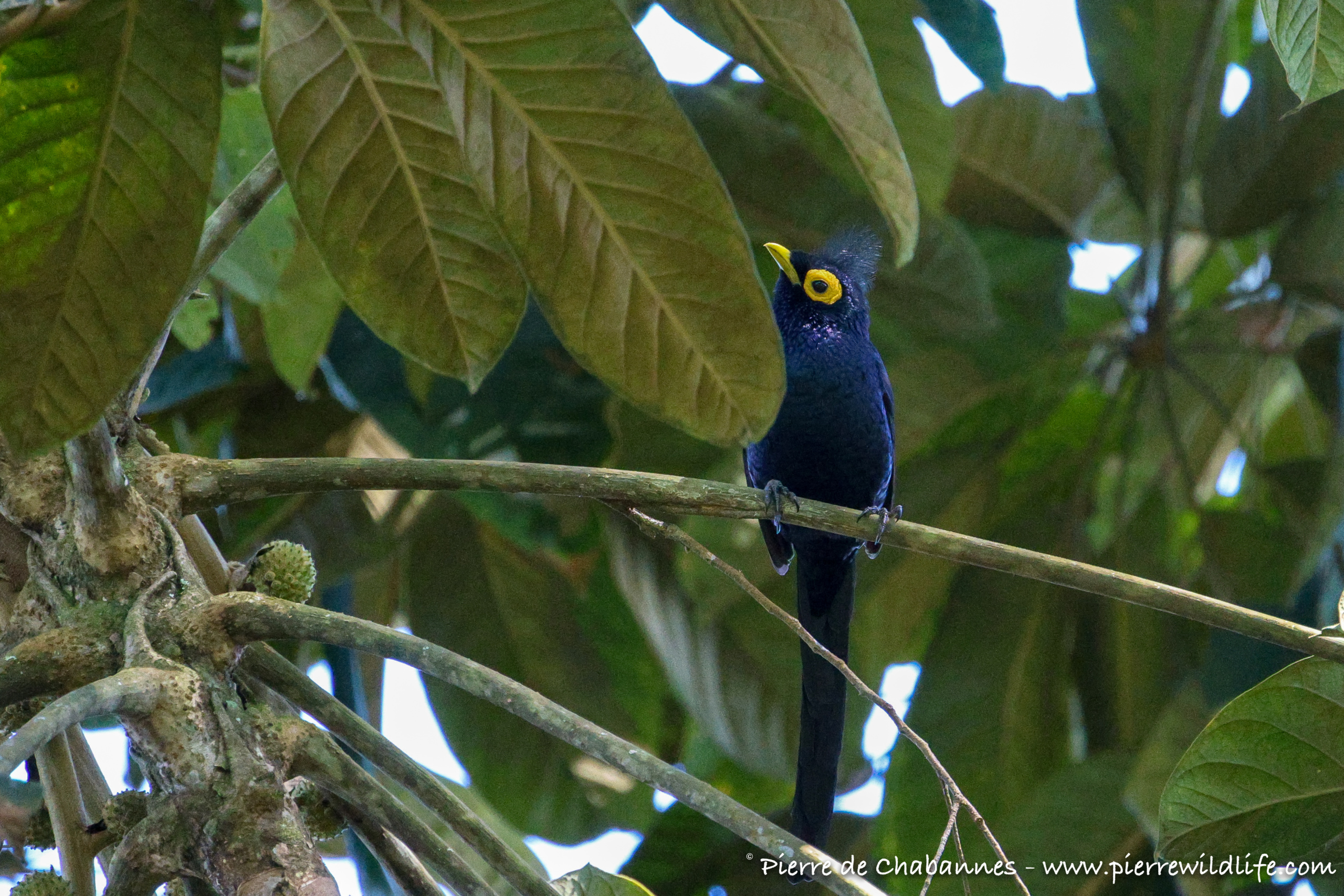
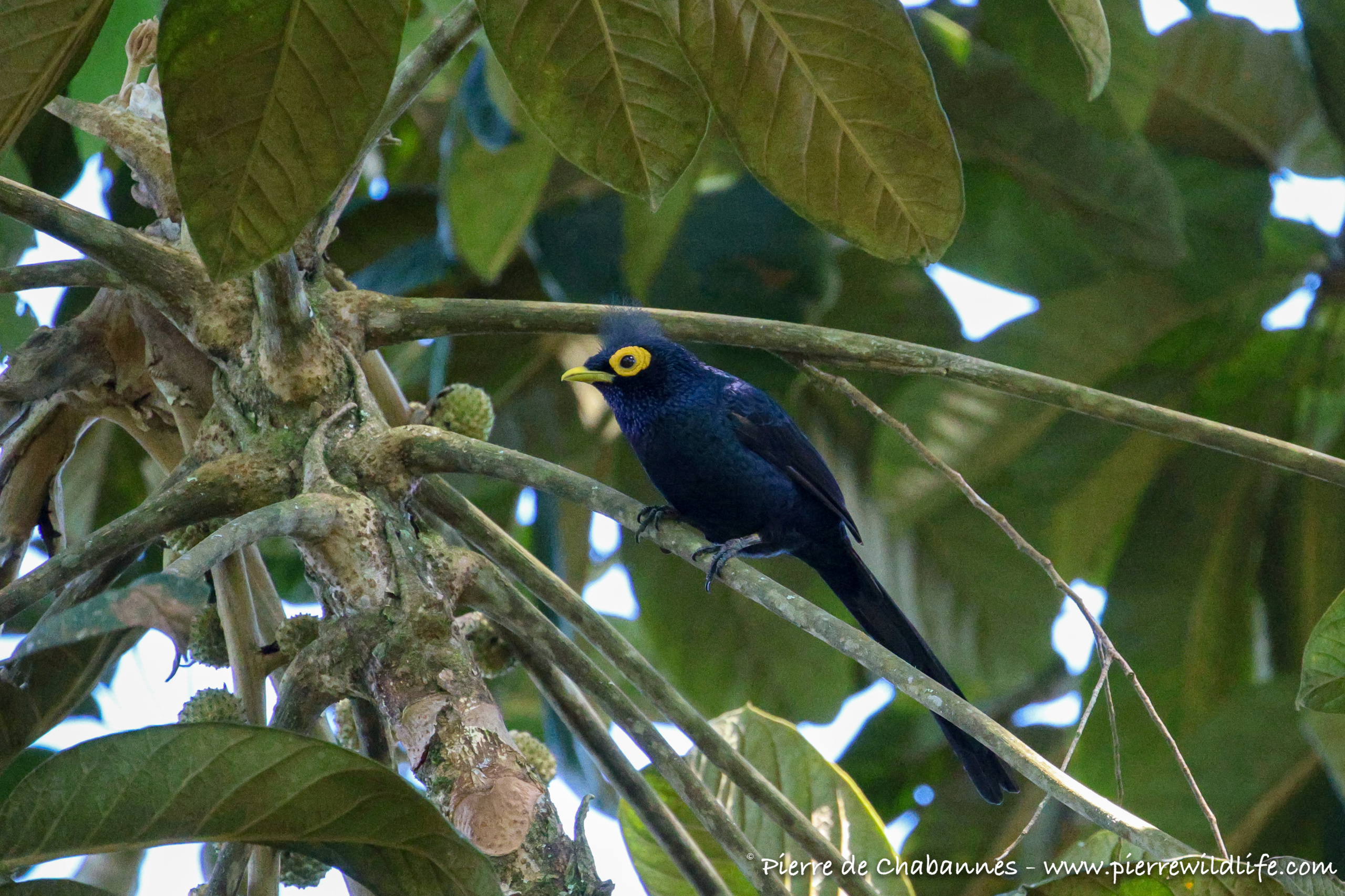
A single individual observed feeding in a fruiting tree during mid-morning on the slopes of Mount Kitanglad, Bukidnon, Mindanao (Philippines).
Field notes
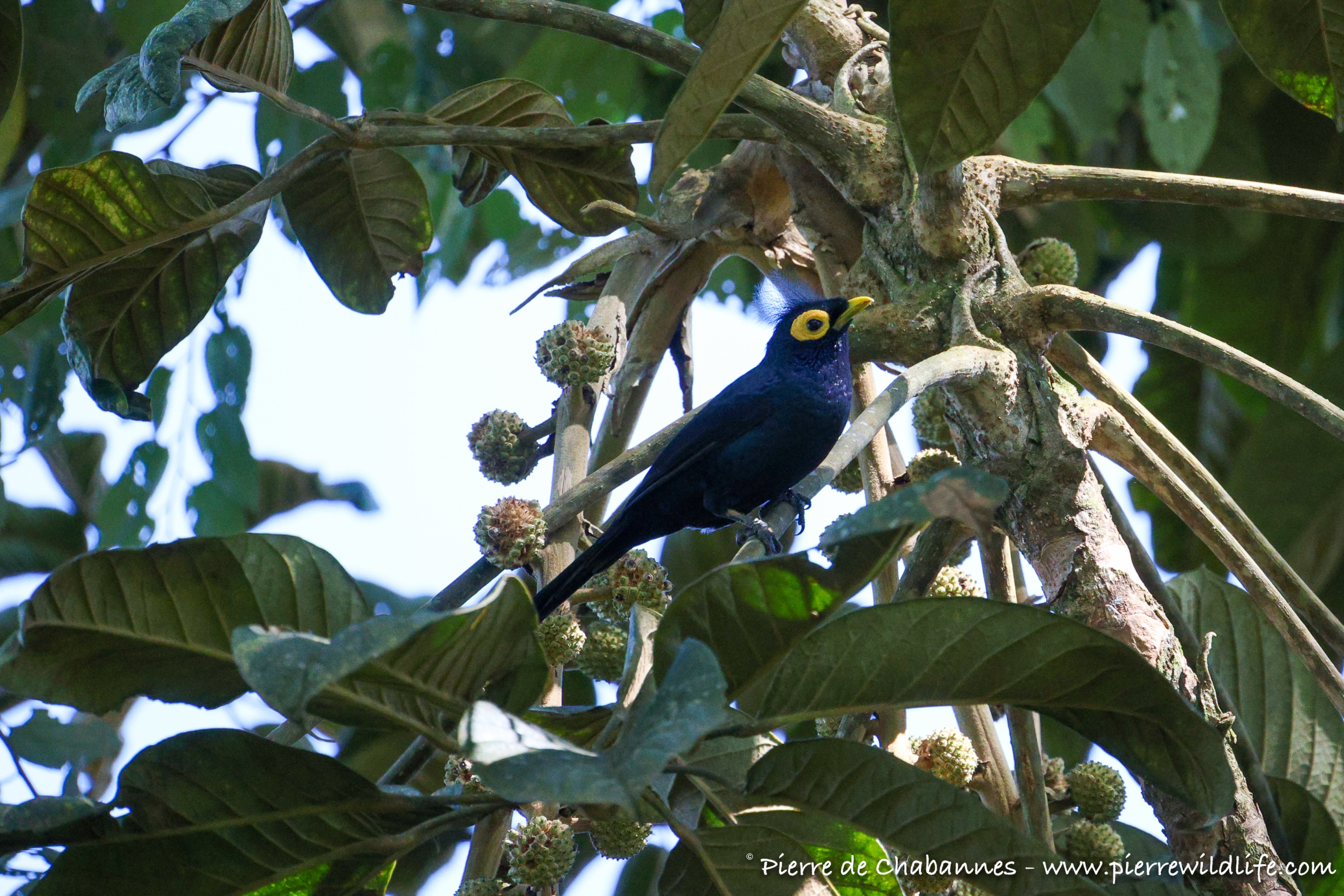
The Apo myna is instantly recognizable by its glossy deep blue plumage, bright yellow facial wattles, and long tail. At close range, its distinctive upright crest also becomes visible.
The species is usually encountered singly, in pairs, or in small noisy groups moving rapidly through the upper canopy and between forest patches.
Mid to late morning often appears to be the best time to observe the species feeding in fruiting trees. Unlike many other montane forest birds, the Apo myna seems difficult to detect during the early morning hours.
Key facts
The Apo myna is endemic to Mindanao and belongs to a unique monotypic genus, Goodfellowia. It is a montane forest specialist, being found in the canopy and around edges of forests above 1250 meters asl.
The species feeds mainly on fruits, berries, insects, and other small food items collected in the canopy. Its breeding and nesting behavior remain almost entirely undocumented.
Unlike many other Southeast Asian starlings, the Apo myna remains strongly associated with relatively intact mountain forests.
Conservation
The species is currently assessed as Near Threatened by the IUCN Red List. Its distribution is naturally limited, fragmented, and strongly tied to remaining montane forest habitats.
Although still locally common in suitable areas, the species remains vulnerable to ongoing deforestation linked to agriculture, as well as potential long-term habitat shifts caused by climate change.
The protection of extensive intact forest habitats in Mindanao remains essential for the species’ long-term survival. It would also be valuable to better understand how the species uses mosaic landscapes combining forest patches and traditional agricultural areas, as this could help identify additional conservation solutions for remaining populations.
More photos from this observation
Other species from Mindanao can be found by browsing my Education resources.
Back to Mindanao ←Previous species Next Species →
“A long-term project documenting biodiversity across the world through fieldwork, zoological observations and educational content.”