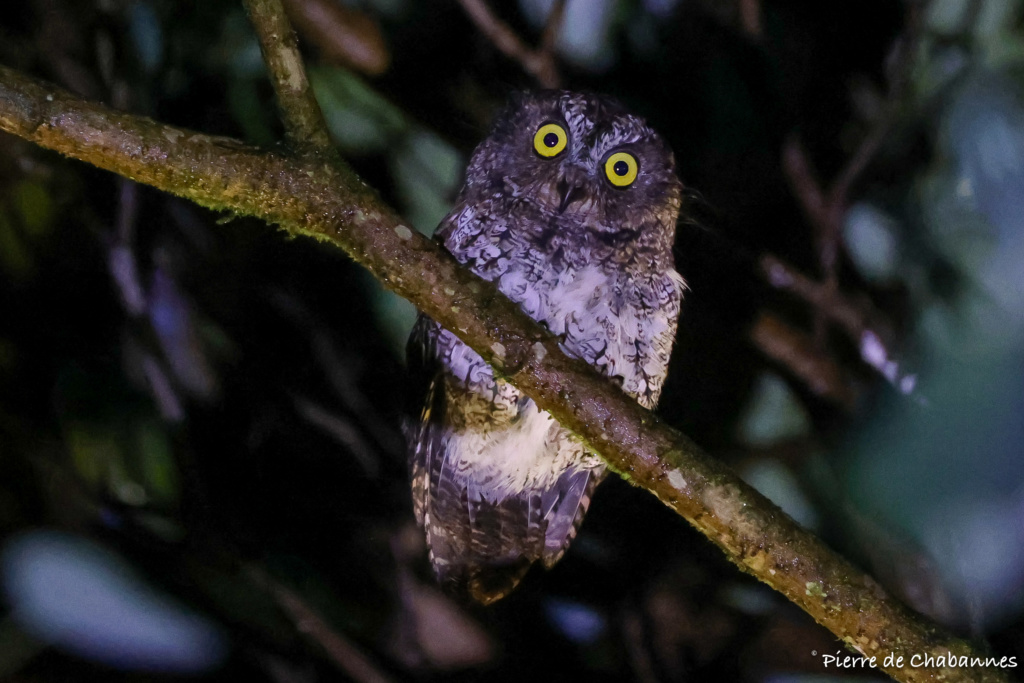
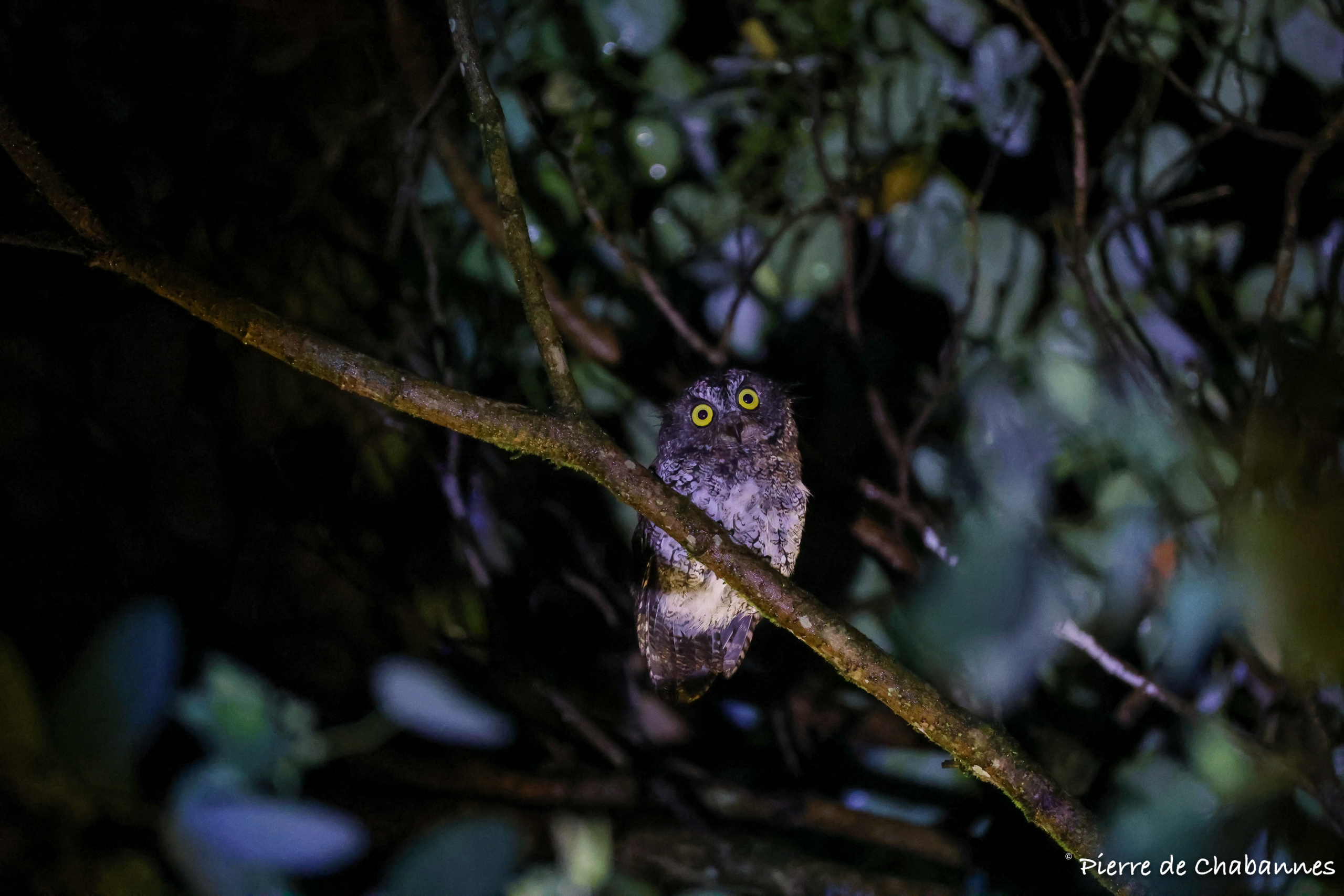
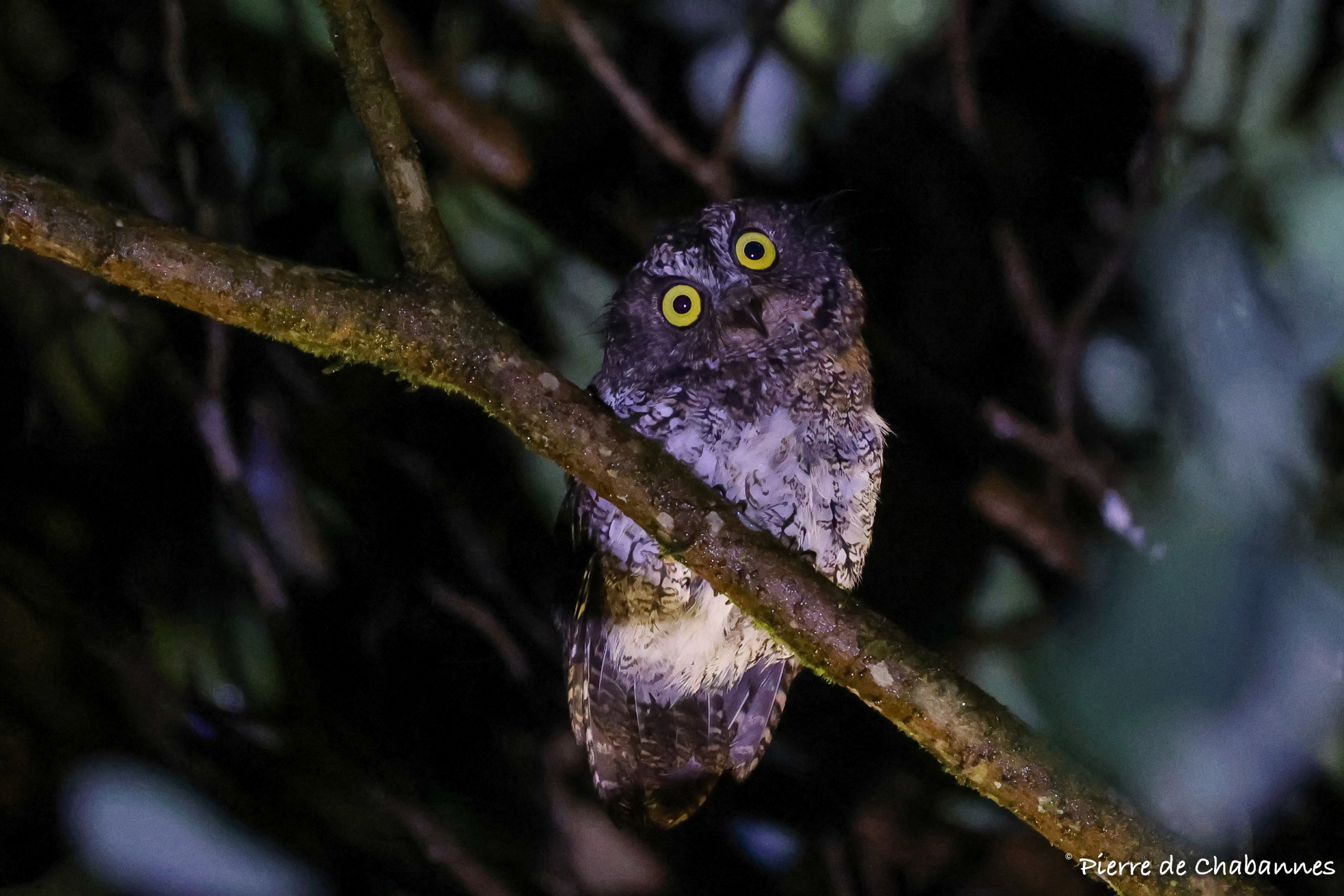
Mindanao scops-owl (Otus mirus)
One of the least known scops owl species in Asia, endemic to the
montane forests of Mindanao.
Context
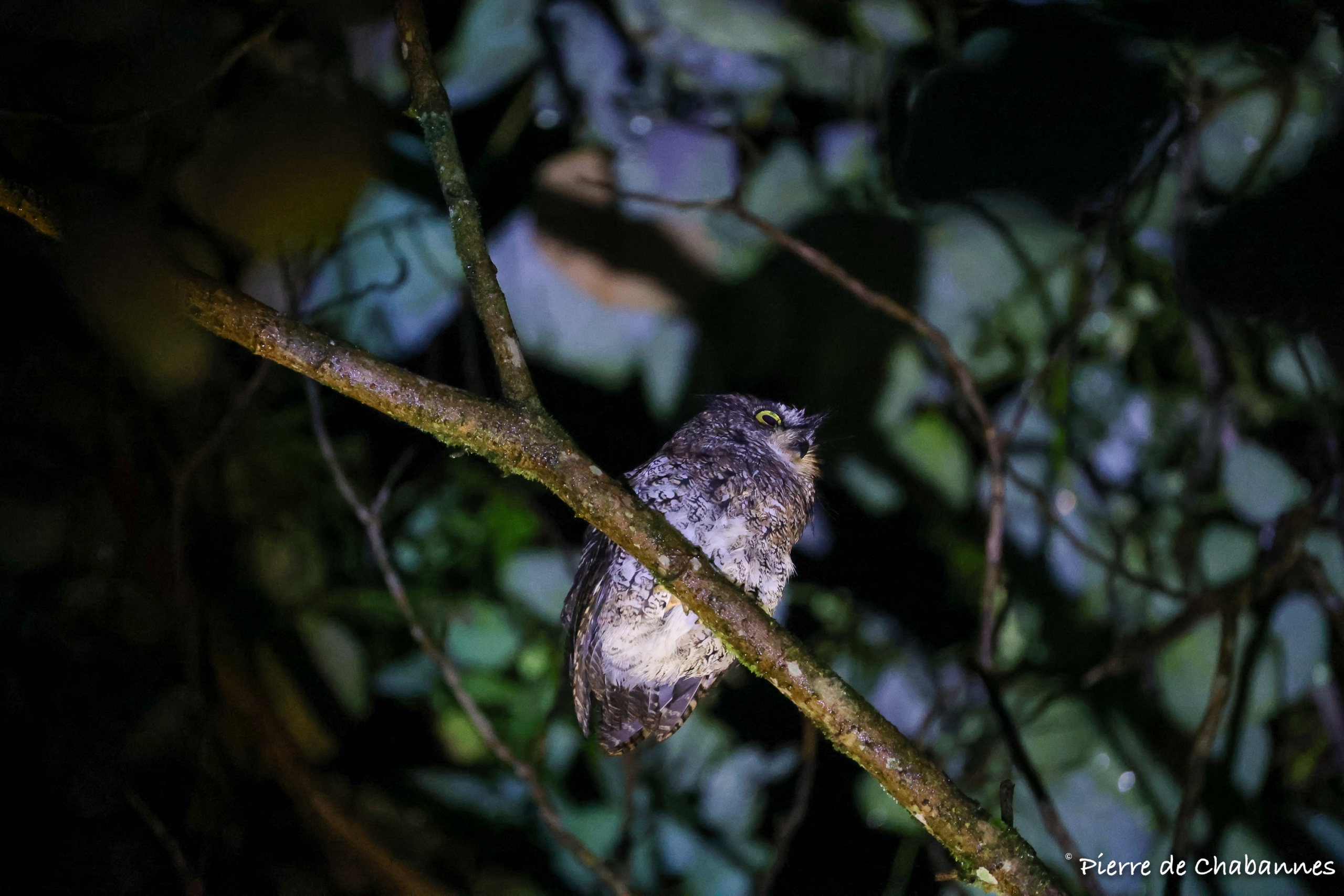
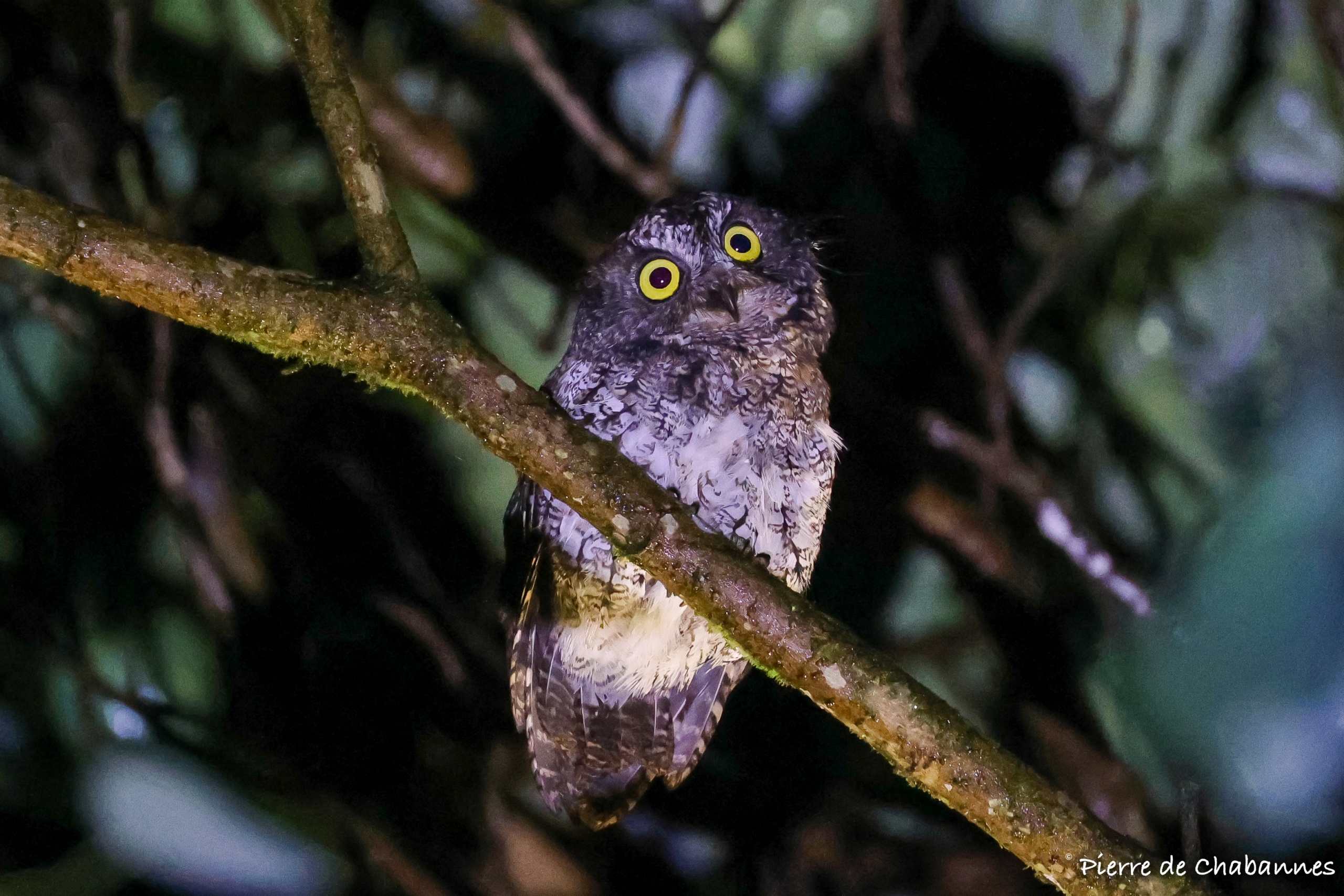
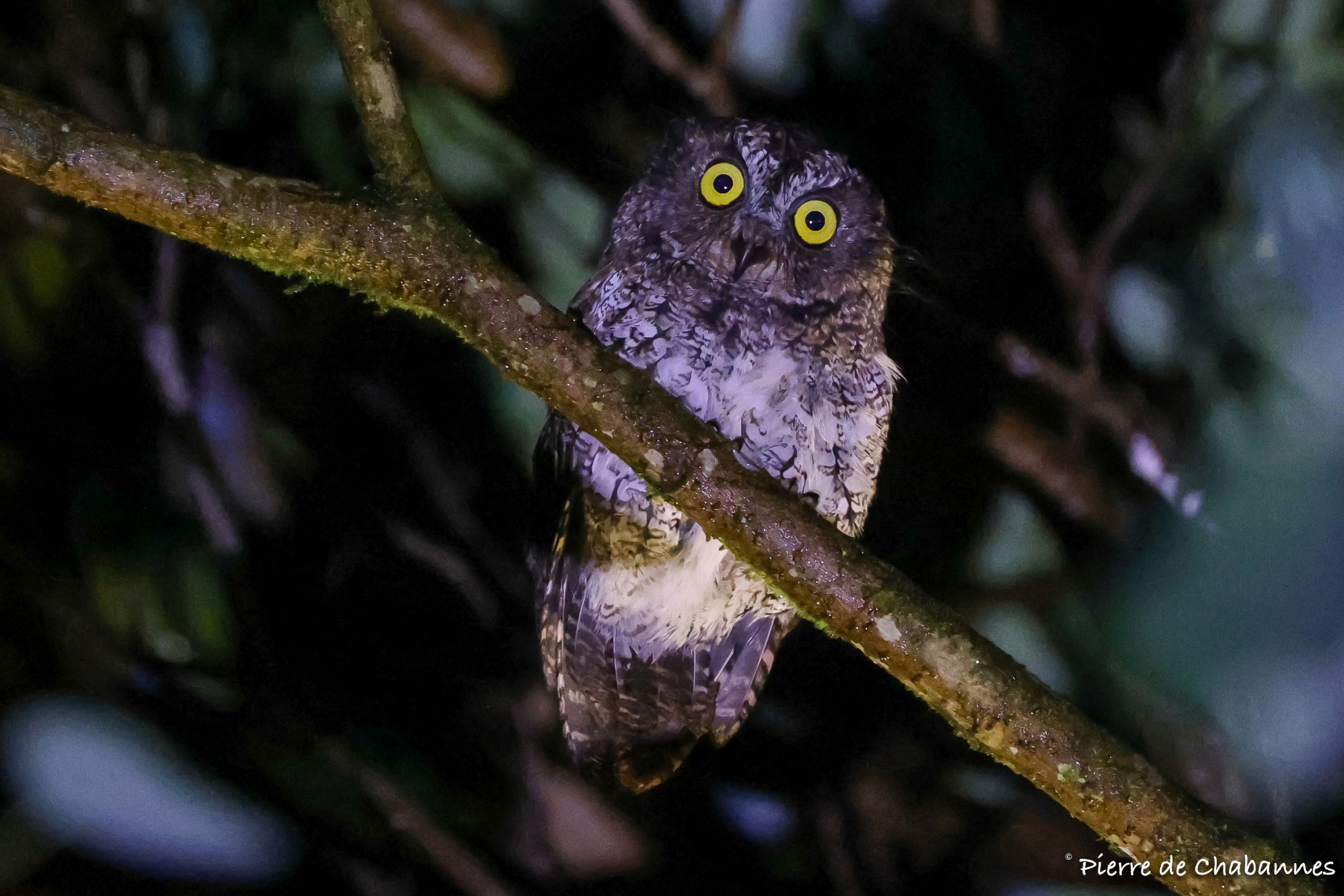
A single individual observed at night in submontane forest on the slopes of Mount Kitanglad, near Bukidnon, Mindanao (Philippines).
Field notes
Like many tropical scops-owls, this species is far more often heard than seen. Its calls regularly echo through the forest at night, while the bird itself usually remains hidden among dense branches and foliage.
This forest patch is one of the few locations where the species can still be observed relatively reliably. Until recent years, it remained one of the least photographed owls in Asia.
The area is located close to a protected forest where Philippine eagles are known to nest. Access is only occasionally possible and requires the presence of a local guide.
Key facts
The Mindanao scops-owl is endemic to Mindanao and is primarily associated with montane and mossy forest habitats. It appears most common above approximately 1,500 m asl and becomes uncommon at lower elevations.
Like many Philippine endemic owls, the species remains poorly studied, and several aspects of its ecology, including diet and breeding biology, are still unknown.
Its plumage provides excellent camouflage against tree bark and moss-covered vegetation, making visual detection particularly difficult during daytime roosting.
Conservation
Previously listed as Vulnerable, the species is now assessed as Least Concern on the IUCN Red List, although populations may still be declining due to ongoing deforestation.
Additional field studies are urgently needed to better understand the species’ biology, ecology, and population trends in order to support effective conservation measures.
The species occurs in several protected areas across Mindanao, but forest protection remains inconsistently enforced, and illegal logging continues to affect parts of its habitat.
More photos from this observation
Other species from Mindanao can be found by browsing my Education resources.
Back to Mindanao ←Previous species Next Species →
“A long-term project documenting biodiversity across the world through fieldwork, zoological observations and educational content.”