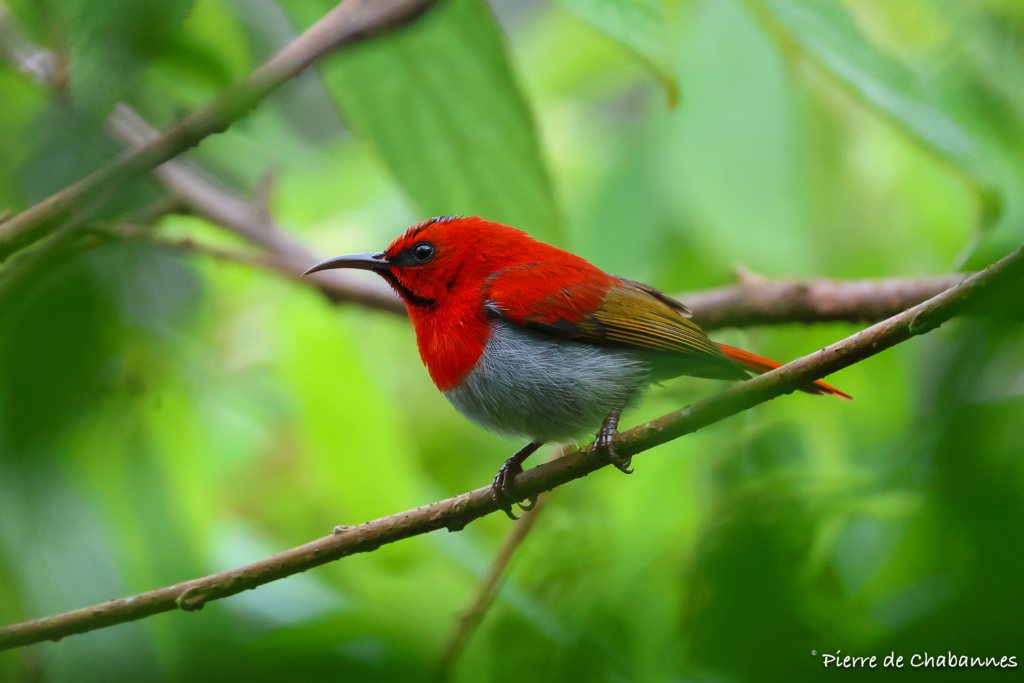
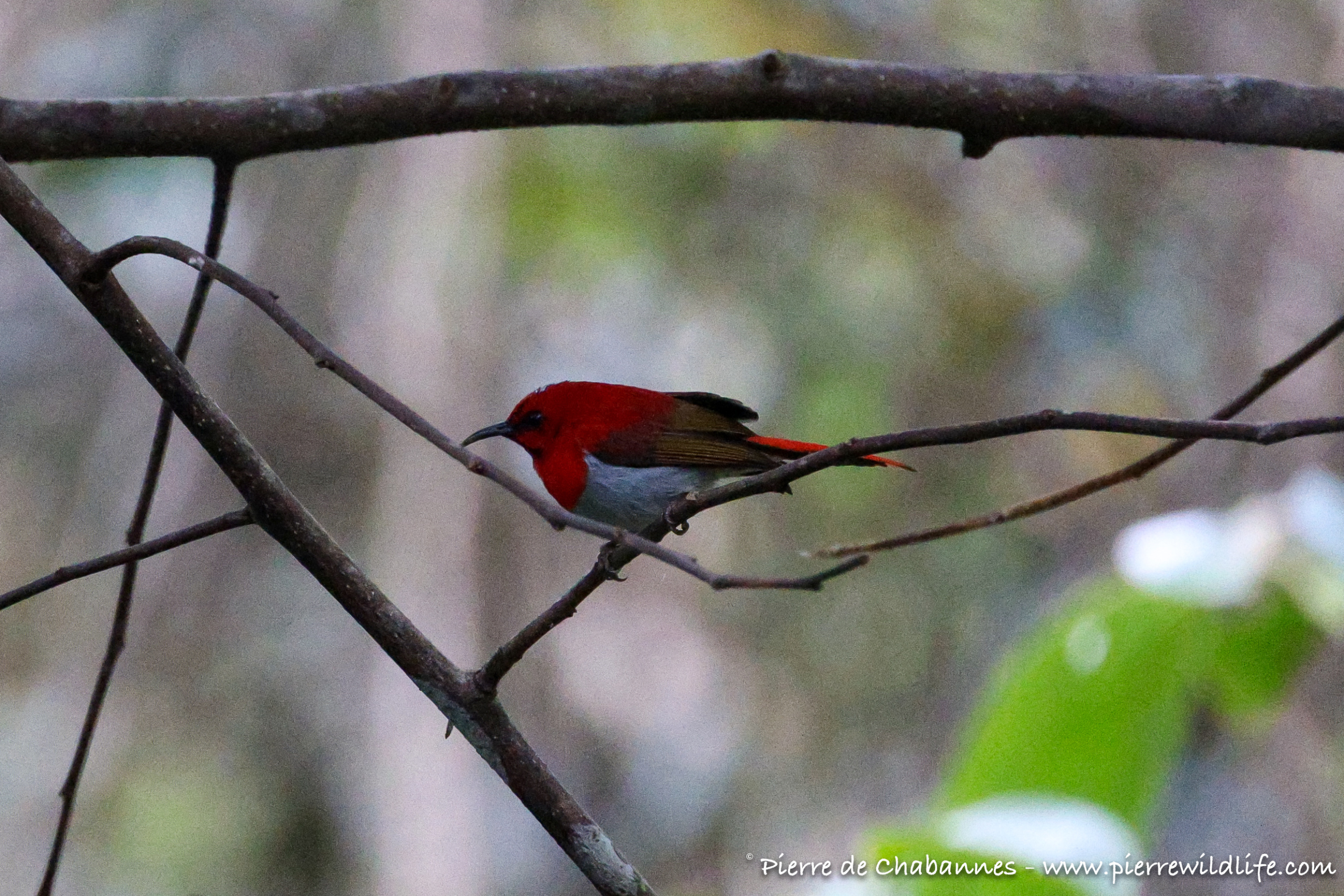
Temminck’s sunbird (Aethopyga temminckii)
A brightly colored sunbird commonly associated with flowering plants in the submontane forests of Borneo, Sumatra, and Peninsular Malaysia.
Context
Observed at Gunung Alab bird hide in Sabah (Borneo), where this male regularly visits flowering vegetation and feeding stations near montane forest edges.
Field notes
This species is common in suitable habitats but is not always easy to observe or photograph, as it moves rapidly and often feeds high in flowering trees rather than in low vegetation.
The location of Gunung Alab bird hide, positioned close to the canopy of fruiting and flowering trees, provides particularly good conditions for observing and photographing such species.
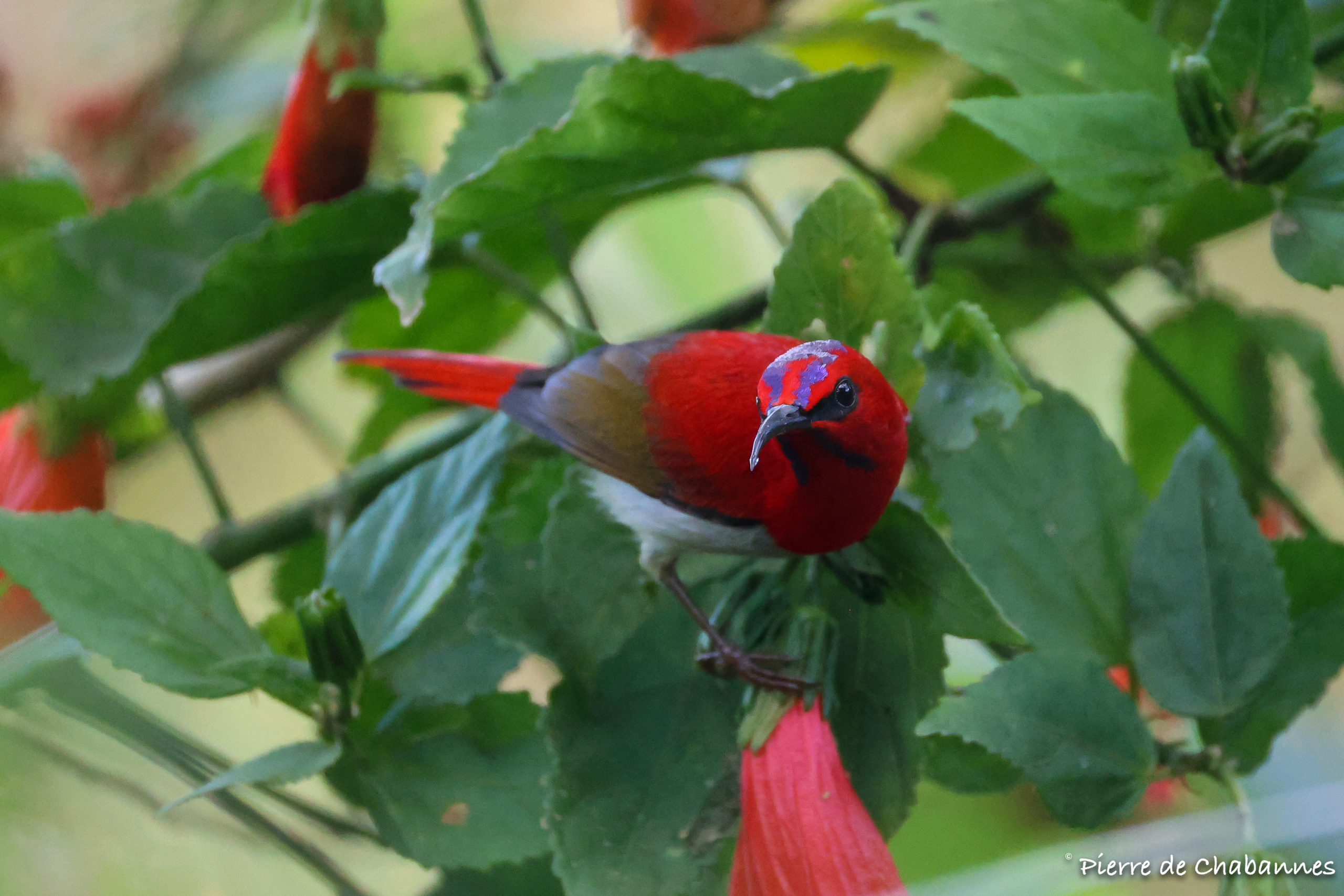
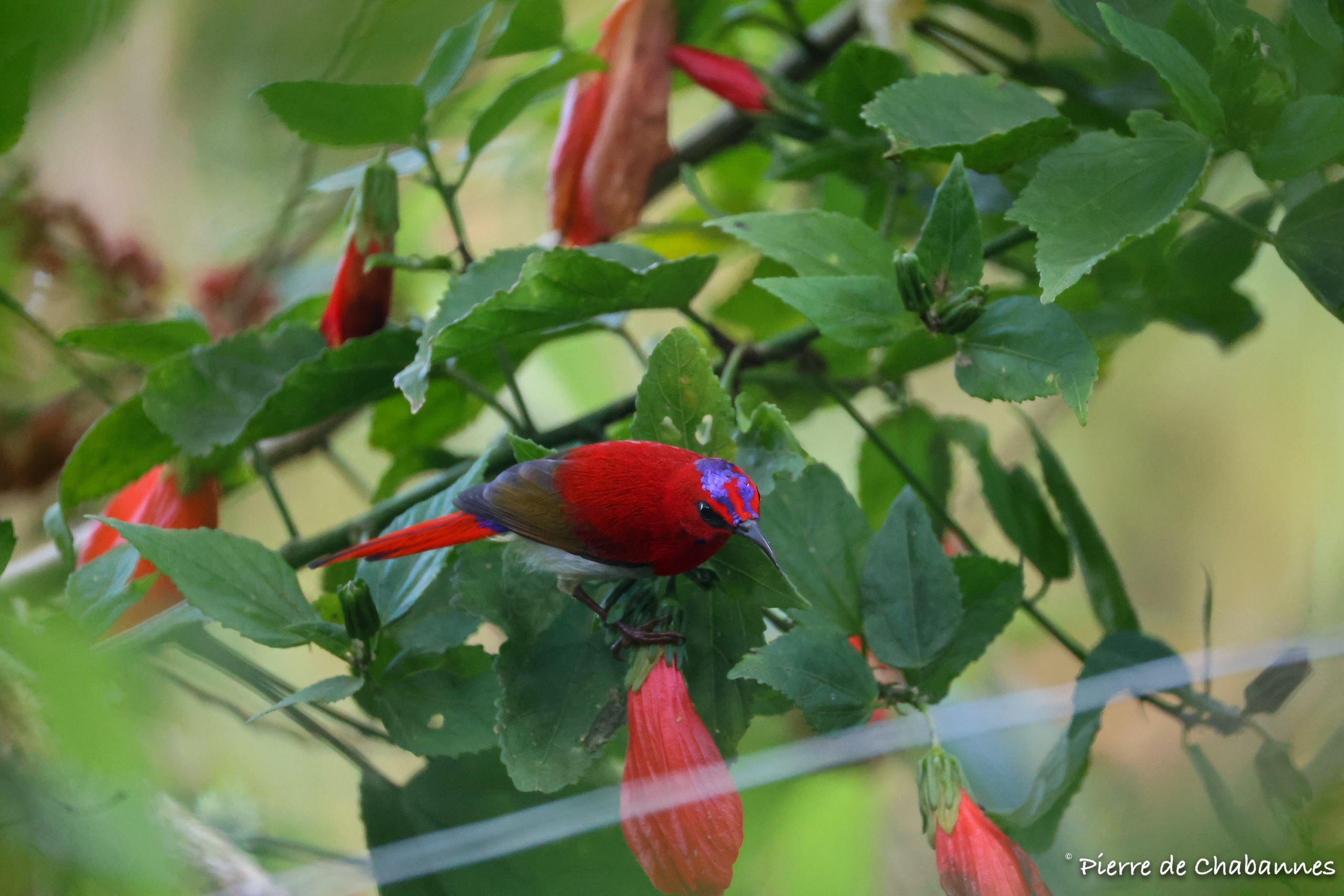
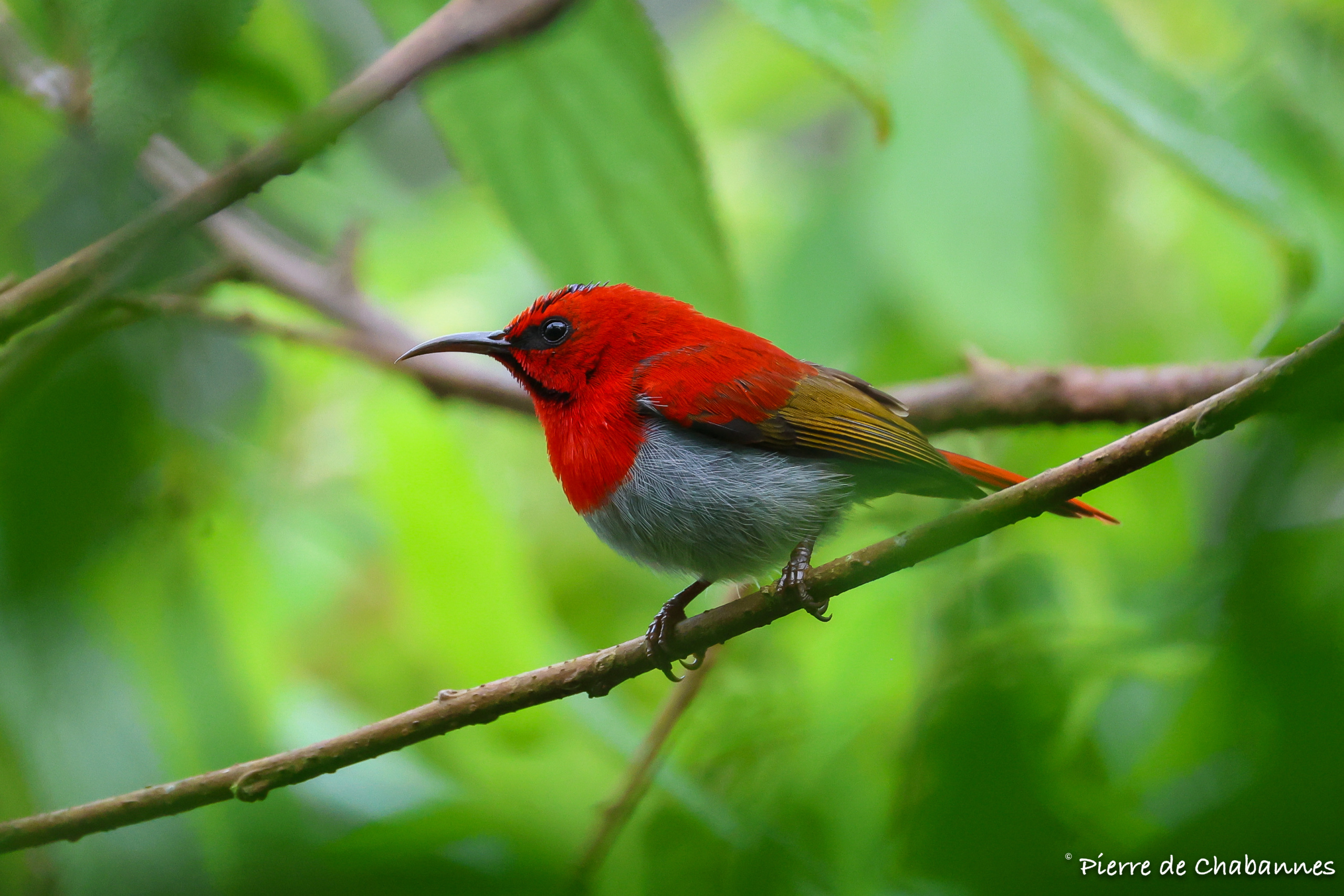
Males are especially striking in sunlight, displaying vivid red, orange, and metallic blue-violet tones while moving quickly between flowers and nearby perches. Females are considerably duller in coloration, providing better camouflage while incubating eggs.
Two species of sunbirds are observed almost daily at Gunung Alab bird hide. Although both may approach humans closely while feeding, they remain fast-moving and difficult to photograph.
Key facts
Temminck’s sunbird occurs in lowland and mid-elevation forested habitats across Peninsular Malaysia, Sumatra, and Borneo. In my opinion, the taxonomy of this species may deserve further investigation, as some isolated populations could potentially prove genetically distinct.
Like other sunbirds, it feeds primarily on nectar and pollen, while also eating arthropods such as spiders and insects, as well as occasional soft fruits. It likely plays an important ecological role as a pollinator.
Unlike the closely related crimson sunbird, this species usually remains associated with forest and forest-edges, and rarely enters plantations or heavily modified habitats. In Borneo, it is primarily a submontane species, occurring up to approximately 1,985 m asl.
Conservation
The species is currently listed as Least Concern on the IUCN Red List, although populations in Peninsular Malaysia appear to be declining due to ongoing deforestation. The species is locally listed as Endangered there.
In Borneo, however, it remains relatively common and occurs in several protected areas, including Kinabalu Park.
More photos from this observation
Other species from Borneo can be found by browsing my Education resources.
Back to Borneo hides ←Previous species Next species →
“A long-term project documenting biodiversity across the world through fieldwork, zoological observations and educational content.”