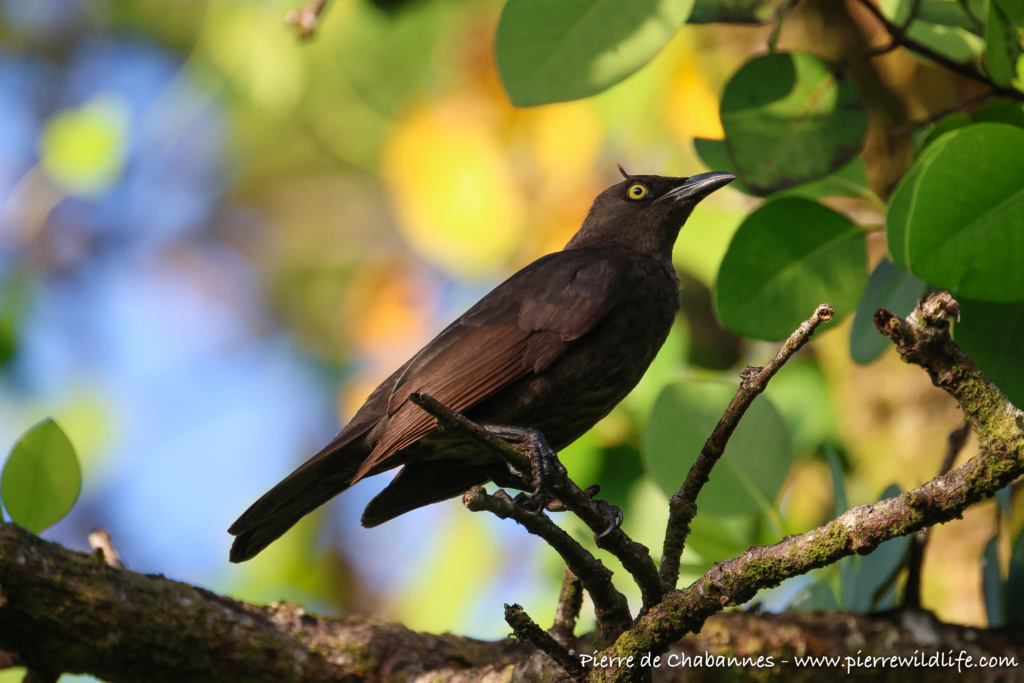
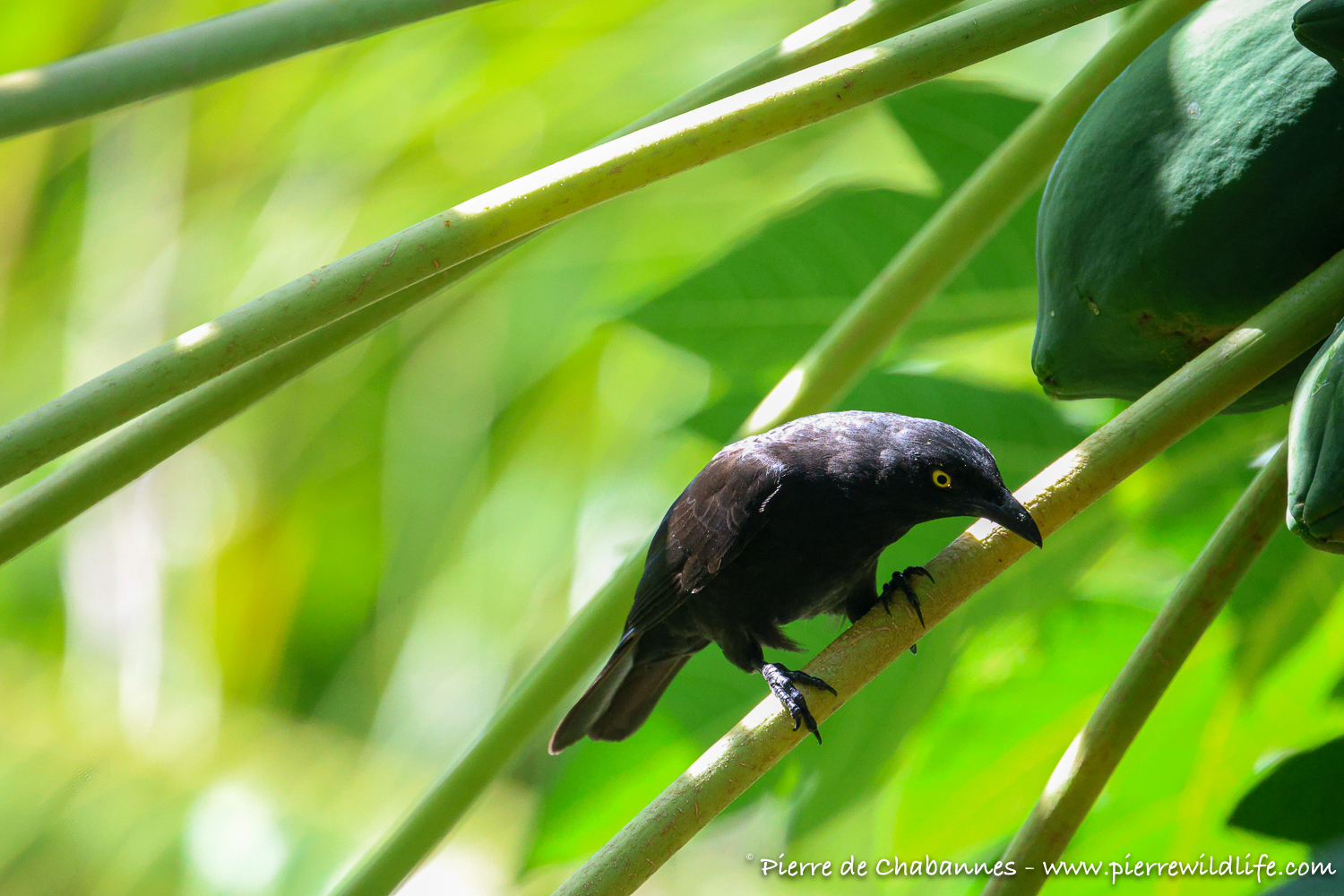
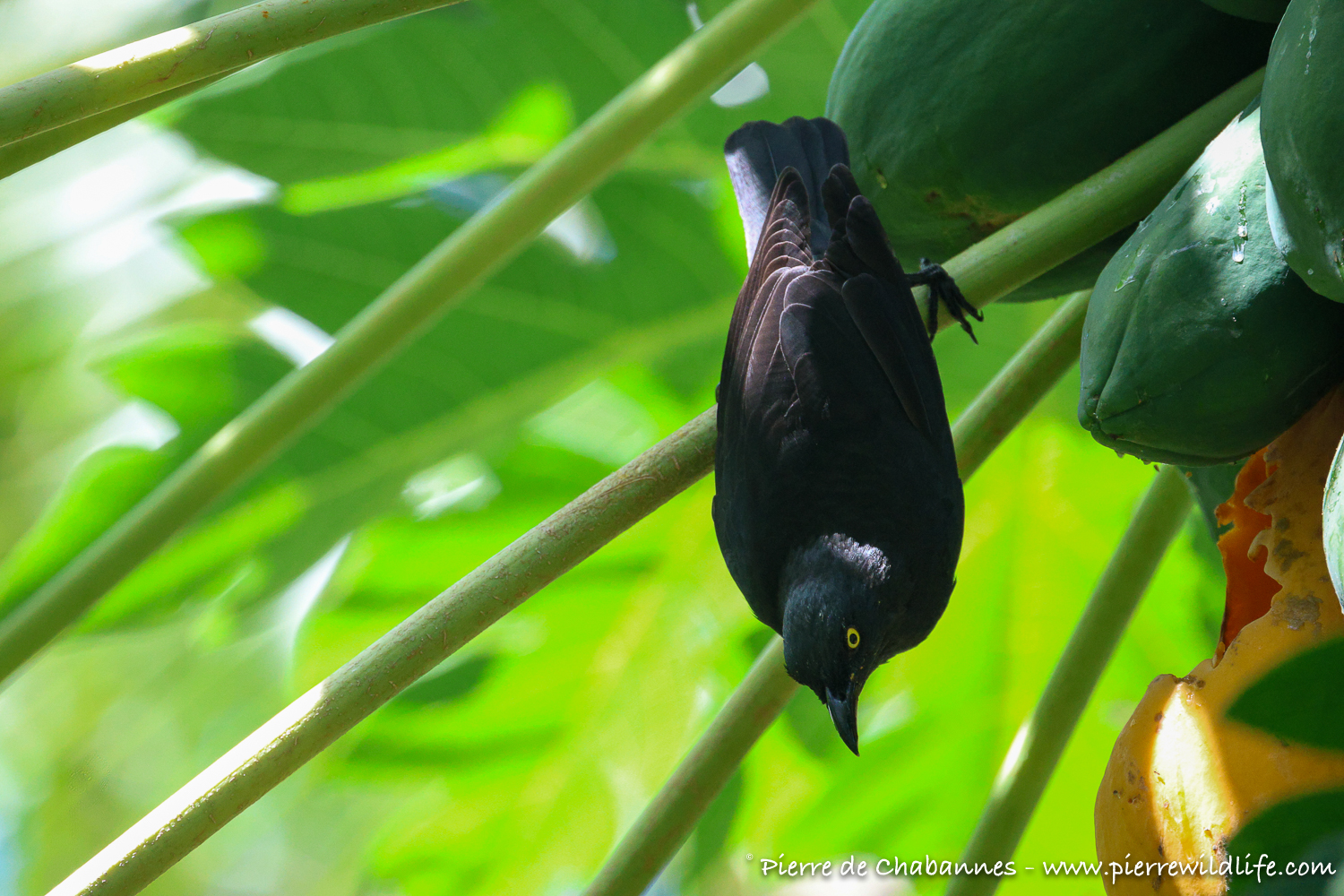
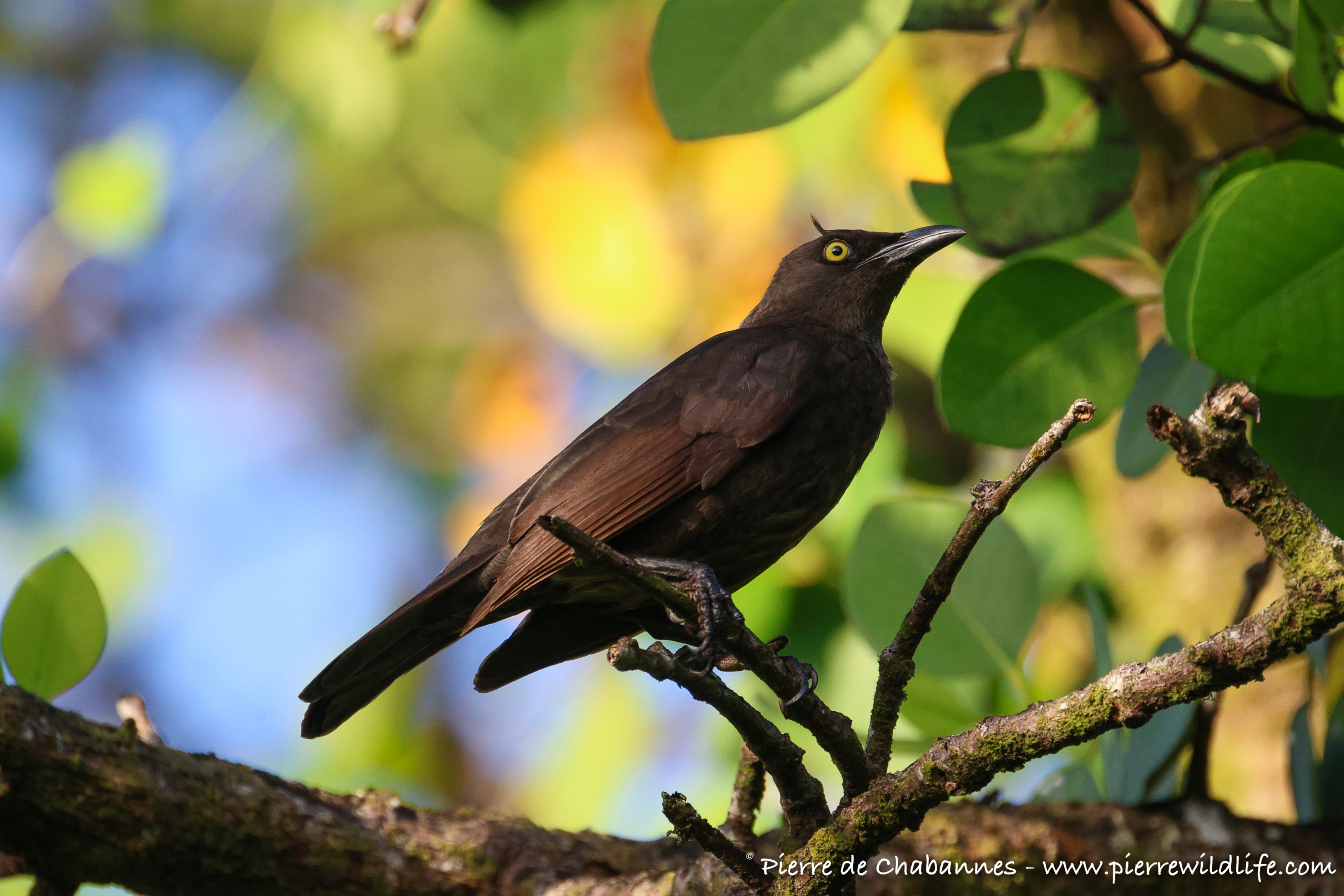
Micronesian starling (Aplonis opaca ponapensis)
A very adaptable starling species, found throughout the Marianas, Caroline
and Palau islands.
Context
Several pairs observed in different lowland habitats around Pohnpei, including the mangrove forests of Nan Madol, coastal vegetation near the airport runway, and the base of Sokehs Rock..
Field notes
Although considered relatively common on Pohnpei, I only managed to observe and photograph the species four times during five days of exploration on the island.
All of my observations were made either in mangrove forests or in degraded coastal habitats near the airport runway. On Pohnpei, the species appears to use both natural and human-modified environments, mainly at low elevations.
Unlike many island endemic birds that remain discreet or localized, this species appears remarkably adaptable and tolerant of human presence.
Key facts
Two species of starlings were found on Pohnpei in recent times: the widespread and adaptable Micronesian starling shown here, and the endemic Pohnpei starling, a duller grey species lacking the bright yellow iris and mostly associated with higher elevation forests.
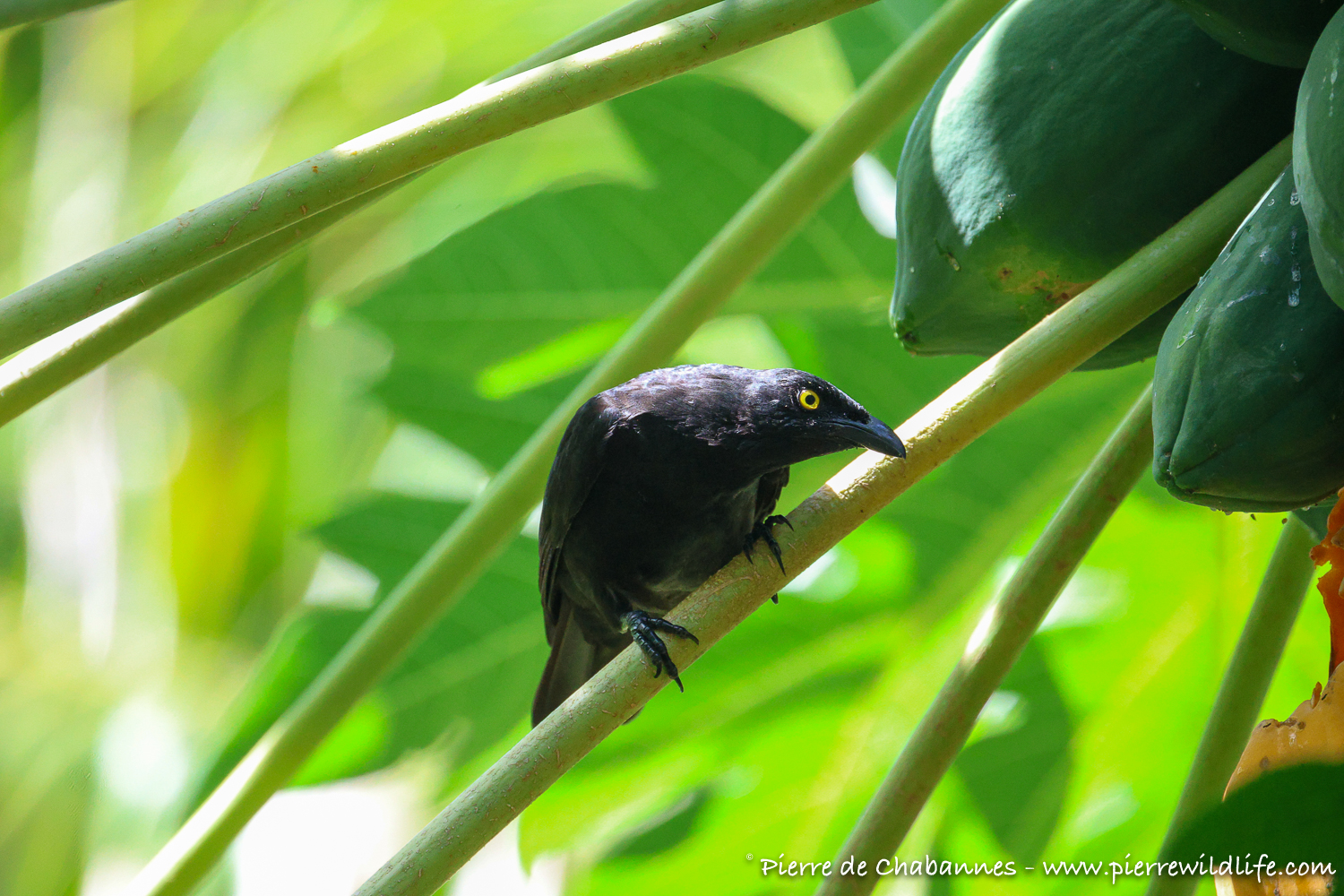
The Micronesian starling is usually encountered in flocks and remains active throughout the day while searching for fruits, small invertebrates, and occasionally seabird eggs. On Pohnpei, the species appears capable of breeding year-round and generally nests inside tree cavities, although cavities in buildings and other man-made structures may also be used.
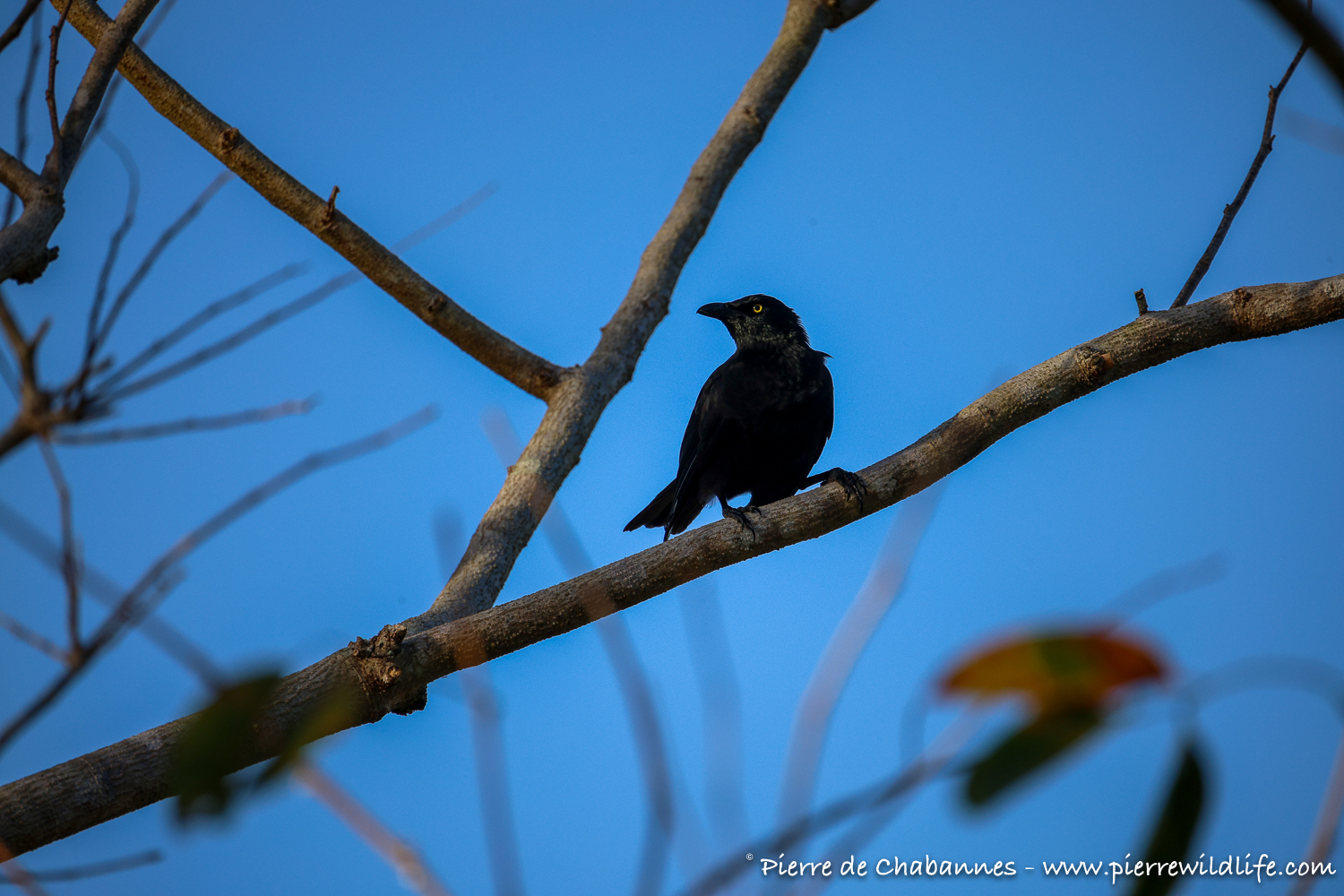
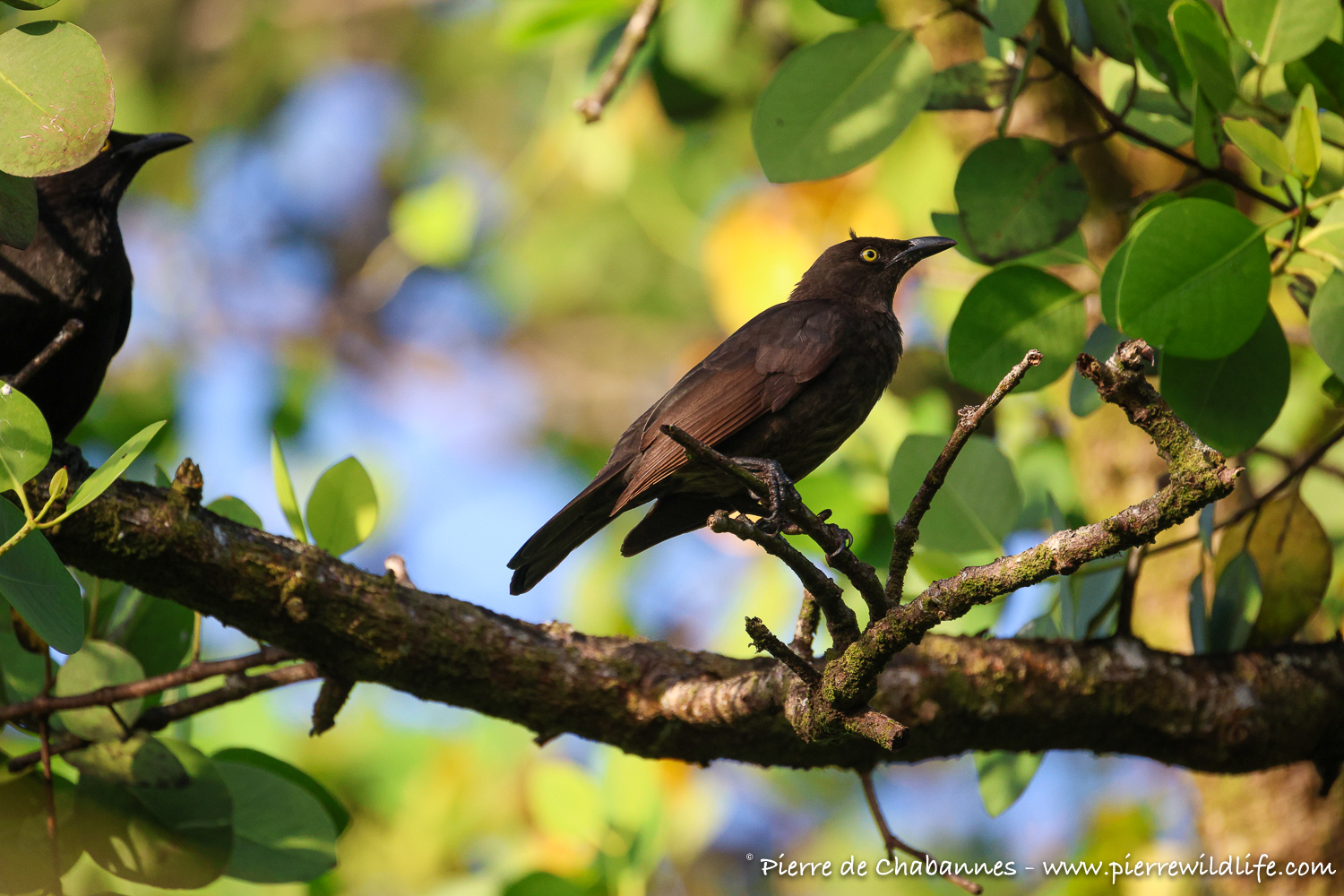
Easily recognized by its glossy black plumage and bright yellow eyes, the species occurs across much of Micronesia, including the Caroline, Mariana, and Palau islands. Up to seven subspecies are currently recognized, including ponapensis, which is endemic to Pohnpei.
Conservation
The species is currently listed as Least Concern on the IUCN Red List. It is said to be common in most of its range and there seems to be, on a global scale, no immediate threats recorded.
However, the native Guam population (A. o. guami) suffered a catastrophic collapse following the accidental introduction of the brown tree snake. This invasive predator caused the extinction of most native forest birds on Guam, with the Micronesian starling being the only native passerine to have survived.
The situation on Guam is a major warning for other isolated Pacific islands such as Pohnpei. Preventing the introduction of invasive predators and carefully monitoring alien species remain essential for protecting the island’s native ecosystems and wildlife.
More photos from this observation
Other insular species can be found by browsing my Education resources.
Back to Island life ←Previous species Next Species →
“A long-term project documenting biodiversity across the world through fieldwork, zoological observations and educational content.”