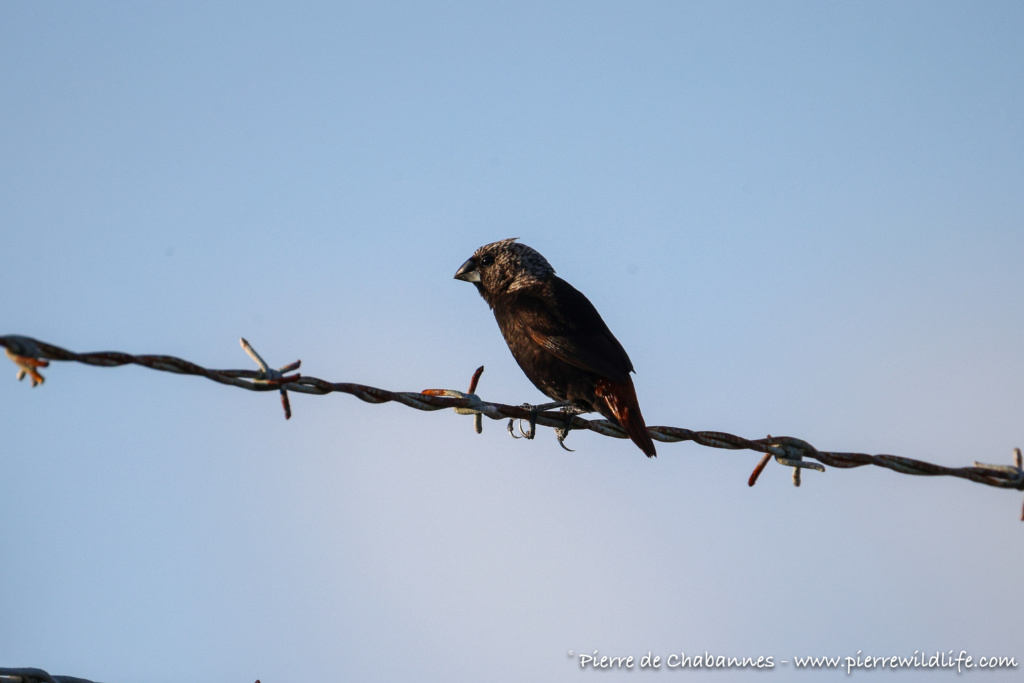
Mottled munia (Lonchura hunsteini)
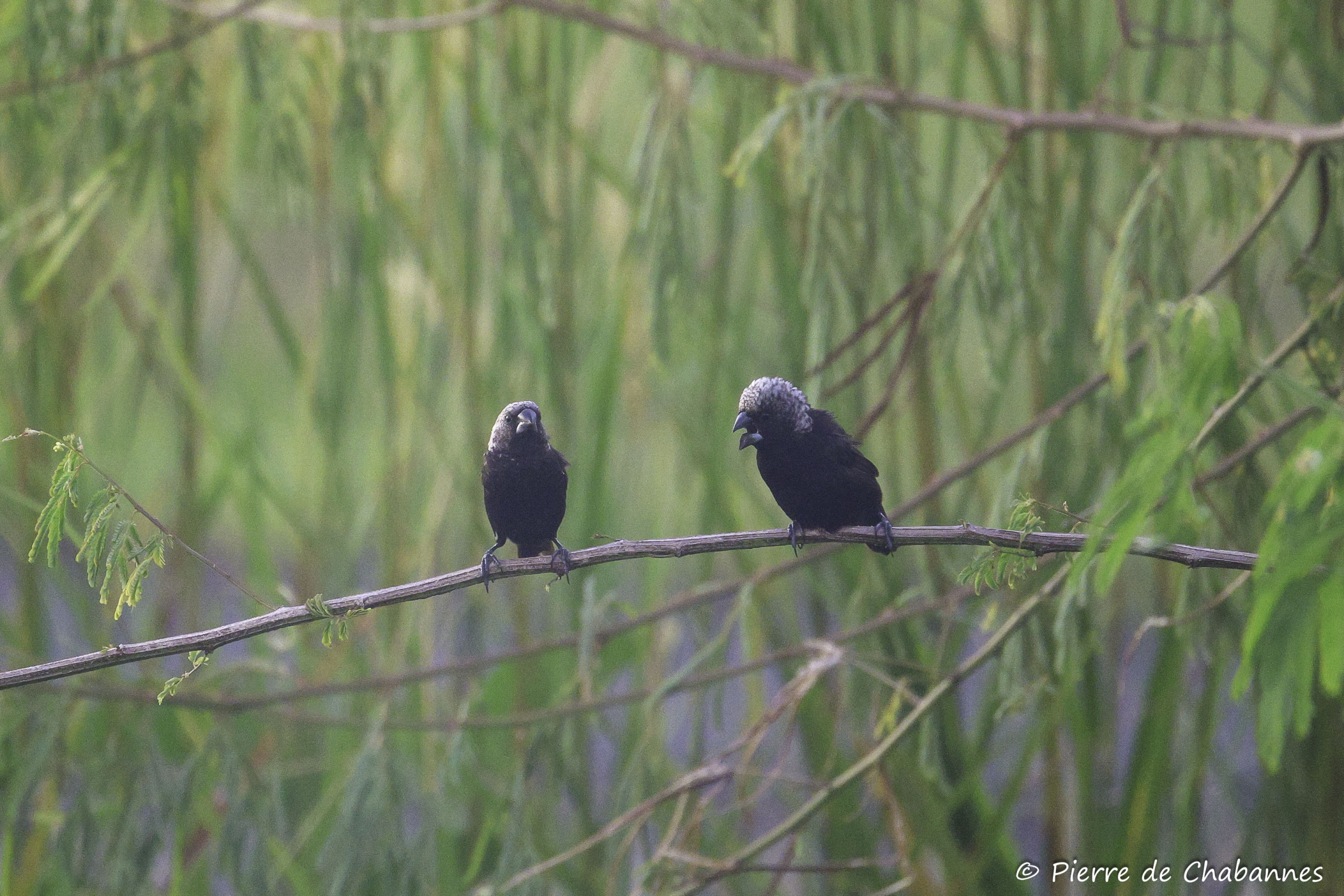
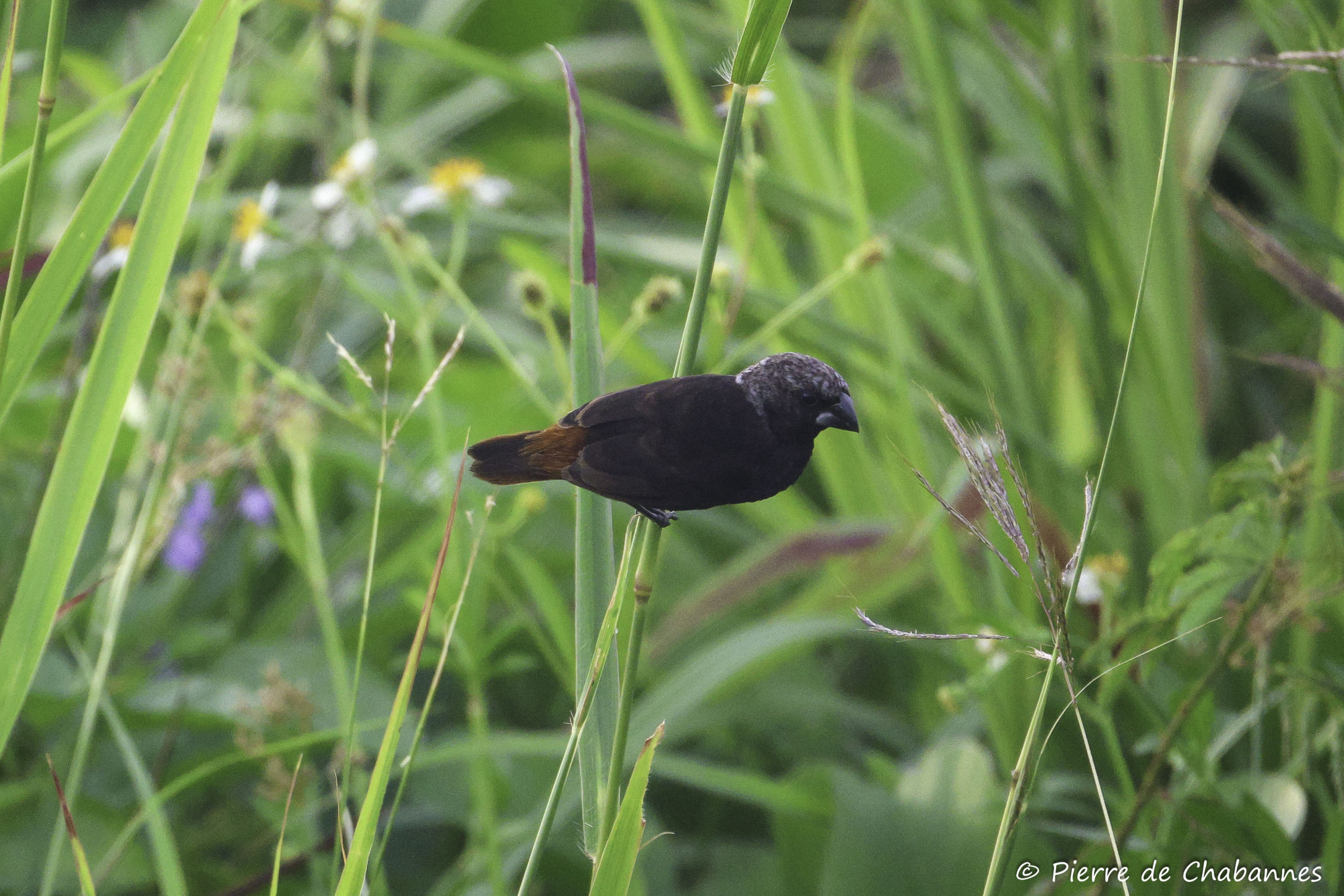
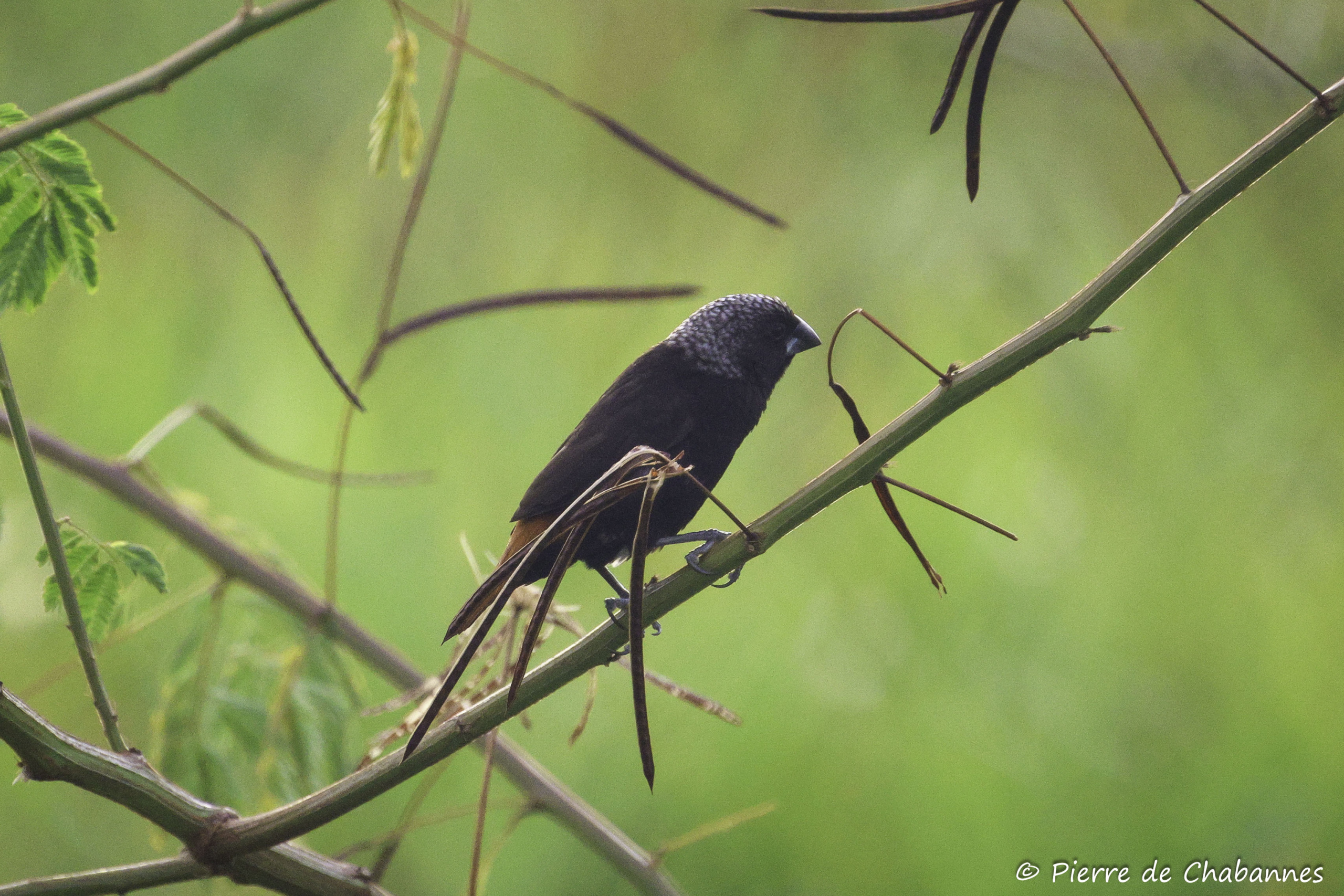
A colorful munia endemic to New Ireland in the Bismarck Archipelago, that has successfully colonized Pohnpei island in Micronesia.
Context
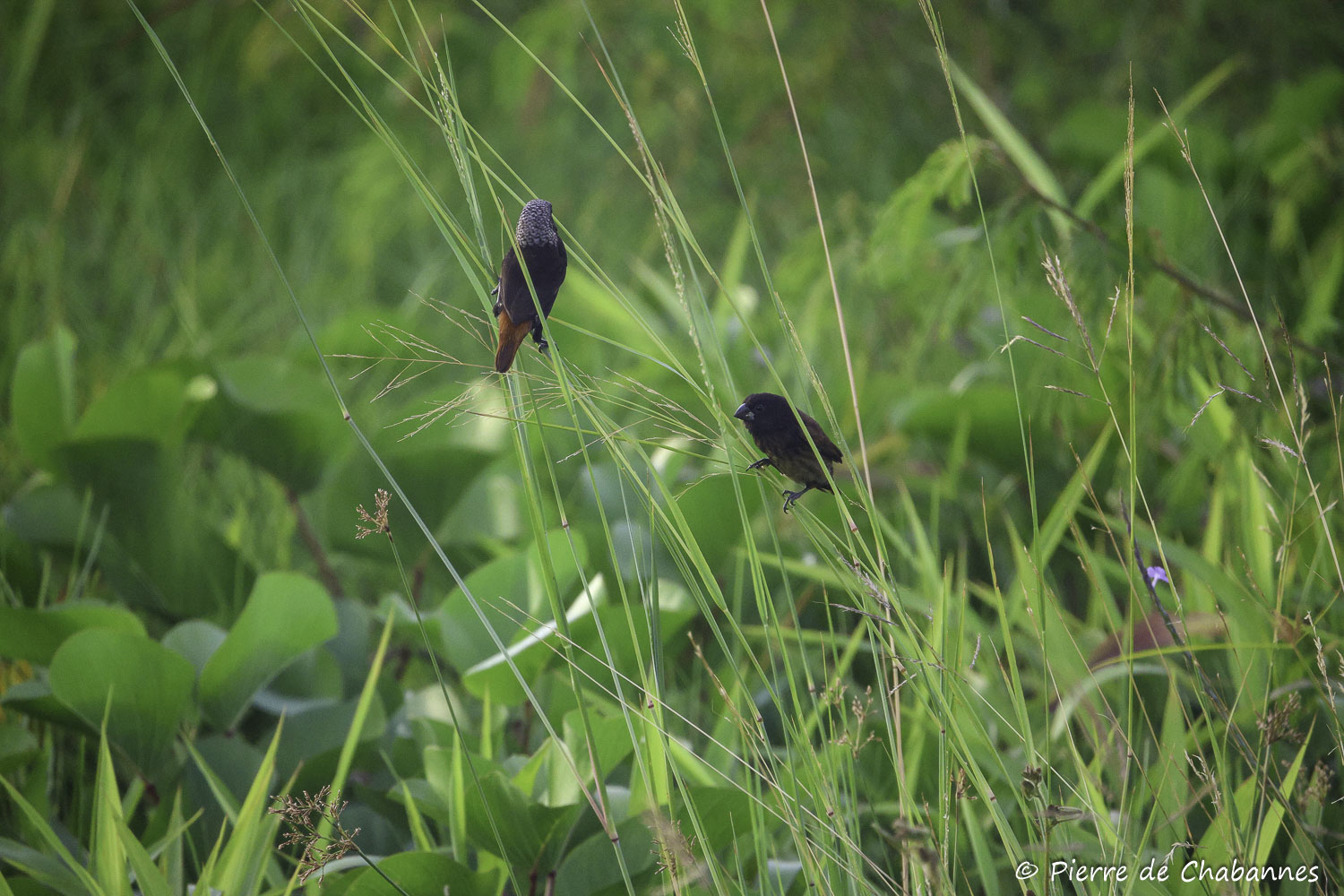
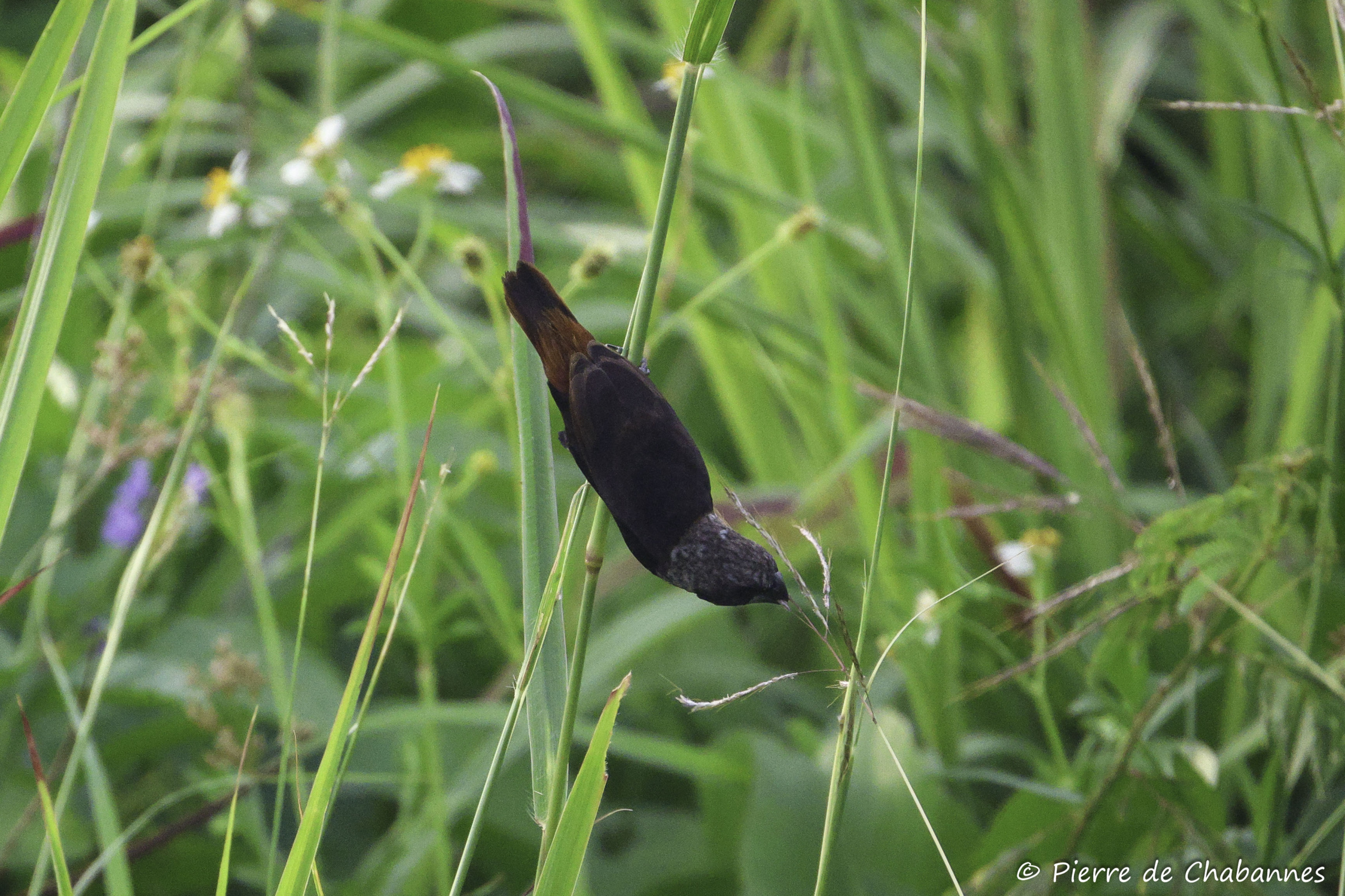
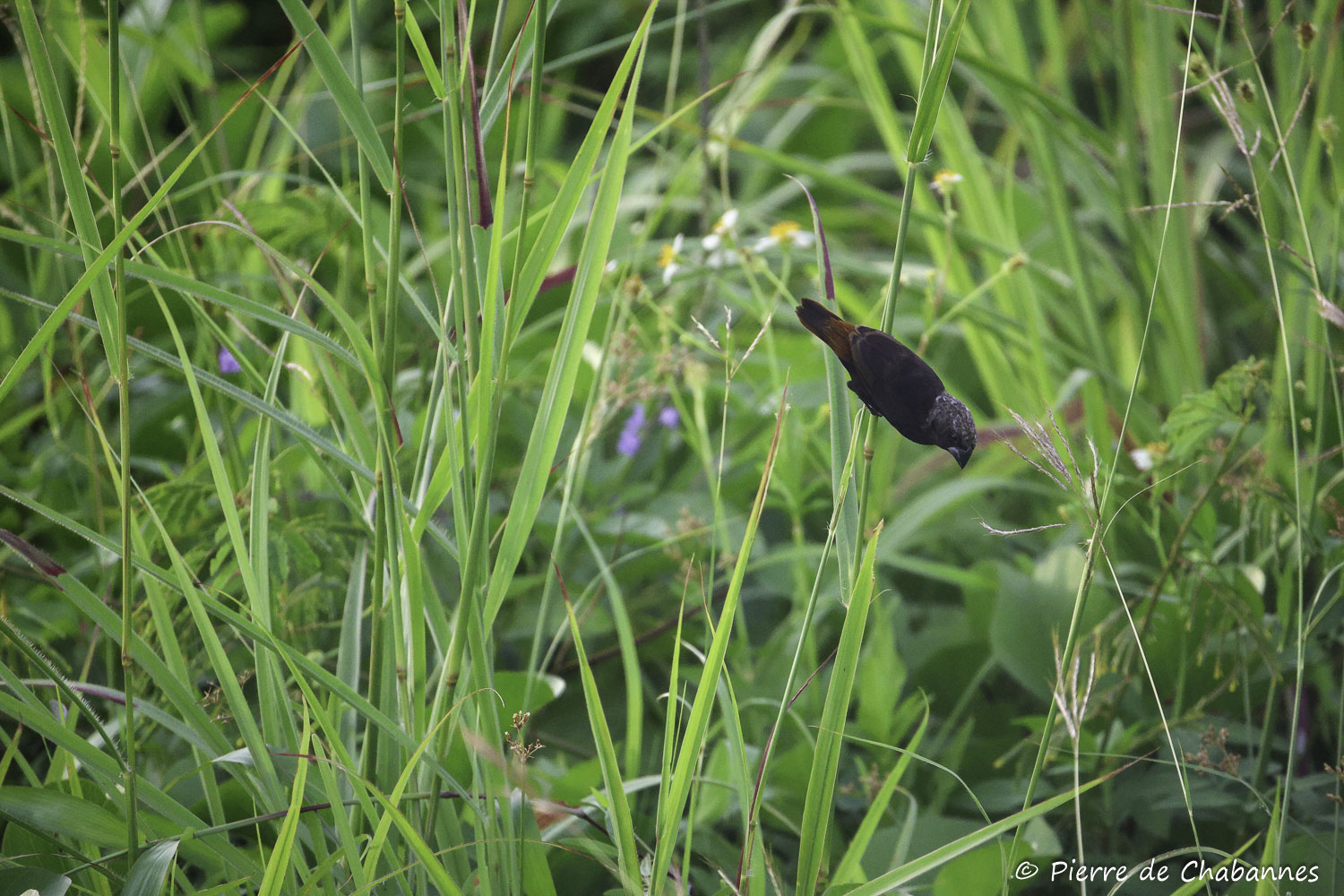
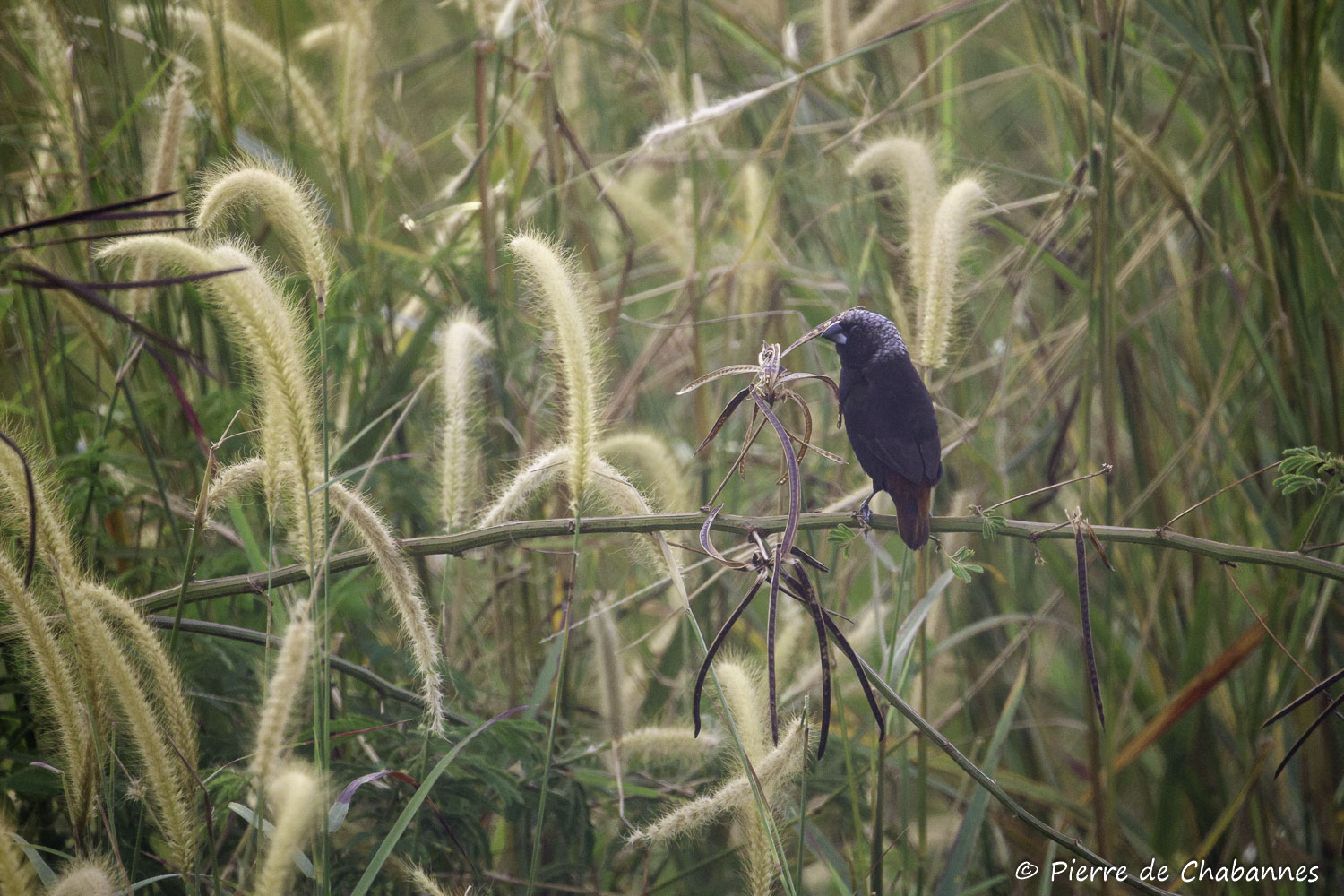
A big flock photographed on a daily basis, feeding on grass seeds in the overgrown parts of the grasslands located near the airport’s runway.
Field notes
The Mottled munia is locally very common on Pohnpei. Small flocks can often be seen feeding on grass seeds along roadsides, around cultivated areas, and in open habitats throughout the island. So far, the only place where I managed to get a decent shot of the species was near the airport’s runway.
Unlike many of Pohnpei’s endemic forest birds, this species thrives in human-modified and open environments. It appears to be particularly common in cultivated areas.
The story of its introduction in Pohnpei isn’t fully known but it is believed to have been introduced during the Second World War period, possibly through military activities and transport between Pacific islands. These accidental introductions have caused extinction of many local species on Guam.
Key facts
This munia is originally poorly known as it is native and endemic to New Ireland island, part of the Bismarck Archipelago located east of New Guinea. Most of the documentation done on this bird as well as most good quality photos originate from the introduced population on Pohnpei.
Like other munias, it feeds primarily on grass seeds and small grains, often gathering in flocks that may contain dozens of individuals.
Nothing is known about its breeding habits and behavior but it isn’t believed to be different from other closely related and better known Lonchura species.
Conservation
The species is currently listed as Least Concern on the IUCN Red List. It is believed to be locally common but no comprehensive population trend studies have been done so far.
The Mottled munia remains very poorly known in its native range and most of the information available comes from observations done on the introduced population on Pohnpei.
At this time, The species is not currently believed to face any significant threats. It can adapt successfully to changes in its environment and is regularly observed near human settlements both in Pohnpei and New Ireland. So far, the only potential threat known could be the use of pesticides and clearing of grasslands.
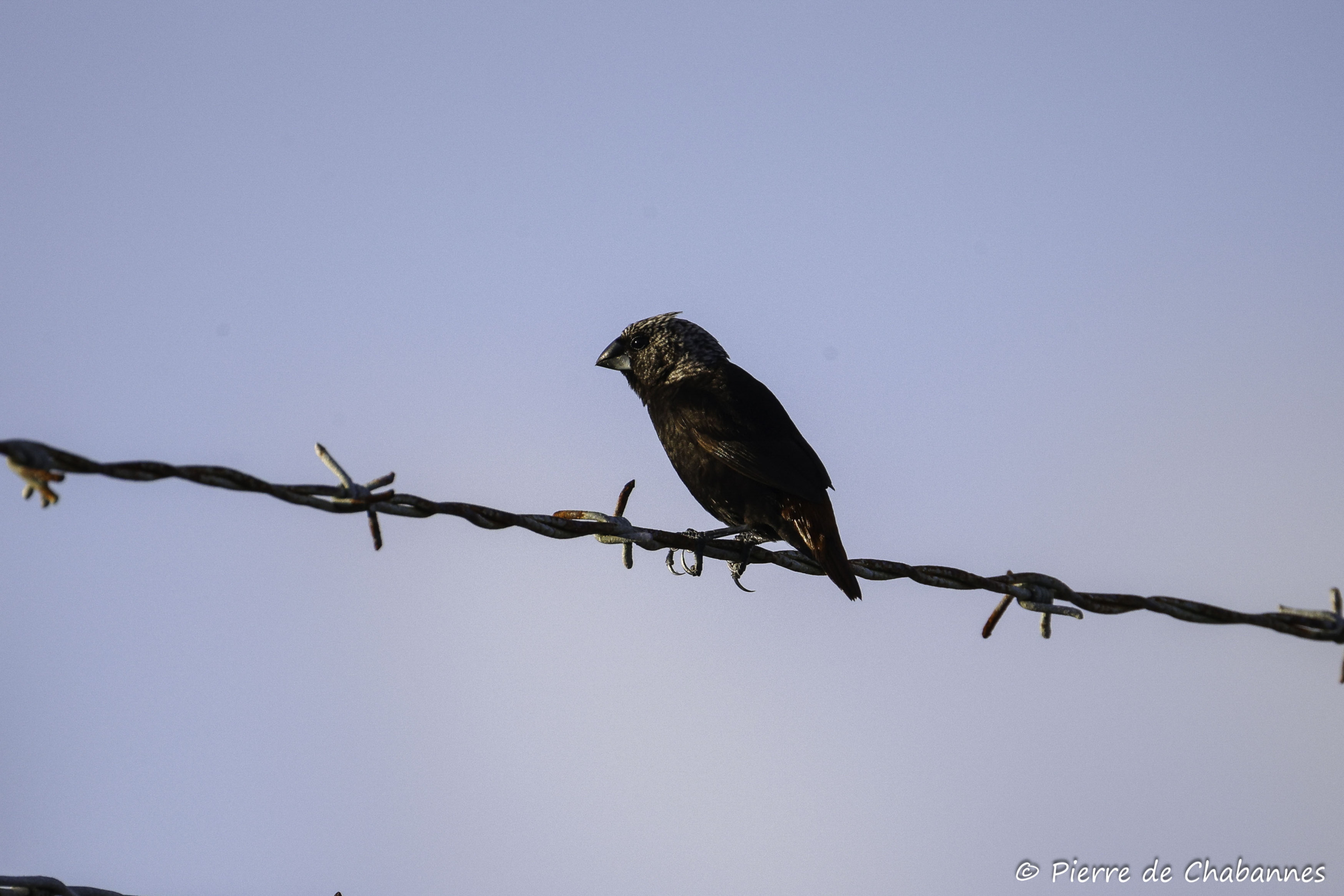
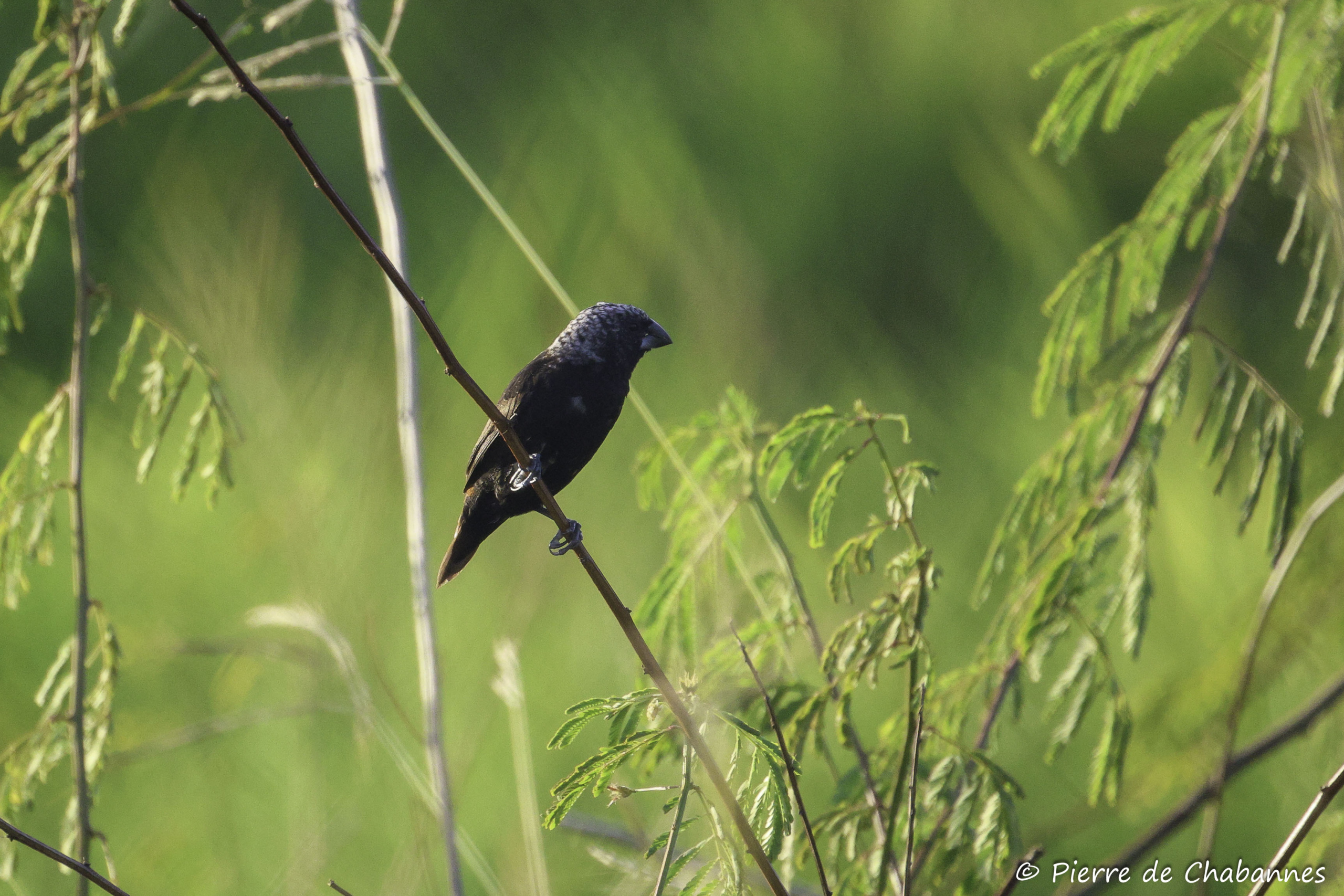
More photos from this observation
Other insular species can be found by browsing my Education resources.
Back to Island life ←Previous species
“A long-term project documenting biodiversity across the world through fieldwork, zoological observations and educational content.”