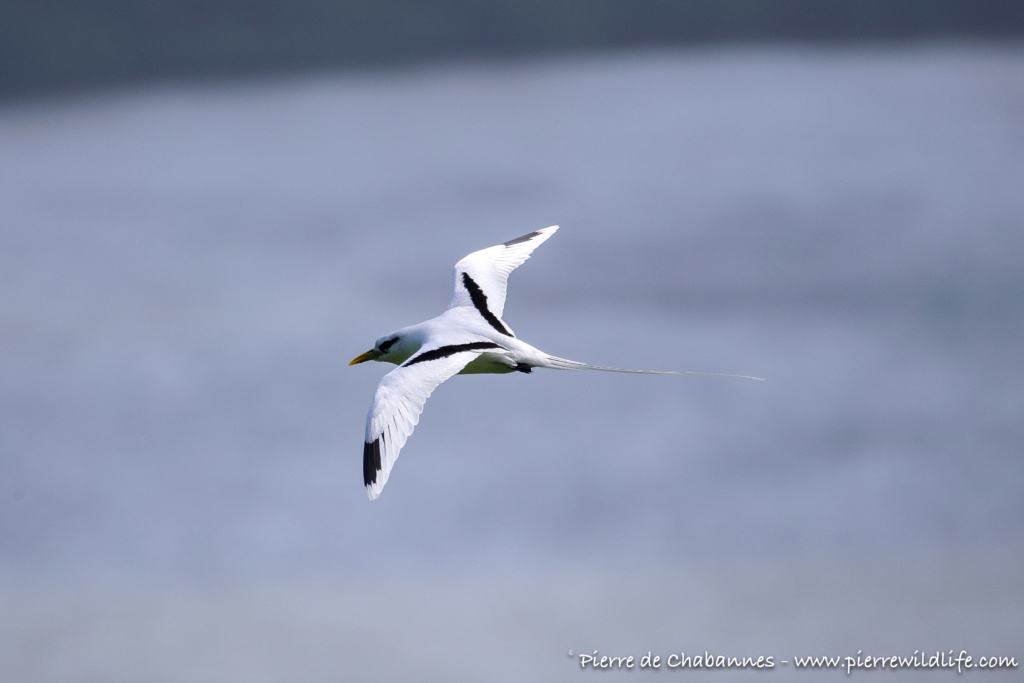
Pacific white-tailed tropicbird (Phaethon lepturus dorotheae)
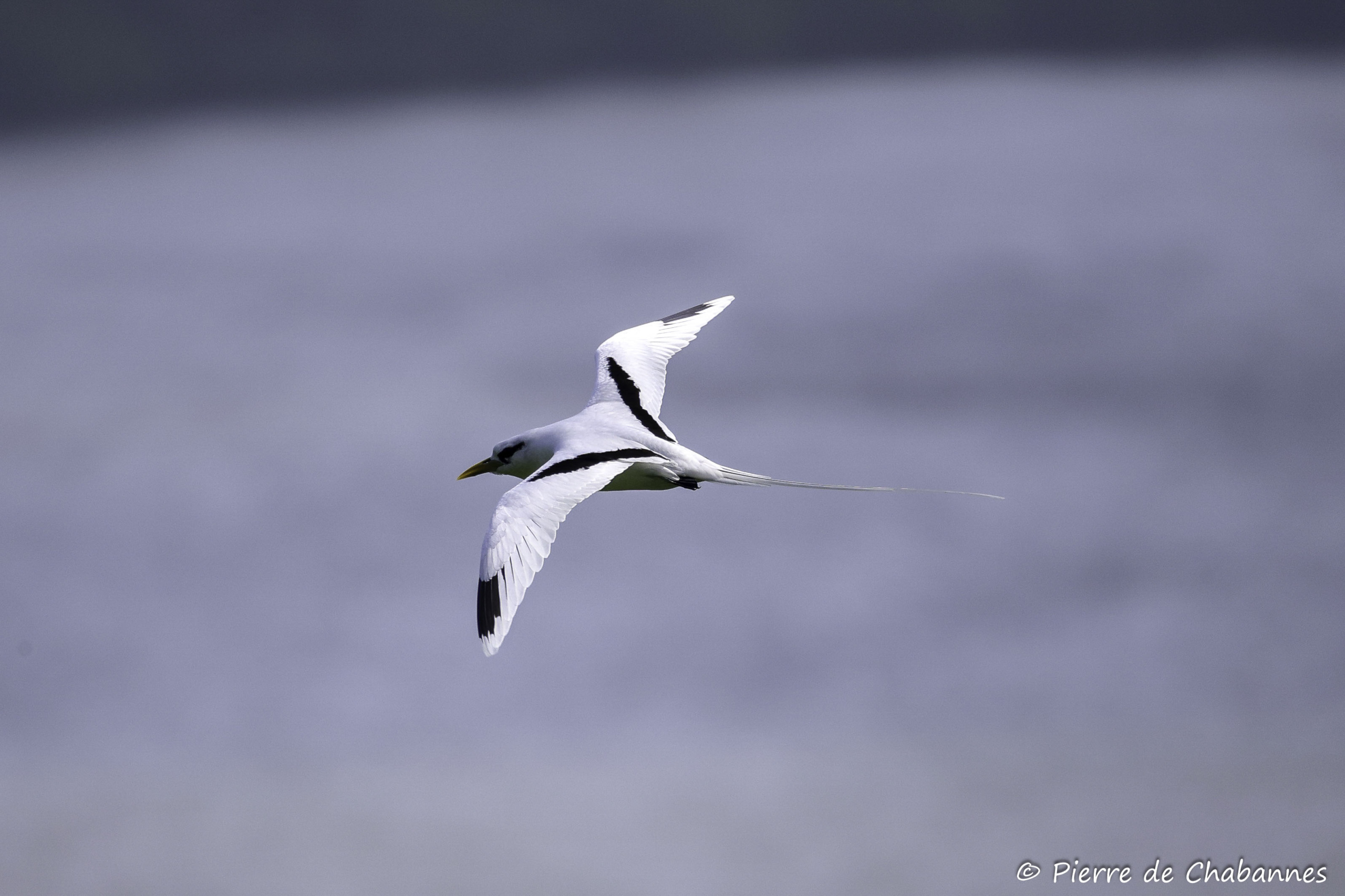
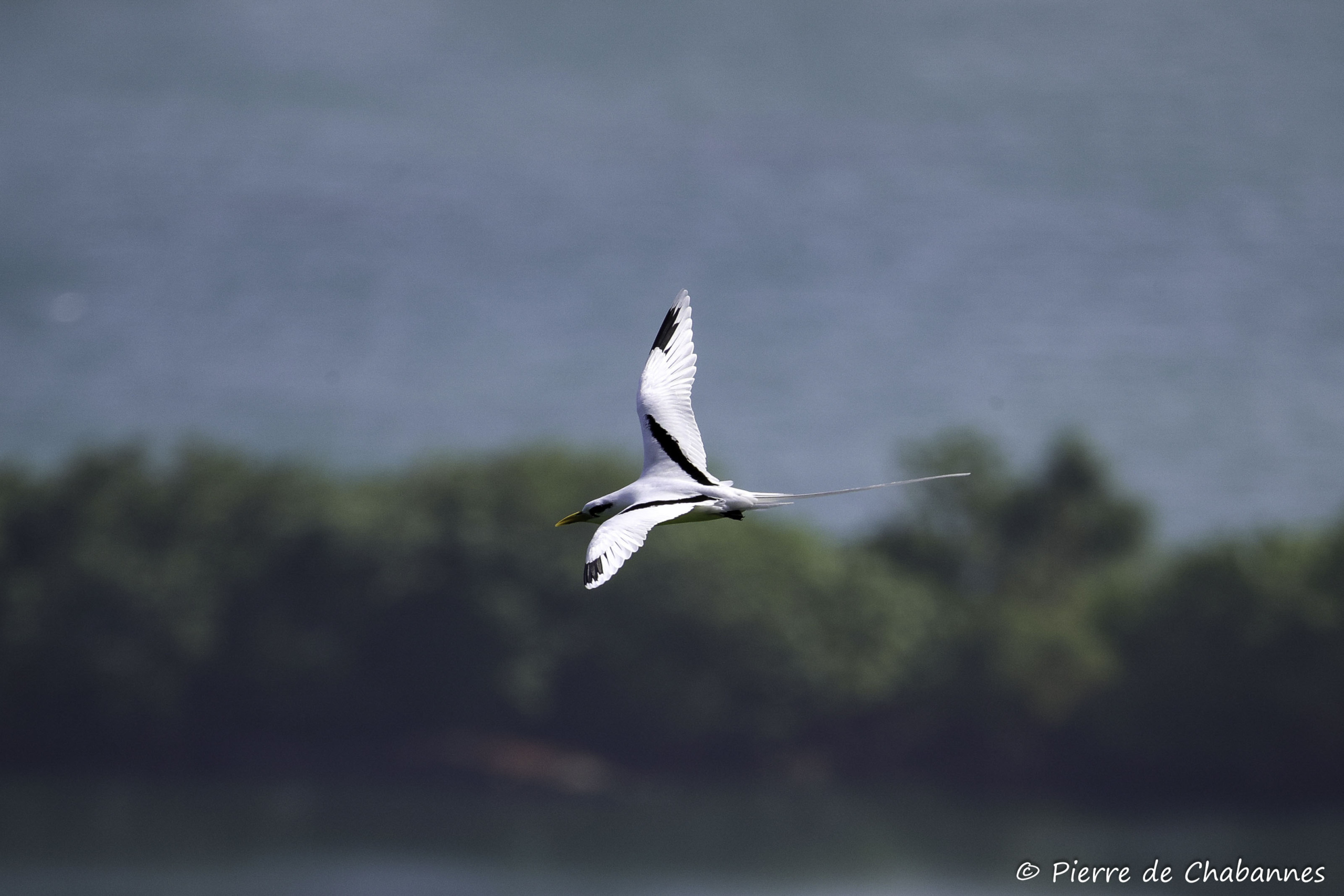
One of the most elegant seabirds of the tropical Pacific, instantly recognizable by its predominantly white plumage with contrasting black markings and long white tail streamers.
Context
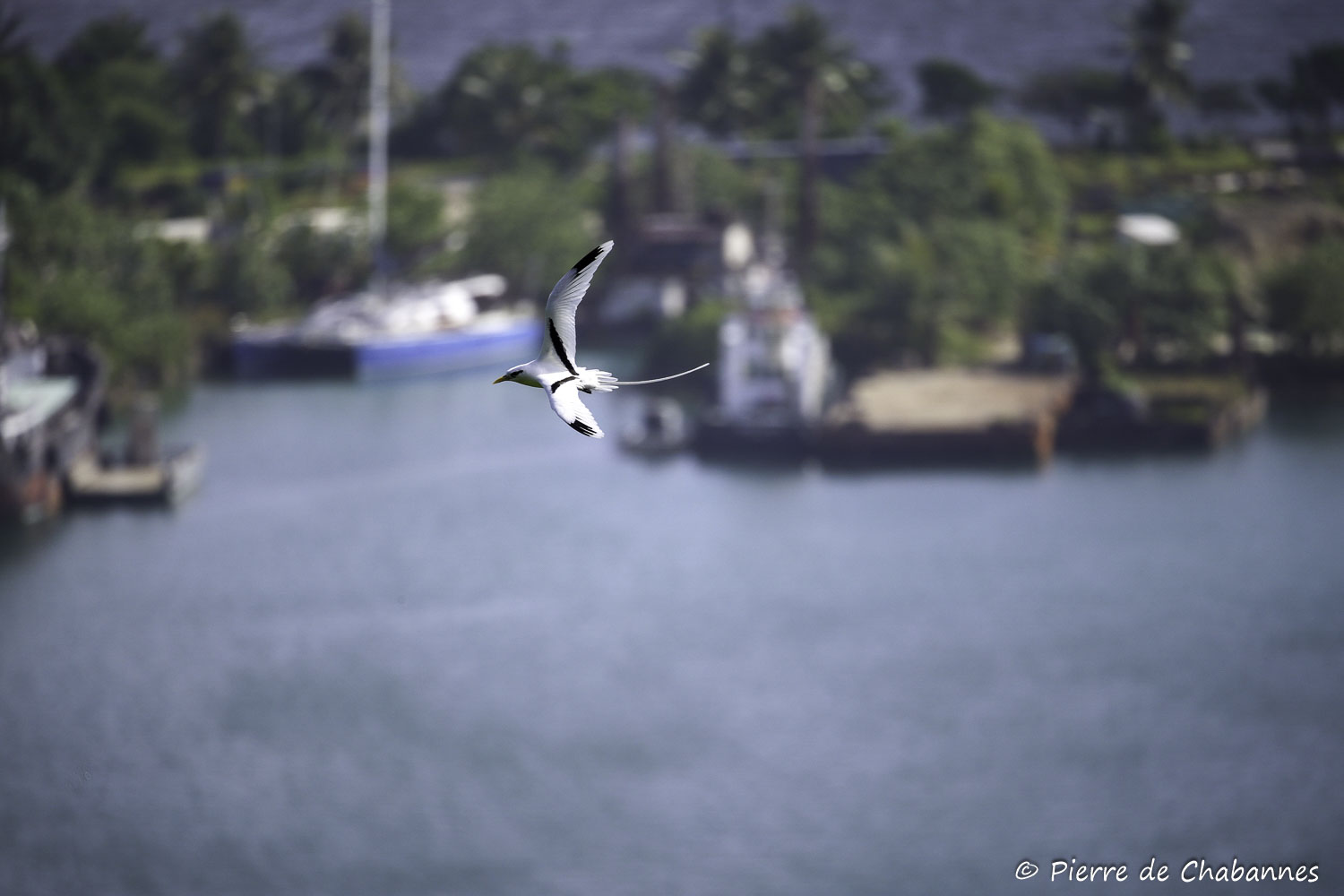
Many individuals seen and photographed flying quite high over various kinds of habitats (from forests to urban areas and mangroves) near the sea, on Pohnpei, Micronesia.
Field notes
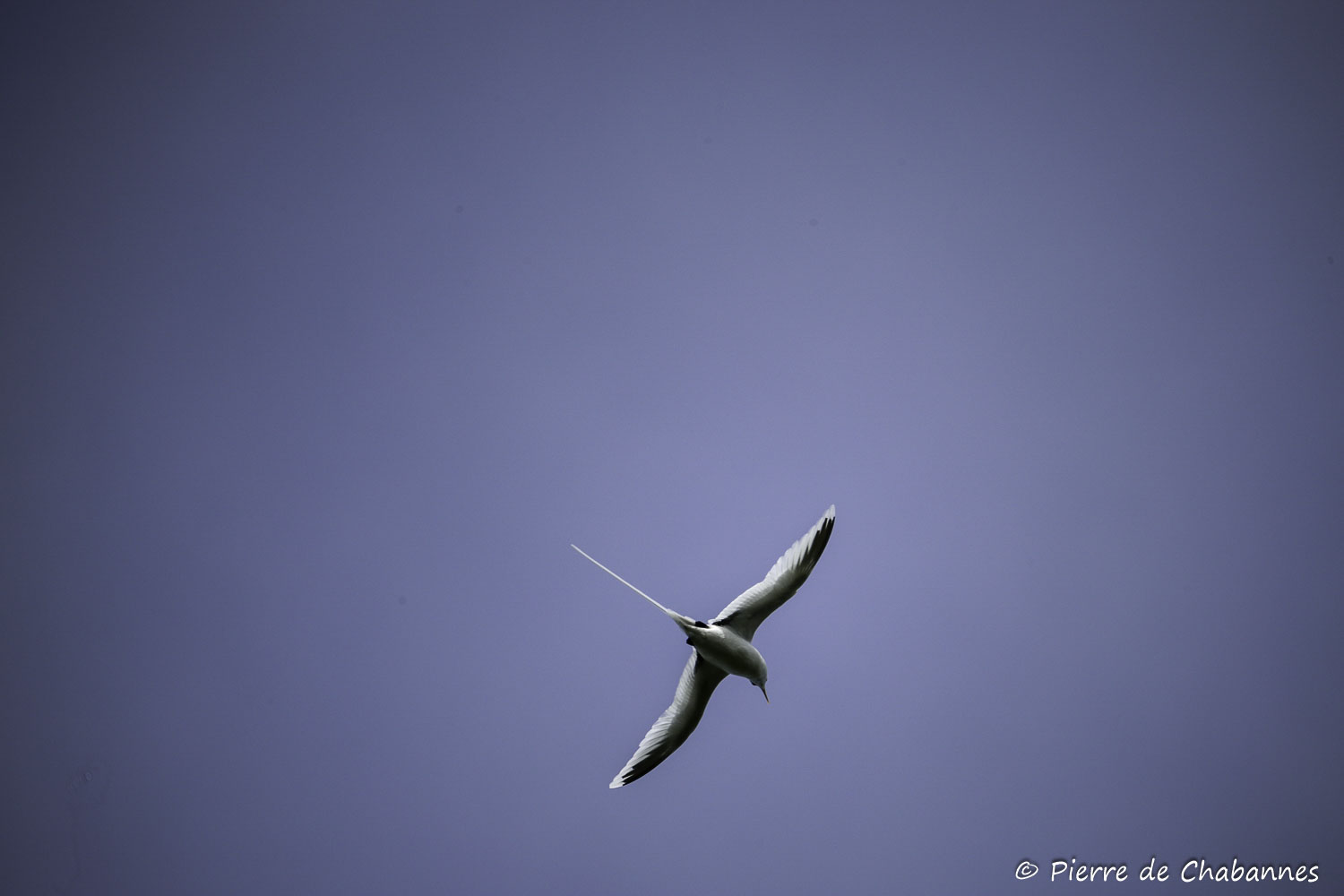
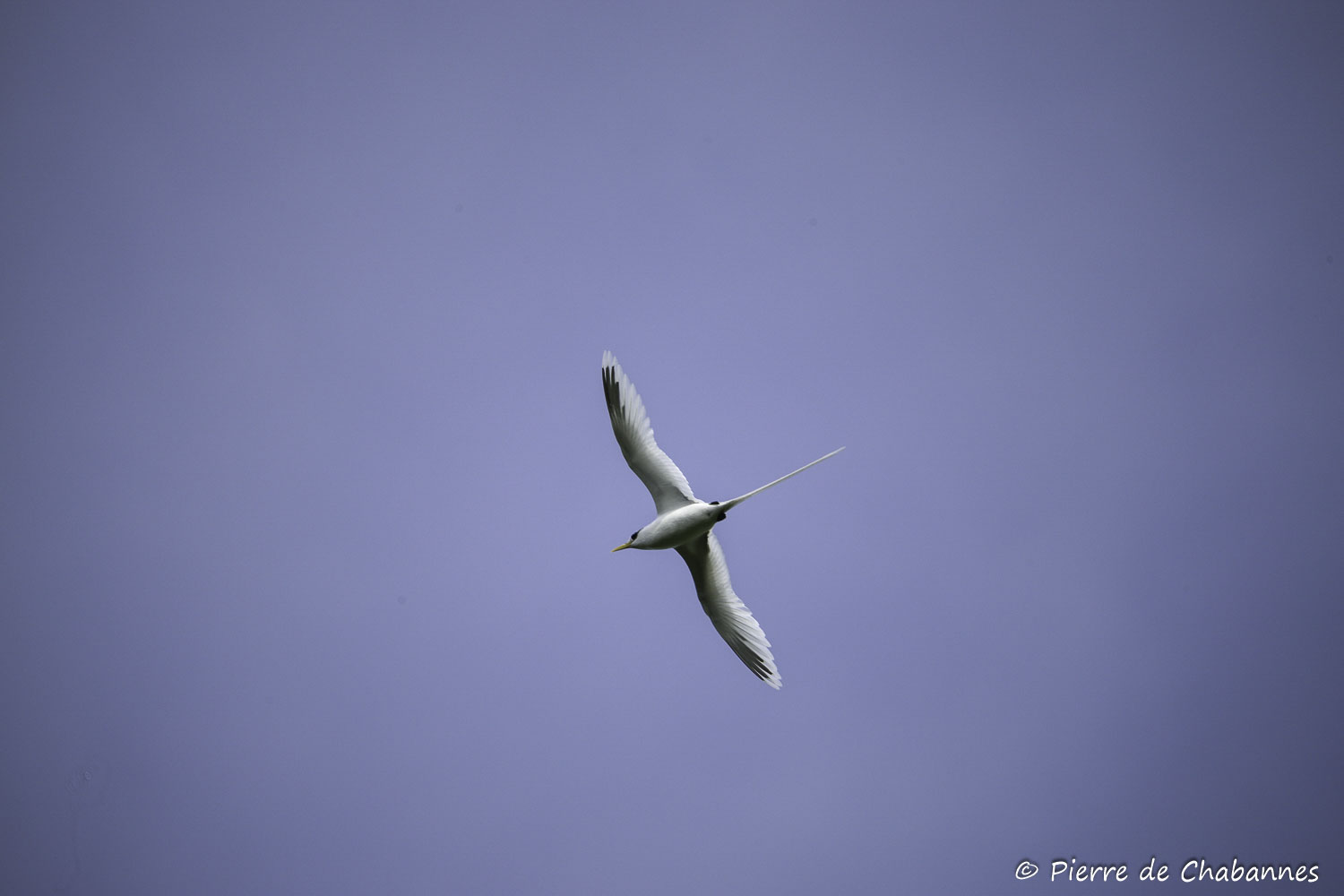
Tropicbirds are amongst the most elegant of seabirds. From below, their wing shape is very distinctive, looking like an inverted “W” and the color of their long and elegant tail streamers immediately give away their identification.
I took my first photos while walking around the outskirts of Pohnpei’s capital city, called Kolonia. A few tropicbirds were flying above me but photographing them well was difficult as they never flew low enough to get a good shot.
On Pohnpei, the best place to photograph species like tropicbirds and noddies is the steep pathway that climbs up to the famous Sokeh’s rock, not far from the airport. There, the flying seabirds such as the white tern and the tropicbirds can be seen and photographed at near eye-level. This is where tropicbirds reveal their true elegance.
Key facts
The White-tailed tropicbird has one of the widest distributions of any tropical seabird, occurring throughout the Indian and Pacific Oceans as well as parts of the tropical Atlantic. The subspecies dorotheae is found across much of Micronesia and several other Pacific island groups.
Tropicbirds spend most of their lives at sea, feeding primarily on flying fish, squid, and small pelagic fishes captured near the ocean surface. Most of the studies done on these bird’s behavior have been done at nesting sites.
The species is famous for its elongated central tail feathers, which can exceed the length of the body in adult birds. These streamers are believed to play an important role in courtship displays and mate selection.
Conservation
The species is currently listed as Least Concern on the IUCN Red List. Its populations are globally stable but some of them are quite small. Comprehensive population estimates remain unavailable for many island populations and subspecies.
The tropicbird species seem to remain safe but the truth is that the impact of most potential threats such as climate change, pollution, use of pesticides have yet to be studied in detail.
The introduction of rats has caused very serious and steep population declines in lots of seabird species, including tropicbirds like on Puerto Rico where the formerly numerous colonies are now reduced to only a few pairs. Habitat alteration on their breeding grounds can also cause a whole colony to collapse.
More photos from this observation
Other insular species can be found by browsing my Education resources.
Back to Island life ←Previous species Next Species →
“A long-term project documenting biodiversity across the world through fieldwork, zoological observations and educational content.”