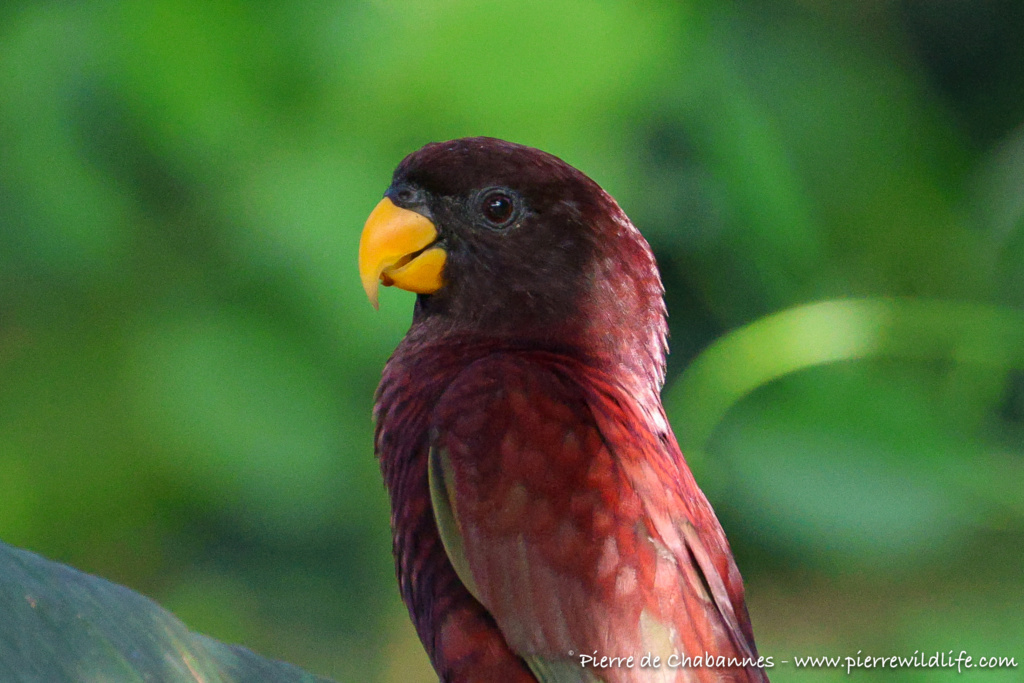
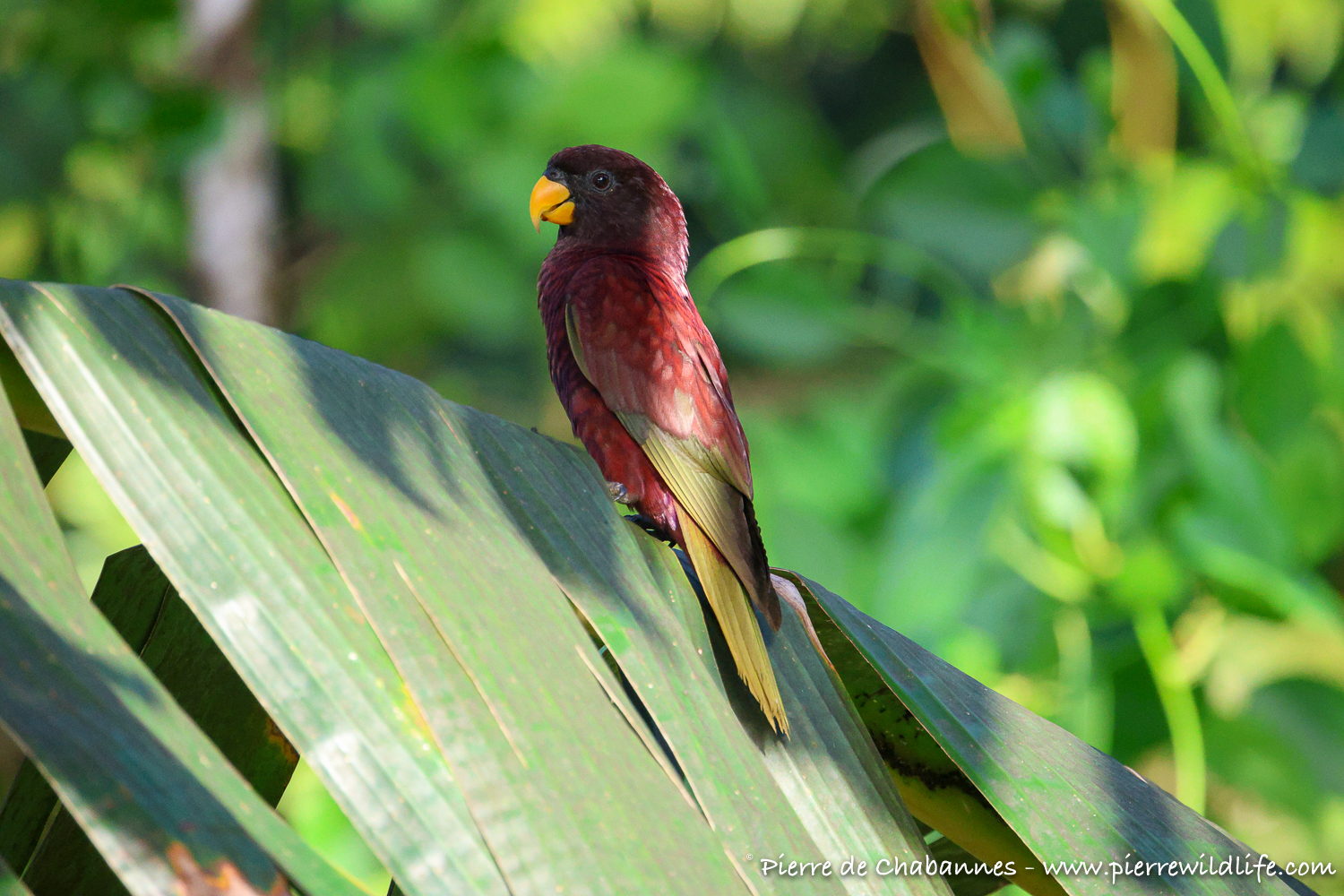
Pohnpei lorikeet (Trichoglossus rubiginosus)
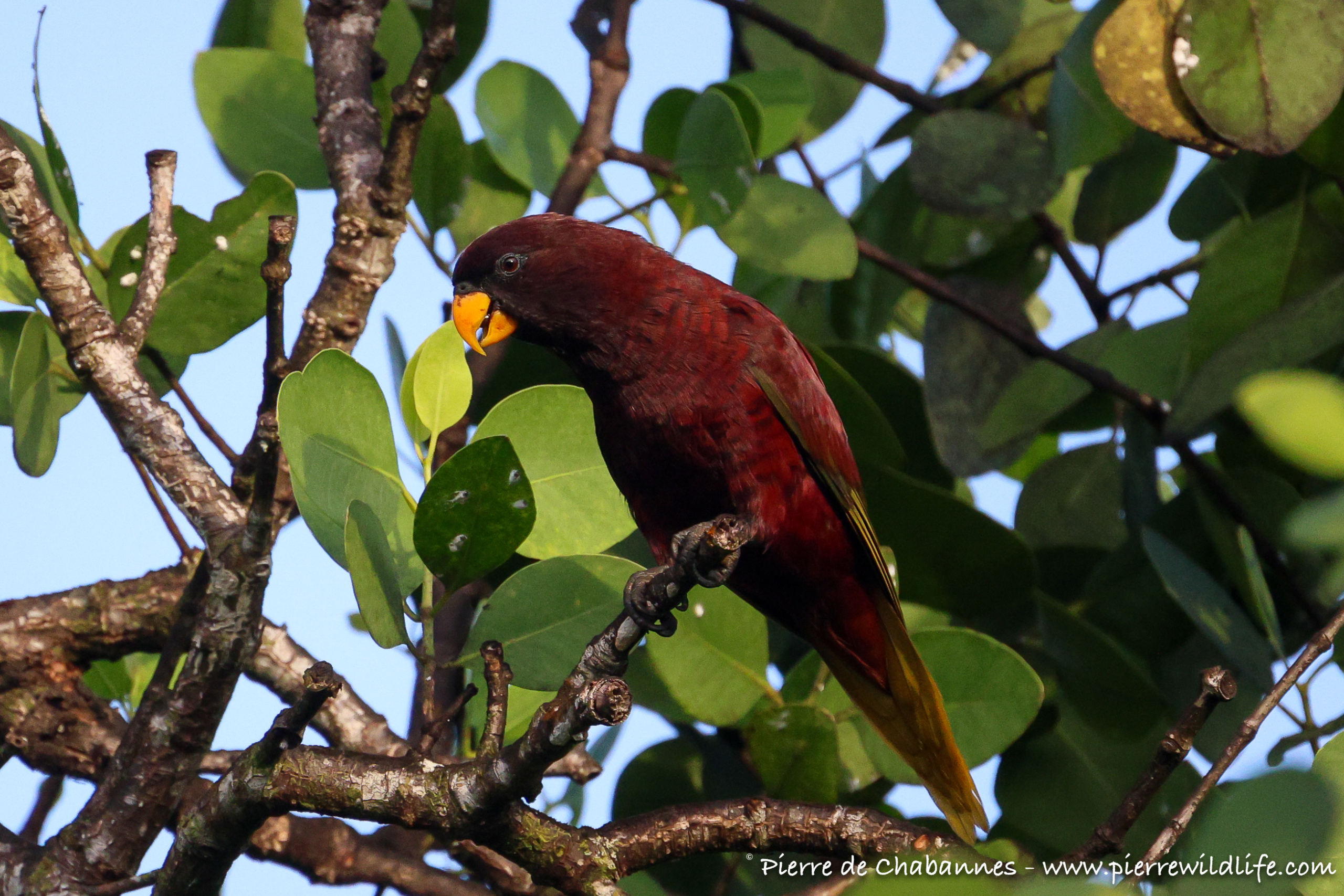
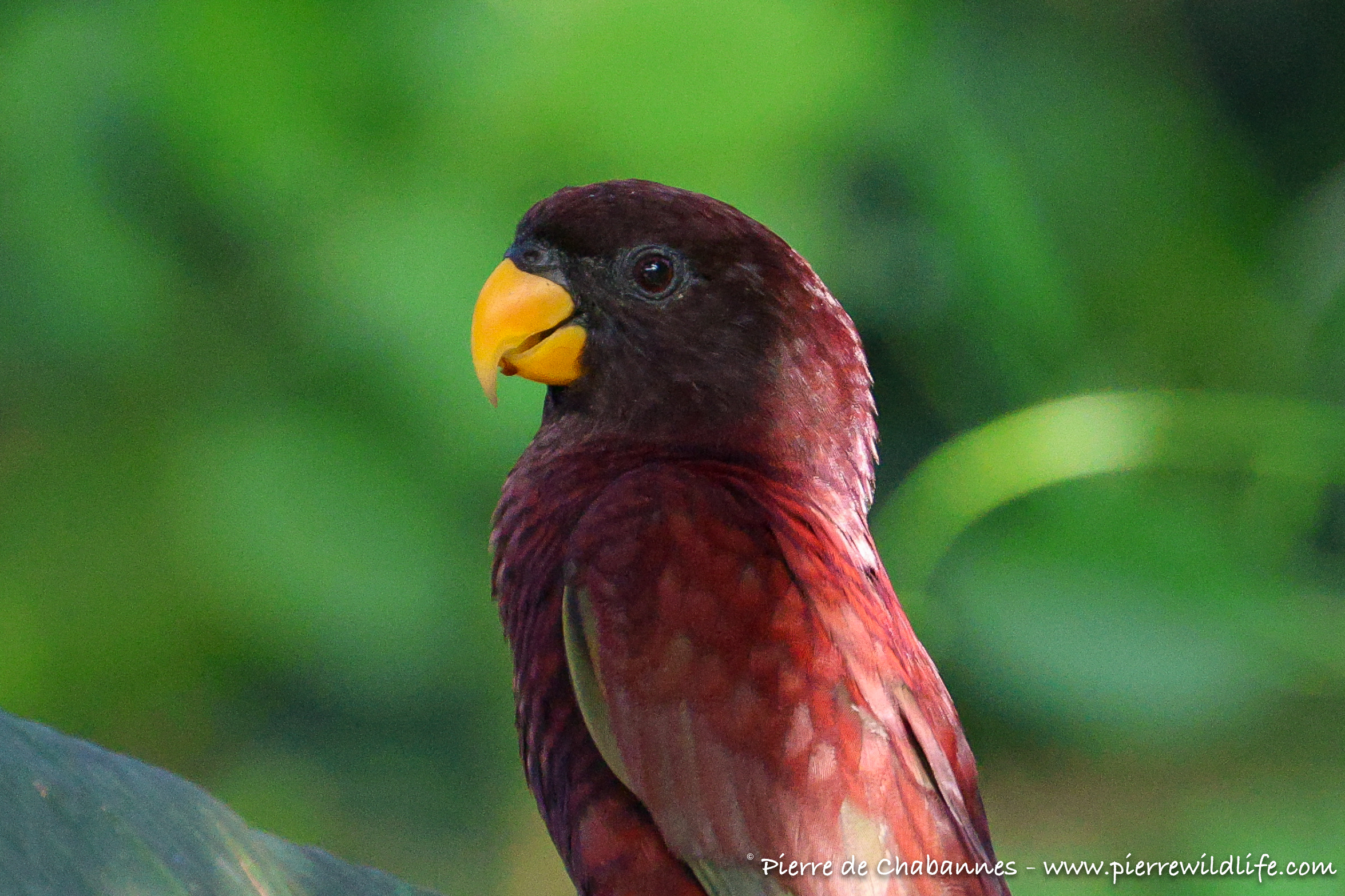
Endemic to Pohnpei, this lorikeet is unique in its coloration and is among the least frequently observed of the large lory species.
Context
An endemic lorikeet from Pohnpei, this species illustrates the unique biodiversity found on isolated Pacific islands.
Field notes
My first observations of the Pohnpei lorikeet were made near the airport runway, where many individuals roost in a small area of degraded mangrove forest. The species is found throughout the island and is most commonly observed near open areas and plantations.
Most individuals were feeding on fruiting and flowering trees, with a particular preference for nectar and pollen from coconut palms.
Despite its relative visibility, its restricted range makes every observation significant, as the entire population is confined to a single island and a nearby atoll.
Key facts
The Pohnpei lorikeet is the only parrot species endemic to Micronesia and, more broadly, to the northern Pacific islands. Its distinctive plumage, unlike that of any other member of its genus, reflects long-term geographic isolation.
It occupies a wide range of habitats, from mangrove forests to forest edges, plantations (particularly coconut), and open areas near patches of forest.
Although relatively easy to observe locally, the species remains poorly known and understudied. Unlike most other lorikeets, females lay only a single egg per clutch.
Conservation
The species appears to maintain a relatively stable population, and hunting and capture are now strictly prohibited, as it is the national bird of Pohnpei.
However, populations are declining in areas where trees are cleared for agriculture. Habitat loss remains widespread on the island, and continued monitoring is needed to better understand the challenges the species may face in the future.
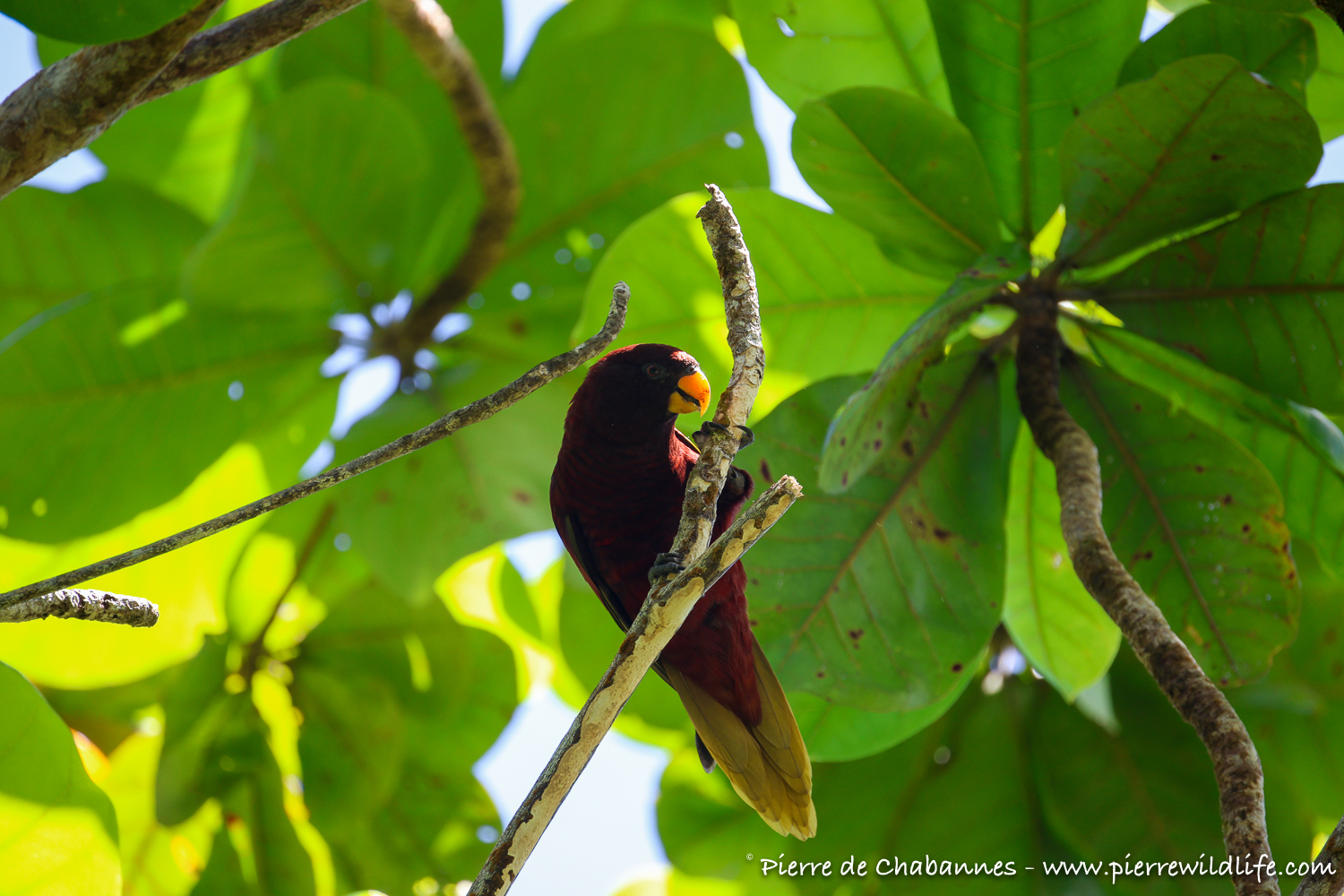
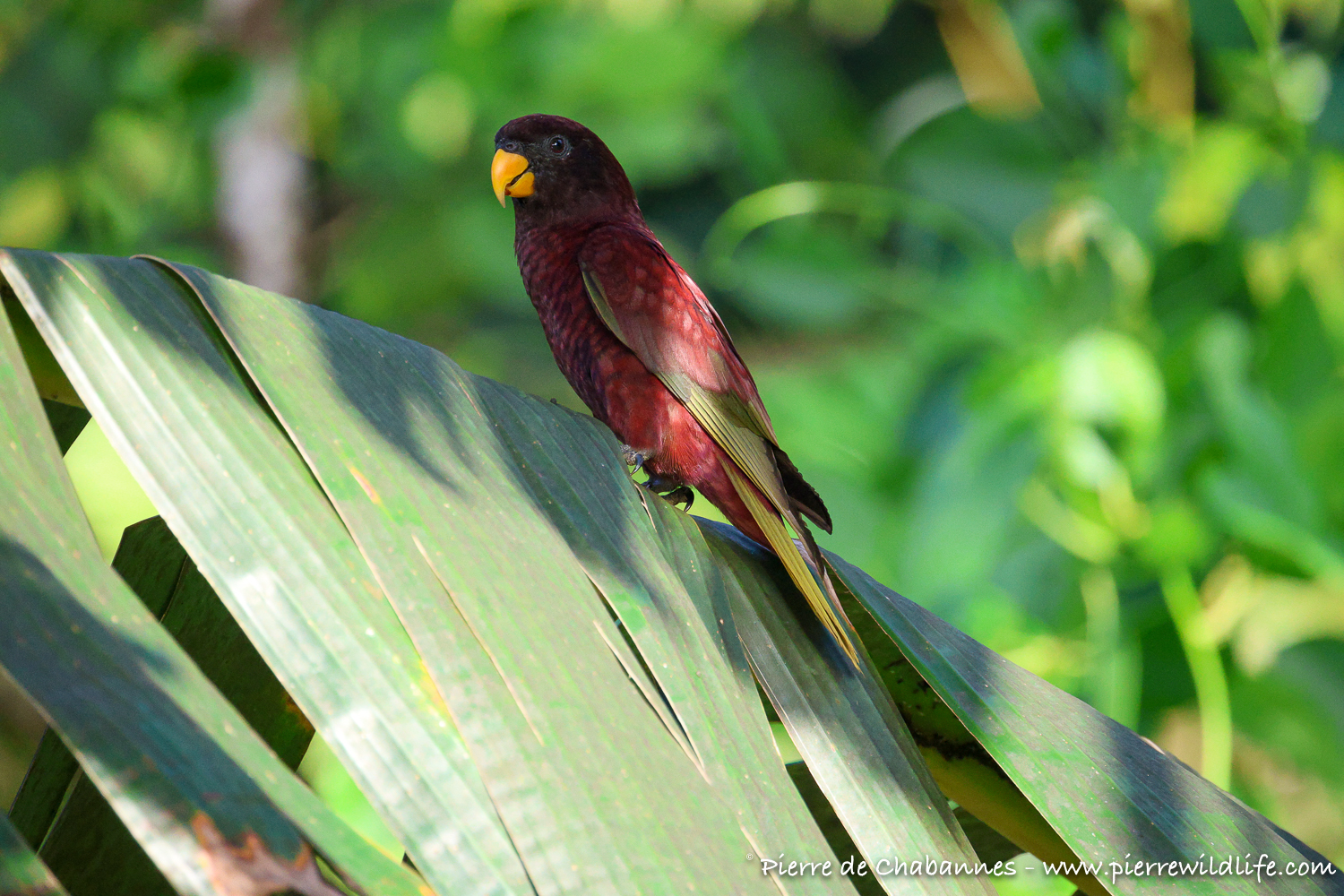
More photos from this observation
Other insular species can be found by browsing my Education resources.
Back to Island life Next Species →
“A long-term project documenting biodiversity across the world through fieldwork, zoological observations and educational content.”