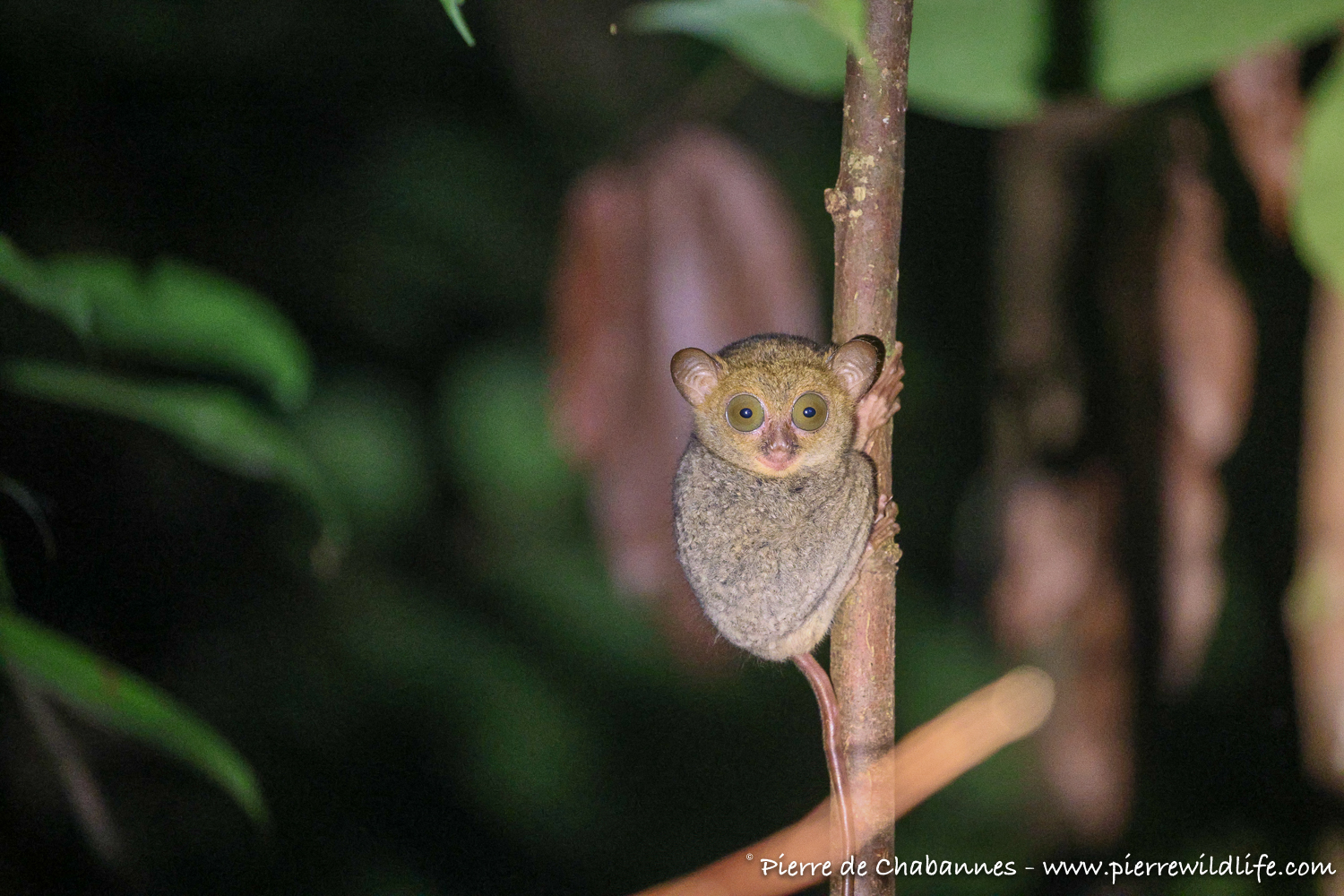
Bornean tarsier (Cephalopachus bancanus borneanus)
A nocturnal primate of Southeast Asian forests, remarkable for its enormous eyes and highly specialized predatory behavior.
Context
A single individual observed among small trees near the main trail at the Sepilok Rainforest Discovery Centre in Sandakan, Sabah (Malaysia).
Field notes
Tarsiers remain relatively common in parts of Borneo where suitable lowland forest habitat persists. They can tolerate secondary forests, provided that tree cavities are available for daytime resting and that sufficient prey remains available.
Photographing tarsiers is particularly difficult, as they can disappear instantly with a single jump. This individual briefly froze in front of us, likely because it had become accustomed to rangers regularly patrolling the area at night.
The tarsier’s enormous eyes allow it to detect prey in near-complete darkness. However, these eyes are also extremely sensitive to light. To photograph this individual without causing disturbance, we used indirect cross-lighting aimed past the animal rather than directly at it. No flashlight was used.
Key facts
The Bornean tarsier belongs to an ancient lineage of primates specialized for nocturnal life. Its enormous eyes are among the largest relative to body size of any mammal and are adapted for hunting in low-light conditions.
Unlike monkeys and apes, tarsiers are unable to move their eyes within their sockets and must rotate their heads to follow movement.
Long hind limbs and elongated ankle bones allow them to perform powerful jumps between branches while hunting.
Conservation
The species is currently listed as Vulnerable on the IUCN Red List, with habitat loss representing the main long-term threat. Deforestation linked to logging, agriculture, and oil palm plantations continues to reduce and fragment suitable habitats across Borneo.
Because of their nocturnal and discreet habits, wild populations remain difficult to monitor accurately. Protecting large tracts of native forest is essential not only for tarsiers, but also for countless other species.
Tarsiers are also targeted by the illegal pet trade. As direct sales in local markets are increasingly restricted, much of this trade now occurs online, making it considerably more difficult to monitor.
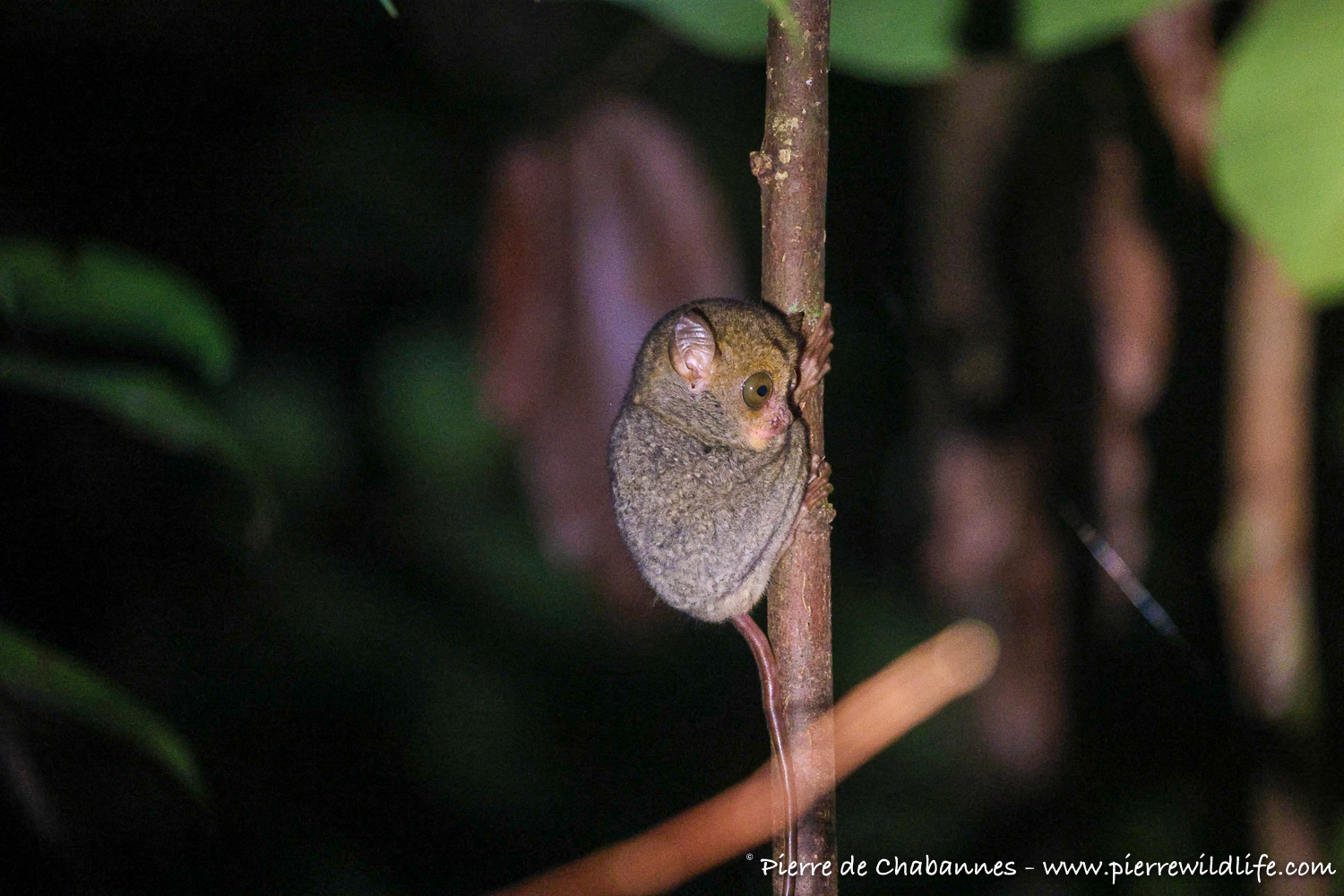
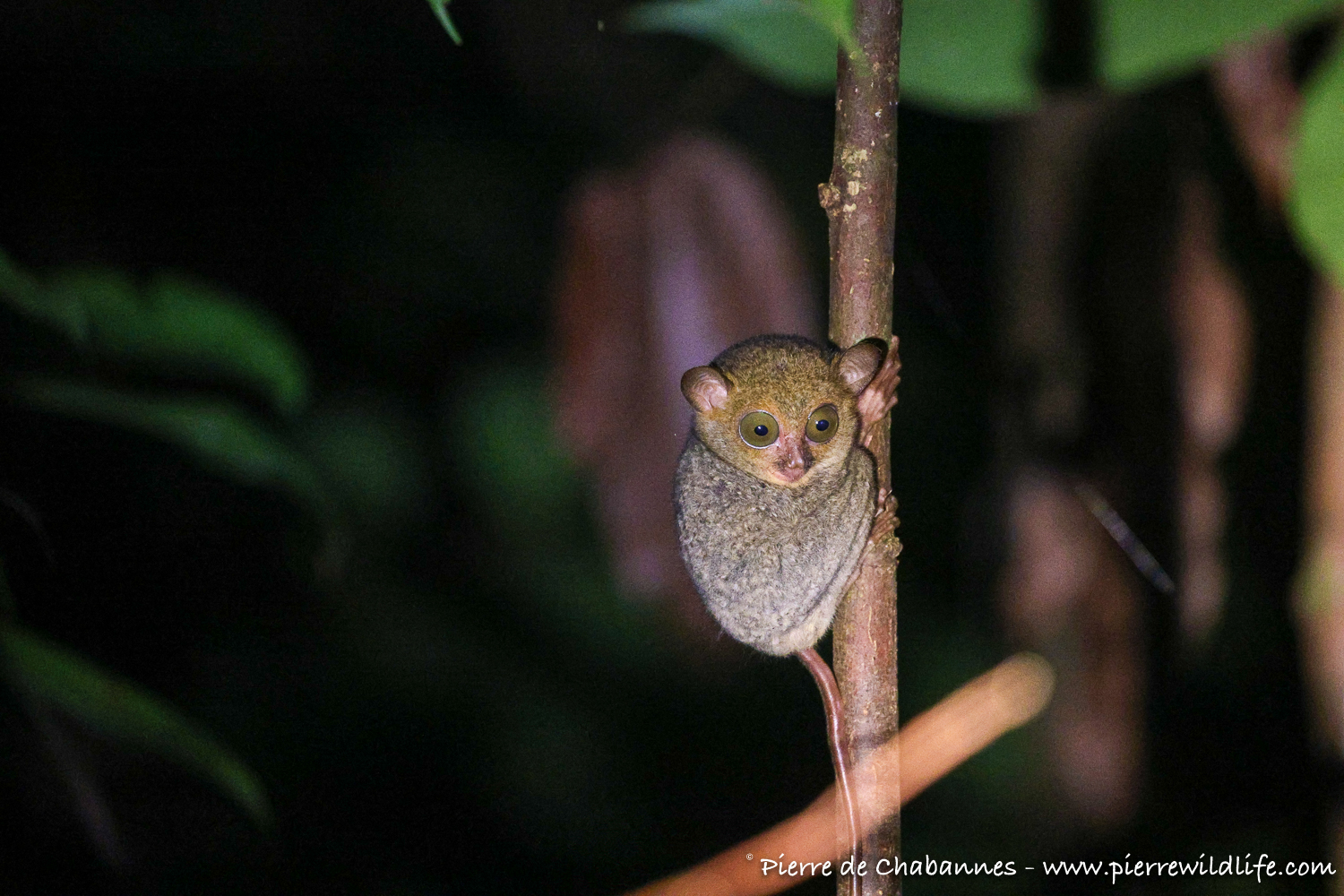
More photos from this observation
Other species of primates can be found by browsing my Education resources.
Back to Primates of Southeast Asia ←Previous species Next Species →
“A long-term project documenting biodiversity across the world through fieldwork, zoological observations and educational content.”