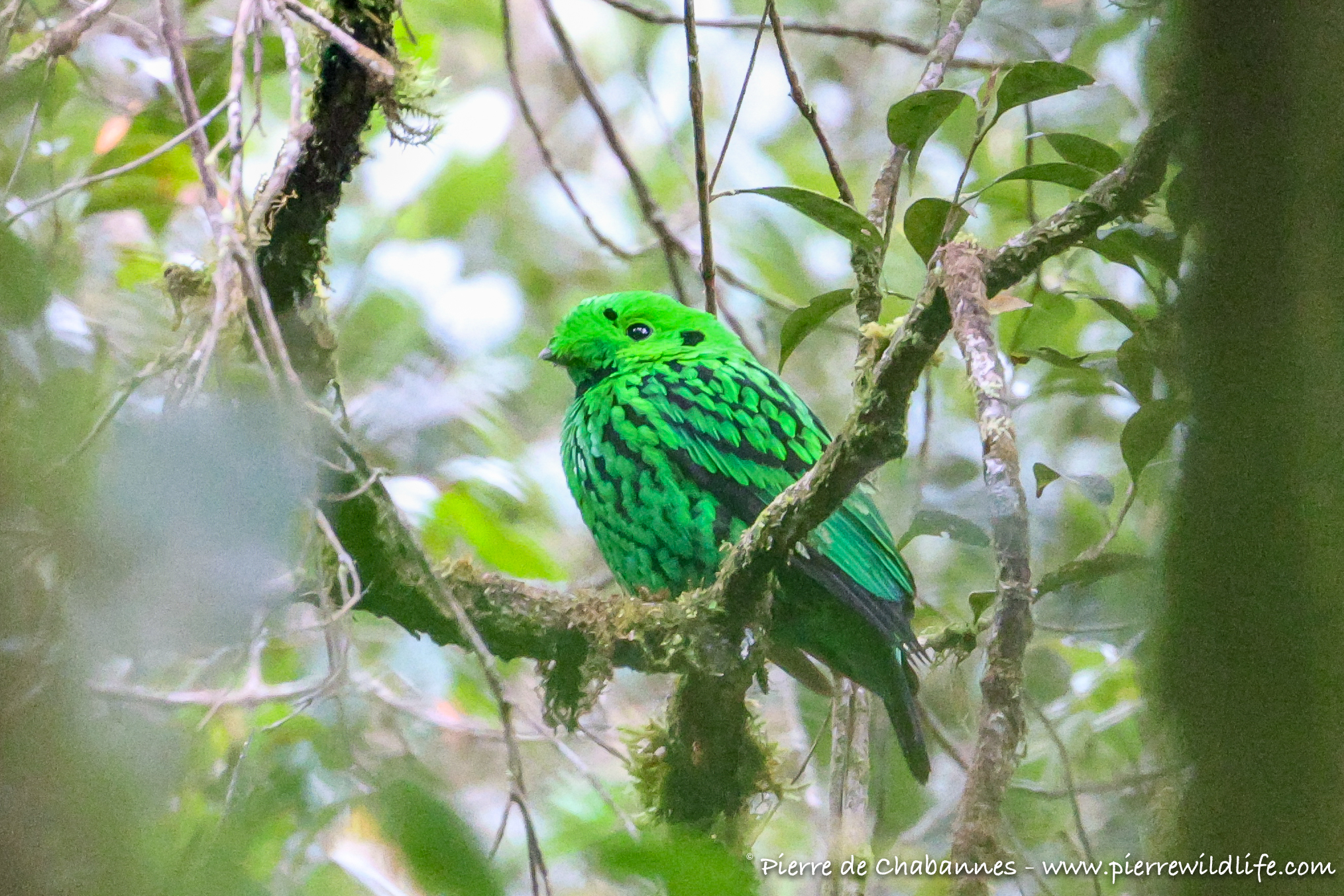
Whitehead’s broadbill (Calyptomena whiteheadi)
One of Borneo’s most iconic montane birds, restricted to high-elevation forests of northern Borneo.
Context
This male was observed in the forests of Kinabalu Park, resting while watching over a nearby female nesting approximately two meters away in a large tree.
Field notes
Whitehead’s broadbill is part of the famous “three Whitehead’s birds,” a group of iconic endemic species highly sought after by birdwatchers. The other two are the Whitehead’s spiderhunter and the Whitehead’s trogon, both of which also occur in Kinabalu Park.
Observing this species is rarely easy, as it usually remains deep within the forest under dense canopy cover, moving only briefly to fruiting trees to feed. It seldom stays exposed for long. In over ten years of exploring Kinabalu Park, this was my only successful opportunity to photograph the species.
Thanks to my guide’s knowledge of the nesting sites, I was able to observe and photograph this male. Photographing nesting birds, however, requires particular care to avoid disturbing the animals. We therefore remained at a sufficient distance to minimize any impact on their behavior.
Key facts
The Whitehead’s broadbill is the largest of the three species of green broadbills, two of which are endemic to the montane forests of Borneo.
Males, such as the individual pictured here, display extensive black markings on the breast and belly, while females are duller green and lack these dark markings.
The species feeds mainly on fruits and small invertebrates and is most commonly associated with mossy and cloud forest habitats at mid to high elevations.
Conservation
The species is currently listed as Least Concern on the IUCN Red List and remains locally common in suitable habitats.
However, as a montane forest specialist with a restricted distribution, it may be vulnerable to long-term habitat changes linked to climate change and forest degradation.
The protection of high-elevation forests such as those surrounding Mount Kinabalu remains essential for the conservation of this and many other endemic species.
More photos from this observation
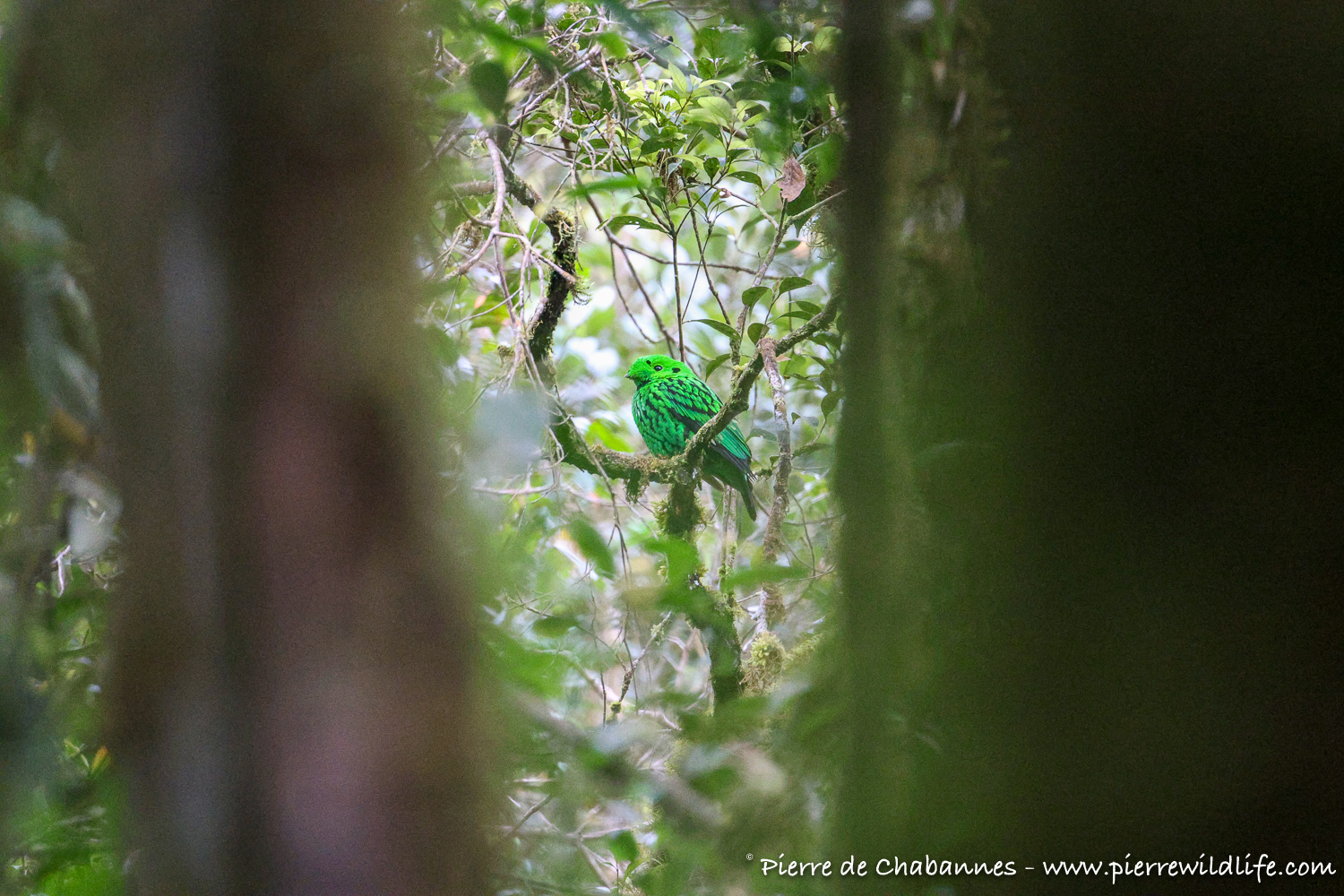
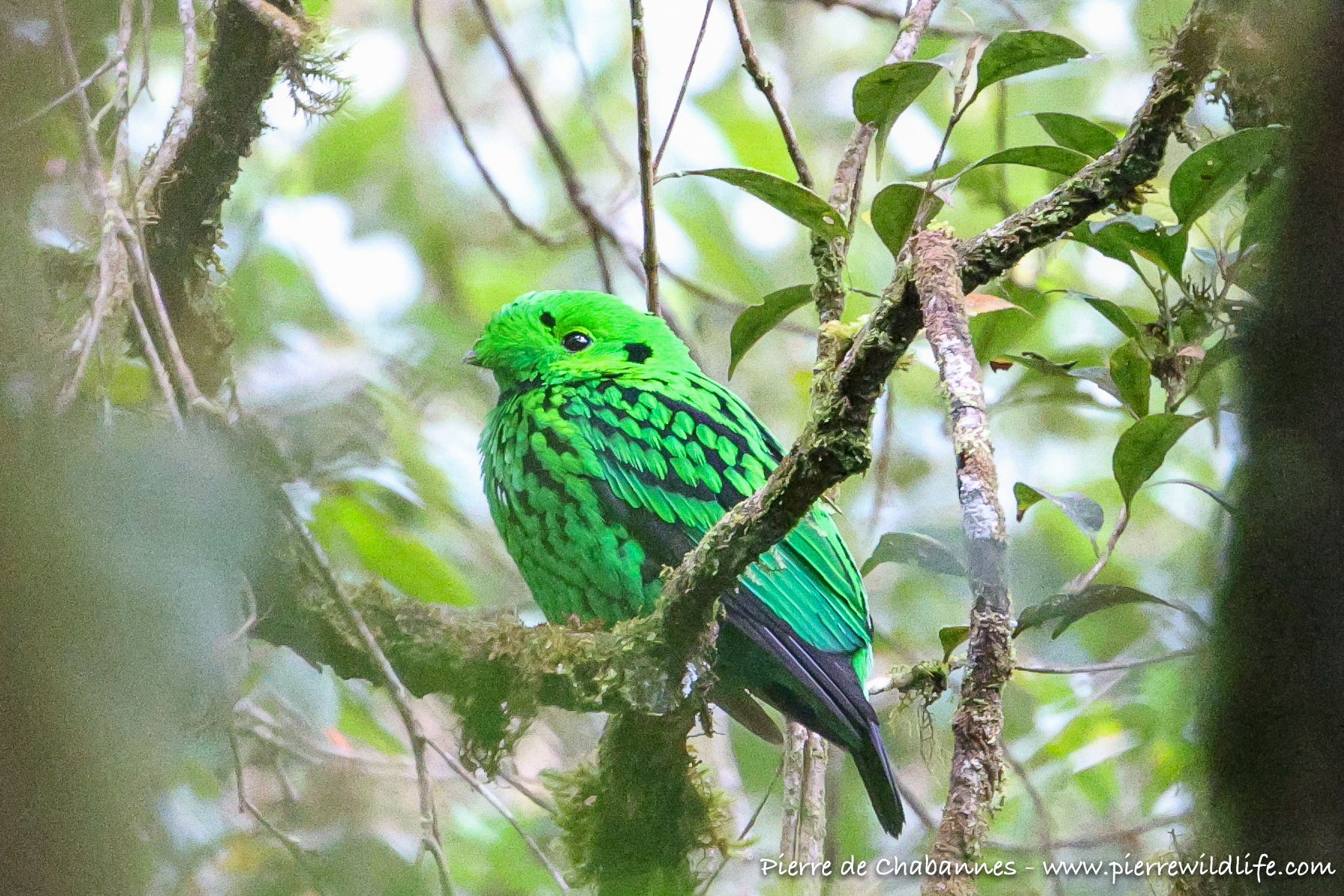
Other species from Kinabalu Park can be found by browsing my Education resources.
Back to Mt Kinabalu ←Previous species Next Species →
“A long-term project documenting biodiversity across the world through fieldwork, zoological observations and educational content.”