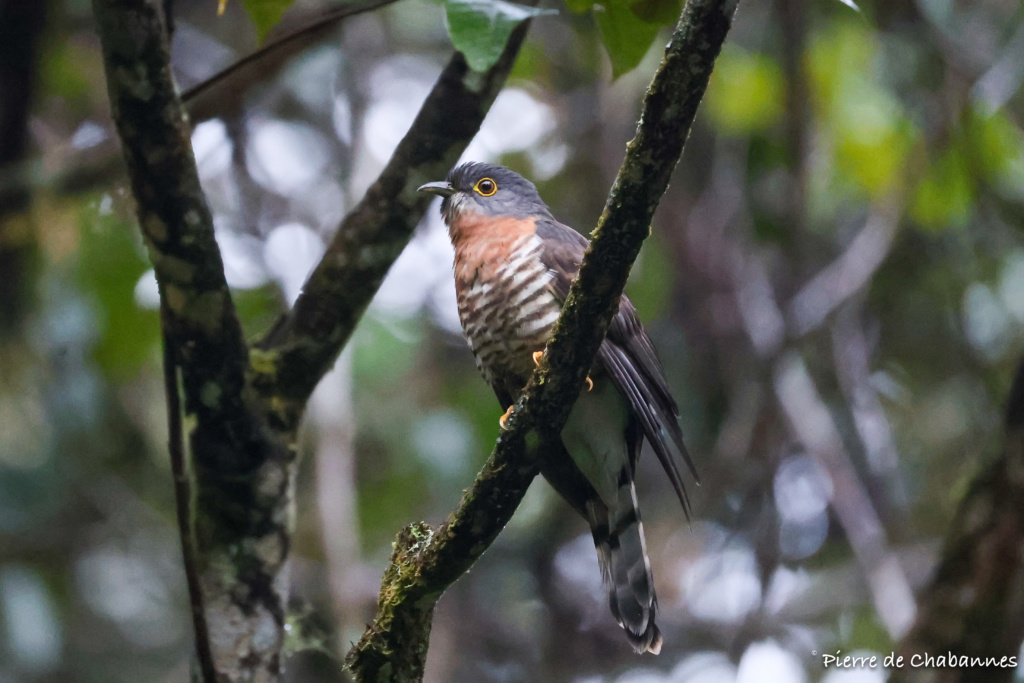
Dark hawk-cuckoo (Hierococcyx bocki)
A little-known montane cuckoo endemic to Borneo, rarely observed despite its distinctive calls echoing through cloud forests.
Context
This individual suddenly appeared at 6 a.m. directly in front of my lodge, perched in a small ornamental tree at approximately 1,200 m asl in Kinabalu Park.
Field notes
Like many hawk-cuckoos, this species is far more often heard than seen. Its repetitive whistling calls can carry over long distances through montane forests, while the bird itself usually remains concealed within dense vegetation.
At first glance, its head shape, bill, and long wings can easily give the impression of a small forest raptor. Individuals are fast-moving and rarely remain exposed for long periods. This particular encounter was pure luck.
I have spent more than a decade exploring various parts of Kinabalu Park, often spending entire days searching for wildlife. During all these years of exploration, this remains the only time I have ever seen and photographed the species, and the encounter lasted barely a minute.
Key facts
The dark hawk-cuckoo is only found in upper montane forests, above 800 meters asl, in Peninsular Malaysia, Borneo and Sumatra.
It is likely one of the least known hawk-cuckoo species. Although it is known to feed mainly on invertebrates, very little information exists regarding its breeding biology, apart from the fact that it is a brood parasite.
Conservation
The species is currently listed as Least Concern on the IUCN Red List and appears locally common in suitable habitats.
It occurs in several protected areas, including Gunung Leuser National Park in Sumatra and Kinabalu Park in Borneo, but remains poorly studied throughout much of its range.
The protection of extensive primary forest habitats remains essential for the survival of this and many other endemic species across Southeast Asian islands such as Borneo, Sumatra, Java and more.
More photos from this observation
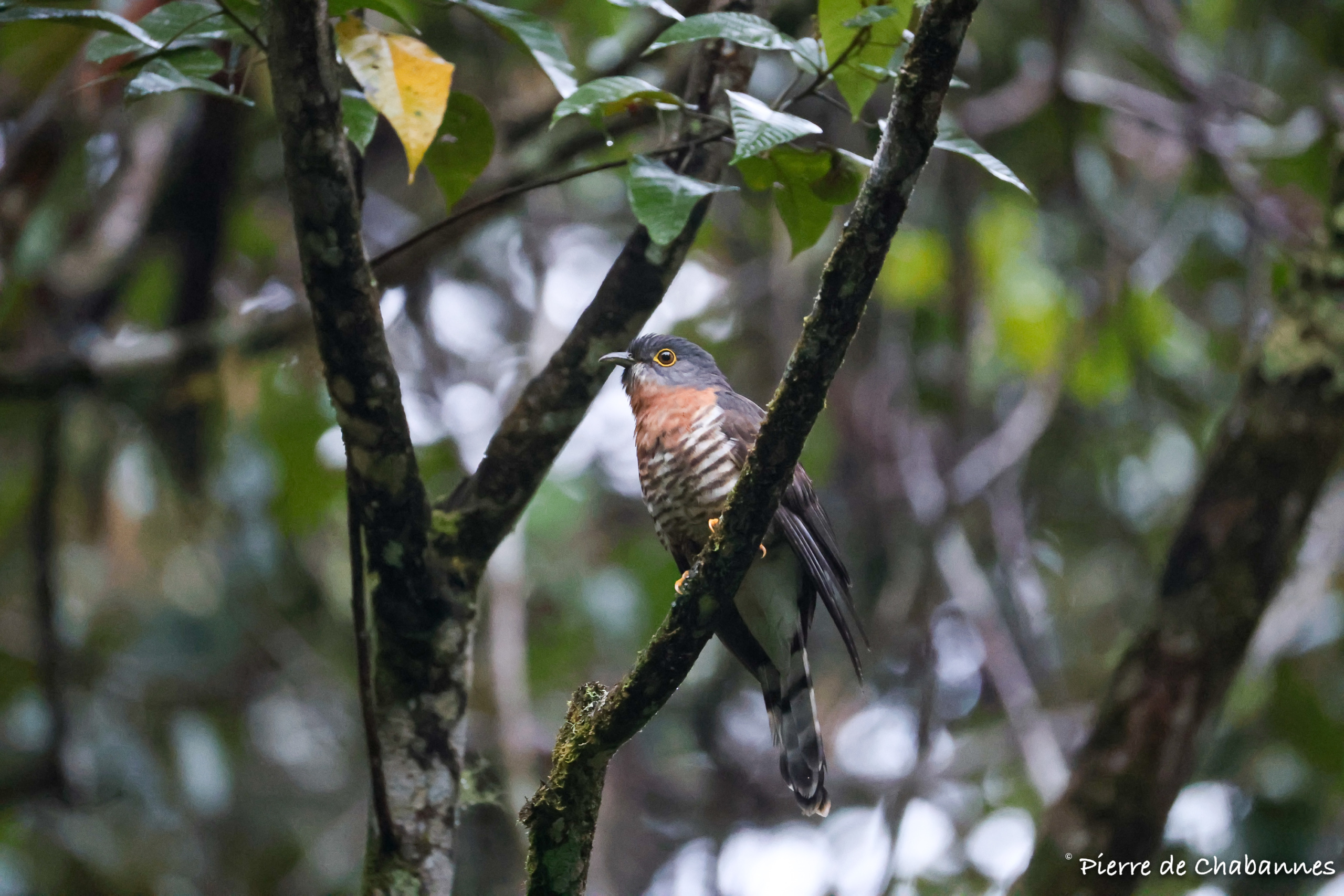
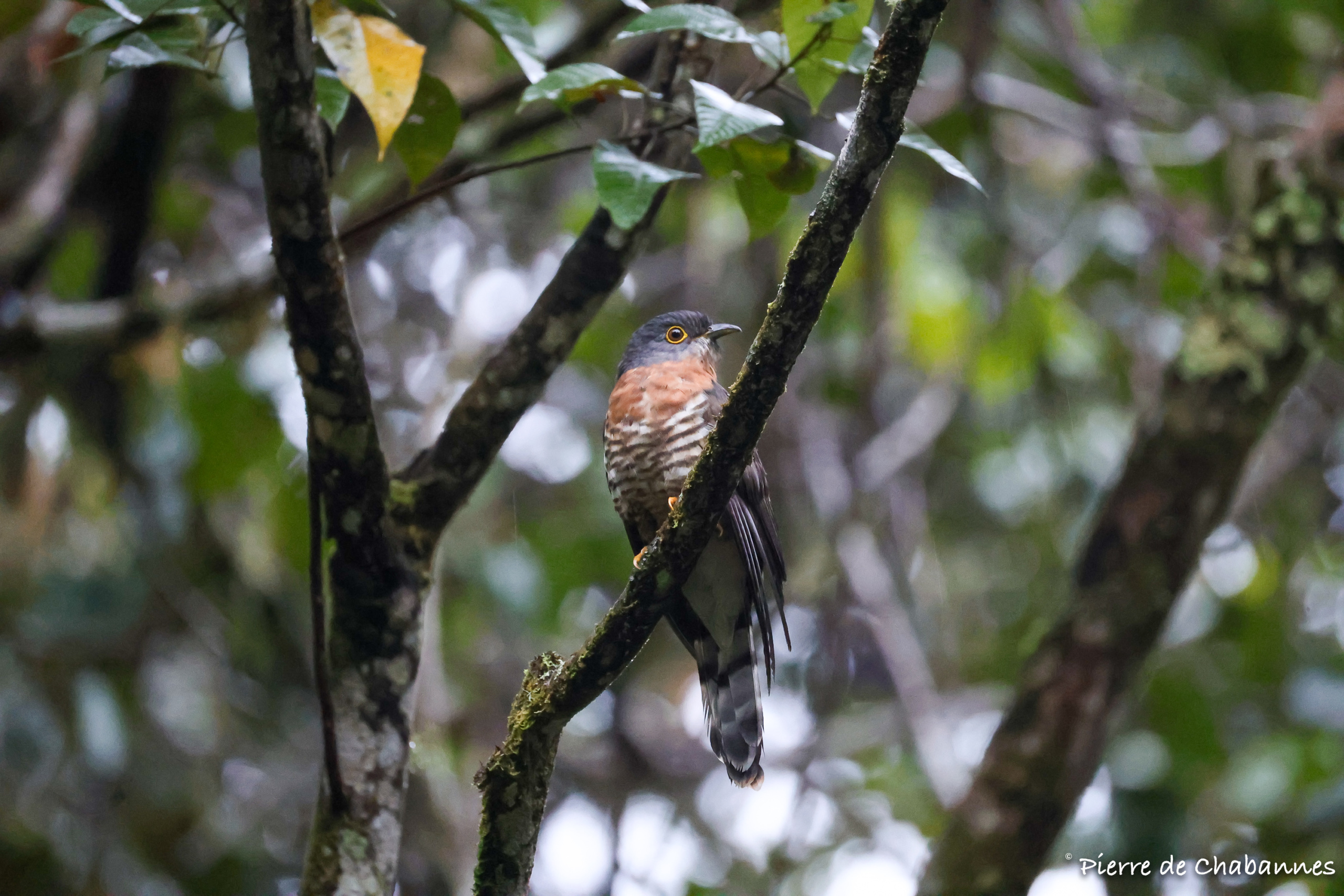
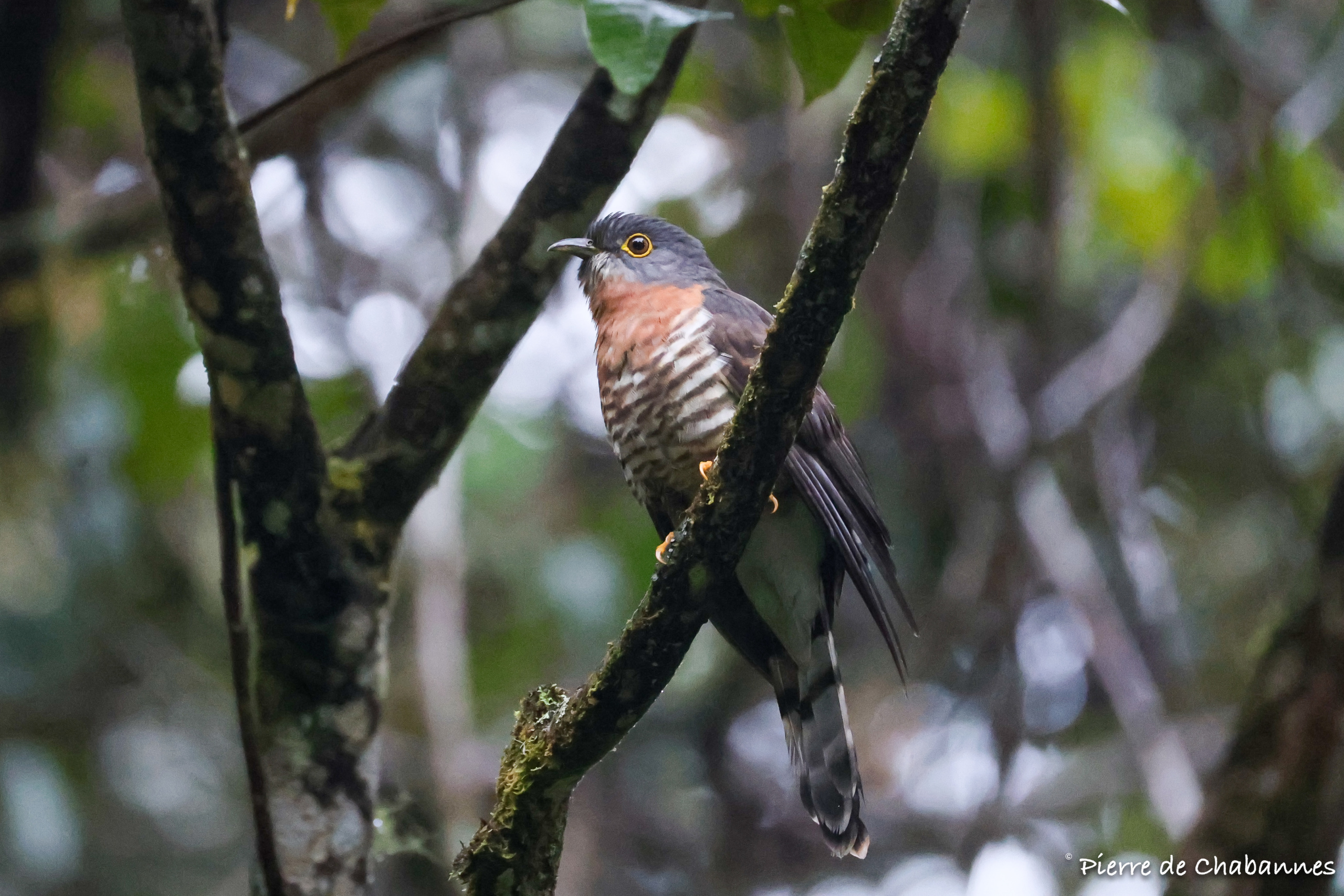
Other species from Kinabalu Park can be found by browsing my Education resources.
Back to Mt Kinabalu ←Previous species Next Species →
“A long-term project documenting biodiversity across the world through fieldwork, zoological observations and educational content.”