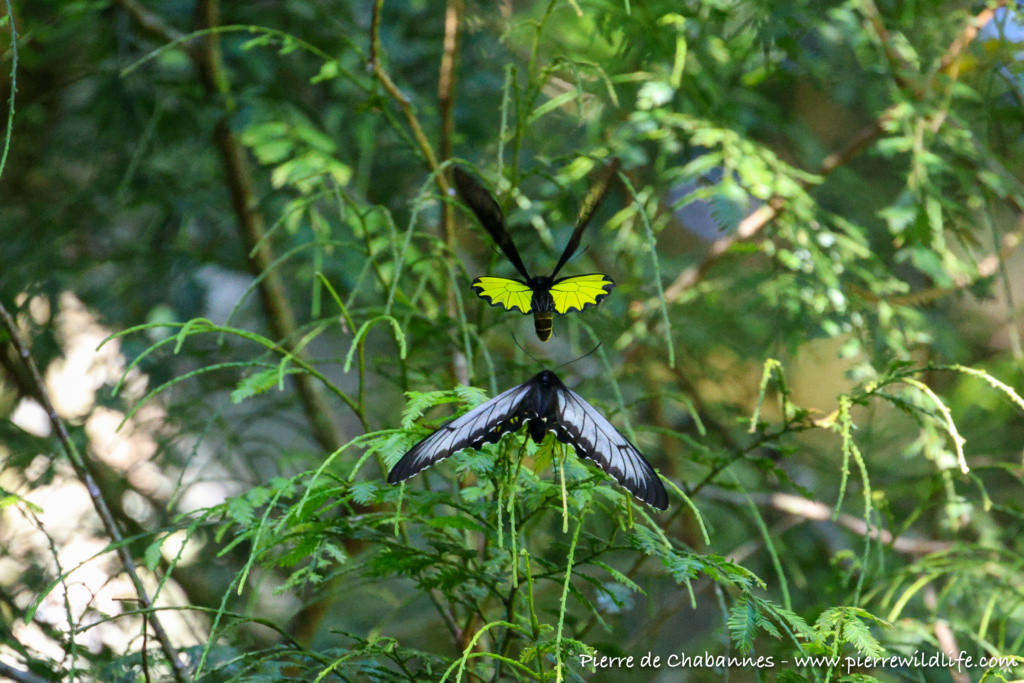
Kinabalu birdwing (Troides andromache andromache)
A spectacular butterfly species with a striking sexual dimorphism, endemic to the mountains of North Borneo.
Context
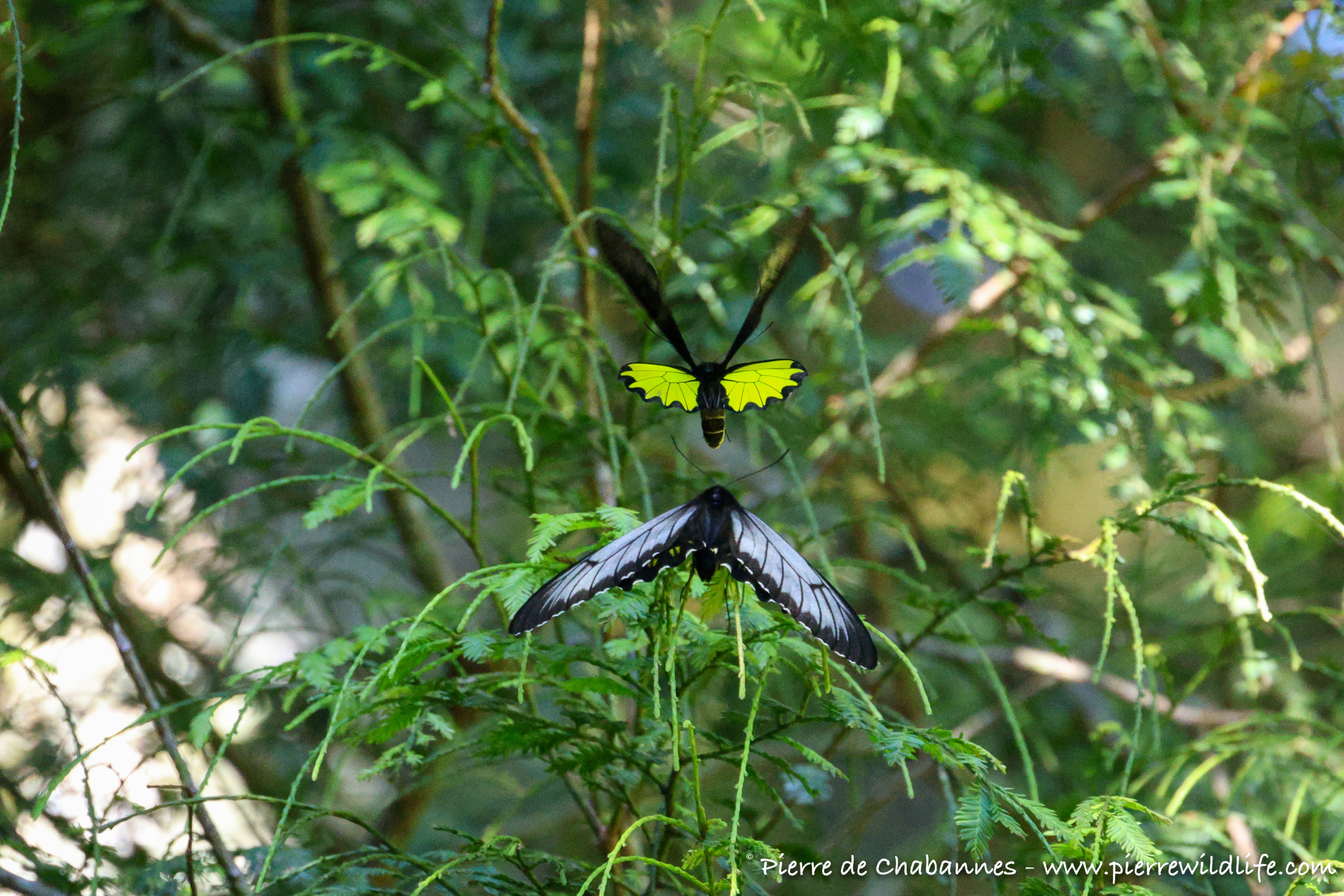
This pair was photographed near a flowering tree along Kinabalu Park’s main road, at approximately 1,200 m asl.
Field notes
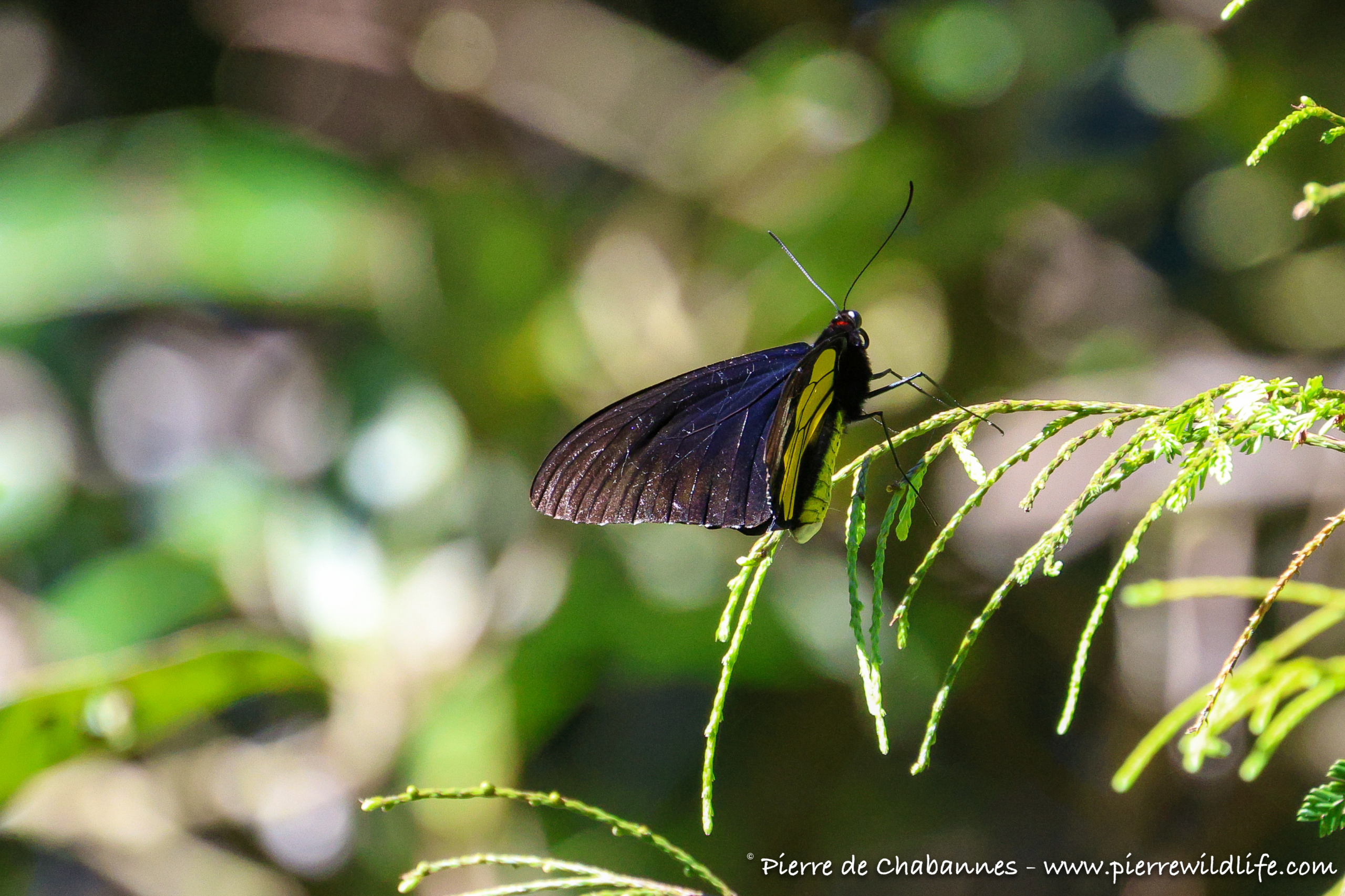
The Kinabalu birdwing is an impressive butterfly with a slow and powerful flight, usually observed high above the ground while moving between flowering plants near forest edges and the canopy.
This species displays one of the most remarkable examples of sexual dimorphism I have observed among the genus Troides. Males possess black forewings and bright yellow hindwings, whereas females display pale grey-white forewings and mostly black hindwings with only limited yellow coloration.
The species is said to be common in suitable habitat. However, I only encountered it once out of ten years of exploration of Mt Kinabalu’s forest. The subspecies found here is the nominate one.
Key facts
Butterflies of the genus Troides, commonly known as birdwings, are easily recognized by their large size and characteristic black-and-yellow coloration. With a wingspan reaching approximately 8.5 cm, the Kinabalu birdwing is the only Bornean member of the genus in which females display predominantly white wings.
Depending on the taxonomic treatment, two or three subspecies are currently recognized. These populations occur from Mount Kinabalu southward to Sarawak, the highlands of Brunei, and northern Kalimantan, although their precise distribution remains incompletely understood.
The species remains poorly studied, and little is known about its early life stages. Adult females have been observed laying eggs on an unidentified species of Aristolochia vine.
Conservation
The species is currently listed as Vulnerable on the IUCN Red List. It has a very limited range in North Borneo and nearby Brunei.
It appears strongly associated with montane forest habitats, with most observations occurring between approximately 850 and 2,000 m asl.
The protection of extensive and connected forest habitats across Borneo remains essential for the long-term survival of this species and many other endemic animals.
More photos from this observation
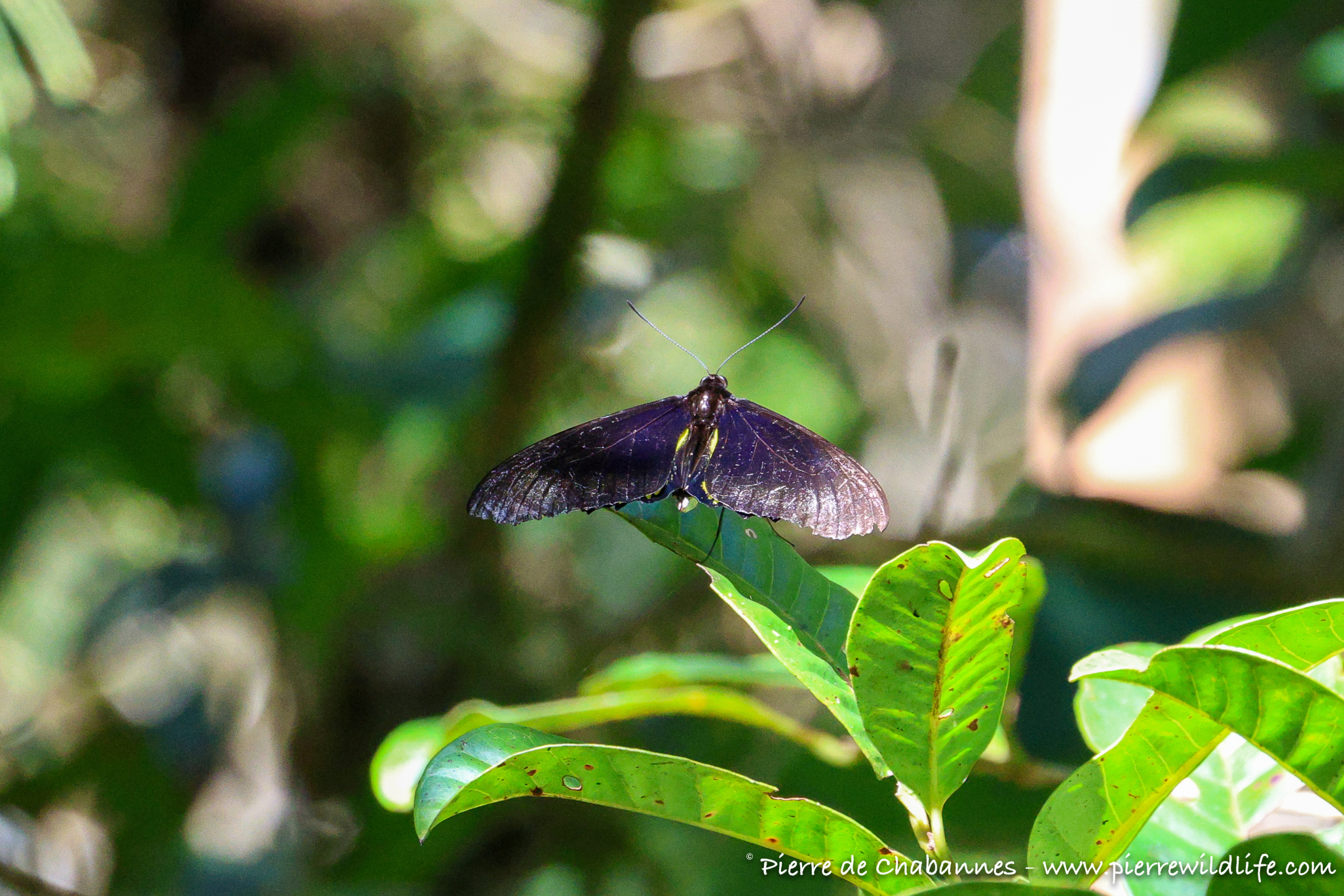
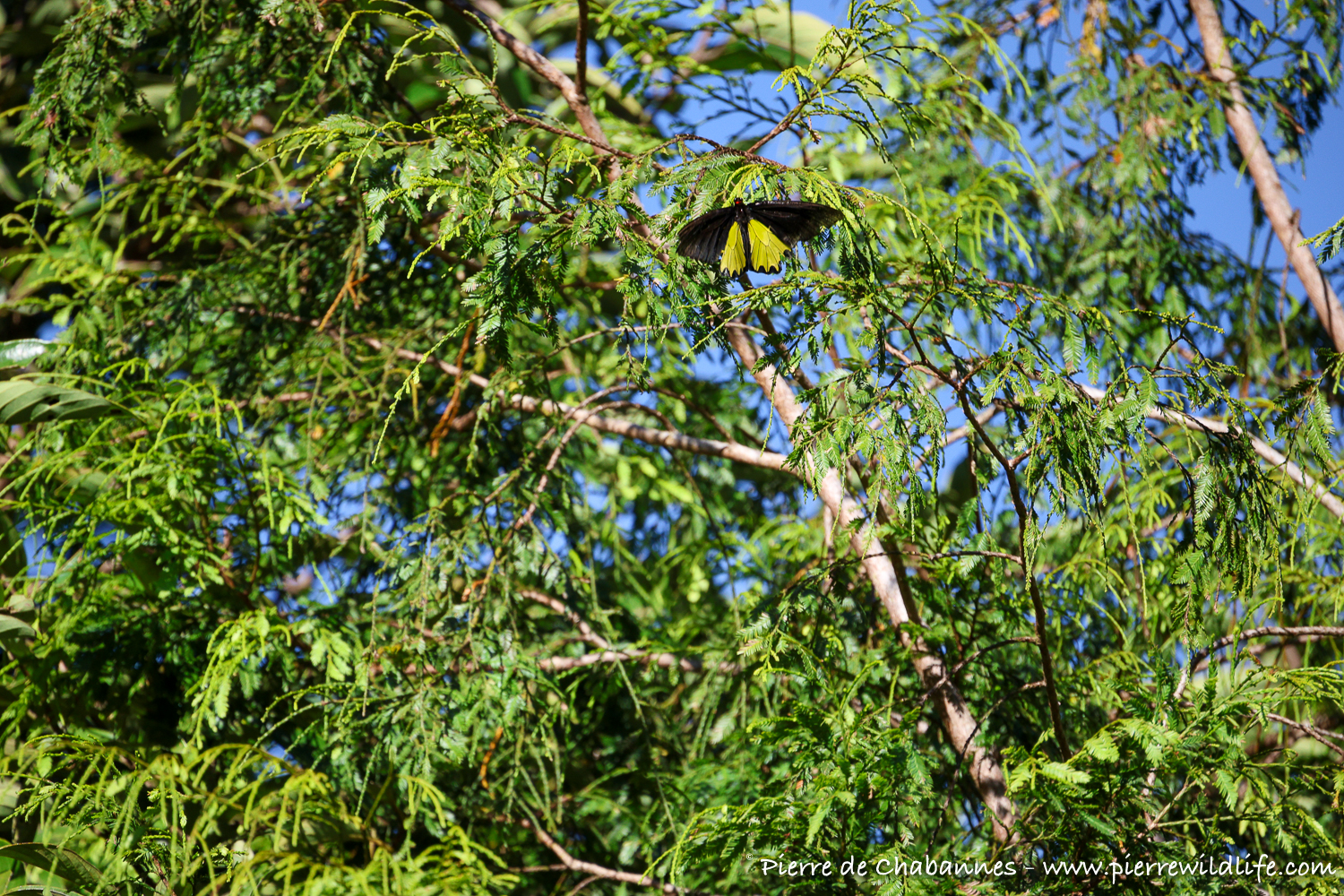
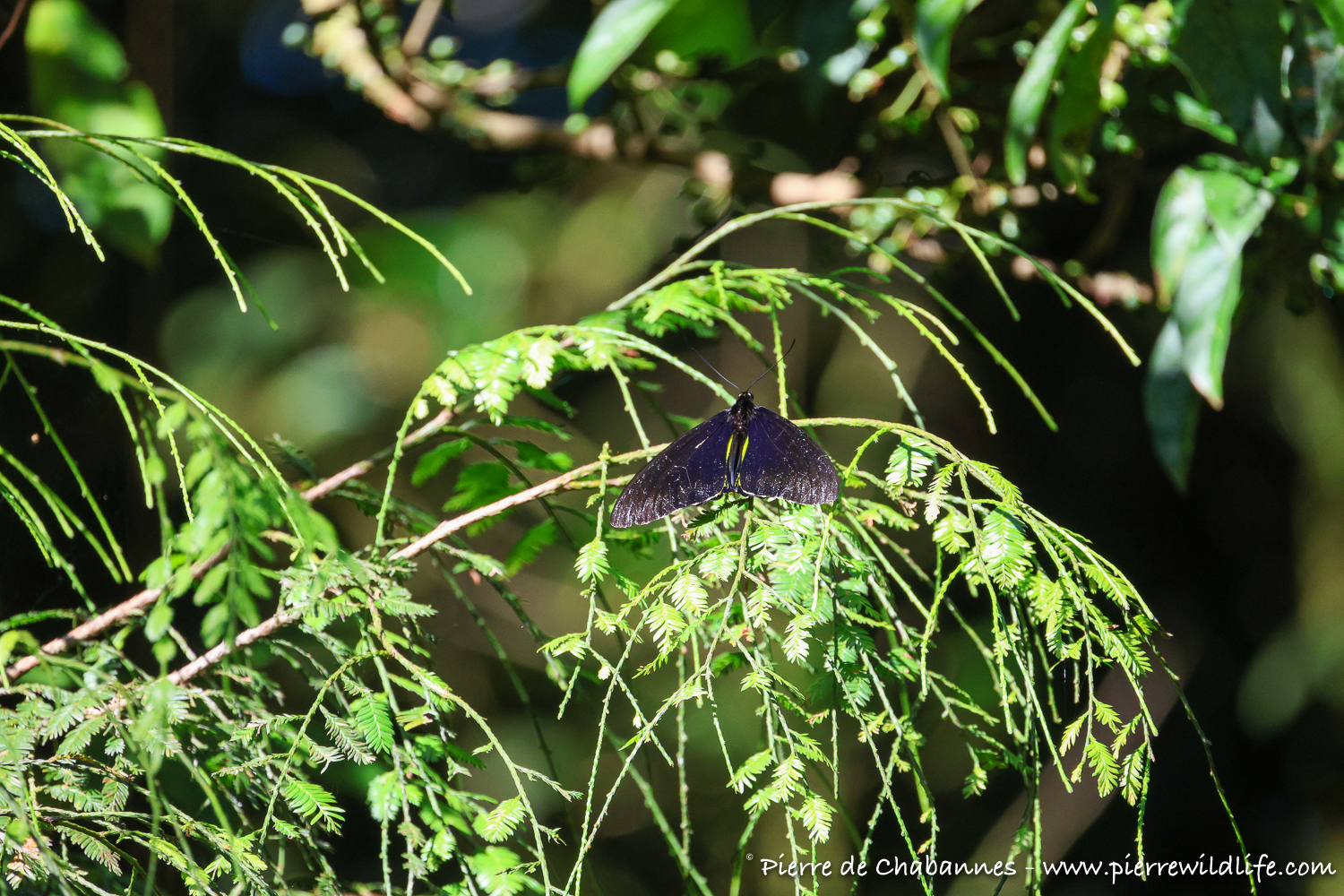
Other species from Kinabalu Park can be found by browsing my Education resources.
Back to Mt Kinabalu ←Previous species Next Species →
“A long-term project documenting biodiversity across the world through fieldwork, zoological observations and educational content.”