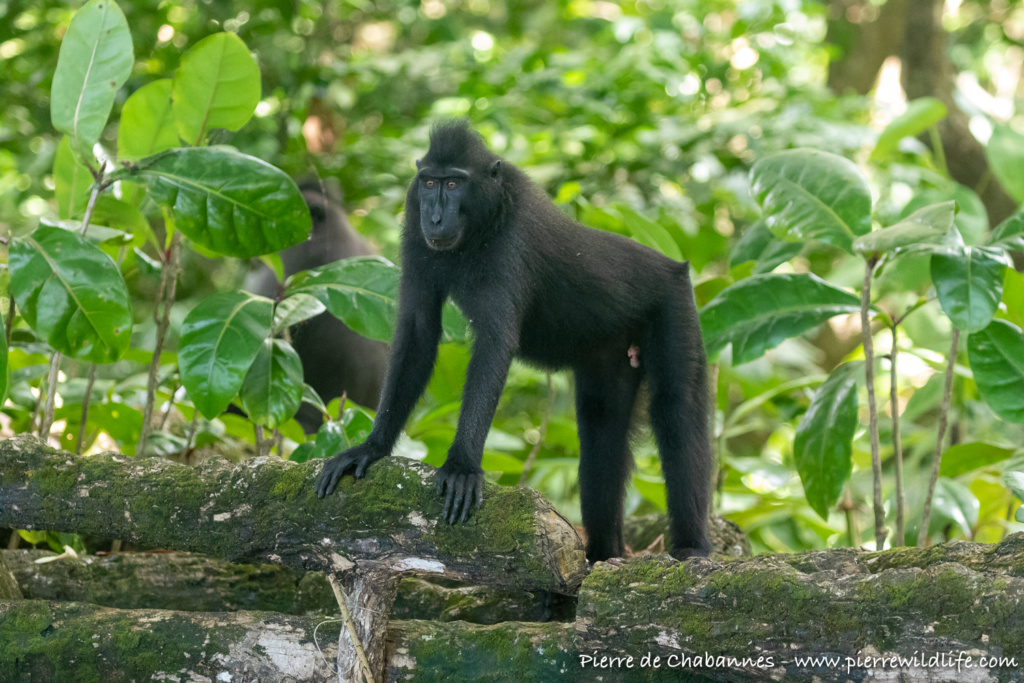
Celebes crested macaque (Macaca nigra)
One of the world’s most endangered macaques, endemic to northern Sulawesi and recognizable by its crest and jet-black coloration.
Context
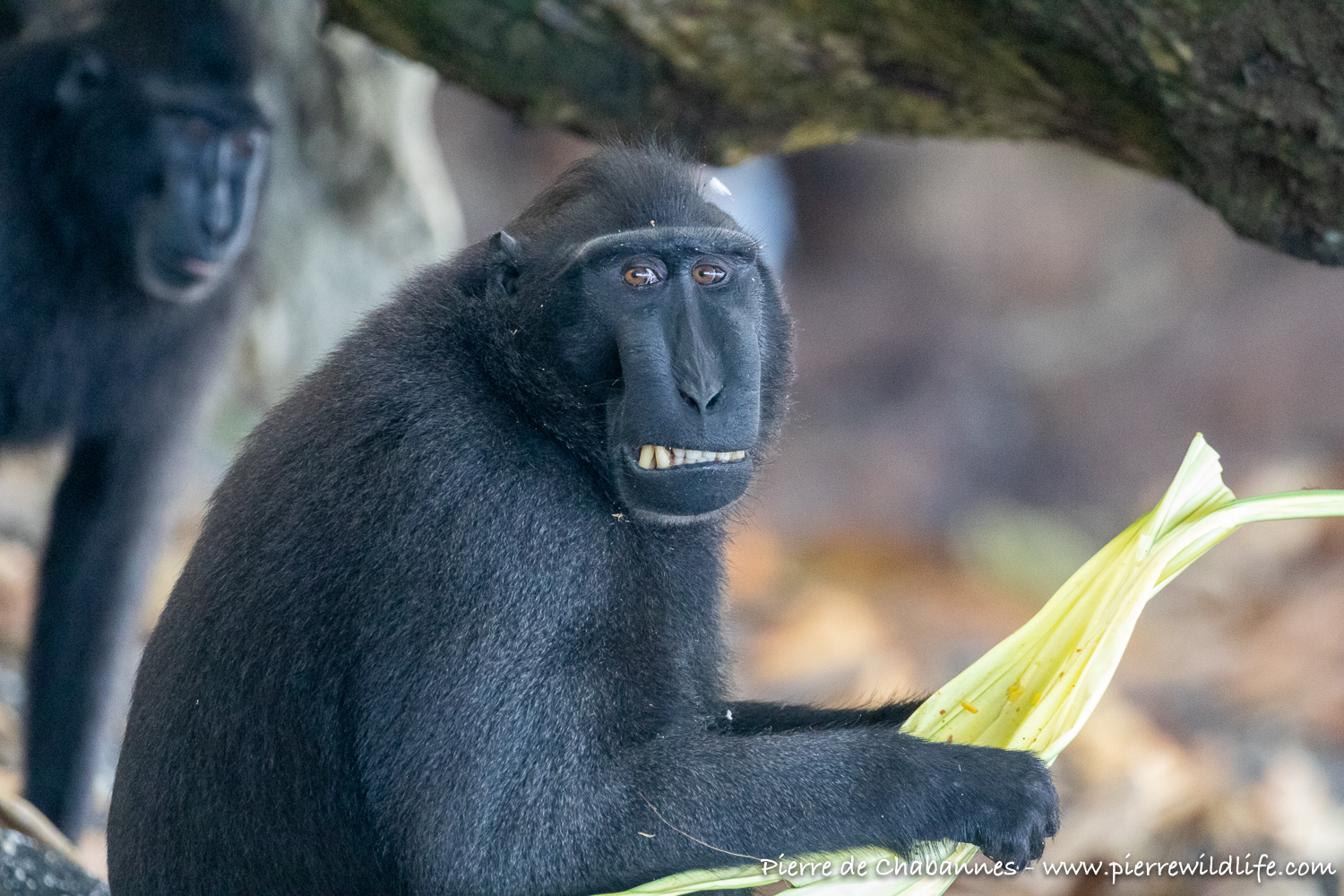
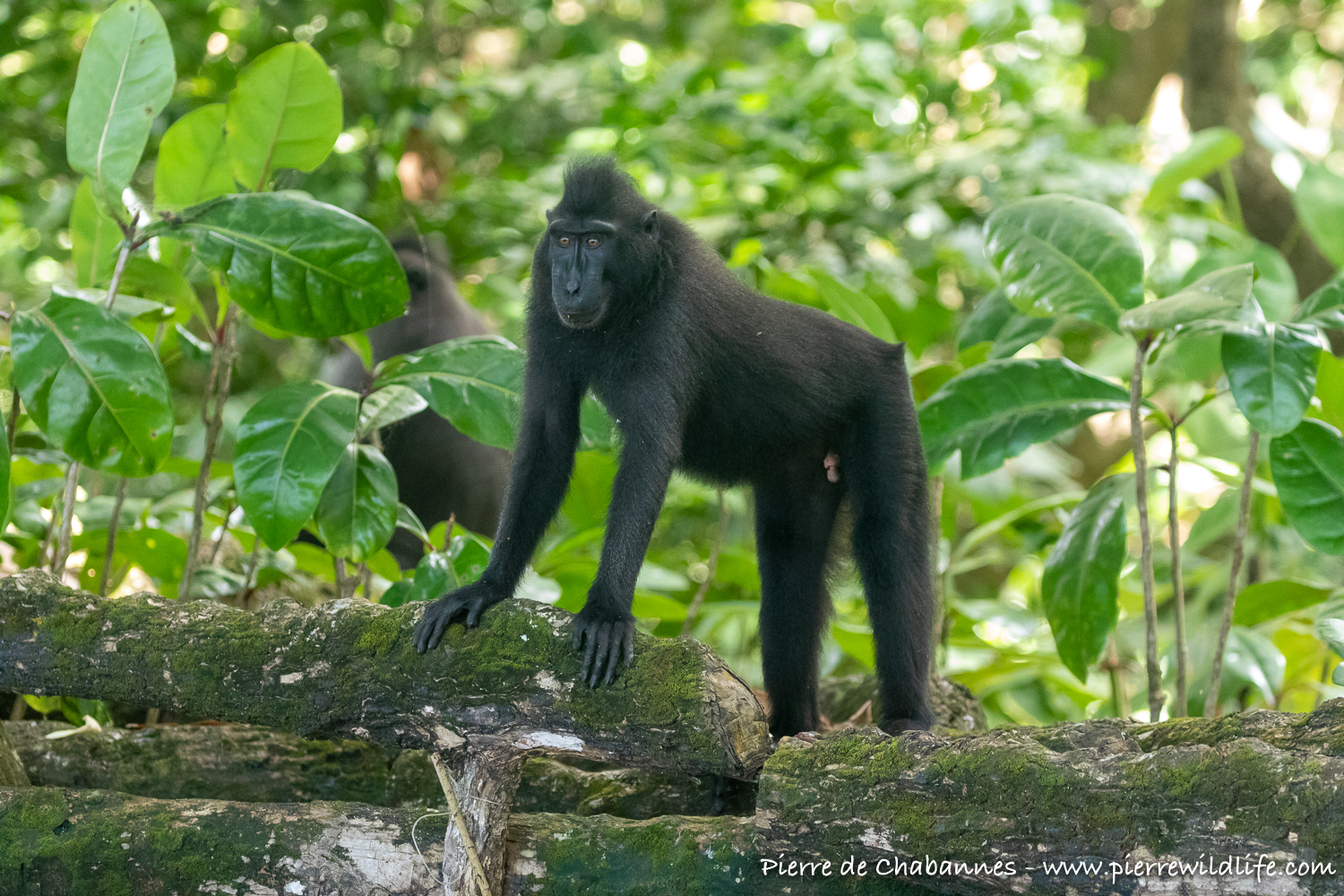
A family group observed in the forests of Tangkoko Nature Reserve, northern Sulawesi (Indonesia), searching for food scraps near the beach after lunchtime.
Field notes
Celebes crested macaques are highly social primates, living in groups ranging from a few individuals to more than sixty. They spend much of the day foraging in and around tropical forests, occasionally raiding crops and gardens near villages.
In Tangkoko Nature Reserve, some groups have become habituated to human presence and frequently approach the beach area around lunchtime in search of unattended food. As a result, the species is sometimes viewed as a pest by local villagers and farmers, while hunting for bushmeat remains a major threat.
Tangkoko currently supports some of the largest remaining wild populations of the species and is considered one of its most important strongholds. In many other forested areas within its historical range, the species has become surprisingly scarce or completely absent.
Key facts
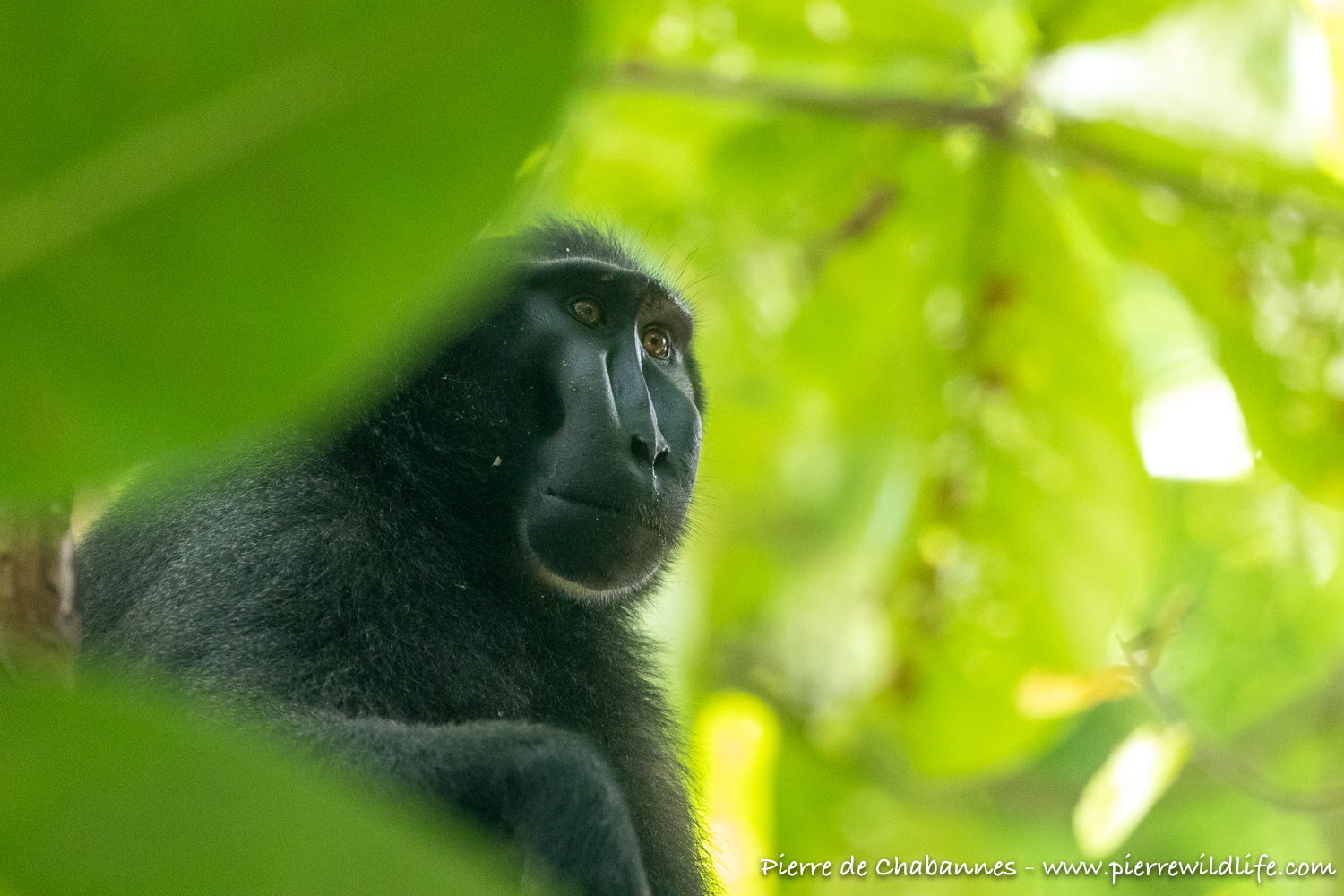
Celebes crested macaques are easily distinguished from most other macaque species by their distinctive facial shape, reduced tail, crest, and entirely black coloration.
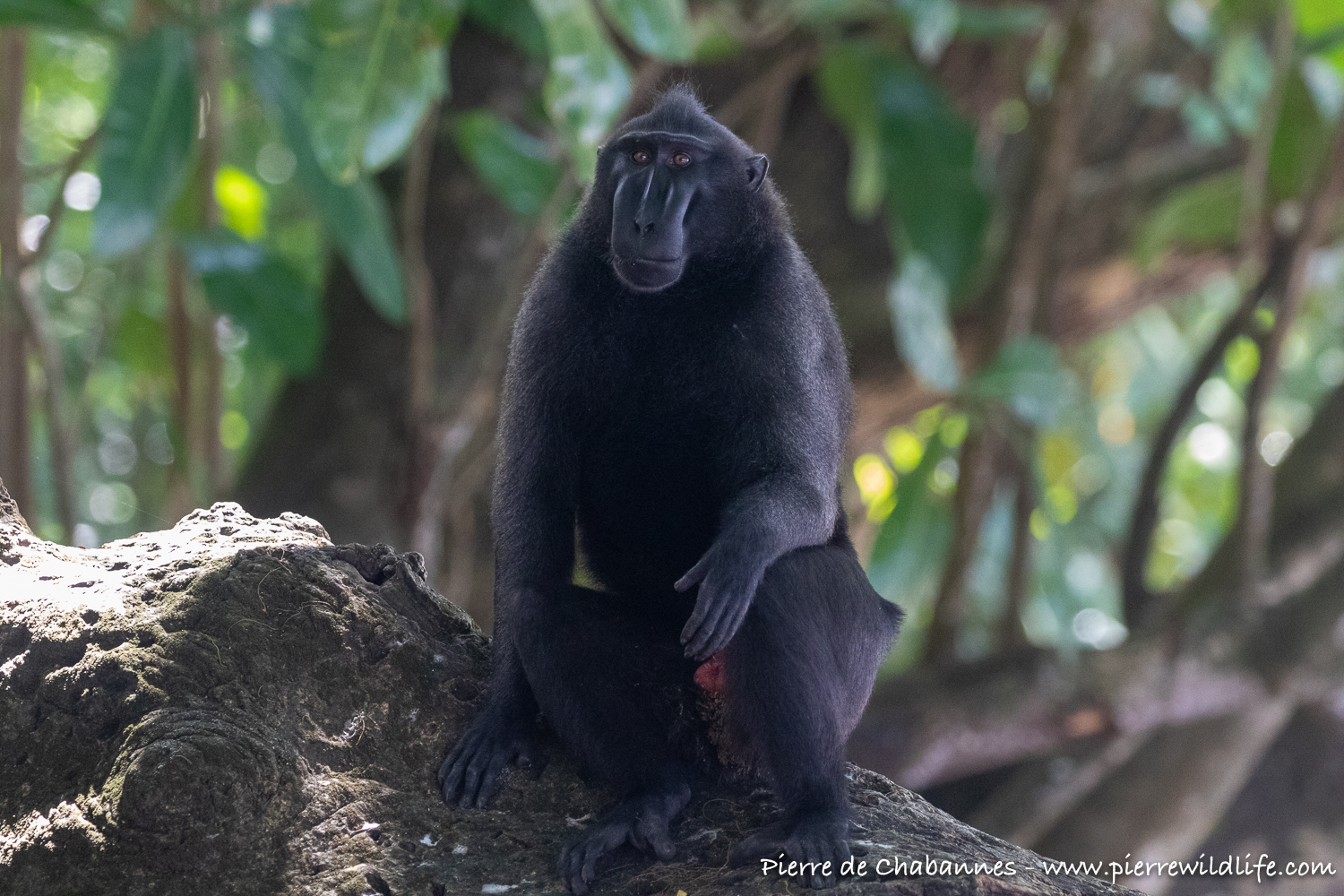
Only one closely related species, the Gorontalo macaque from central-northern Sulawesi, appears very similar and can mainly be distinguished by the coloration of the ischial callosities.
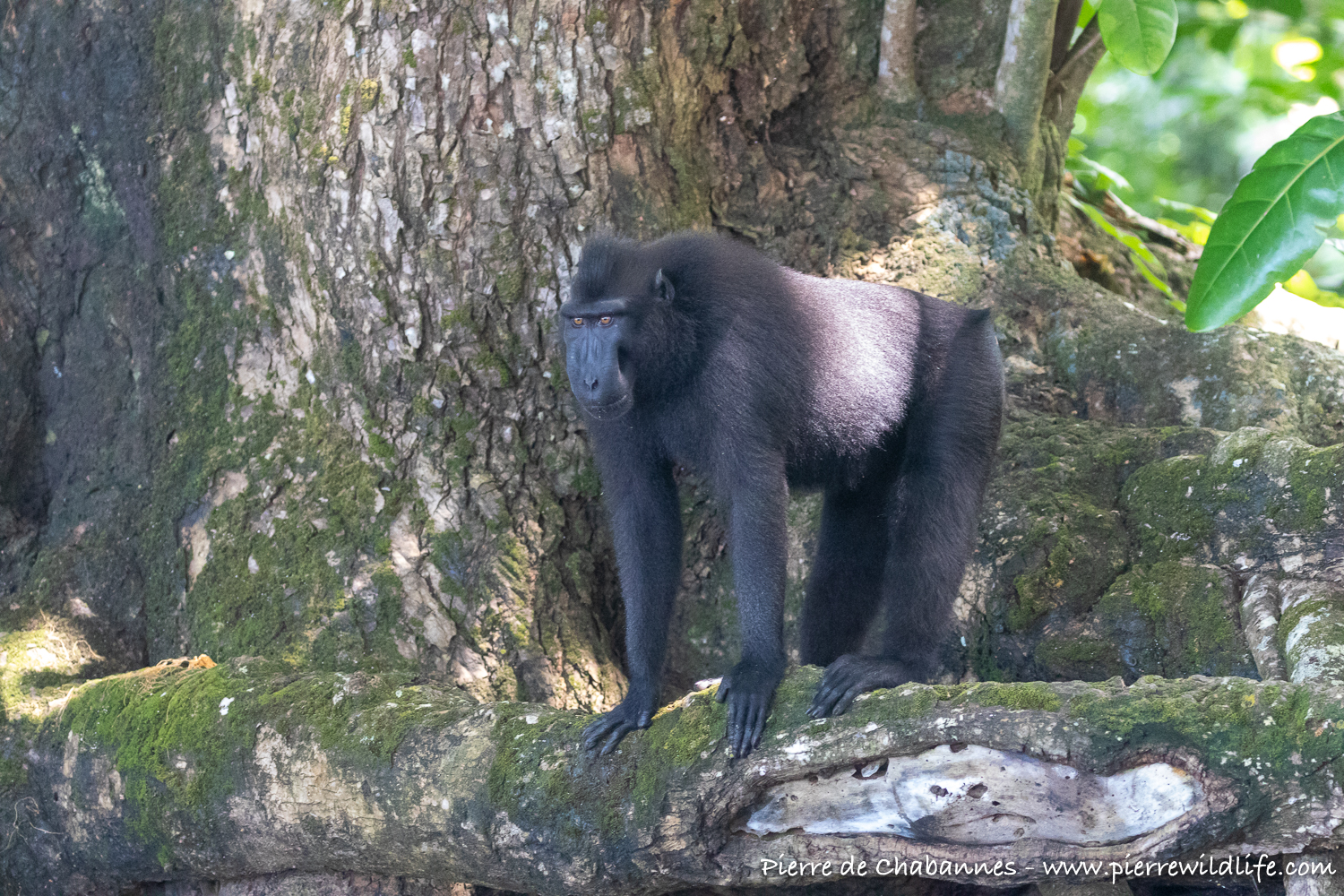
These macaques are primarily terrestrial but regularly climb trees for resting, social interactions, and predator avoidance. Their diet mainly includes fruits, invertebrates, and young vegetation.
Conservation
The species is currently listed as Critically Endangered on the IUCN Red List, and outside Tangkoko, reliable population estimates are not available.
The main threats include hunting for bushmeat, habitat loss, and, to a lesser extent, capture for the illegal pet trade.
A large introduced population, estimated at around 100,000 individuals, exists on Bacan Island (Maluku). However, because this population is not native, it is not included in official wild population estimates for the species.
The long-term conservation of the Celebes crested macaque depends on effective habitat protection, hunting regulation, and continued conservation programs. Captive breeding populations maintained in zoological institutions in Europe and North America also contribute to awareness and conservation funding.
More photos from this observation
Other species of primates can be found by browsing my Education resources.
Back to Primates of Southeast Asia ←Previous species Next Species →
“A long-term project documenting biodiversity across the world through fieldwork, zoological observations and educational content.”