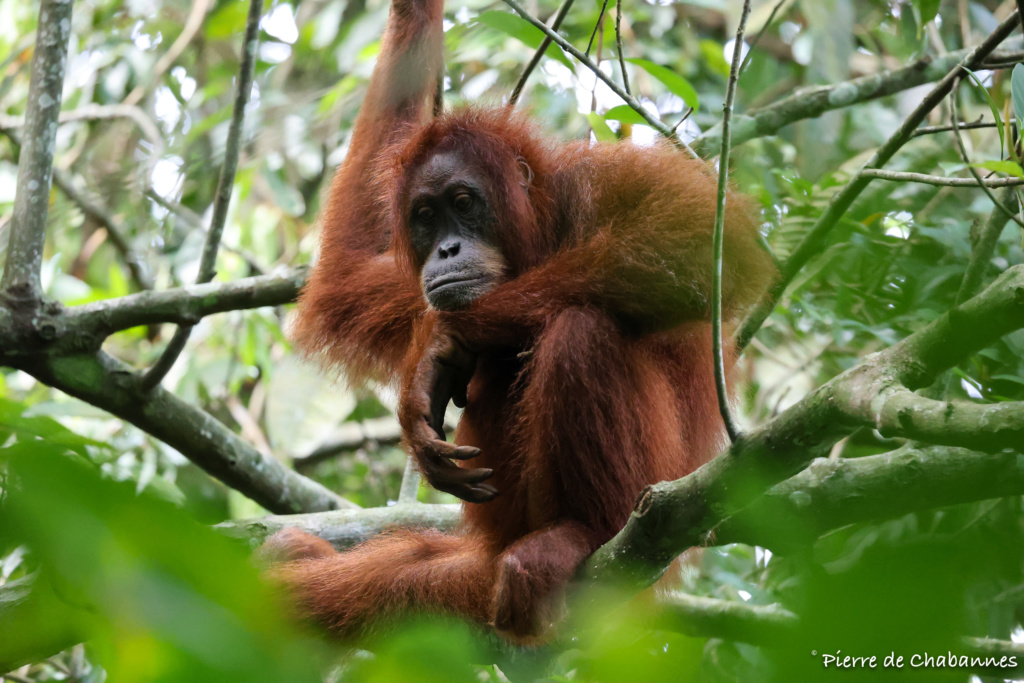
Sumatran orangutan (Pongo abelii)
One of the world’s most endangered great apes, restricted to the remaining rainforests of northern Sumatra.
Context
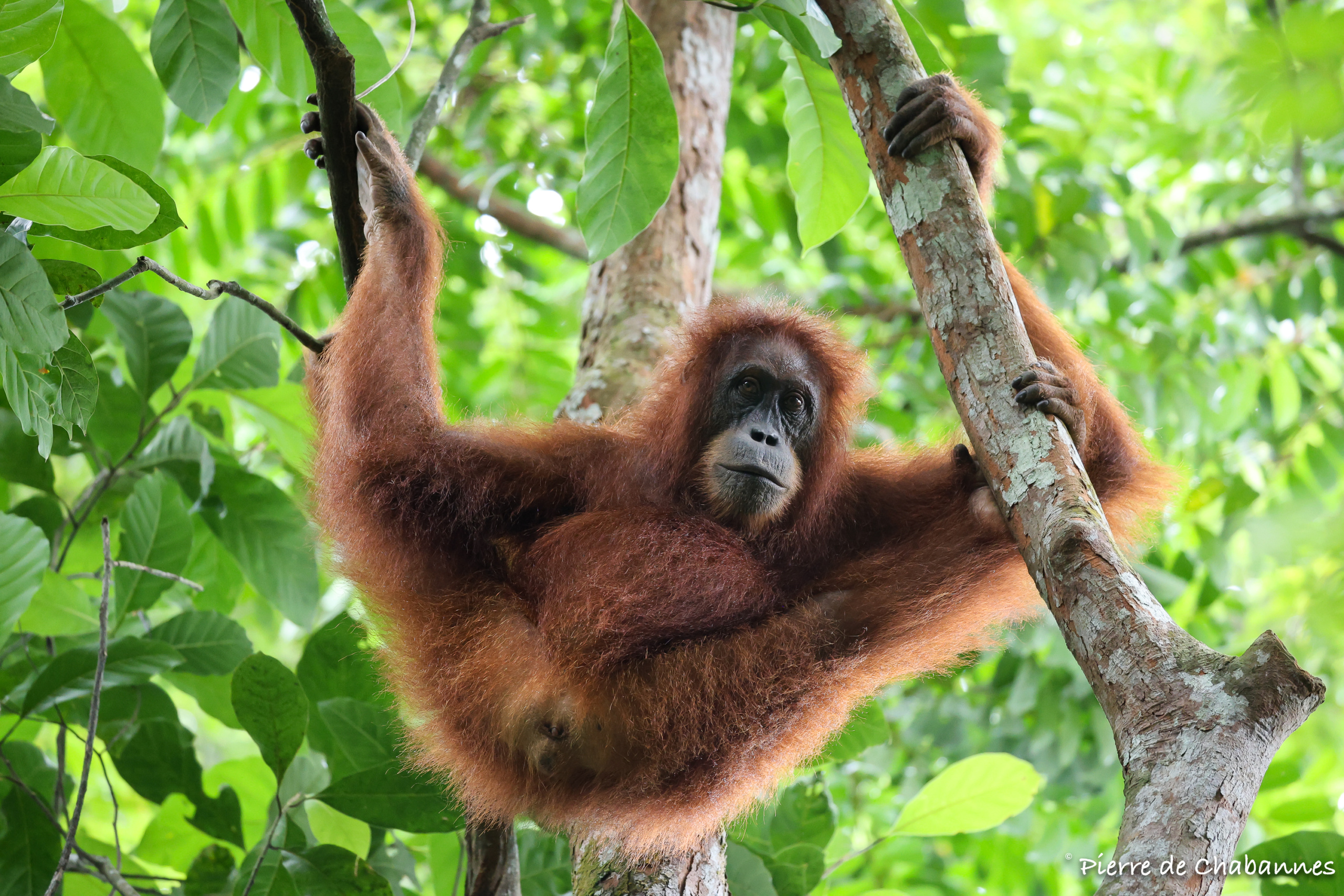
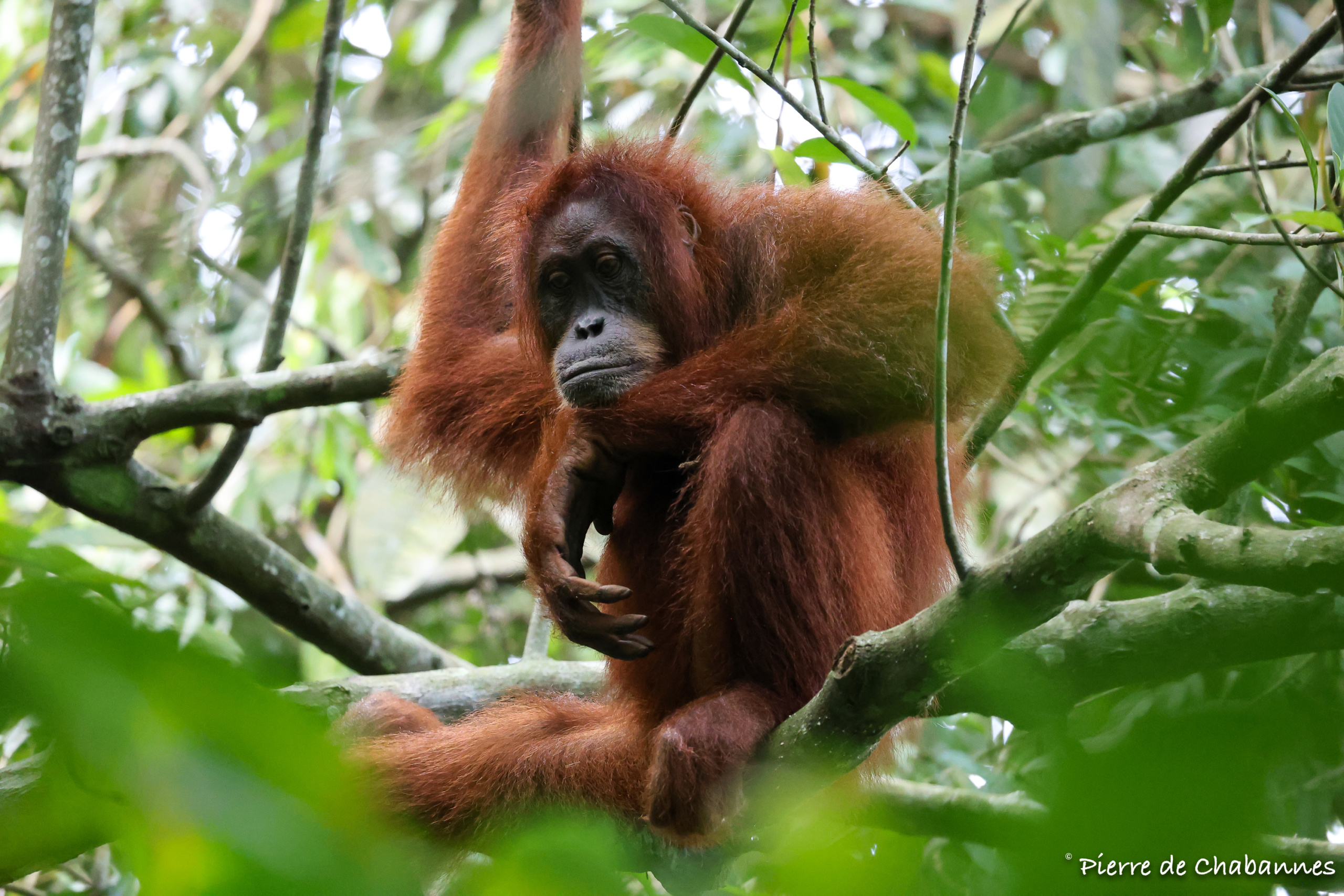
An adult female and a young male observed foraging together in primary rainforest within Gunung Leuser National Park, Sumatra (Indonesia).
Field notes
Around Bukit Lawang, at the edge of Gunung Leuser National Park, orangutans can still be observed relatively reliably, as rangers occasionally place fruit in trees to facilitate sightings for visitors. The area is also well known for its populations of Thomas’s leaf monkeys, grizzled langurs, and numerous Wagler’s pitvipers.
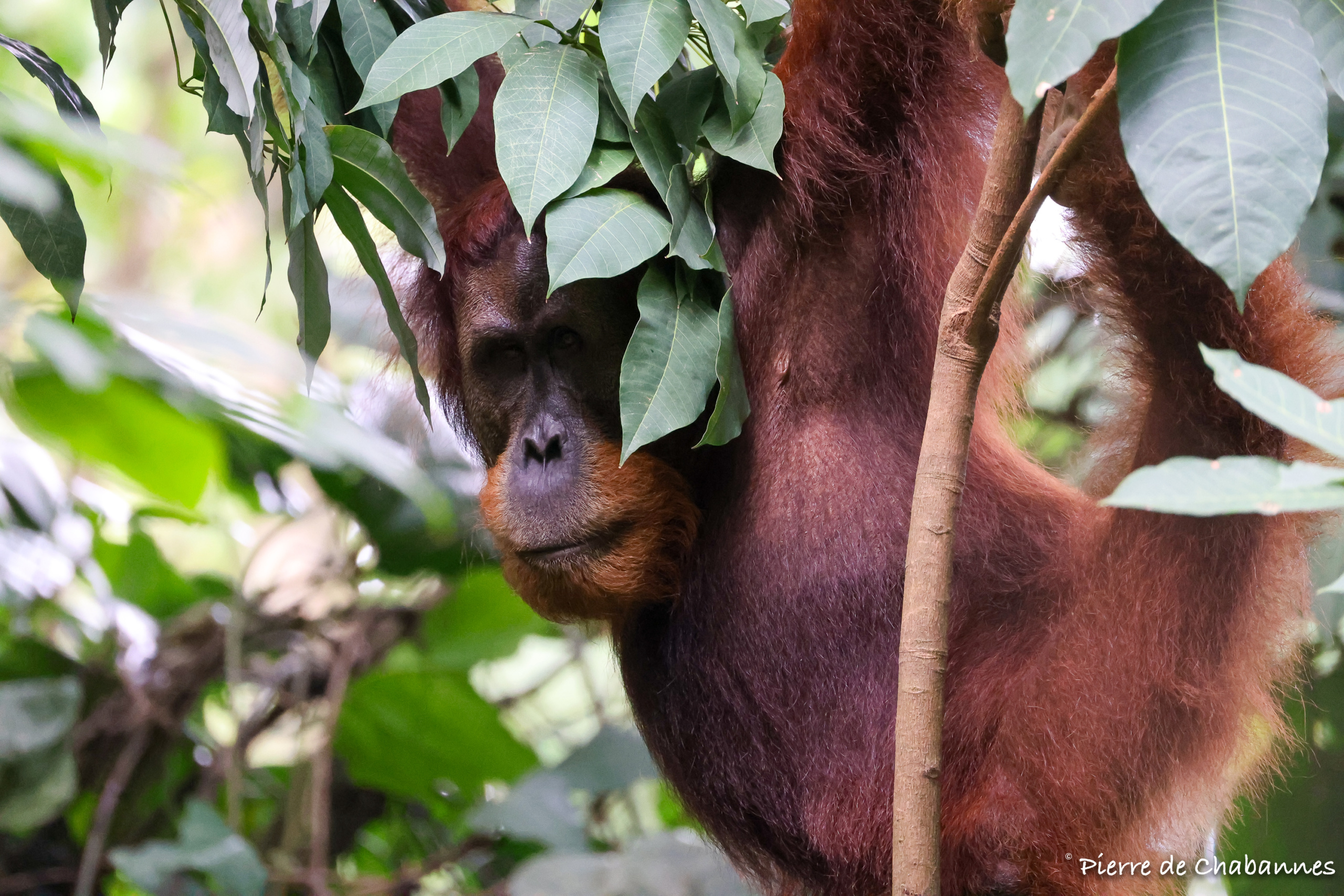
Younger individuals are more frequently observed in this part of the park, while fully adult males generally occur deeper within the forest and are considerably more difficult to encounter despite their much larger size.
Observing a wild orangutan in intact rainforest remains one of the most remarkable wildlife experiences in Southeast Asia.
Key facts
The Sumatran orangutan is one of three currently recognized orangutan species and is endemic to northern Sumatra.
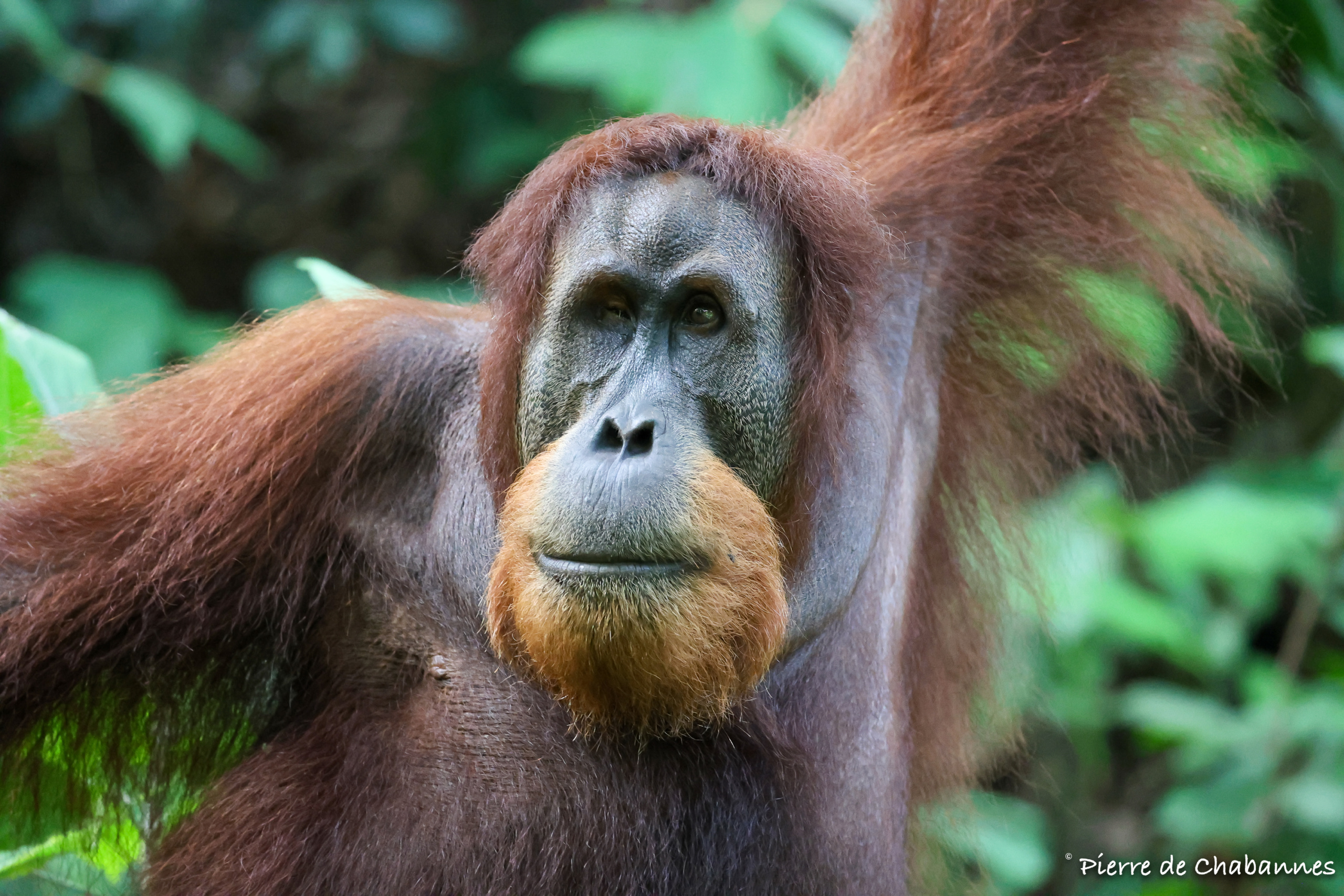
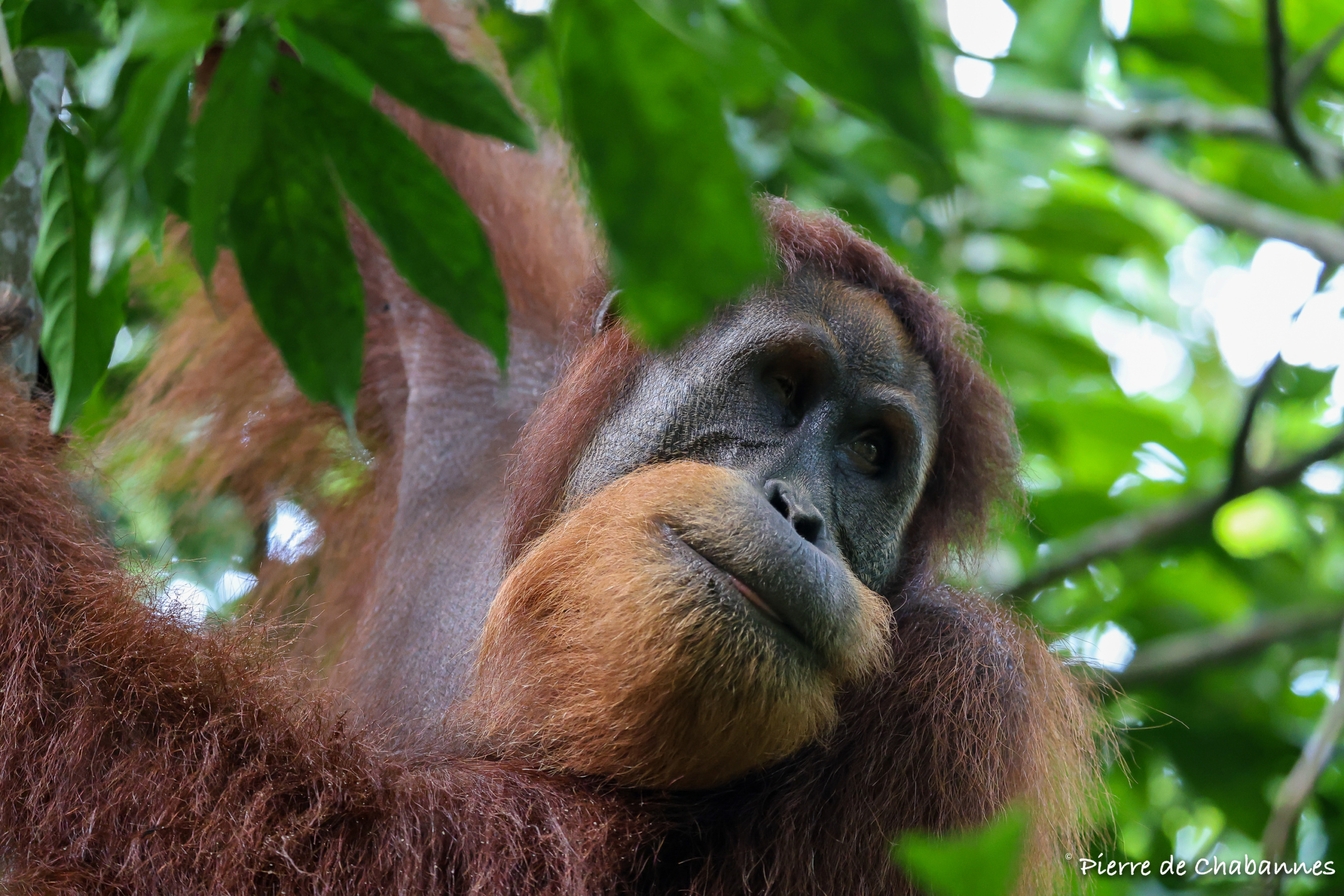
Compared to Bornean orangutans, it is generally more arboreal and often displays lighter fur coloration and longer facial hair including a distinctive moustache and beard.
Orangutans possess advanced cognitive abilities and are known to use tools, solve problems, and transmit learned behaviors between generations.
Conservation
The species is currently listed as Critically Endangered on the IUCN Red List. More than 60% of its habitat was lost between 1985 and 2007.
Deforestation remains an ongoing threat, while illegal hunting and capture continue to affect populations even inside protected areas. If current trends continue, Sumatran orangutan populations are expected to decline by more than 80% over the coming decades.
The species benefits from several conservation and rescue initiatives in Indonesia and internationally, including conservation breeding programs in European and American zoos.
The protection of extensive primary forest areas such as Gunung Leuser National Park remains essential for the species’ survival, with more than 95% of the remaining population known to occur within these forests.
More photos from this observation
Other species of primates can be found by browsing my Education resources.
Back to Primates of Southeast Asia ←Previous species Next Species →
“A long-term project documenting biodiversity across the world through fieldwork, zoological observations and educational content.”