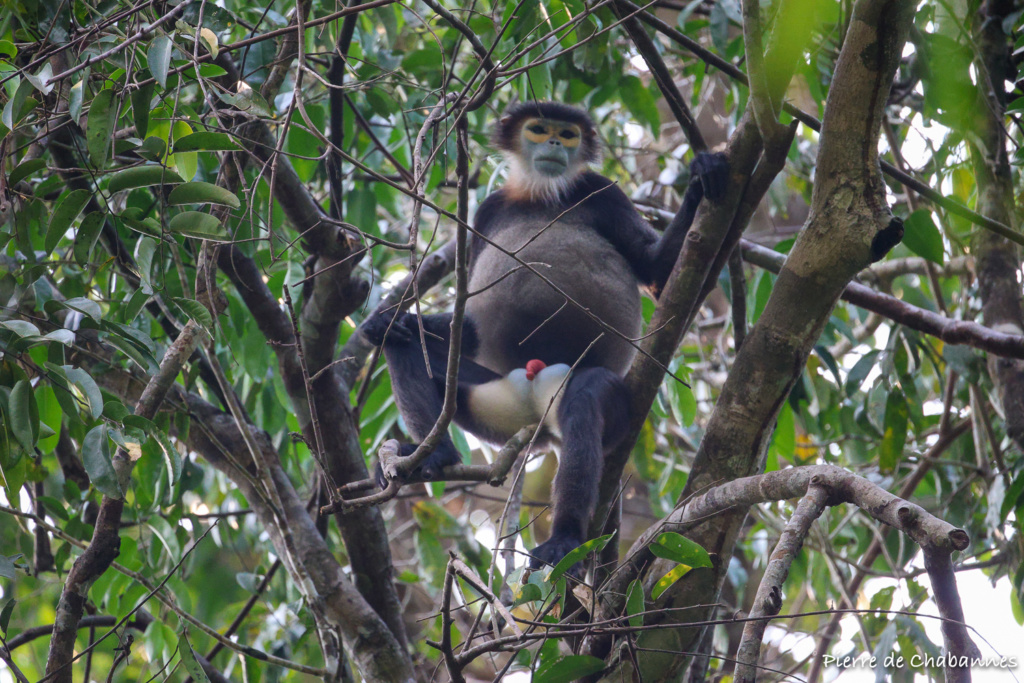
Black-shanked douc (Pygathrix nigripes)
One of Southeast Asia’s most spectacular primates, threatened by hunting and ongoing deforestation.
Context
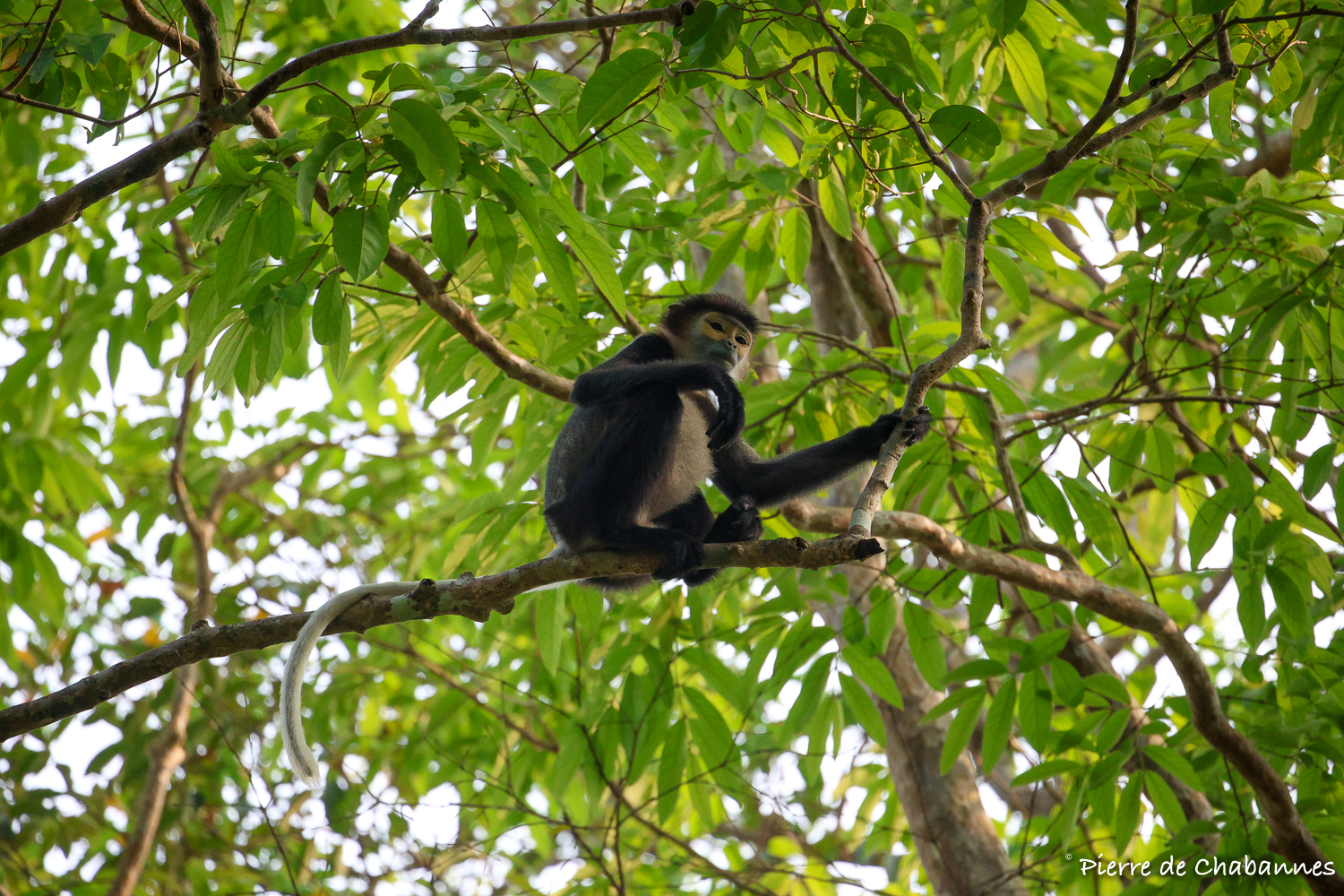
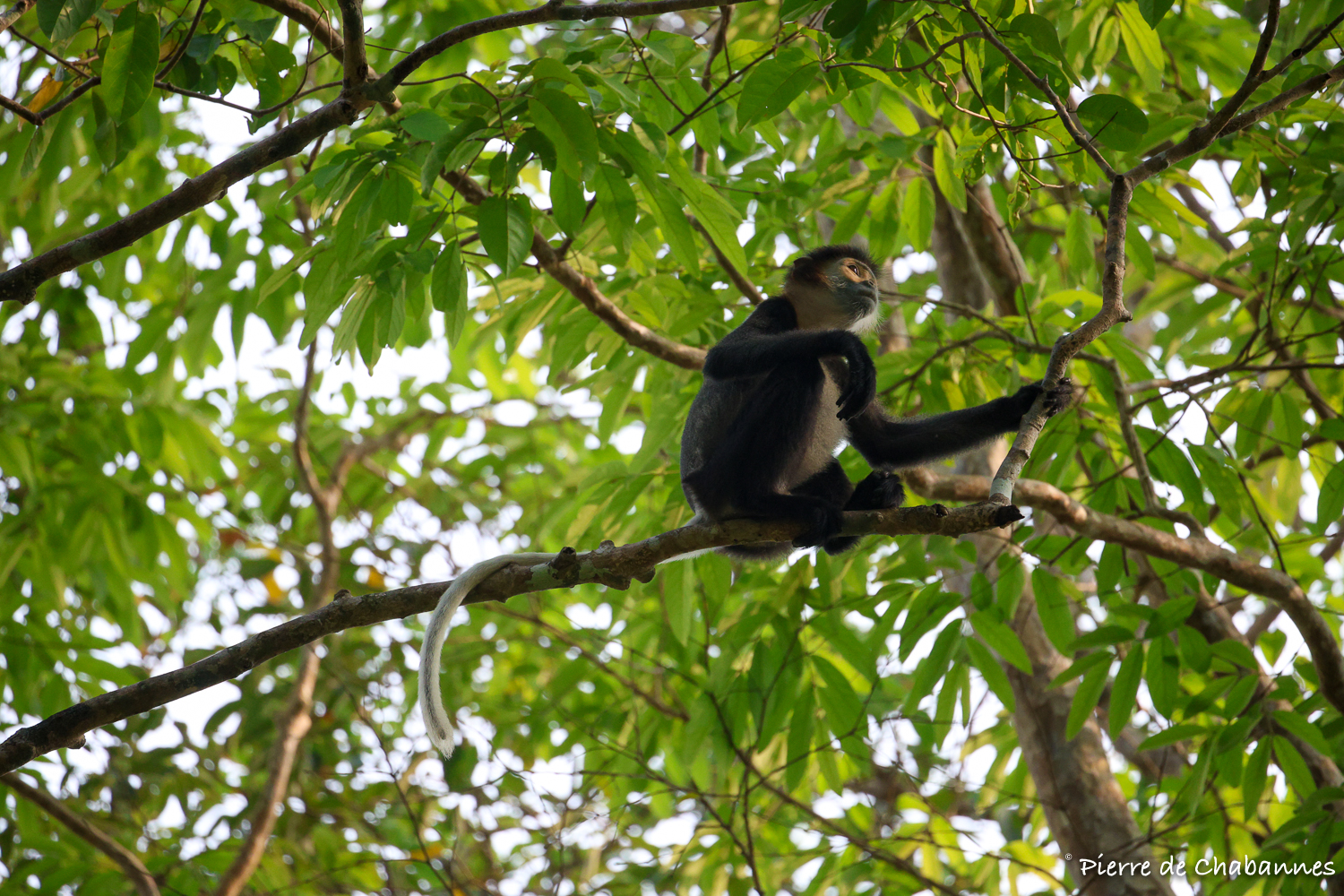
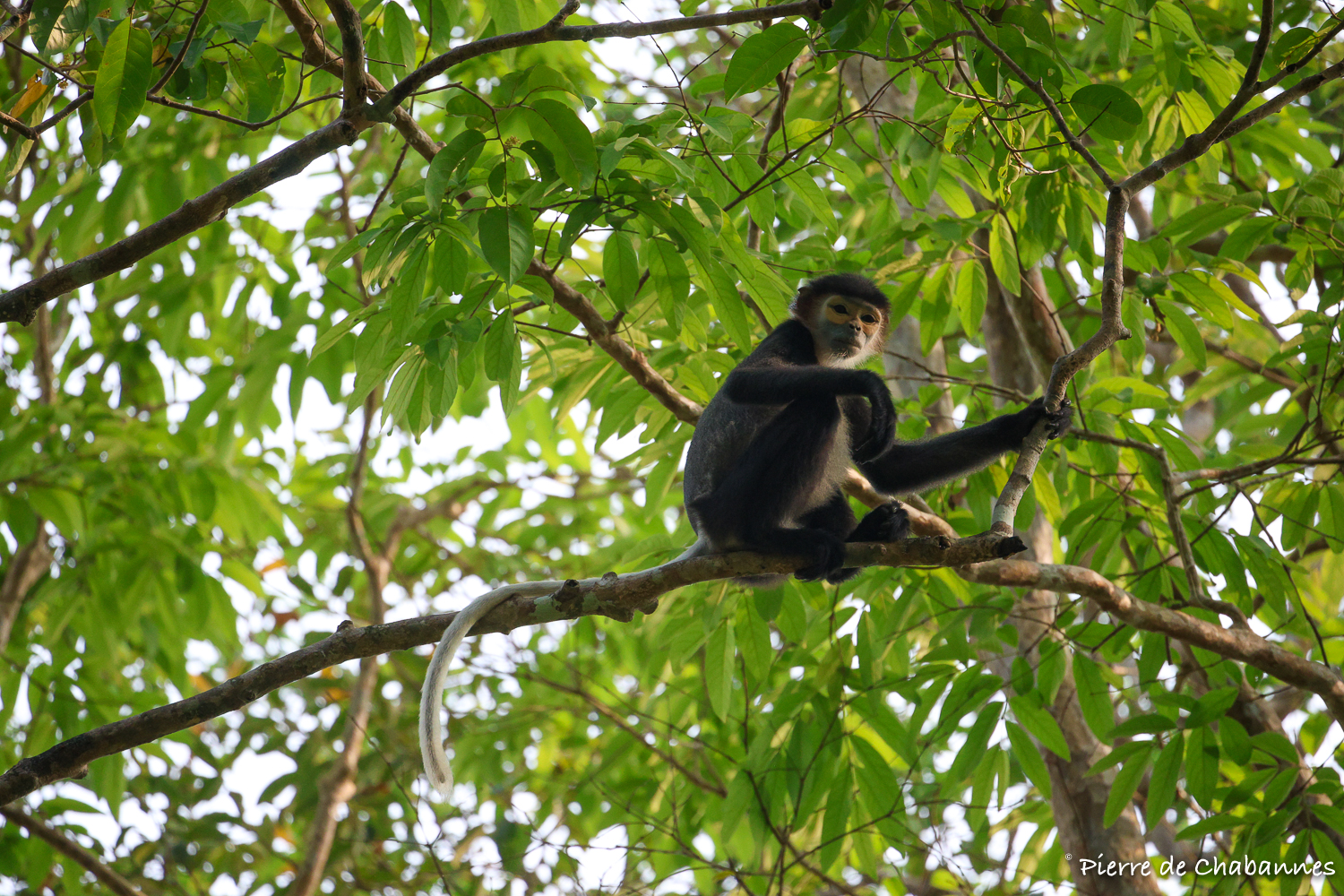
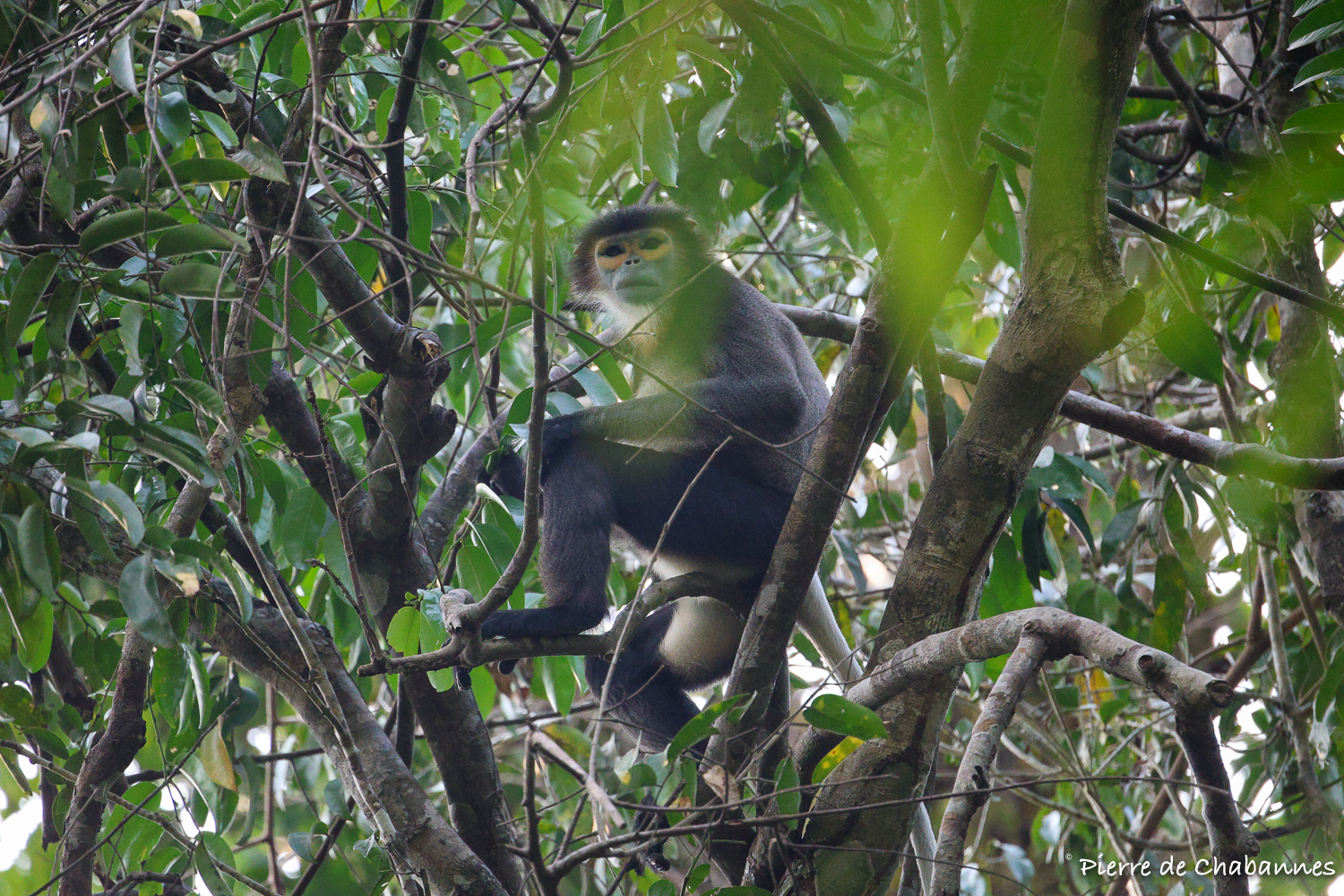
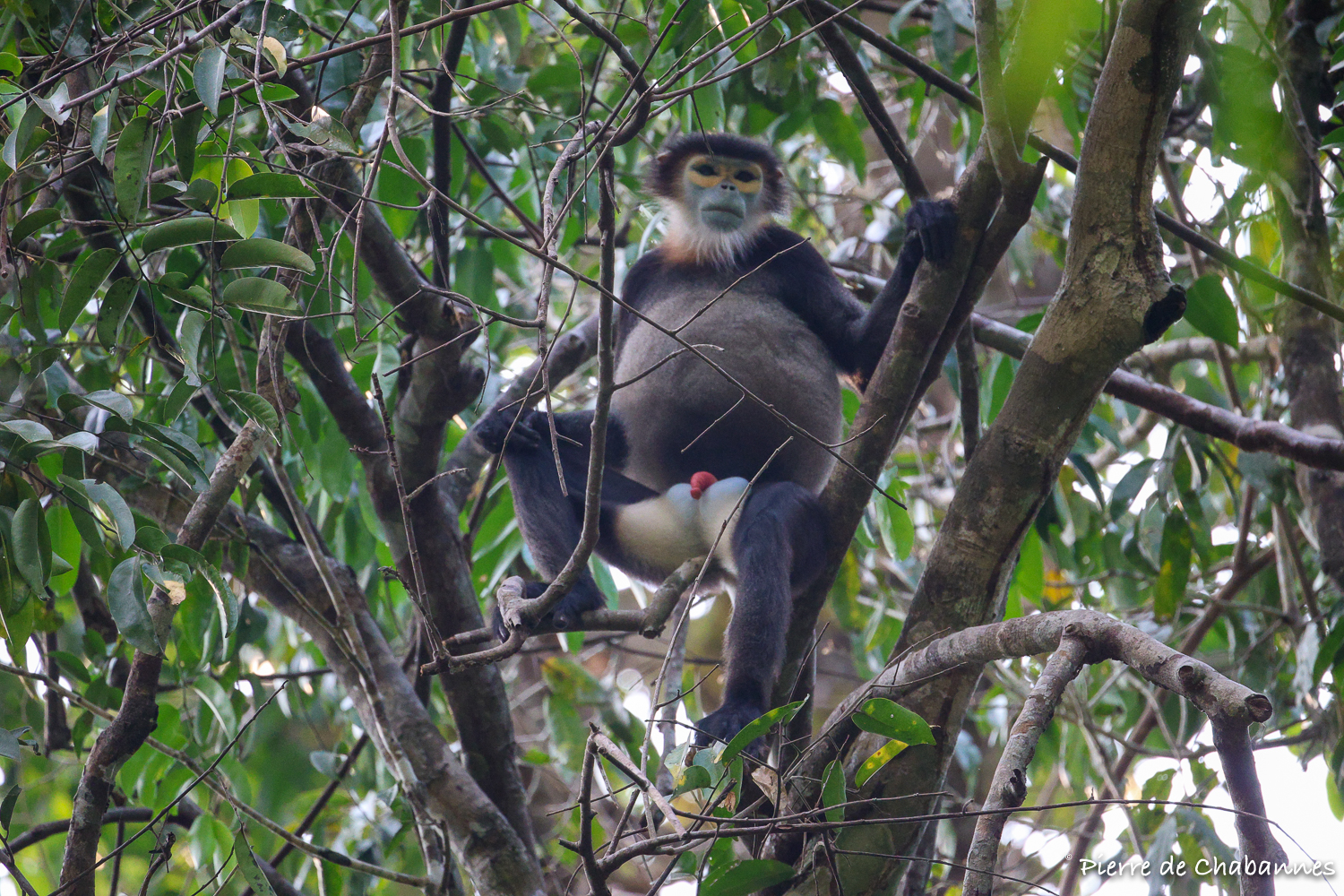
A small family group observed leaping from tree to tree before pausing to rest above one of the main roads in Cat Tien National Park, southern Vietnam.
Field notes
Black-shanked doucs are highly arboreal primates, spending most of their lives in the forest canopy where they feed, rest, and travel by moving gracefully and jumping between branches.
Doucs in general are often difficult to locate, as groups can remain completely silent and motionless for long periods while resting high in the trees. In this case, we were fortunate to detect the group after hearing the large adult male jumping between tall canopy trees.
The protected forests of Cat Tien National Park represent one of the species’ main strongholds and remain among the most reliable locations for observing and photographing black-shanked doucs in the wild.
Key facts
The black-shanked douc belongs to the genus Pygathrix, a group of highly distinctive Southeast Asian langurs often considered among the world’s most colorful primates. The species can easily be recognized by its black lower legs contrasting with grey upperparts and blue and orange face.
Like other colobine monkeys, it relies heavily on leaves and possesses a specialized digestive system adapted to processing fibrous vegetation. Fruits and seeds may occasionally supplement its diet.
The species inhabits both evergreen and seasonally dry forests across southern Vietnam and adjacent parts of Cambodia east of the Mekong River.
Conservation
The species is currently listed as Critically Endangered on the IUCN Red List. It is amongst the world’s most threatened primate species.
The main threats include ongoing deforestation through both legal and illegal logging, habitat destruction linked to road construction and dam projects, and conversion of forests into industrial agricultural land. Hunting for traditional medicine also continues to affect populations locally.
Although the species still occurs in several protected areas, no population is currently considered fully secure, and declines continue throughout much of its range at alarming rates. While black-shanked doucs are maintained in captivity, no conservation breeding program currently exists to establish a long-term insurance population.
More photos from this observation
Other species of primates can be found by browsing my Education resources.
Back to Primates of Southeast Asia ←Previous species Next Species →
“A long-term project documenting biodiversity across the world through fieldwork, zoological observations and educational content.”