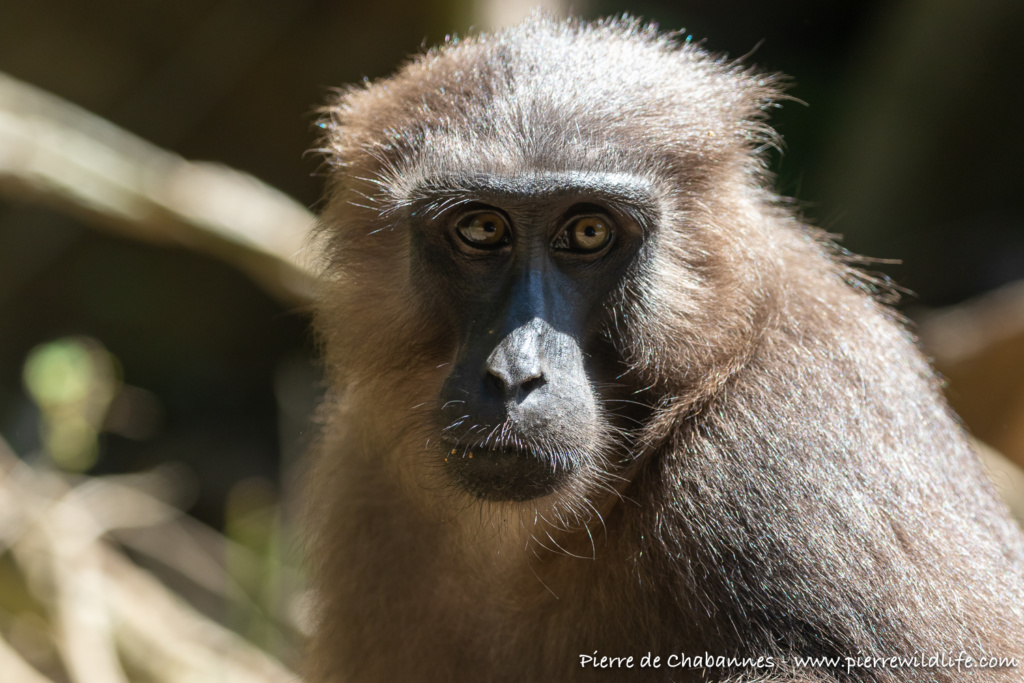
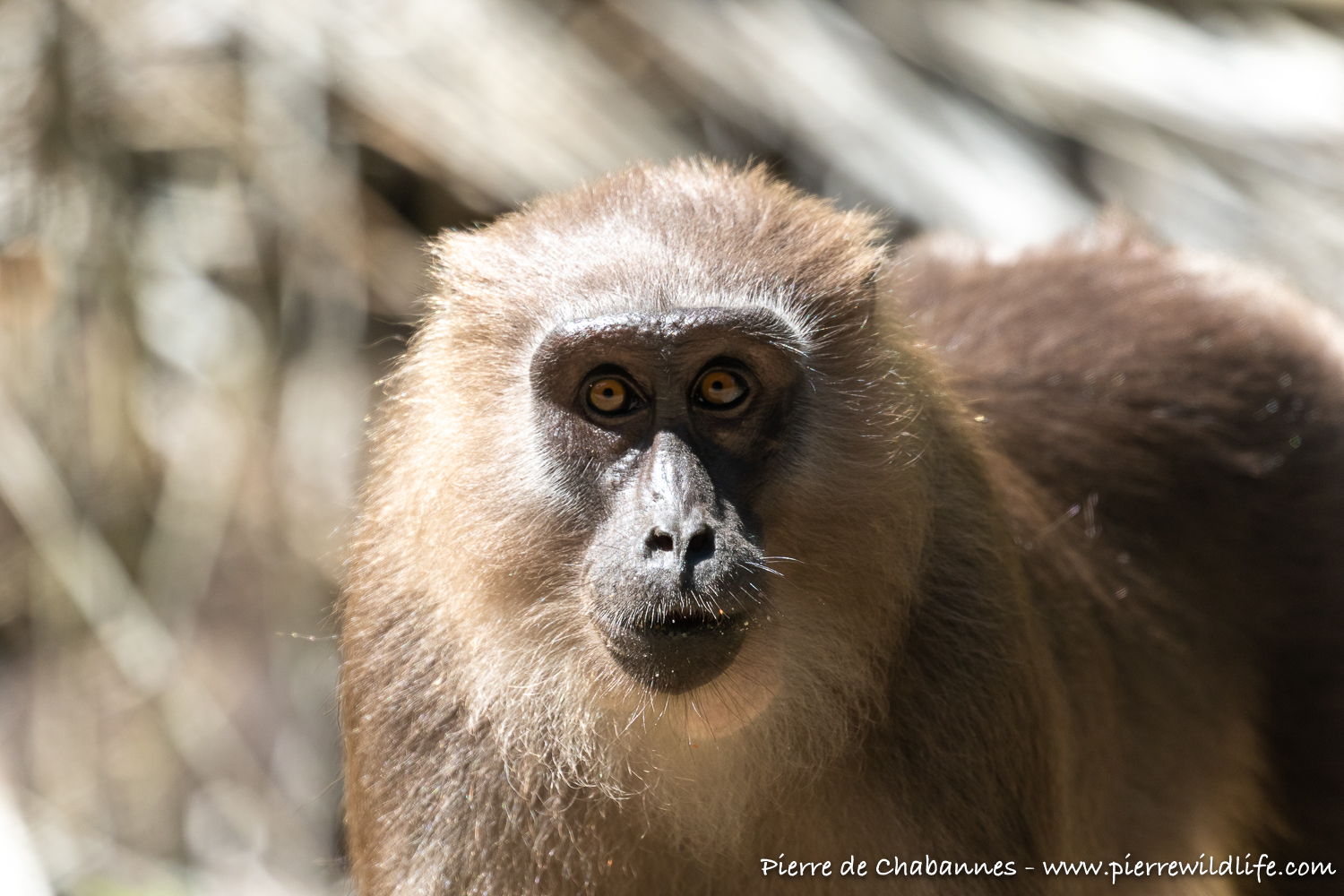
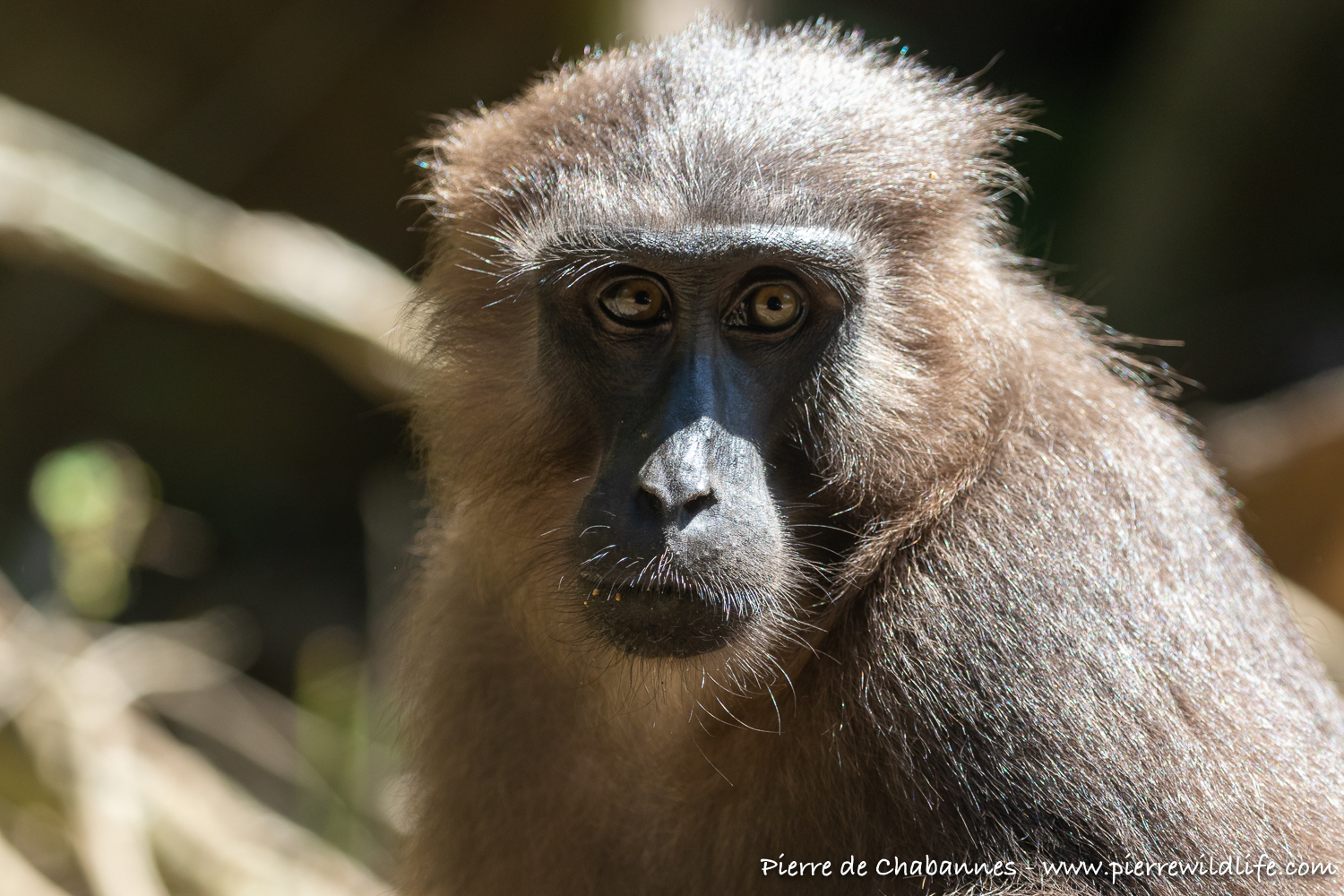
Moor macaque (Macaca maura)
One of Sulawesi’s endemic macaques, threatened by habitat loss and increasing fragmentation of the island’s forests.
Context
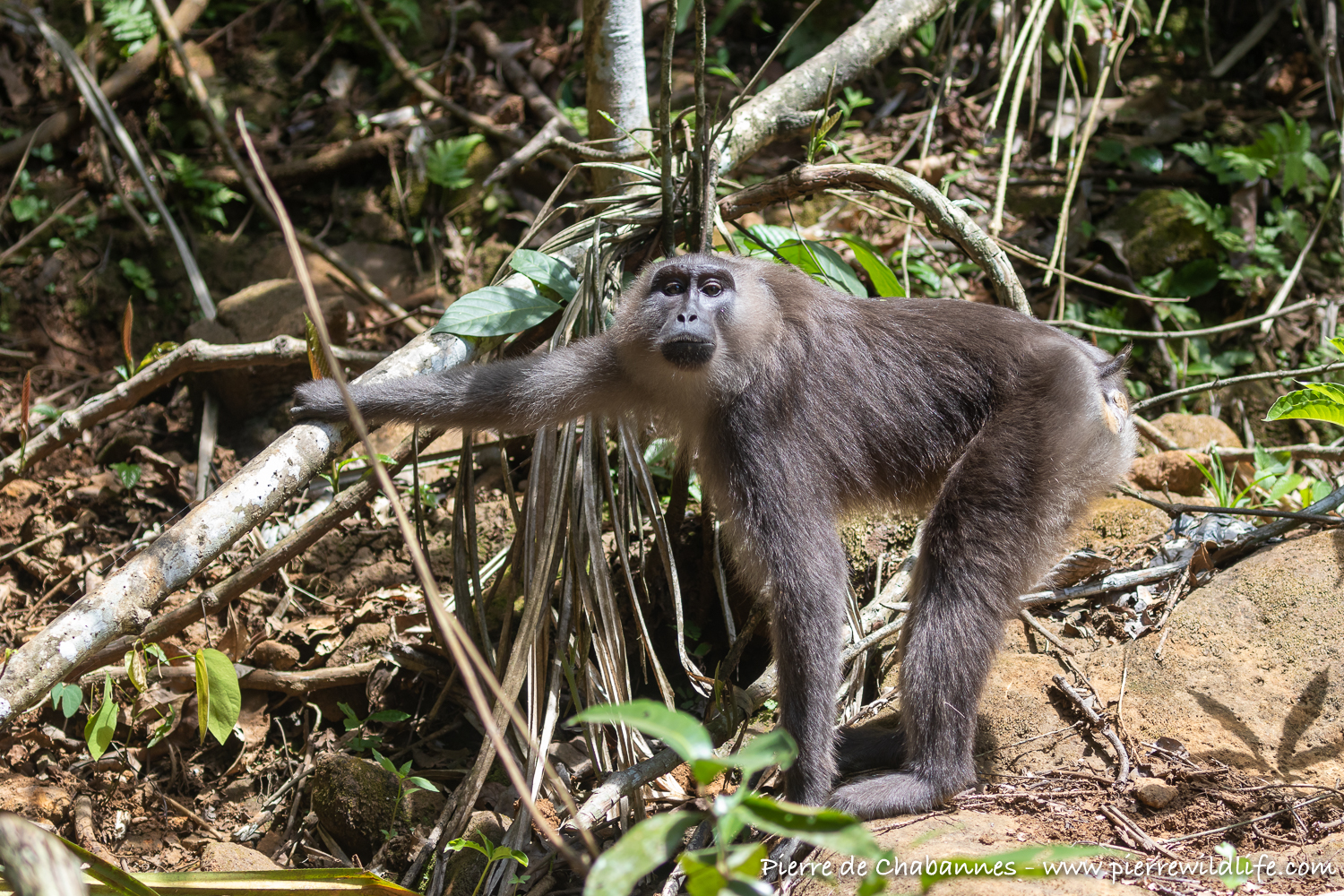
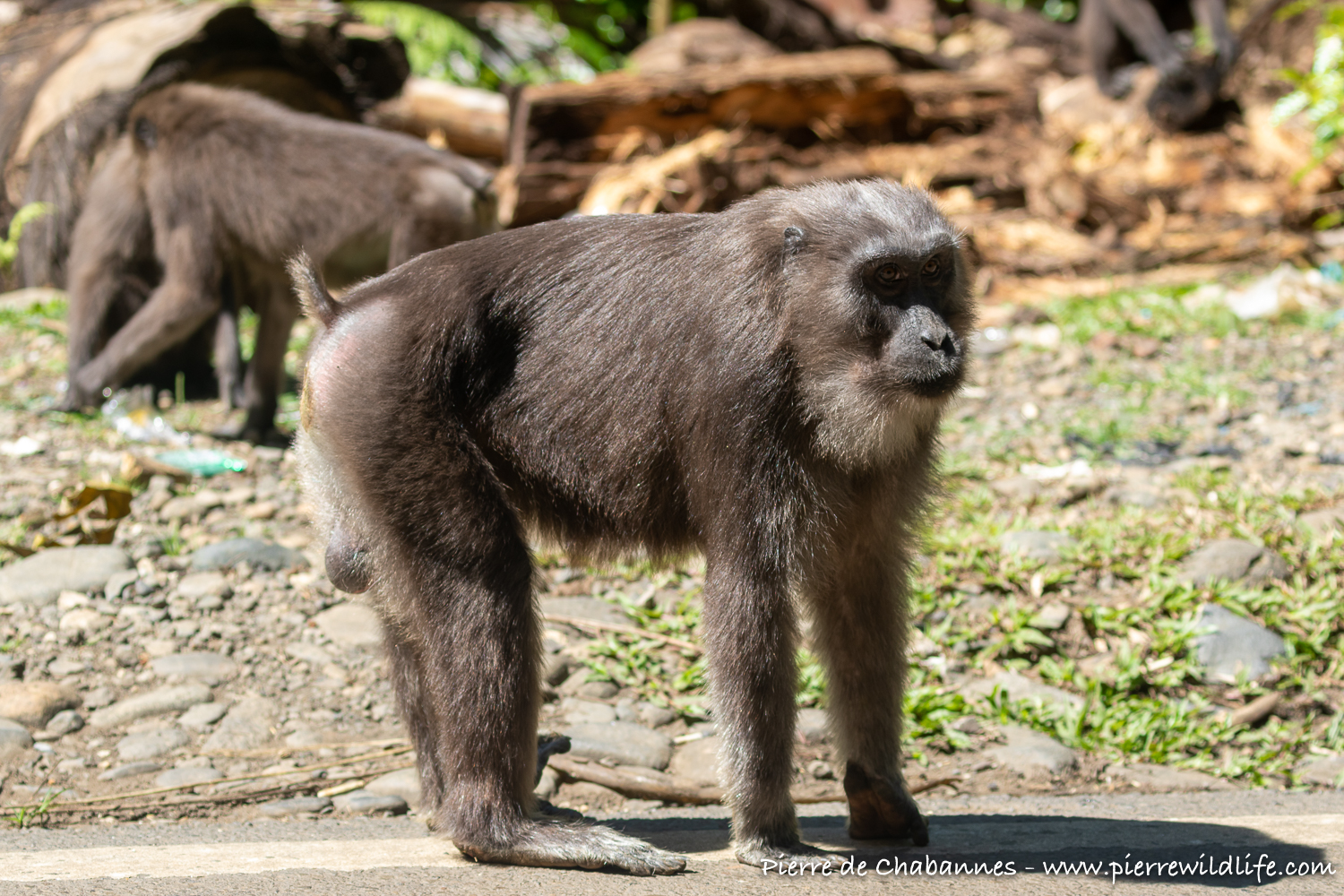
A family group is often seen near the road, begging for food at cars that stop to better observe the monkeys, near the Bantimurung National Park in Makassar area, Sulawesi (Indonesia).
Field notes
Taman Nasional Bantimurung is the most well known protected areas near Makassar, in the southwest peninsula of Sulawesi. Numerous threatened and endemic species occur there and the place is well known for its butterfly diversity.
Outside of the park’s main permises, the main road leads to a dry forest area where a large troup of Moor macaques live. They are attracted to people passing by and throwing them food.
The family group of Bantimurung is big and, with a little bit of patience, lots of social behaviors can be documented. This group is by far the easiest to observe within the species range.
Key facts
The Moor macaque is endemic to southern Sulawesi. It is found in humid and dry forests and is very adaptable, using man-made environments like plantations to find food.
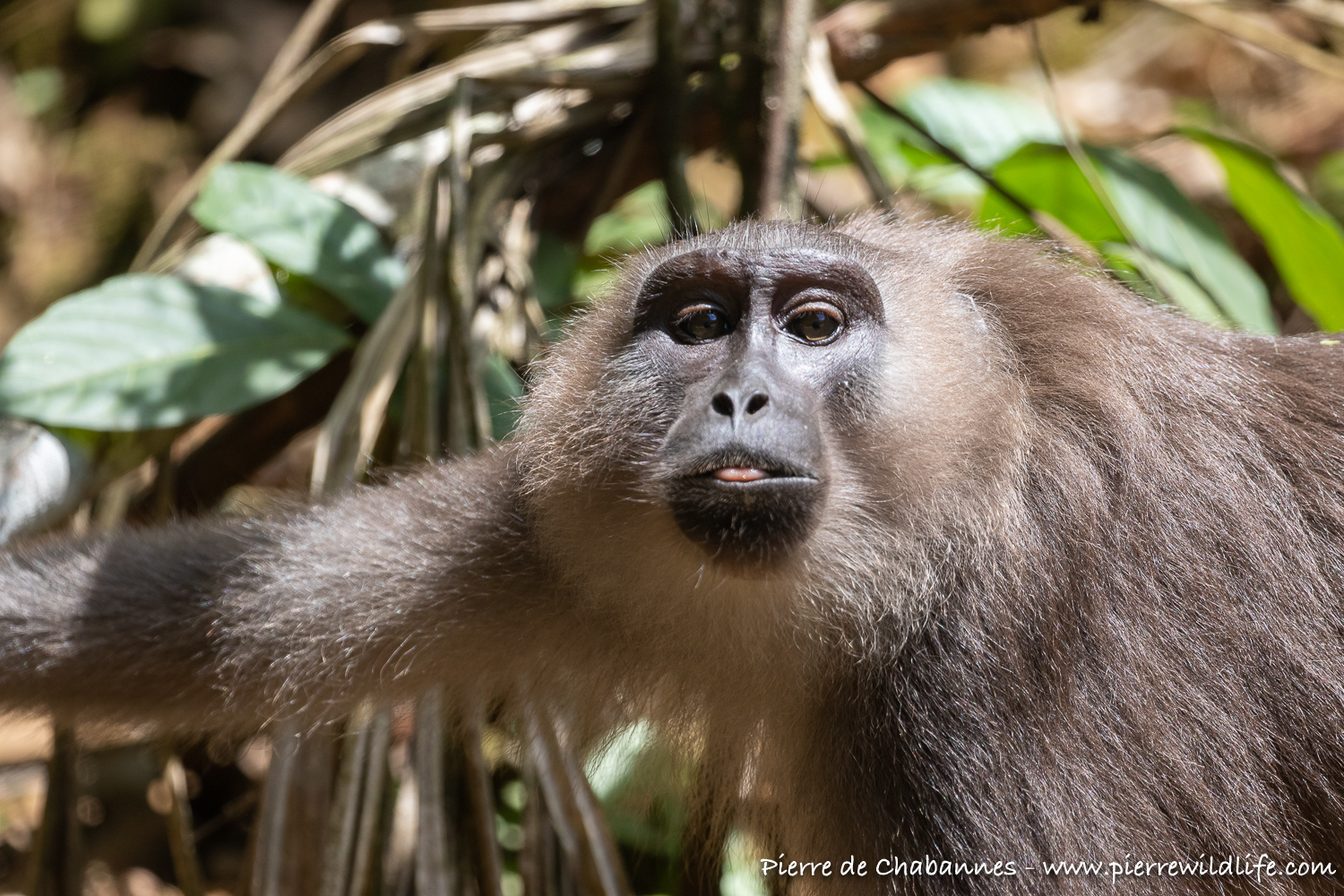
It has a more robust body shape and more brownish fur than the north Sulawesi Macaques. The species is very similar in body shape and face to the Heck’s macaque and Booted macaque.
Sulawesi macaques are evolutionarily distinct from mainland Asian macaques and represent one of the most remarkable examples of island primate diversification in Southeast Asia.
Conservation
The species is currently listed as Endangered on the IUCN Red List. Its populations are alarmingly declining because of habitat loss and persecution because of human / animal conflicts such as crop destruction.
Indonesian primates are also threatened by the pet trade. Hundreds of specimens belonging to different endangeed species are being sold illegally on internet every year and more are found in small city markets.
Although the species survives in several protected areas, many remaining forests in southern Sulawesi are becoming increasingly isolated. Long-term conservation of the Moor macaque depends on the protection and restoration of connected forest habitats across Sulawesi.
More photos from this observation
Other species of primates can be found by browsing my Education resources.
Back to Primates of Southeast Asia ←Previous species Next Species →
“A long-term project documenting biodiversity across the world through fieldwork, zoological observations and educational content.”