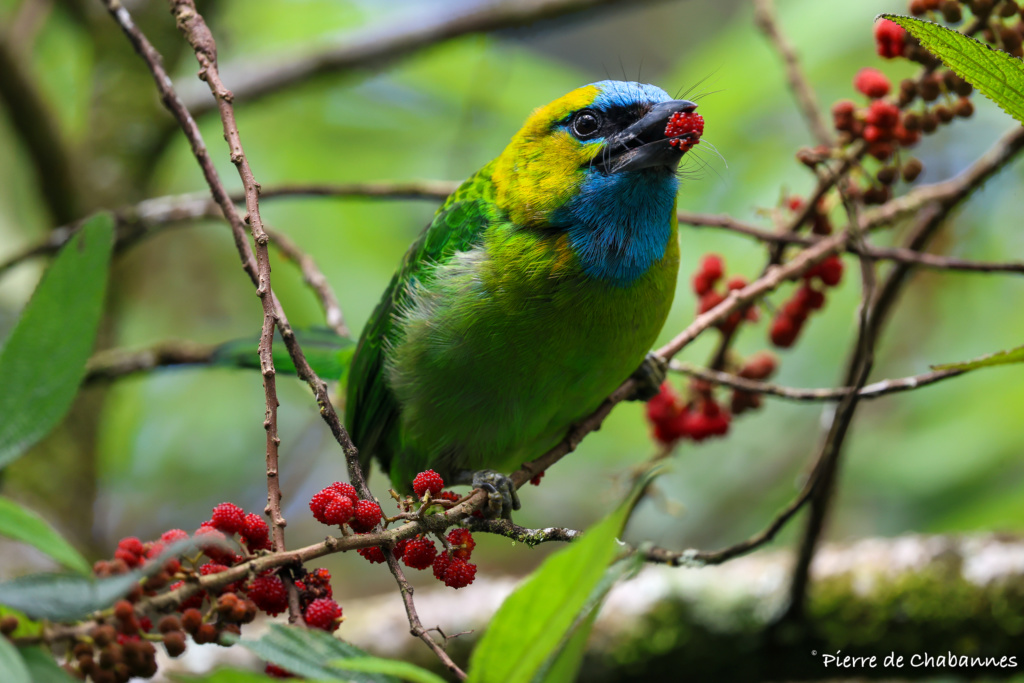
Golden-naped barbet (Psilopogon pulcherrimus)
A very little known barbet, endemic to the montane forests of northern Borneo.
Context
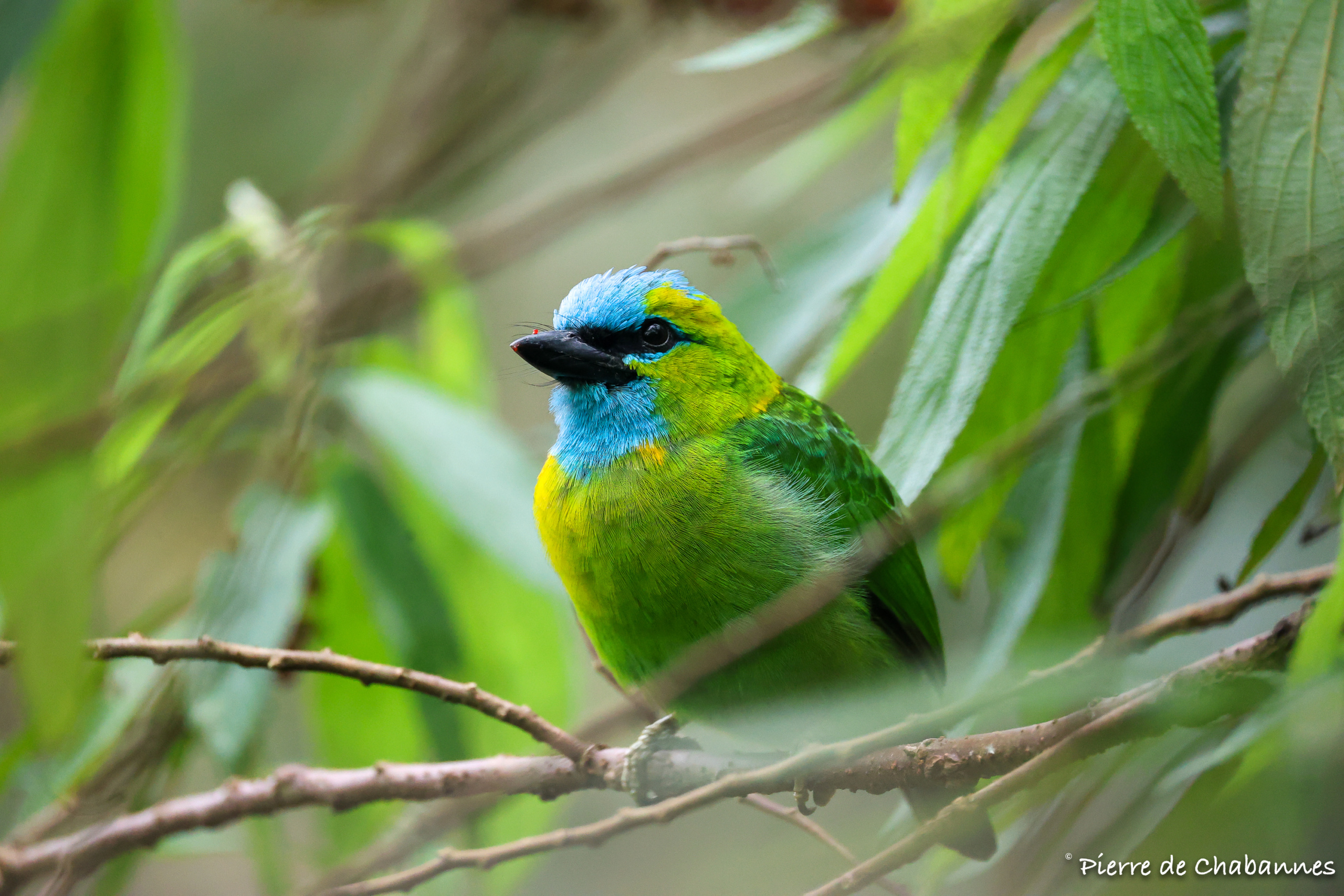
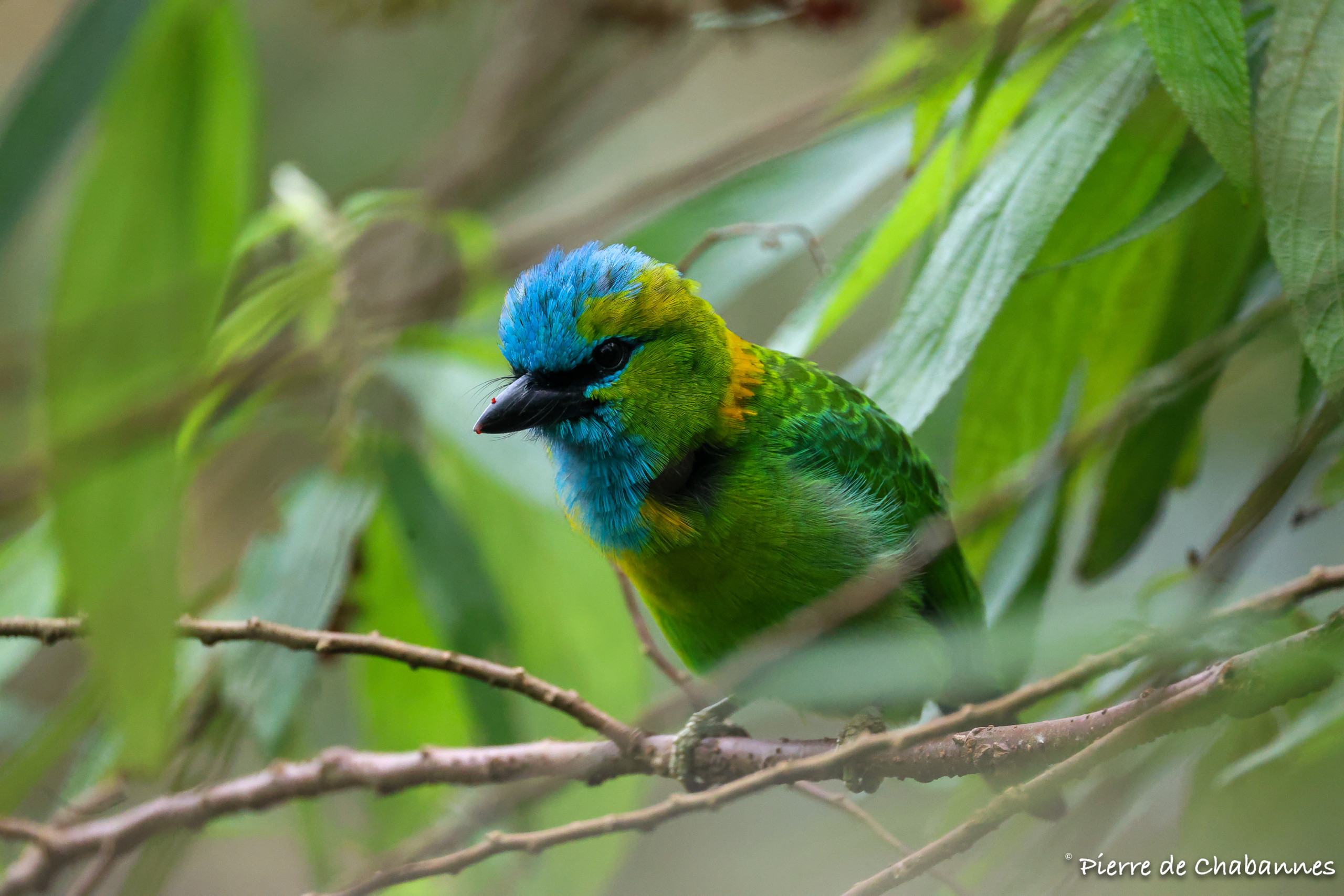
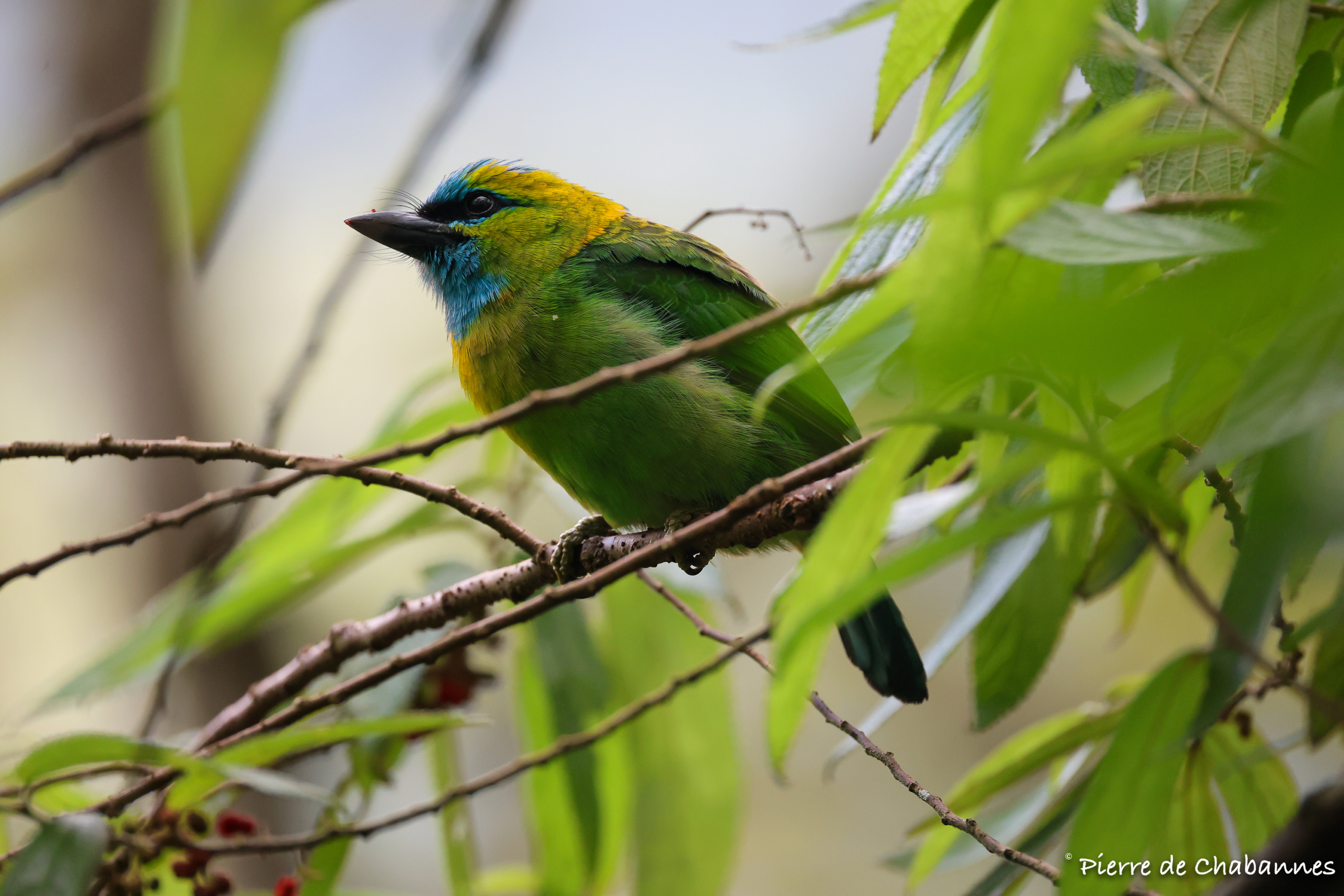
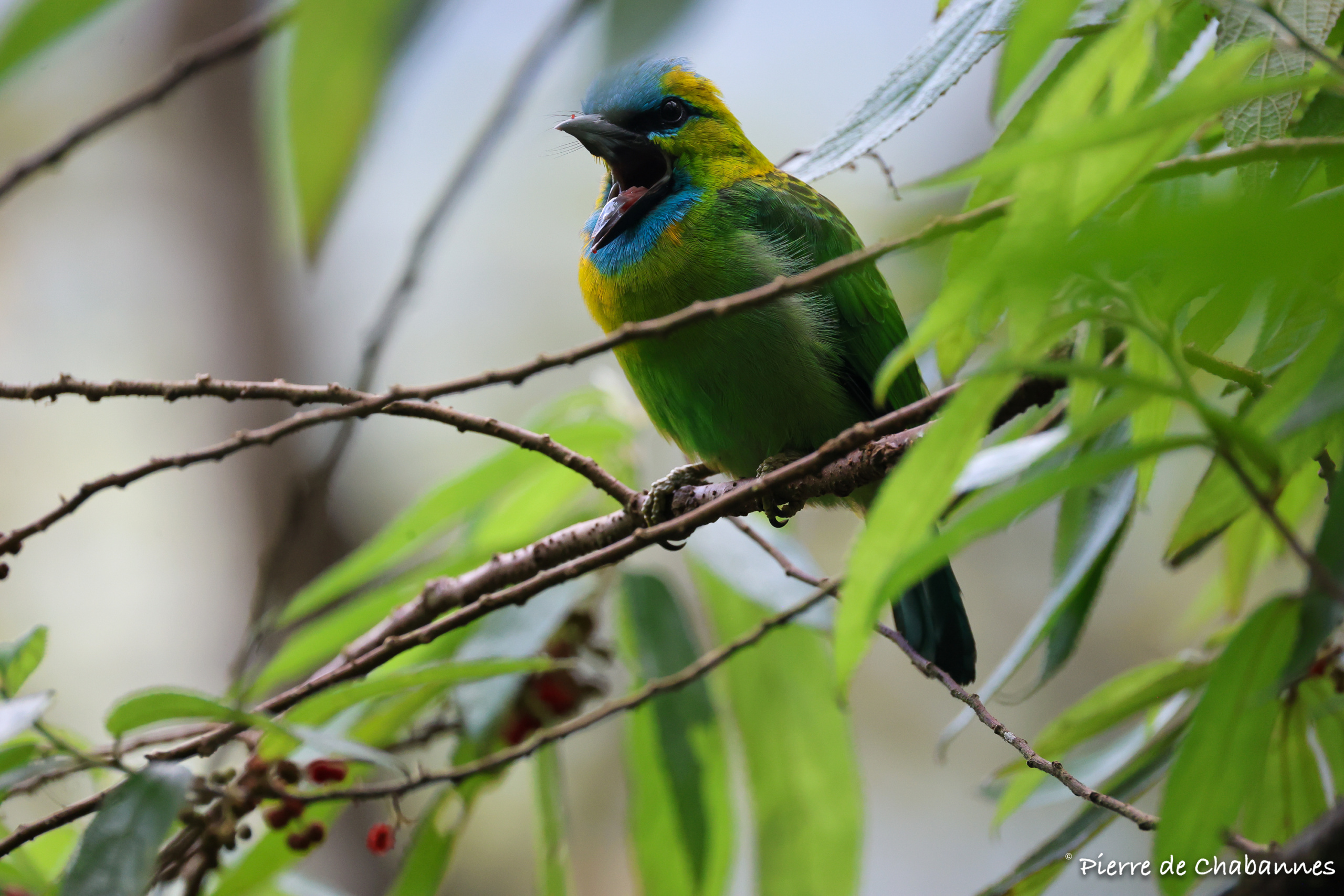
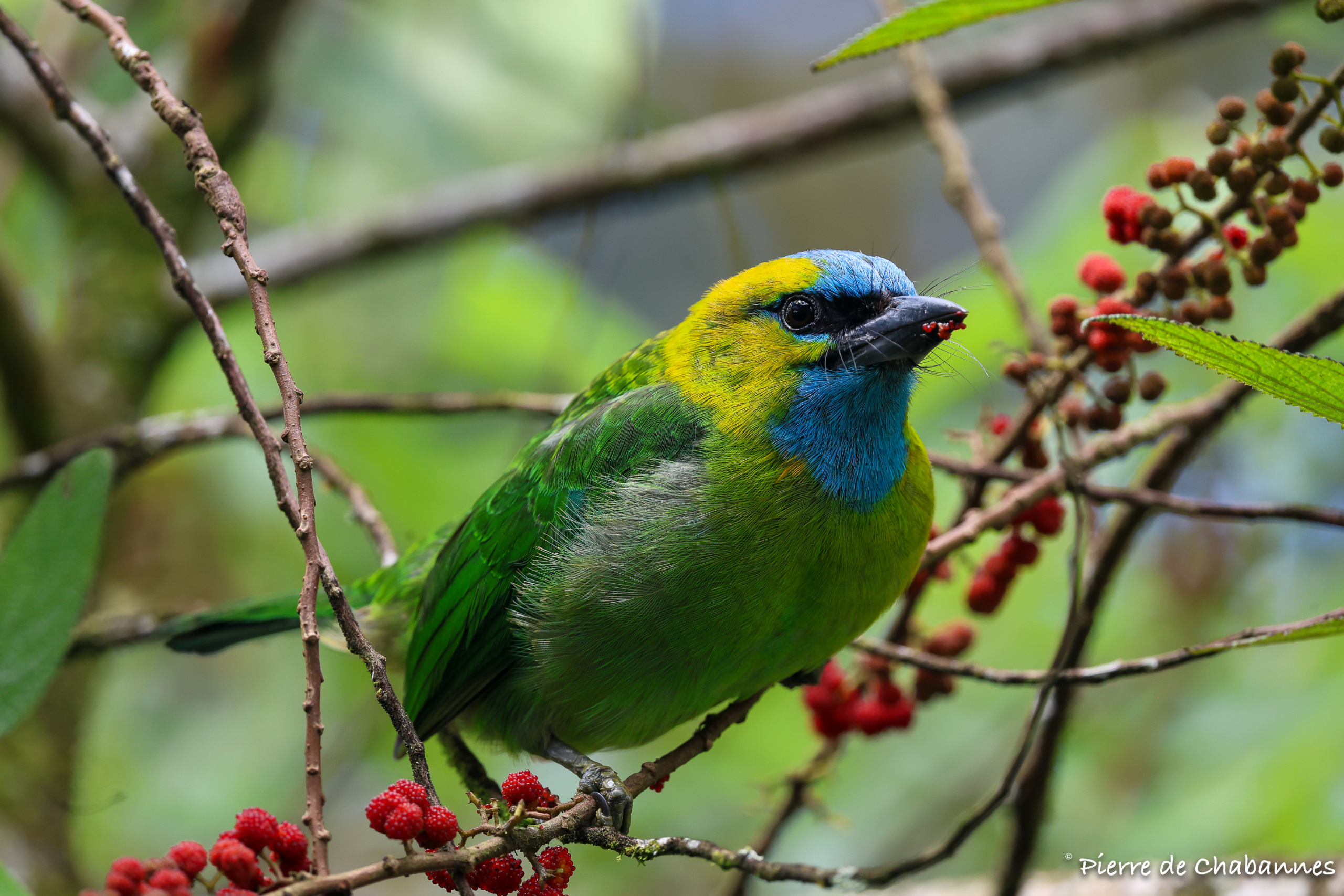
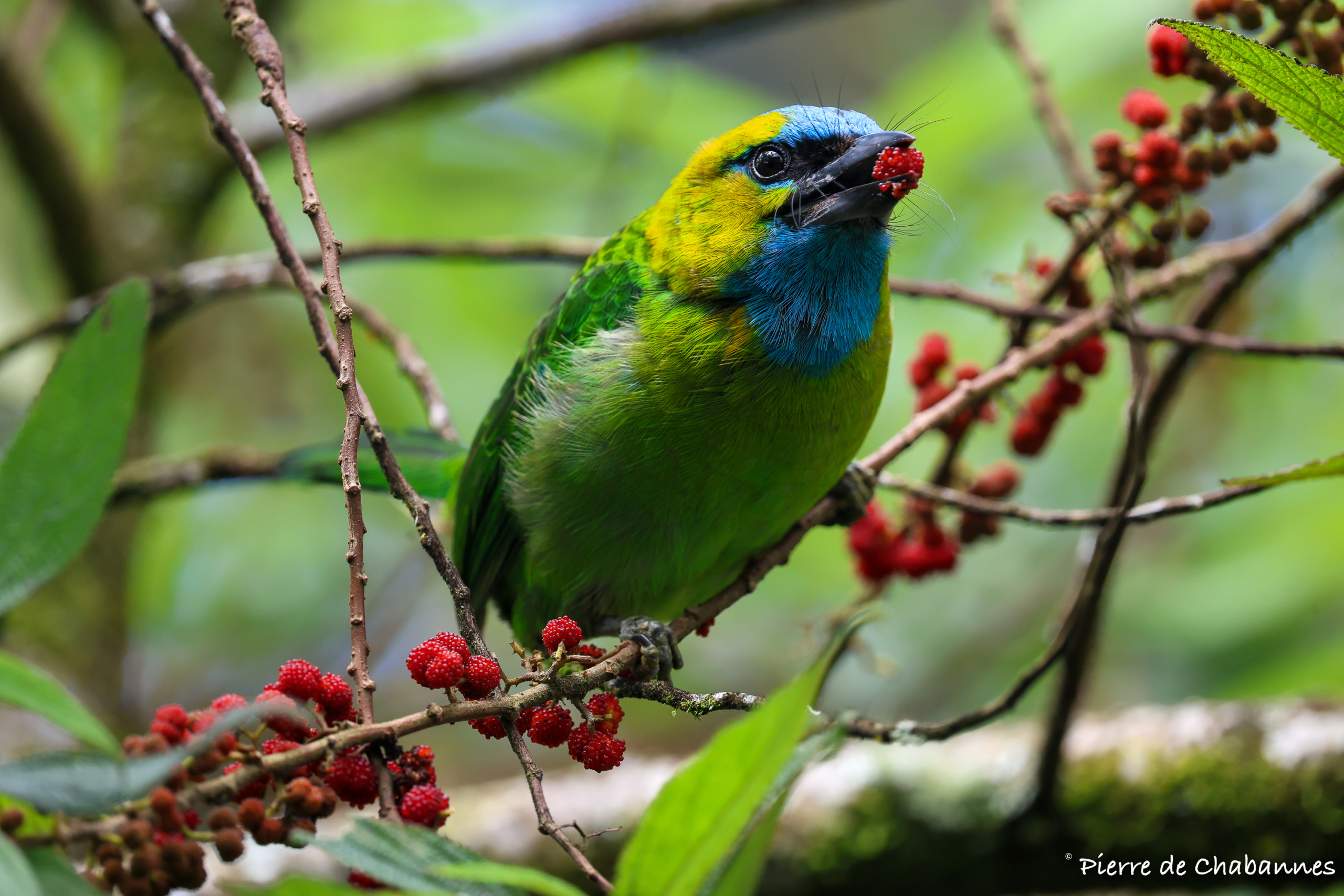
A single individual observed feeding, preening, and resting at Gunung Alab bird hide in Sabah, Malaysia. The bird appeared to visit the hide regularly to feed on the small red berries visible in the photograph above.
Field notes
Barbets are often difficult to observe well, as they usually remain hidden just below the forest canopy and only occasionally emerge into the open when calling. Like many tropical forest birds, they are far more often heard than seen. Their repetitive calls are among the characteristic sounds of Kinabalu Park’s montane forests.
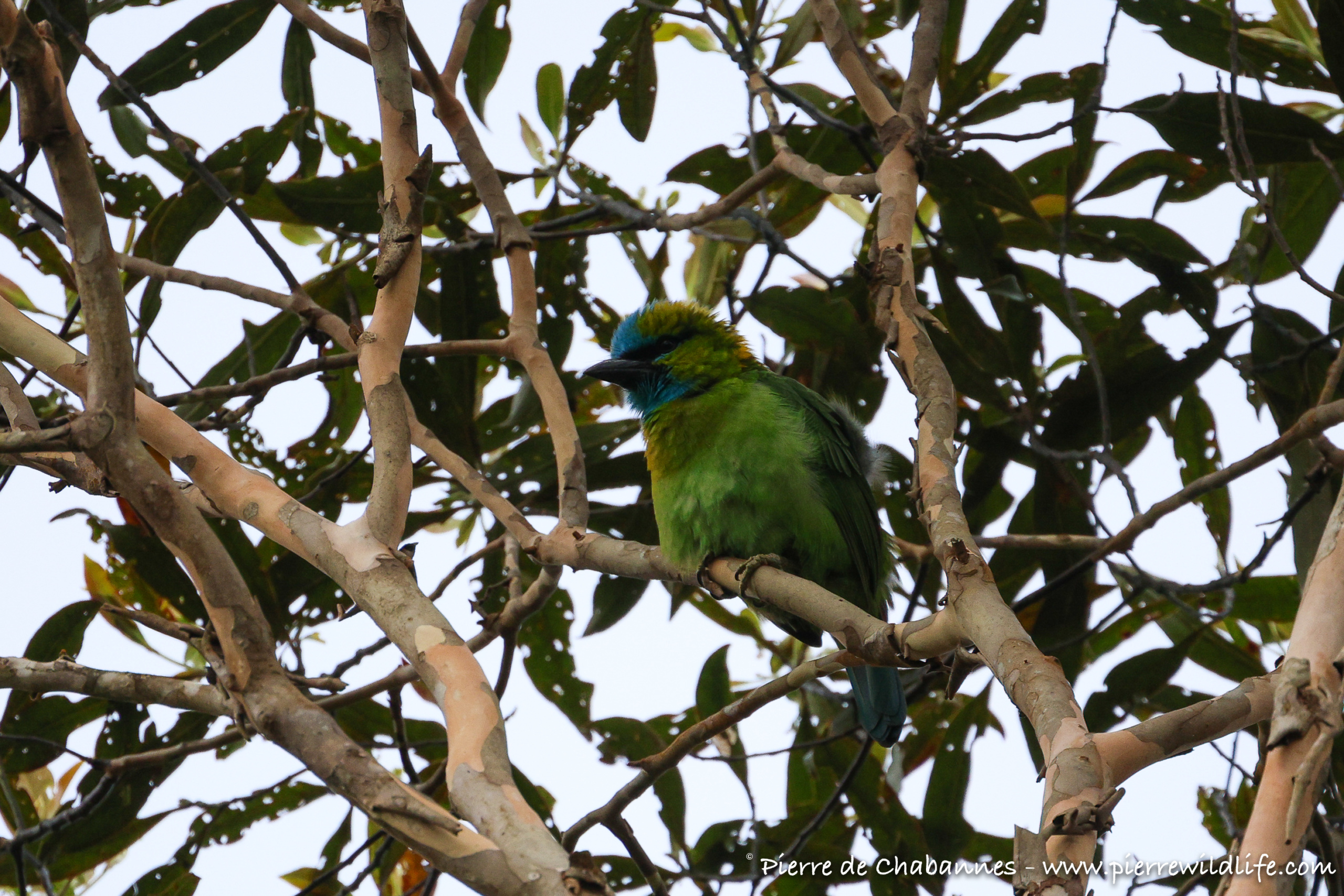
At present, Gunung Alab bird hide is the only known location where this species — and occasionally the mountain barbet — can be observed at close range, allowing prolonged behavioral observations and quality photographs. Most encounters elsewhere typically result only in distant or partially obscured views (as shown in the gallery below).
Barbets remain active throughout much of the day, regularly calling while moving between fruiting trees, berry-producing shrubs, and flowering vegetation.
Key facts
The golden-naped barbet has a relatively restricted distribution and occurs only in a few high-elevation forest areas of Sabah and northeastern Kalimantan.
It is known from protected areas such as Gunung Mulu, Mount Kinabalu, and Mount Trusmadi, generally between 1,000 and 3,100 m asl.
Like many other barbets, it appears to feed mainly on fruits and berries, based on observations made at bird hides. Barbets play an important ecological role in tropical forests by dispersing the seeds of many fruiting plant species.
Conservation
The species is currently listed as Least Concern on the IUCN Red List and is classified by BirdLife International as a restricted-range species.
It appears relatively local in distribution, and little information is currently available regarding population size or long-term trends. Many aspects of its ecology, including diet and breeding behavior, also remain poorly documented.
The species is primarily associated with intact montane forests, although it may occasionally occur in partially disturbed habitats. While much of its altitudinal range remains relatively well protected, climate change and future habitat degradation could represent significant long-term threats.
More photos from this observation
Other species from Borneo can be found by browsing my Education resources.
Back to Borneo hides ←Previous species Next species →
“A long-term project documenting biodiversity across the world through fieldwork, zoological observations and educational content.”