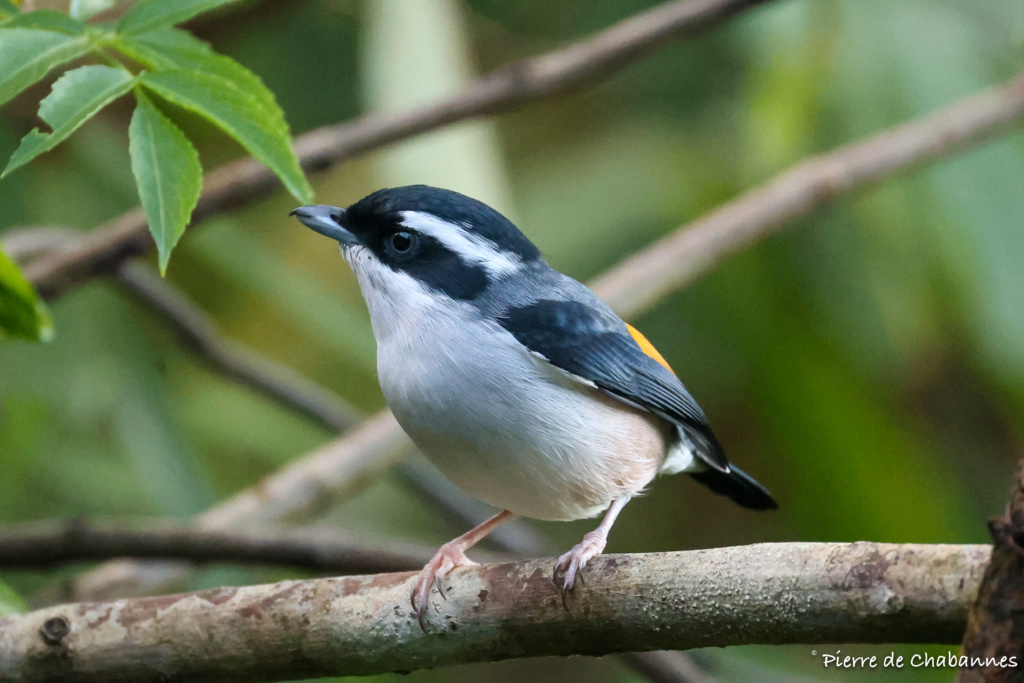
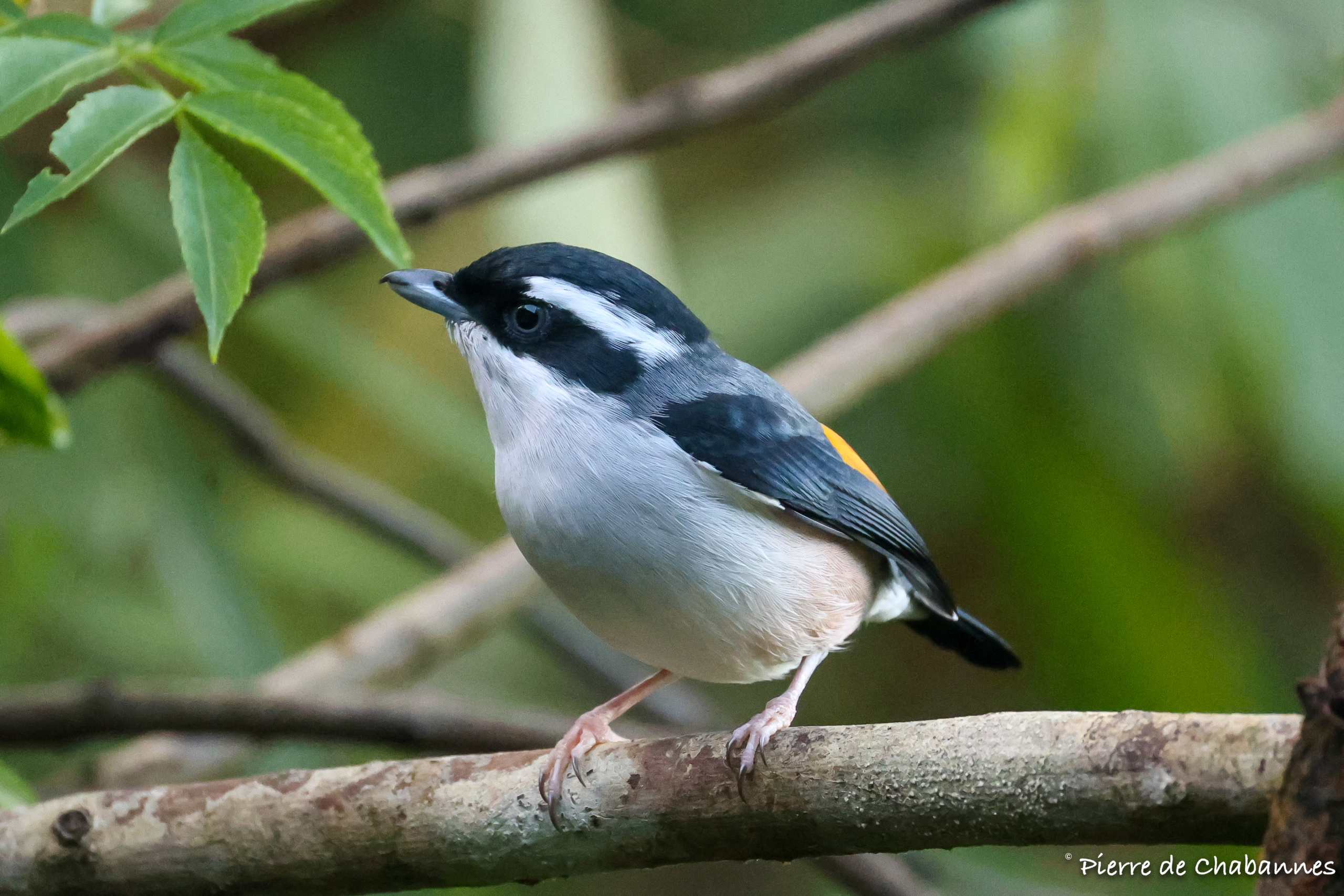
White-browed shrike-babbler (Pteruthius aeralatus robinsoni)
A little-known montane forest bird, often moving through the canopy in mixed flocks.
Context
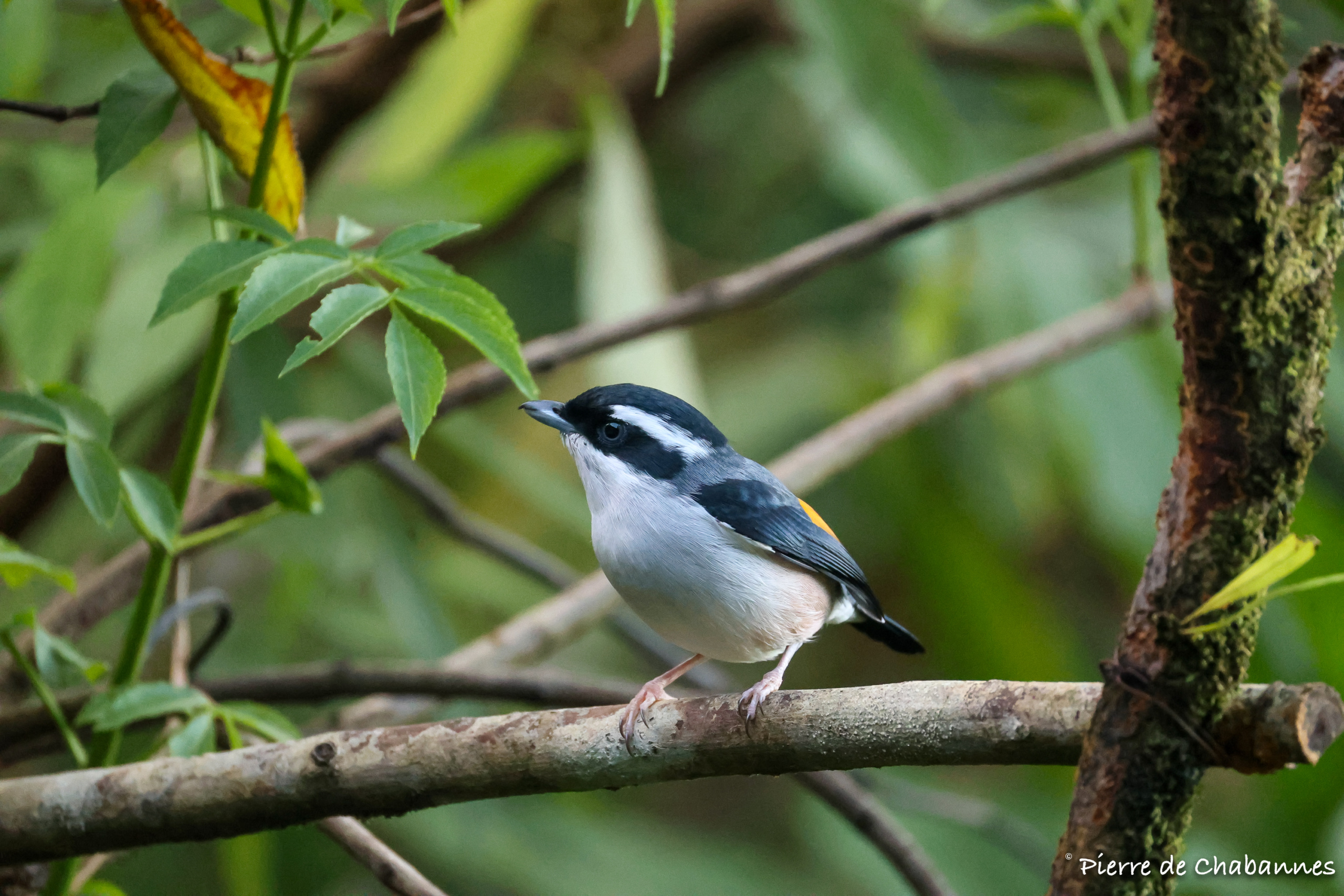
A pair comes almost daily at the main bird feeders of Gunung Alab bird hide in the Sabah province of Borneo, Malaysia.
Field notes
Shrike-babblers are colorful birds that are mostly found in the forest canopy and middle storeys. They rarely come down to the ground and are almost constantly on the move when not resting.
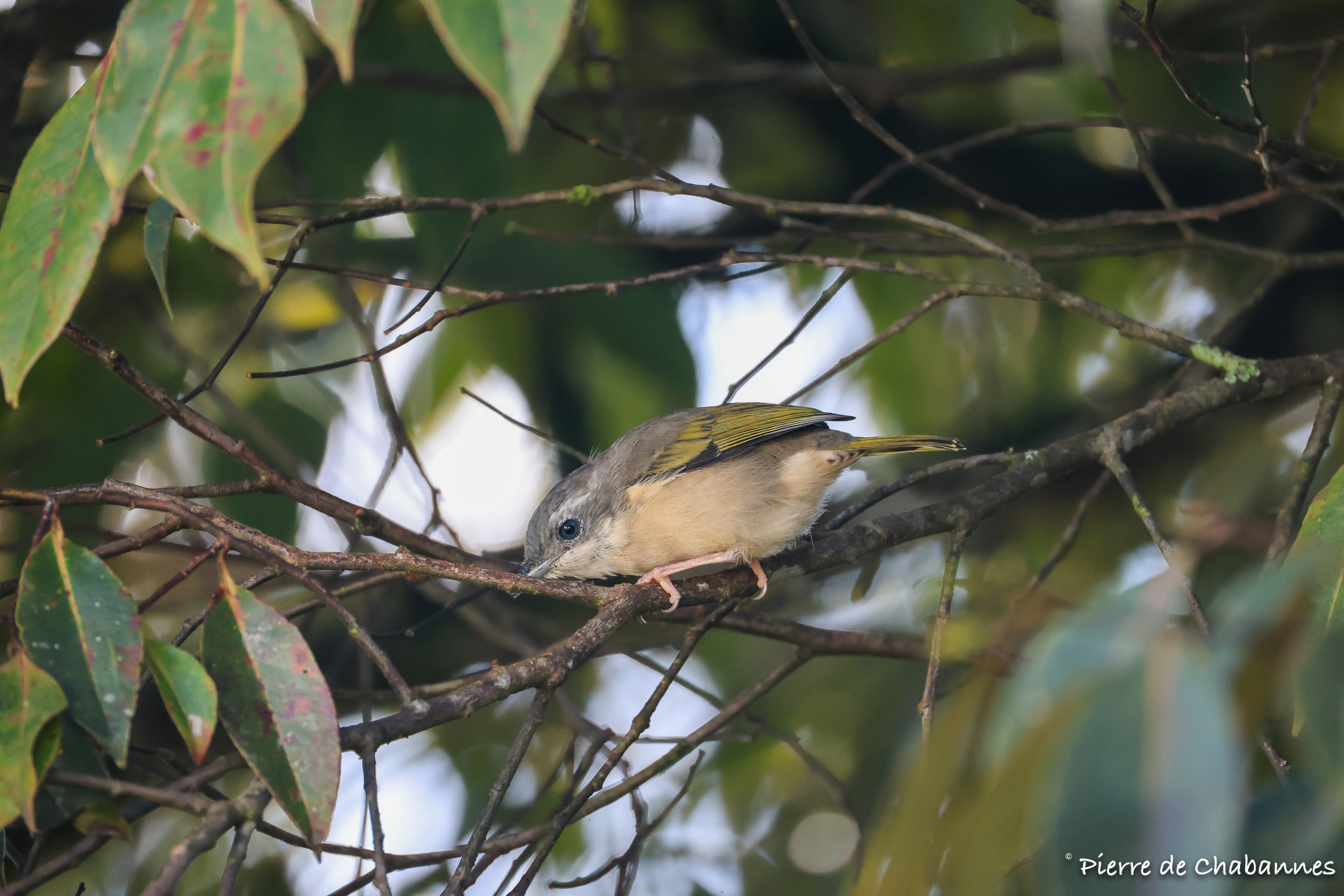
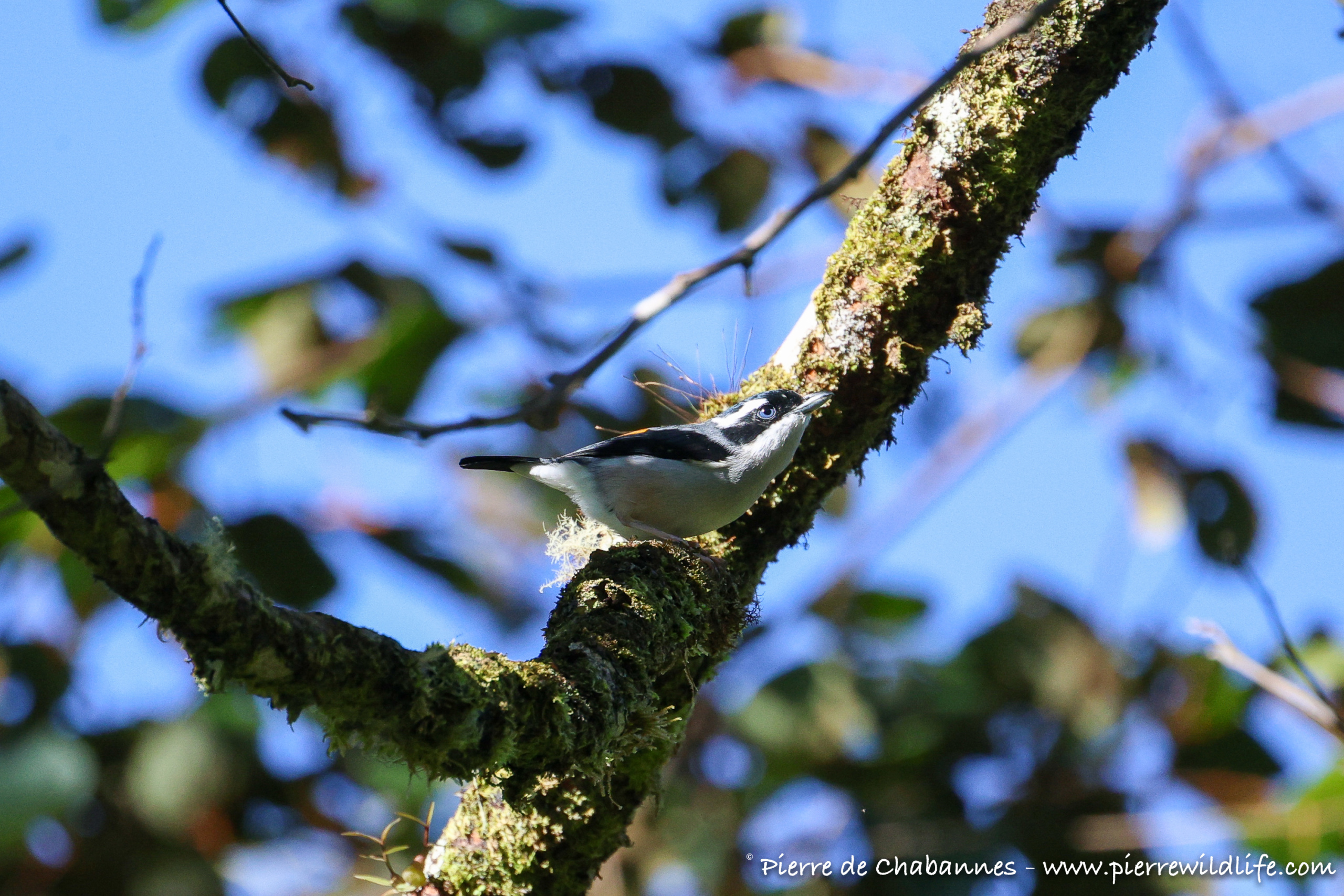
At present, Gunung Alab bird hide appears to be one of the only locations where this species — and particularly this endemic subspecies — can be observed reliably at close range, allowing prolonged behavioral observations and high-quality photographs. Elsewhere, encounters generally consist only of distant or partially obscured views, as illustrated in the gallery below.
Outside Gunung Alab, my few encounters with the species have always been brief and distant, with individuals rapidly moving from branch to branch while searching for insects.
Key facts
The white-browed shrike-babbler belongs to the genus Pteruthius, a group of small Asian passerines specialized for feeding within forest canopies and dense vegetation. The subspecies robinsoni is endemic to the mountains of northern Borneo and is associated mainly with montane forests, between 750 and 2100 m asl.
The species appears to feed primarily on insects and other small invertebrates, although at least one female has been observed preying upon a gecko. Fruits and berries also seem to form an occasional part of its diet.
Despite being relatively common in suitable habitat, the species remains poorly studied. Its breeding biology is still entirely undocumented, and even basic aspects of its feeding ecology remain insufficiently understood.
Conservation
The species is currently listed as Least Concern on the IUCN Red List and remains locally common in suitable montane habitats.
However, because it depends heavily on humid montane forests, long-term habitat degradation and climate change could eventually affect local populations.
It is also possible that some populations currently assigned to this species, particularly in Vietnam, may represent distinct species. If future taxonomic revisions occur, the conservation status of individual island and montane populations — including the Bornean subspecies — may require reassessment, as such isolated forms are often especially vulnerable.
More photos from this observation
Other species from Borneo can be found by browsing my Education resources.
Back to Borneo hides ←Previous species Next species →
“A long-term project documenting biodiversity across the world through fieldwork, zoological observations and educational content.”