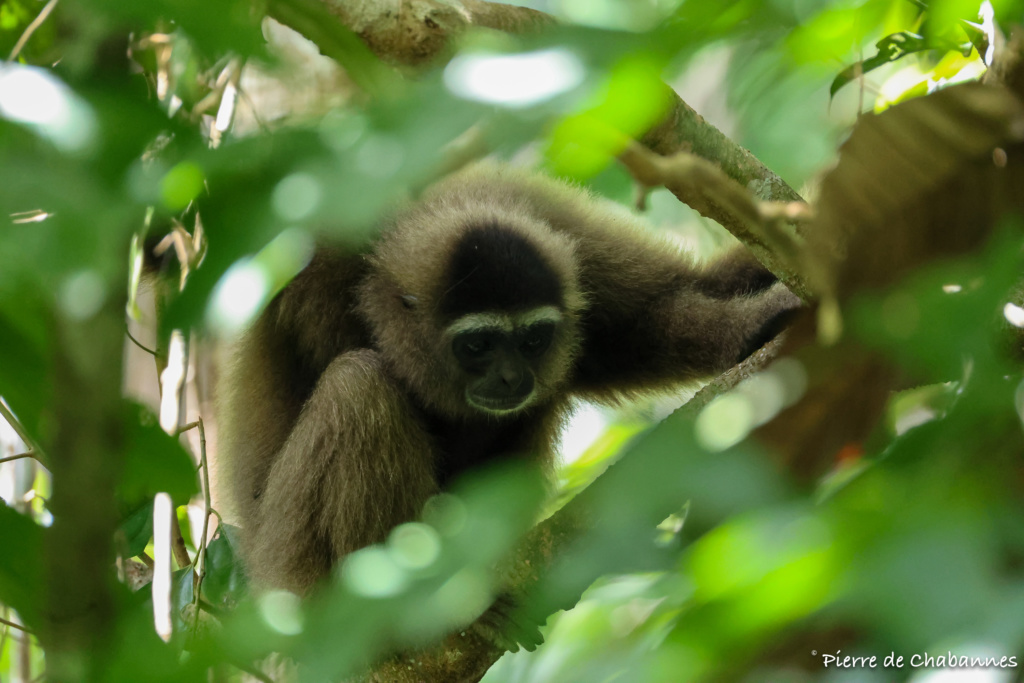
Northern gray gibbon (Hylobates funereus)
One of Borneo’s four gibbon species, highly threatened with habitat loss.
Context
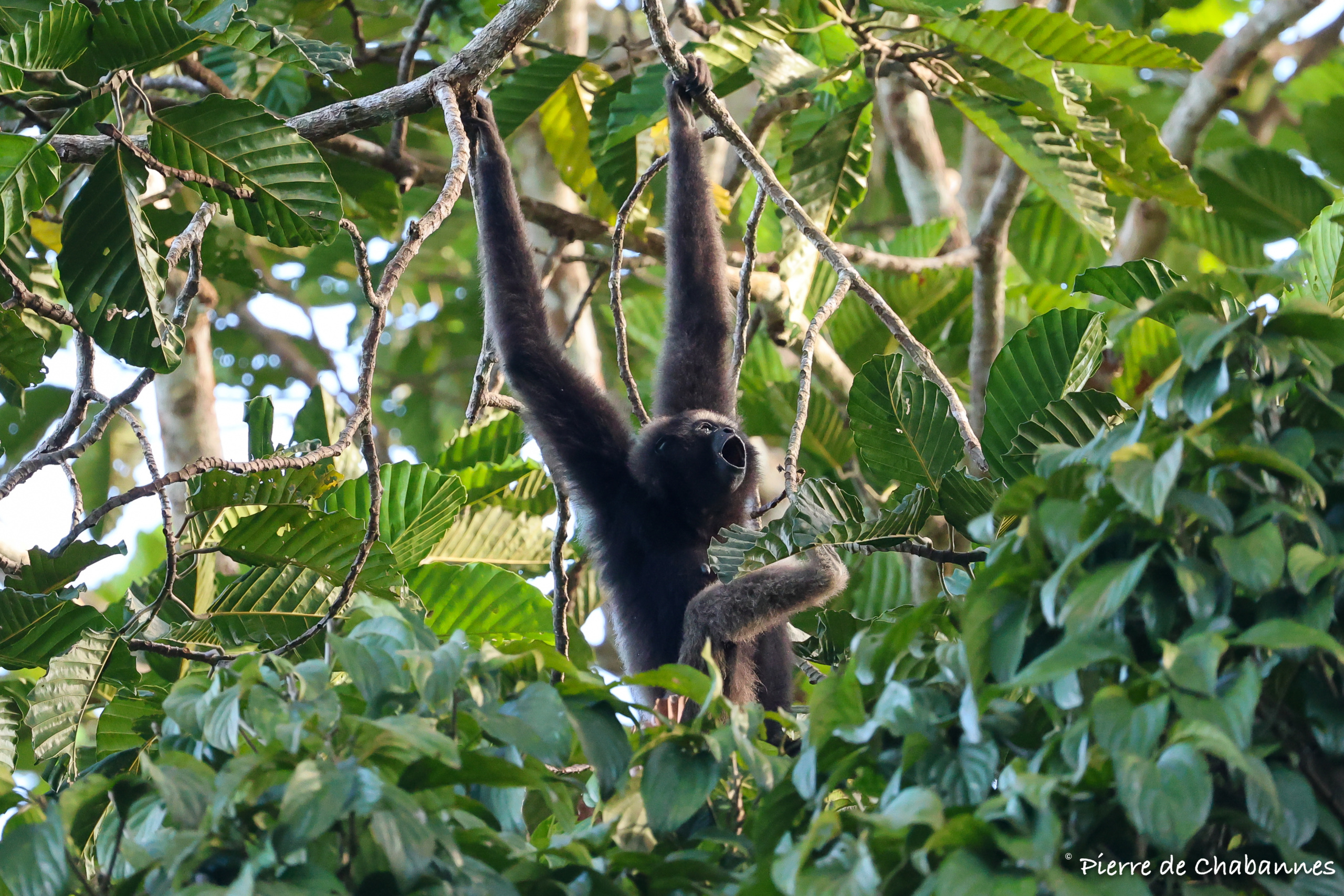
A family group observed almost every morning singing and moving through the canopy of mature secondary rainforest at Sepilok Rainforest Discovery Centre (RDC), Sandakan, Sabah (Malaysia).
Field notes
Sepilok RDC is one of the most reliable places in north Borneo to hear and observe gibbons early morning. They are nearly always present in the forest and can easily be located by their beautiful duet songs.
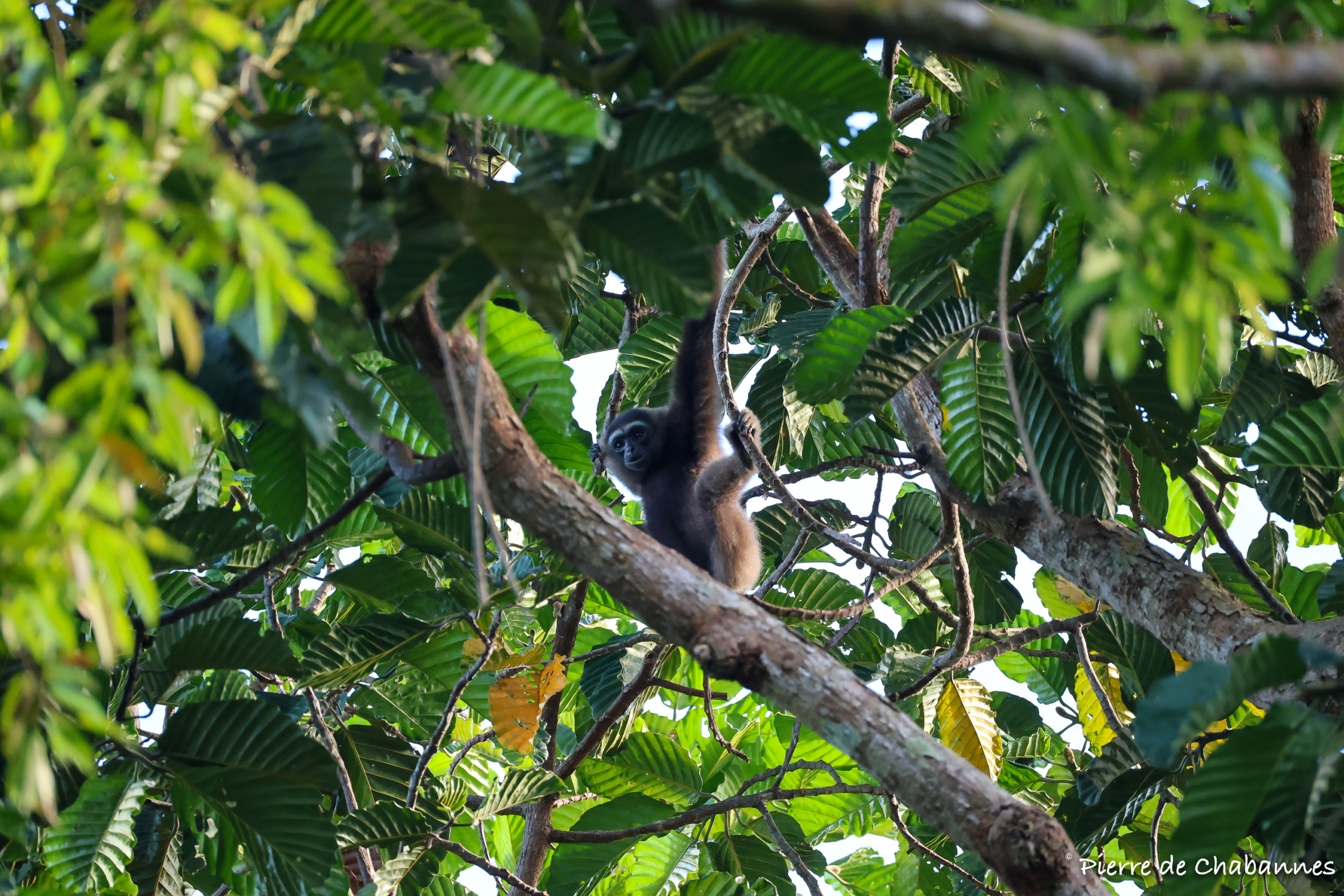
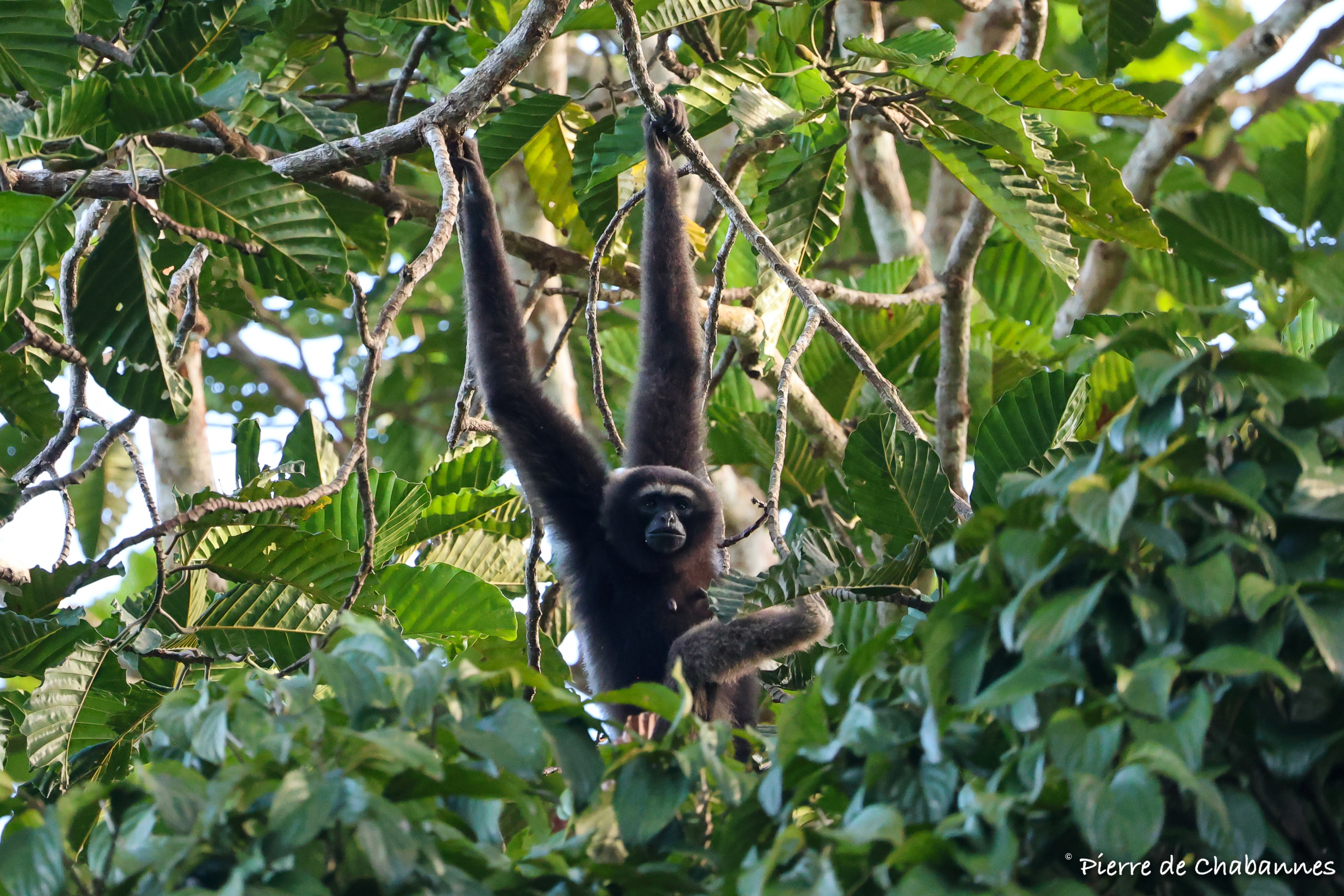
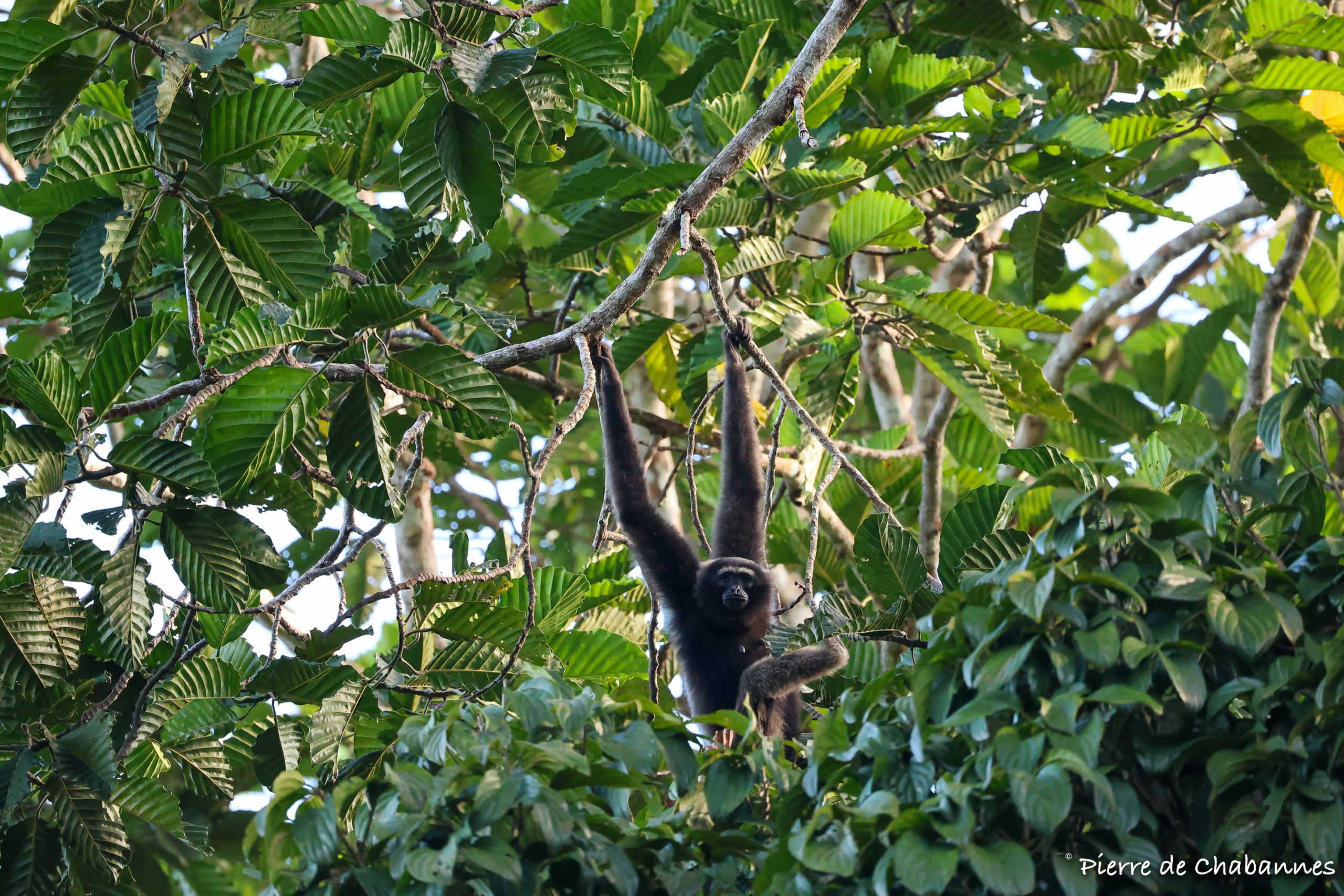
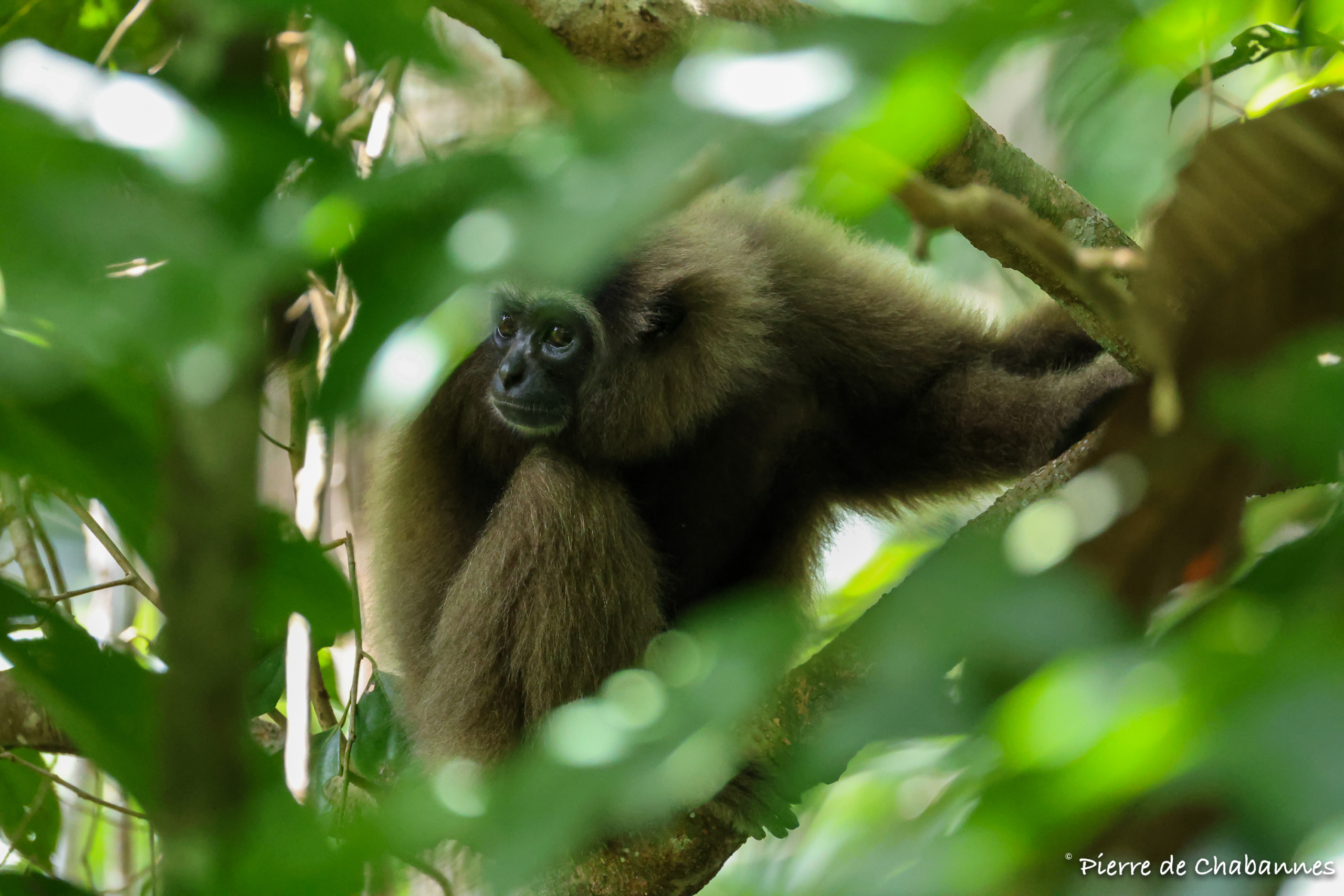
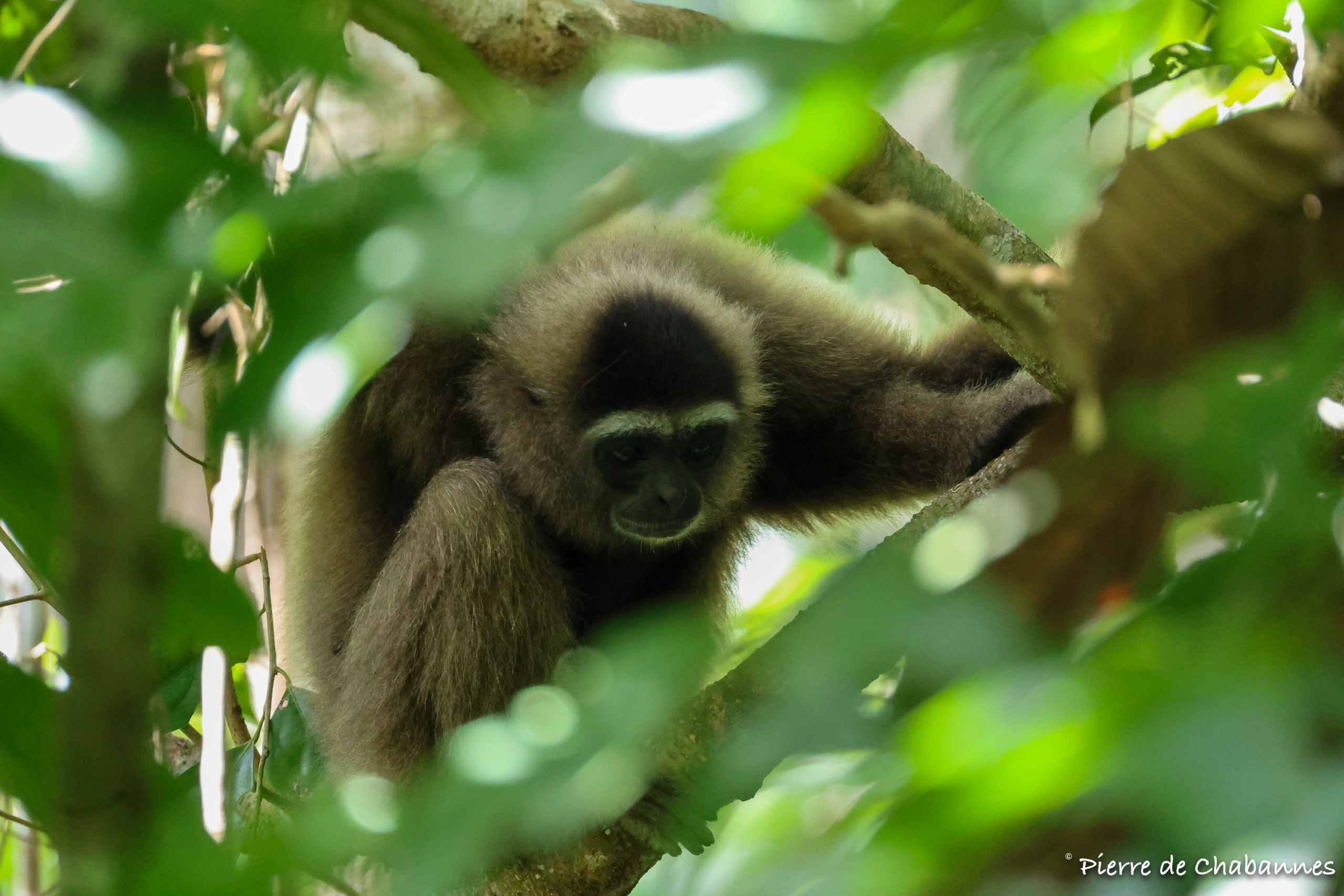
During my last stay in Sepilok RDC in November 2025, I photographed a bonded pair calling incessantly during a nice sunny morning, from the canopy boardwalk. The female was calling repeatedly and aggressively as a single young individual was also calling from further away in the forest. It was a fascinating territorial interaction to witness.
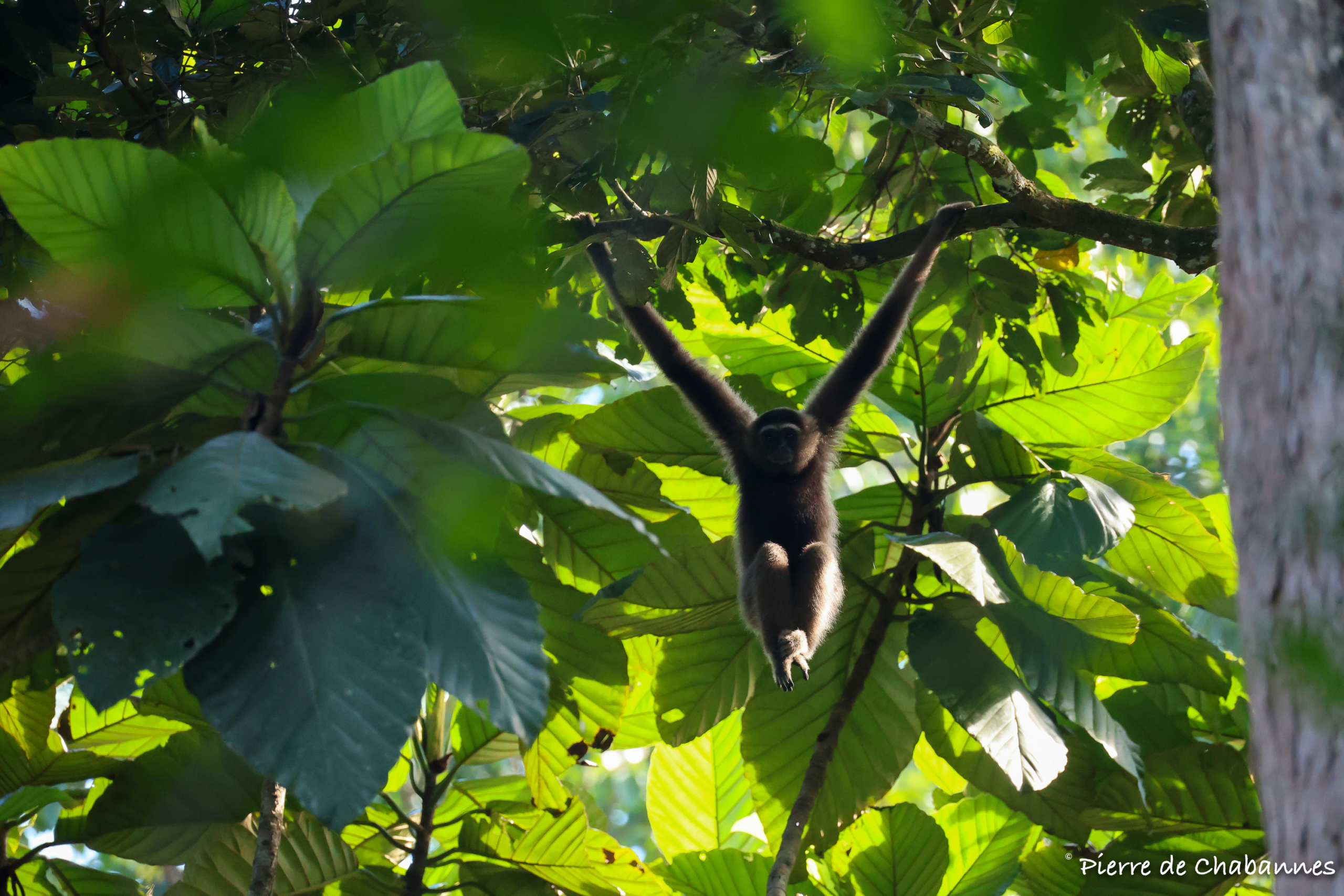
Gibbons travel rapidly through the treetops using brachiation, swinging effortlessly between branches with remarkable agility. During territorial displays including chasing off intruders, individuals move from tree to tree at breathtaking speed.
Key facts
The northern gray gibbon is endemic to northern Borneo and occurs in Sabah, northern Sarawak, and Brunei. It is a fairly recent split from the Bornean gibbon (Hylobates muelleri) and the two species sometimes intergrade where their ranges meet.
Like all gibbons, it belongs to the family Hylobatidae, the smallest of the apes. Unlike monkeys, gibbons lack tails and possess highly specialized shoulder joints that allow exceptional movement through the canopy.
Family groups typically consist of a breeding pair and their offspring. Pairs maintain territories through vocal displays that help reduce conflicts with neighbouring groups. Gibbon species all have very distinctive “songs” and, within the same species or subspecies, variations can be noted between different populations and pairs, effectively forming local vocal “dialects”.
Conservation
The species is currently listed as Endangered on the IUCN Red List. Habitat loss caused by logging, agricultural expansion, and conversion of forests to oil palm plantations continues to fragment populations throughout much of its range.
Because gibbons are highly dependent on continuous forest canopy, even relatively narrow breaks in forest cover can isolate family groups and reduce breeding opportunities.
The species hasn’t been studied much and the true status of its wild populations remain poorly known. Capture for the wildlife trade (becoming truly unsustainable in Indonesia) and deforestation are two threats that could easily drive the species very close to extinction without conservation programs.
More photos from this observation
Other species of primates can be found by browsing my Education resources.
Back to Primates of Southeast Asia ←Previous species Next Species →
“A long-term project documenting biodiversity across the world through fieldwork, zoological observations and educational content.”