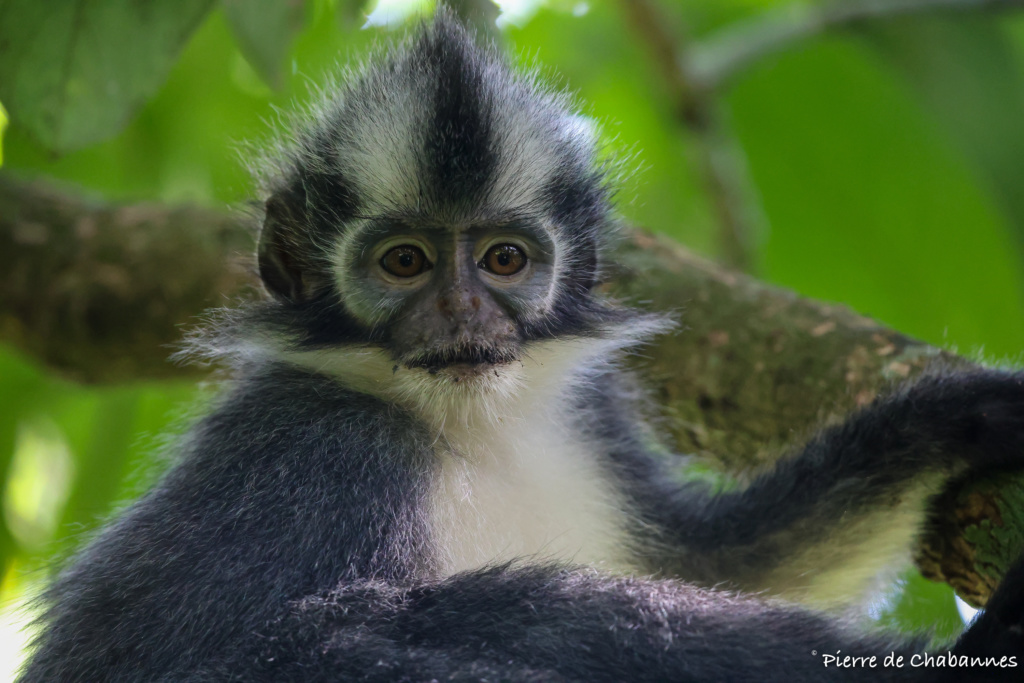
Thomas’ leaf monkey (Presbytis thomasi)
A very distinctive leaf monkey species, endemic to northern Sumatra and well known for its tolerance of human presence around Bukit Lawang.
Context
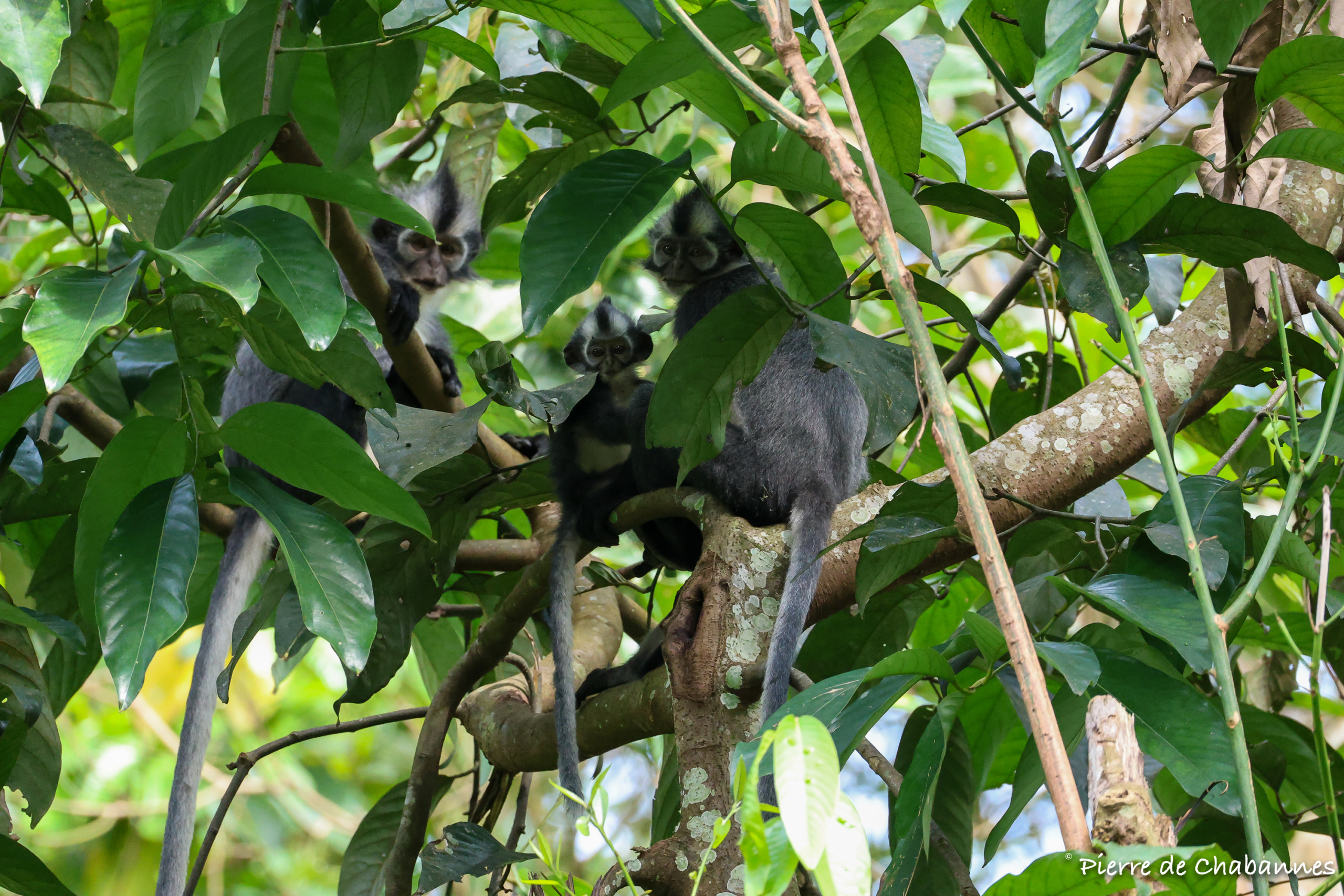
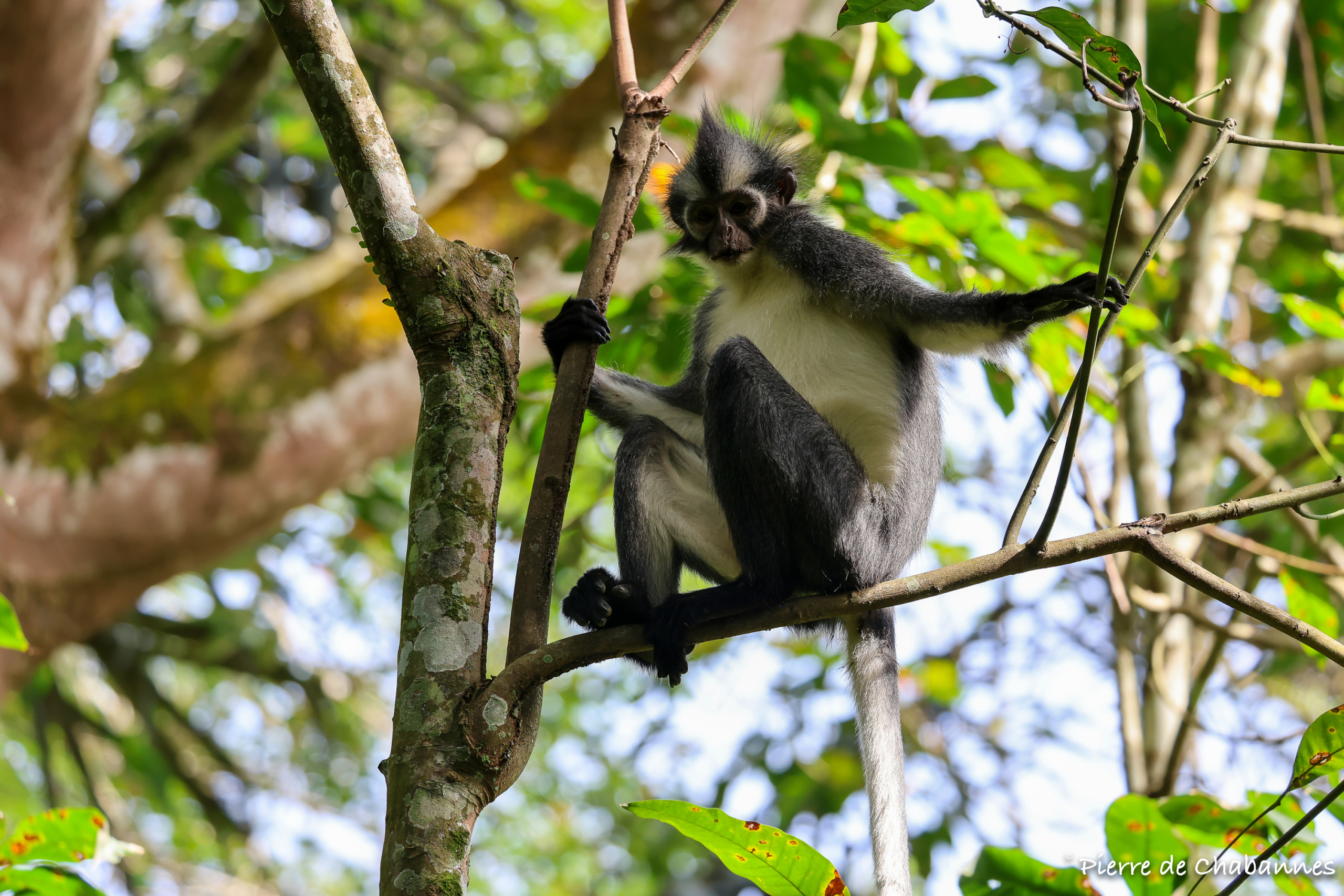
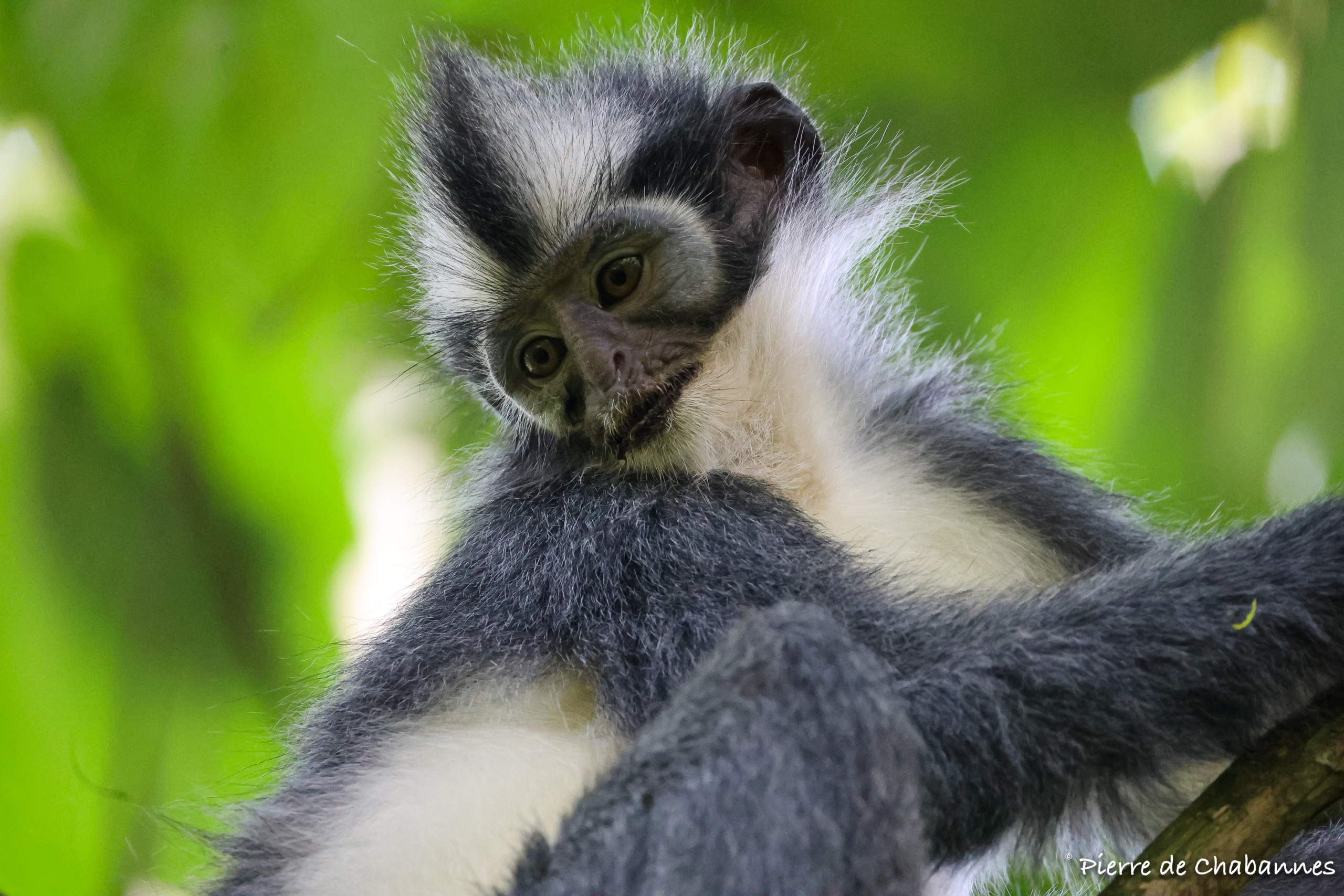
A family group observed and photographed in the protected forests near Bukit Lawang, in Gunung Leuser National Park, Sumatra (Indonesia).
Field notes
Thomas’ leaf monkeys are amongst the most well known and popular species found around Bukit Lawang, together with the iconic Sumatran orangutan.
These langurs are mostly found in family groups but I also observed isolated adult males in the forest, staying near the trails and probably waiting for rangers to give them food as they use fruit pieces to attract orangutans near tourist areas.
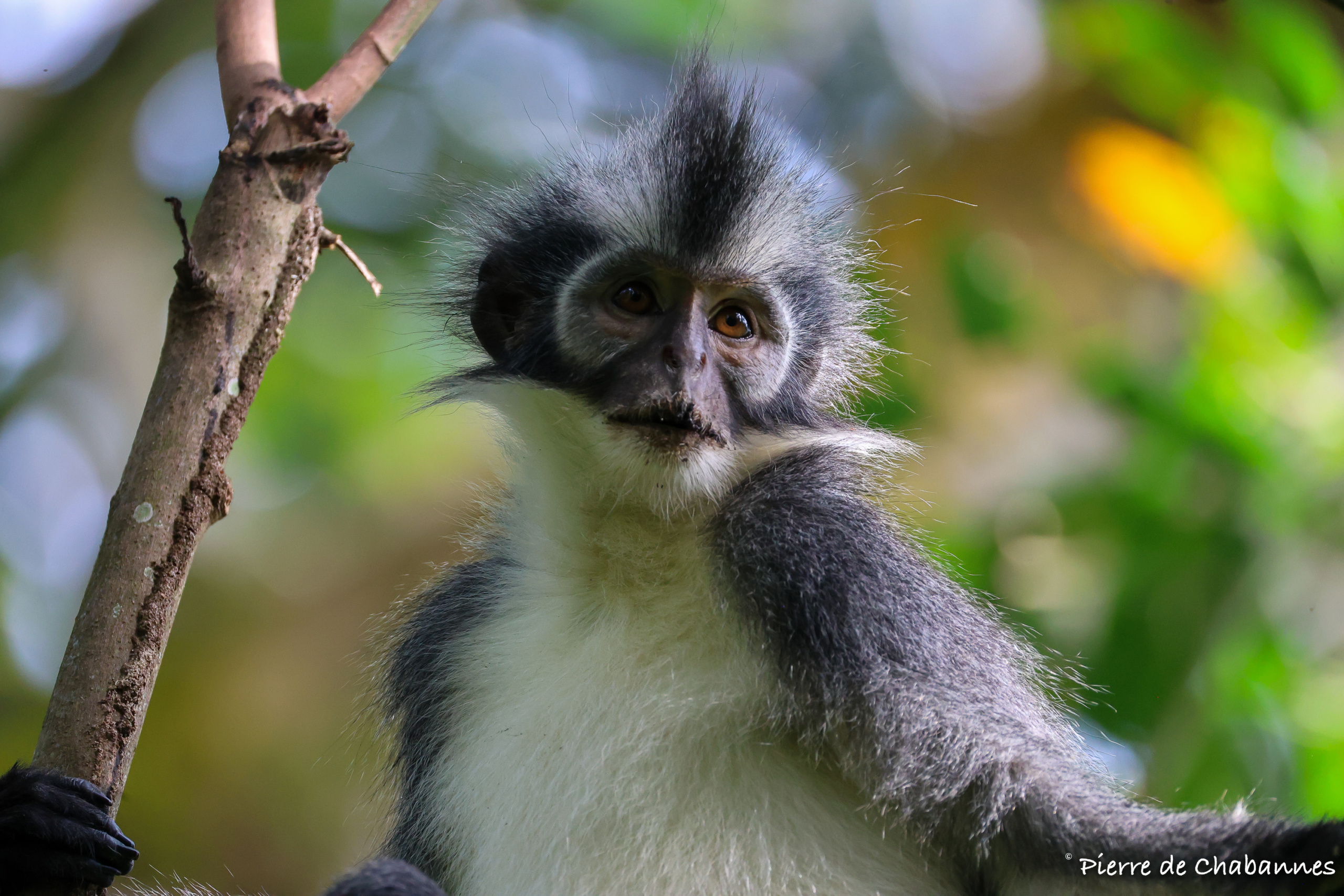
Compared with macaques and even orangutans, Thomas’ leaf monkeys often appear remarkably tolerant and non-aggressive toward people as it was demonstrated by the family group I encountered during my first visit to Gunung Leuser National Park. The individuals stayed around me, watched me, even tried to interact with me by touching my clothes and my camera but never threatened me in any ways.
Key facts
Besides the Grizzled or silvered leaf monkey, Thomas’ leaf monkey is one of the easiest leaf monkey species to find and photograph in Sumatra. Other species are much more elusive and some have hardly ever been photographed or even seen in the wild.
This species is endemic to northern Sumatra and is found from the north tip of Aceh province all the way to the southern boundaries of Gunung Leuser National Park and south to the Simpangkiri river.
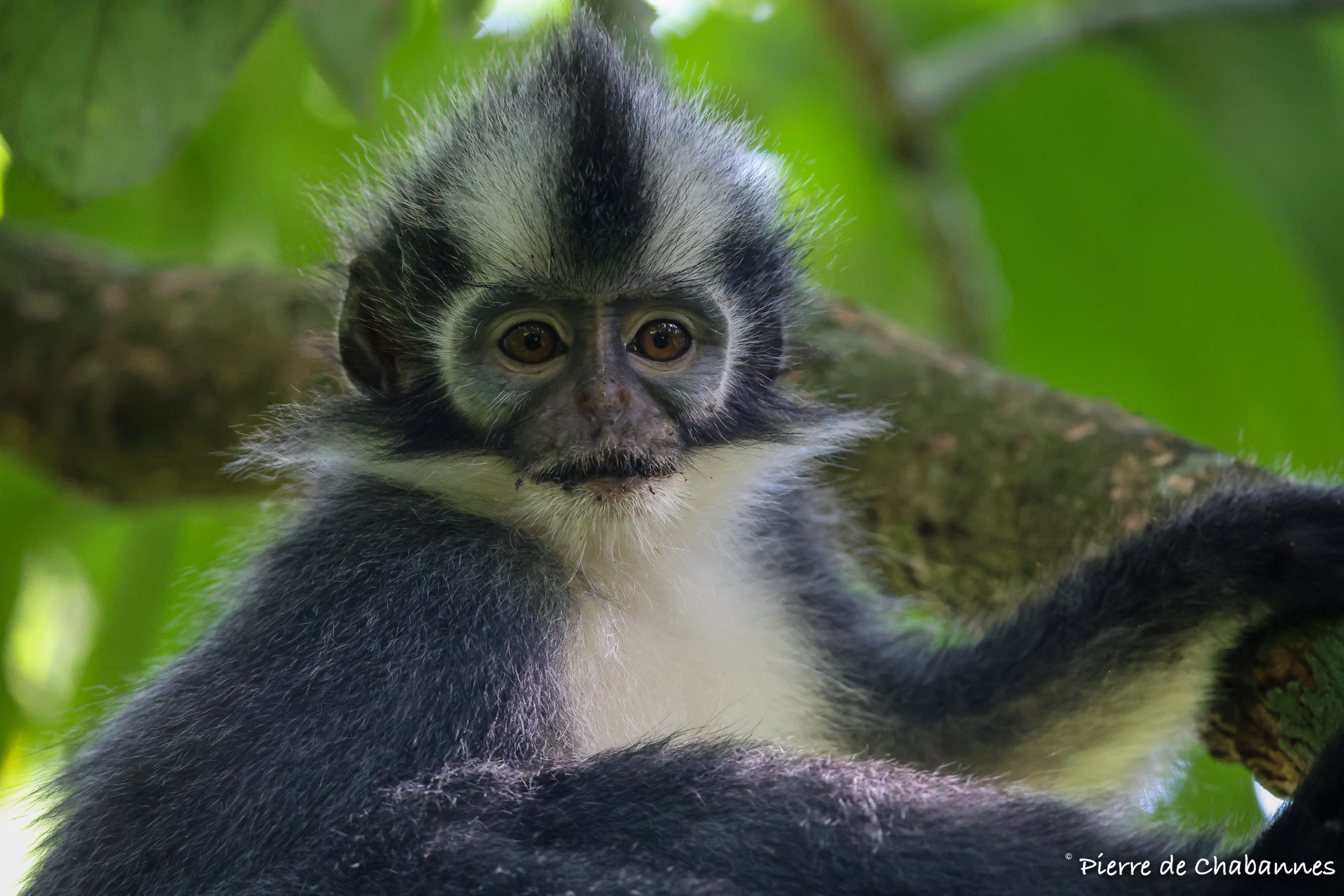
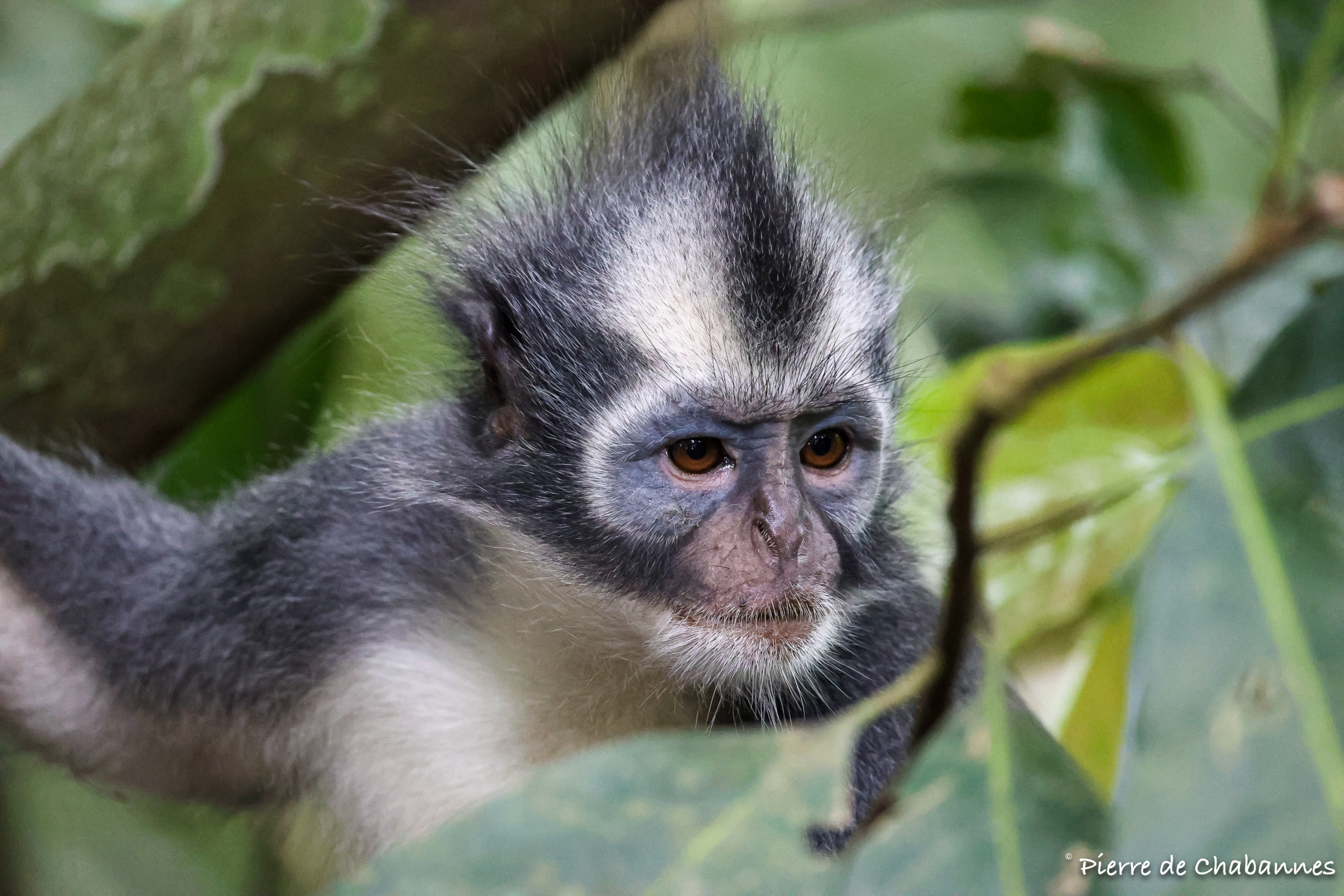
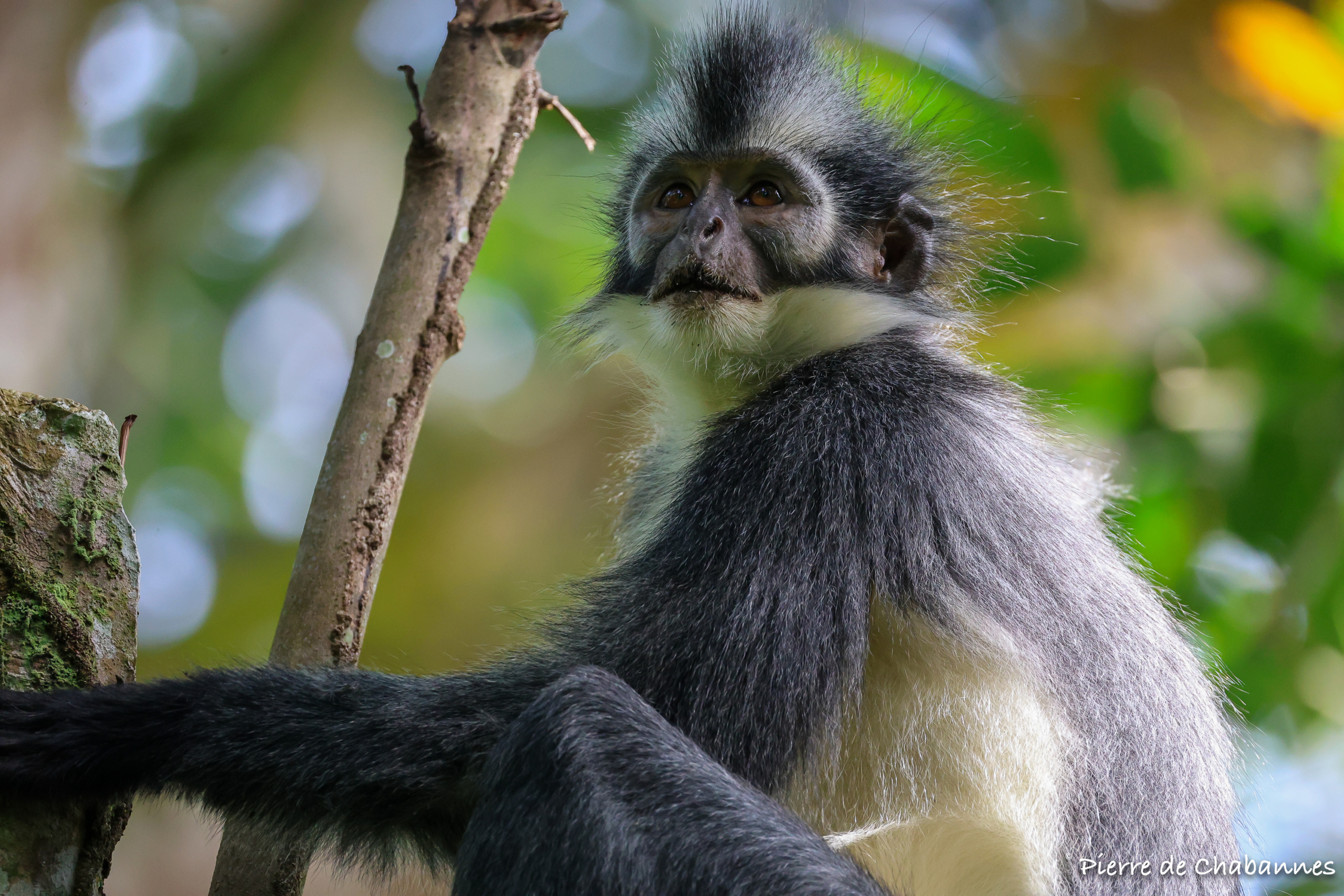
Within its range, the species is unmistakable. It can be easily told from other langurs by its black and white crest and conspicuous straight hair tufts on the cheeks.
Although leaves form the majority of its diet, the species also feeds on fruits, seeds, flowers, and young shoots depending on seasonal availability.
Conservation
The species is currently listed as Vulnerable on the IUCN Red List. Its populations have declined by over 30% during the last 40 years because of unsustainable deforestation, due to logging and palm oil plantations.
These days, deforestation still occurs which remains the main cause of concern for this species’ survival. It is also illegally hunted away from protected areas.
However, it is one of the best known langur species in Sumatra and its presence in protected areas such as Gunung Leuser National Park gives hope that the species will remain protected in the future.
More photos from this observation
Other species of primates can be found by browsing my Education resources.
Back to Primates of Southeast Asia ←Previous species Next Species →
“A long-term project documenting biodiversity across the world through fieldwork, zoological observations and educational content.”