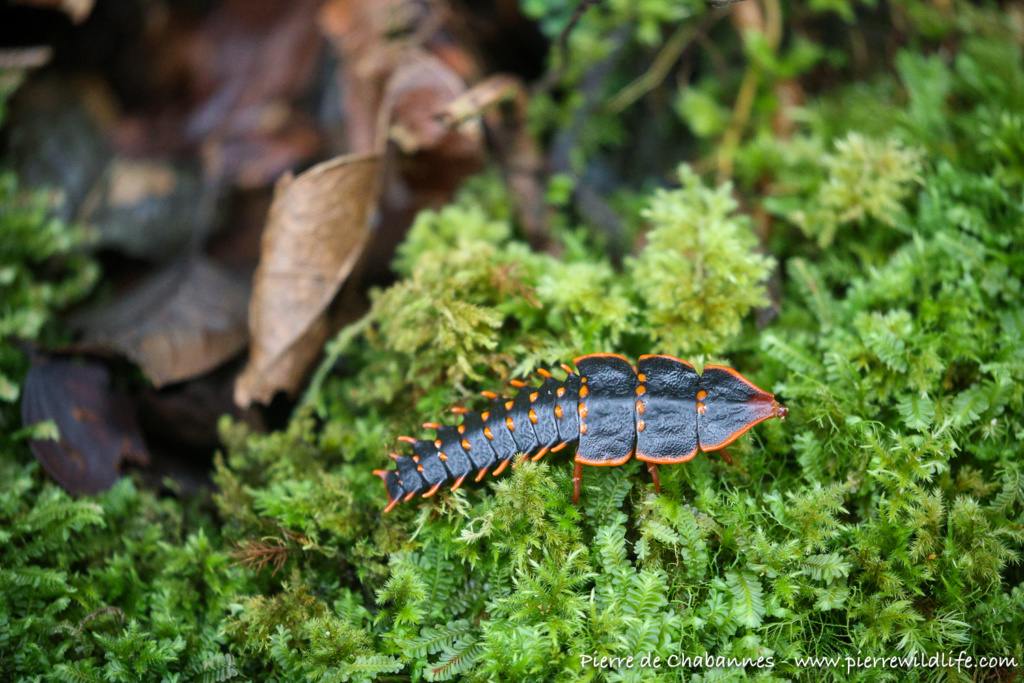
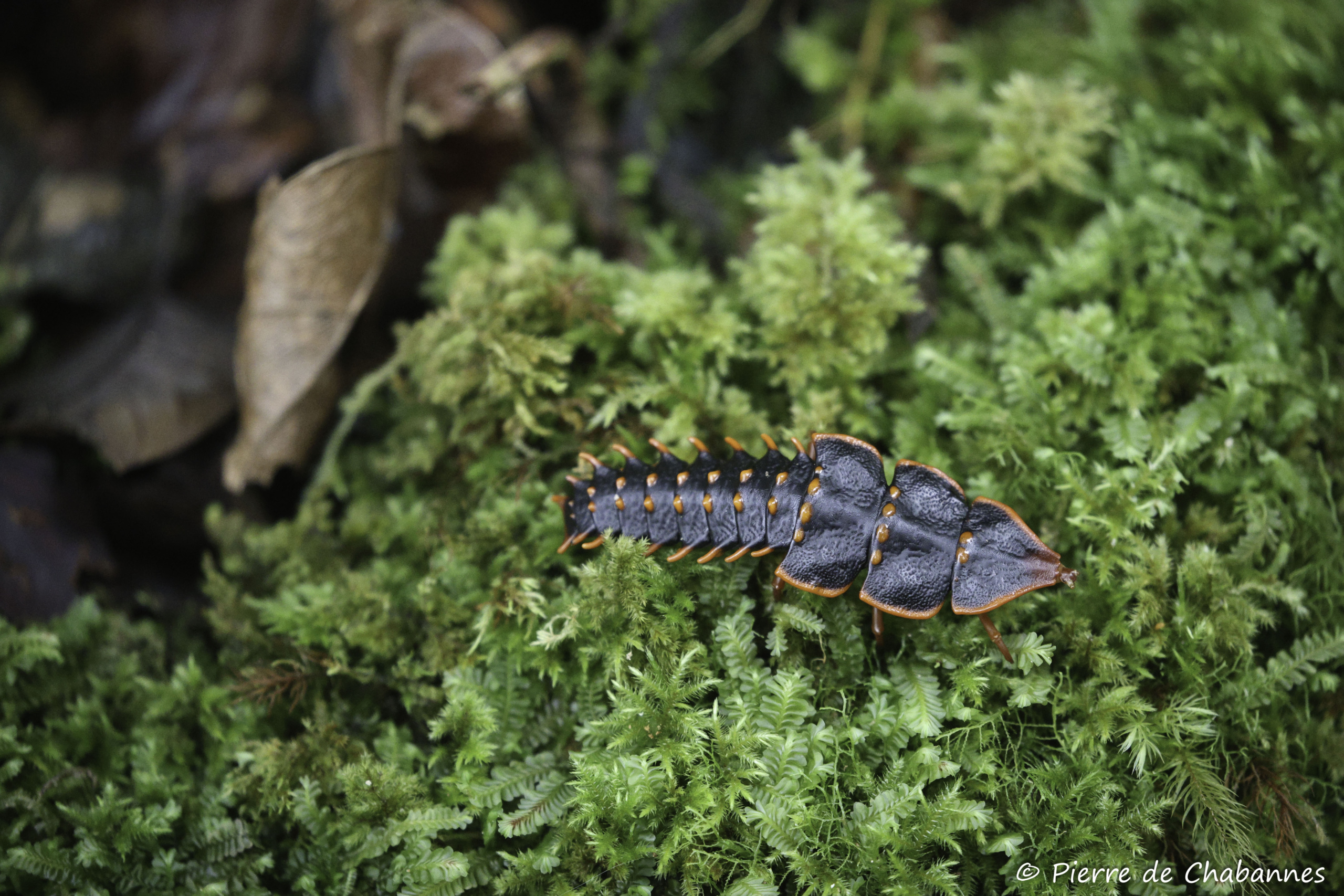
Trilobite beetle (Platerodrilus svetae)
A remarkable and primitive looking beetle whose wingless female
resembles a living trilobite.
Context
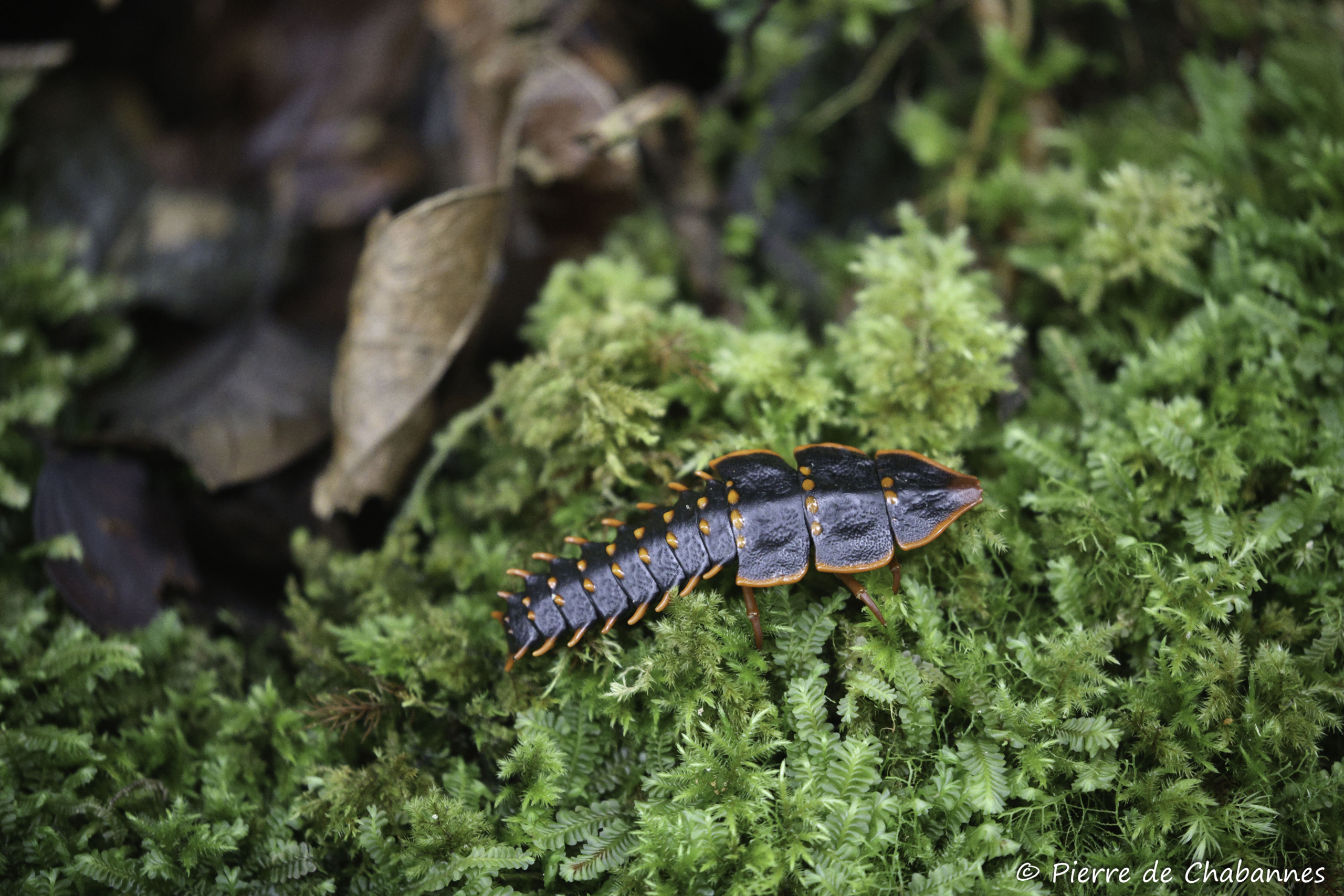
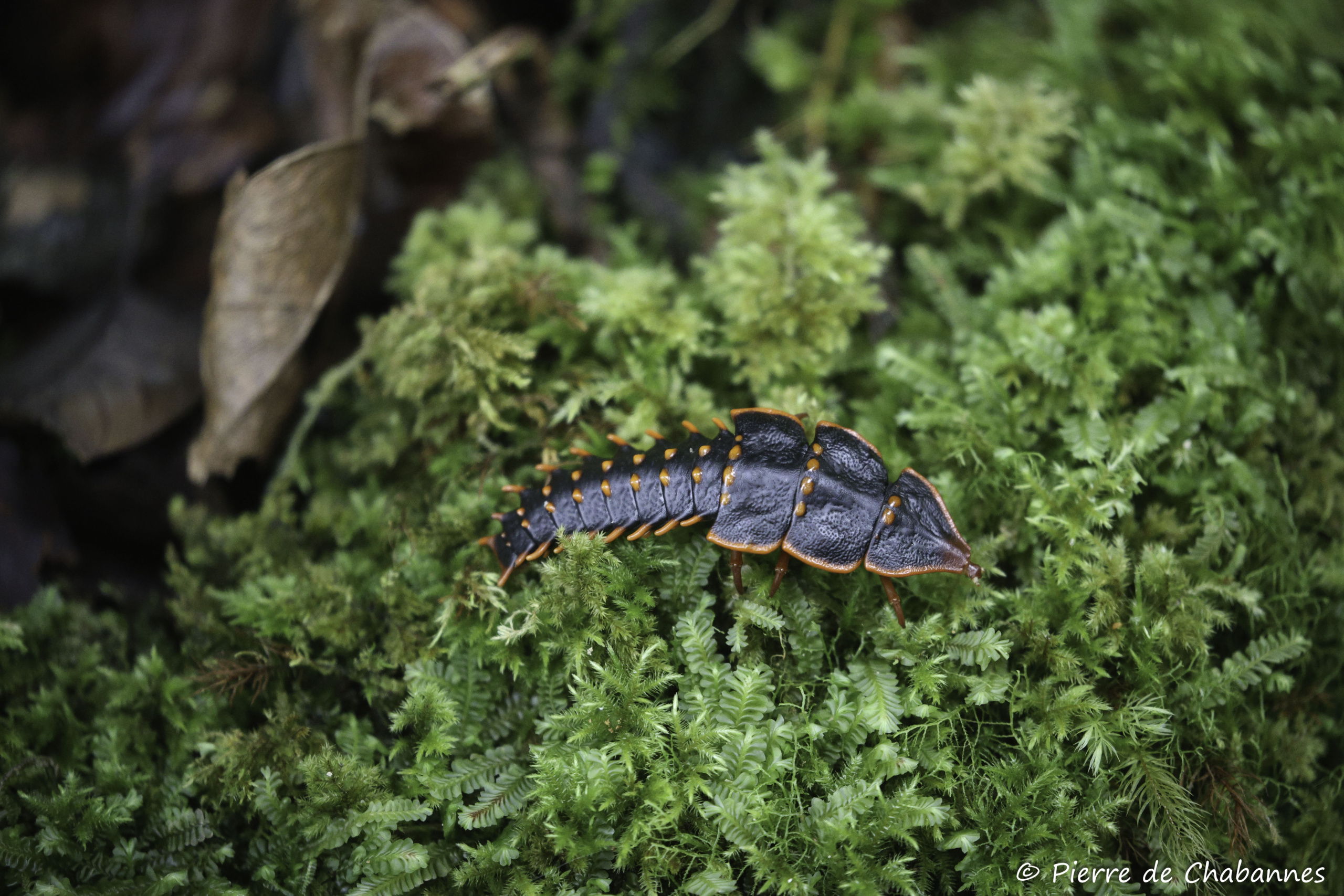
A single specimen photographed on the forest floor in Kinabalu Park at about 1200 meters above sea level in Sabah, Borneo.
Field notes
I have photographed trilobite beetles in Borneo three times, all of them in the primary montane forests of Kinabalu Park.
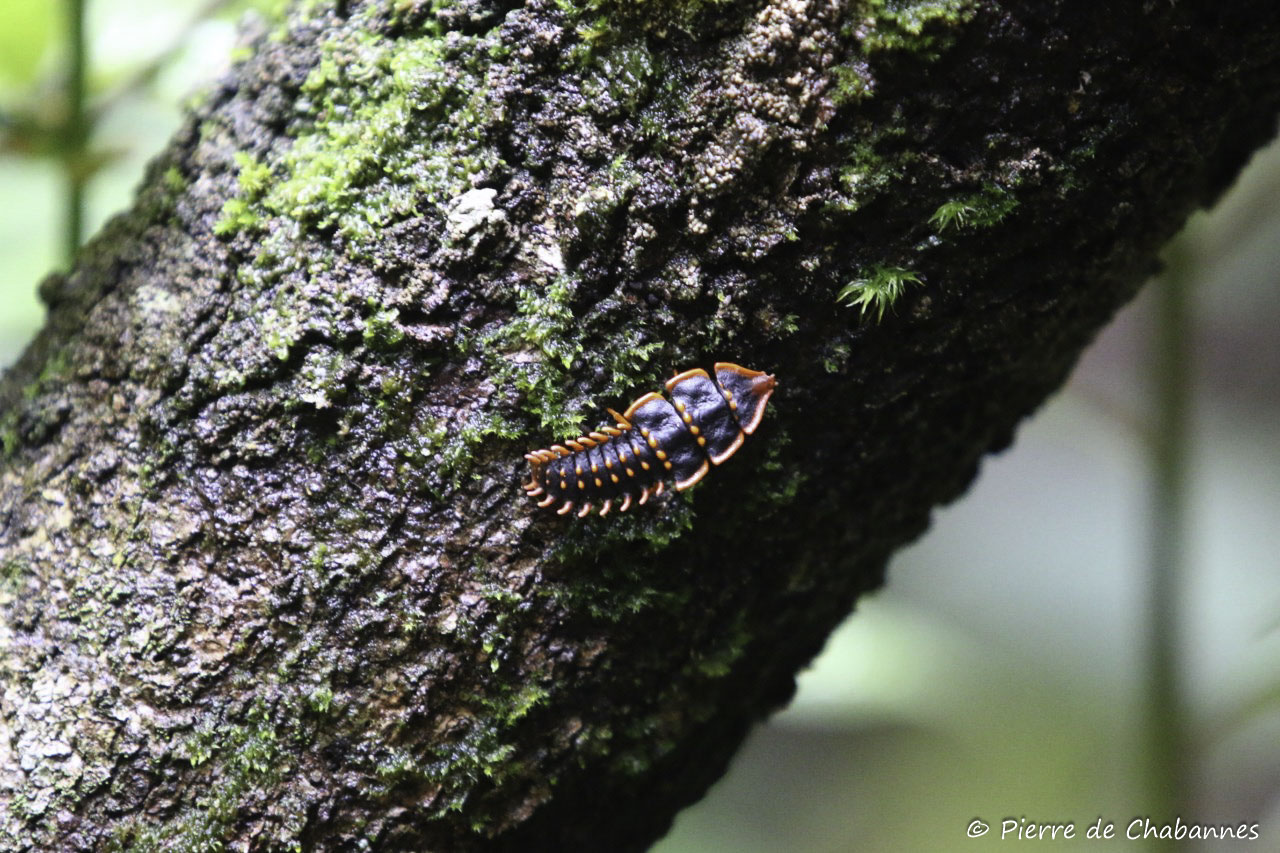
The first time I saw a trilobite beetle was in 2016. I found a single specimen on a tree trunk accidentally while scanning for birds. In 2023 however, I found a single specimen on humid moss on the forest floor. I haven’t seen the species at all during my last visit in 2025.
Females are especially spectacular. Unlike males, they remain wingless throughout their lives and retain a larva-like appearance, a phenomenon known as neoteny. Their large flattened bodies can reach several centimeters in length and are among the most unusual insects found in Southeast Asian forests.
Key facts
Platerodrilus svetae belongs to the family Lycidae, commonly known as net-winged beetles. The genus Platerodrilus contains several species distributed across Southeast Asia.
The female remains larviform throughout her life, while the much smaller male undergoes complete metamorphosis and develops wings. Because males and females look so different, they were once thought to belong to completely different groups of insects.
The montane forests of northern Borneo are home to many species of trilobite beetles, most of which remain poorly known.
Conservation
The conservation status of Platerodrilus svetae has not been formally assessed by the IUCN. Like many forest-dependent invertebrates, it is likely sensitive to habitat degradation and the loss of humid forest microhabitats.
Protected areas such as Kinabalu Park and the Trusmadi Forest Reserve provide important refuges for this species and many other specialized invertebrates.
More photos from this observation
Other species from Kinabalu Park can be found by browsing my Education resources.
Back to Mt Kinabalu ←Previous species
“A long-term project documenting biodiversity across the world through fieldwork, zoological observations and educational content.”