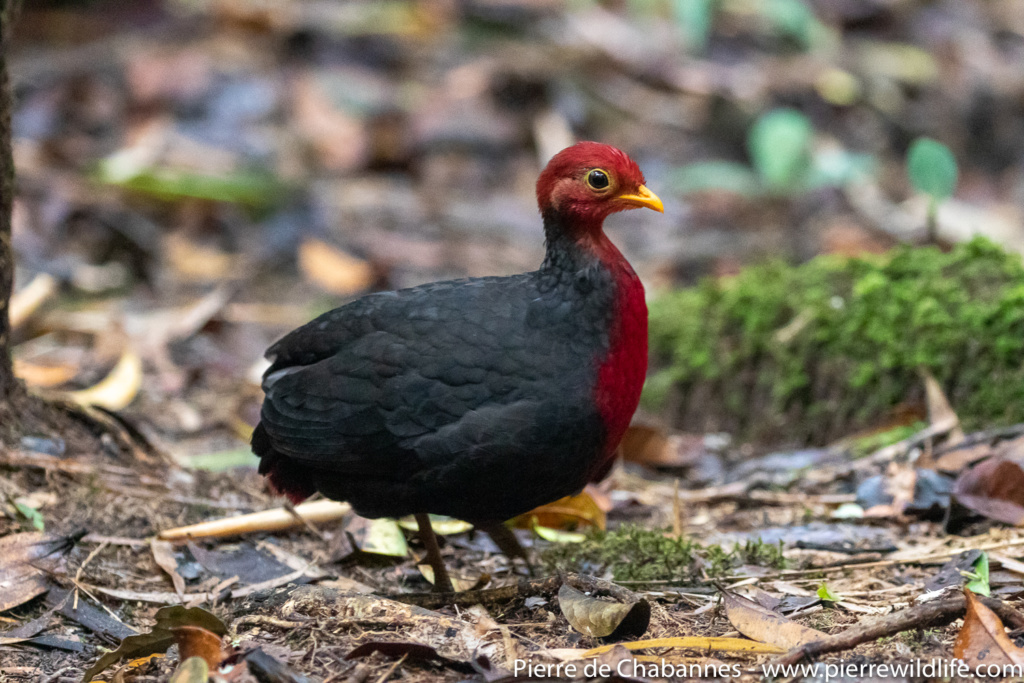
Crimson-headed partridge (Haematortyx sanguiniceps)
A striking partridge endemic to the lower montane forests of northern Borneo.
Context
Multiple pairs were observed and photographed around Kinabalu Park, near the summit of Gunung Alab and its bird hides, as well as at Mr Song’s bird hide on Mt Trusmadi, Sabah, Borneo.
Field notes
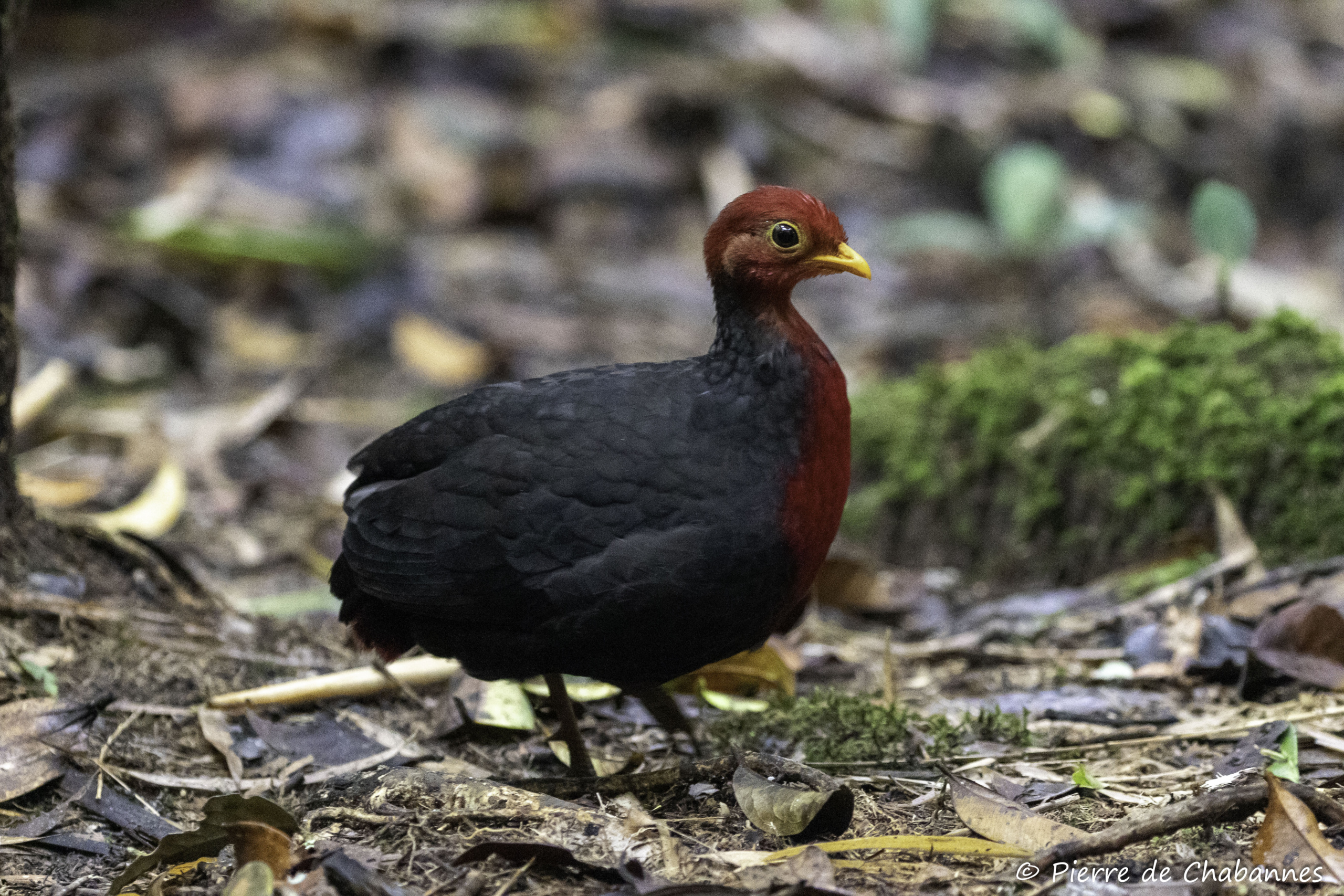
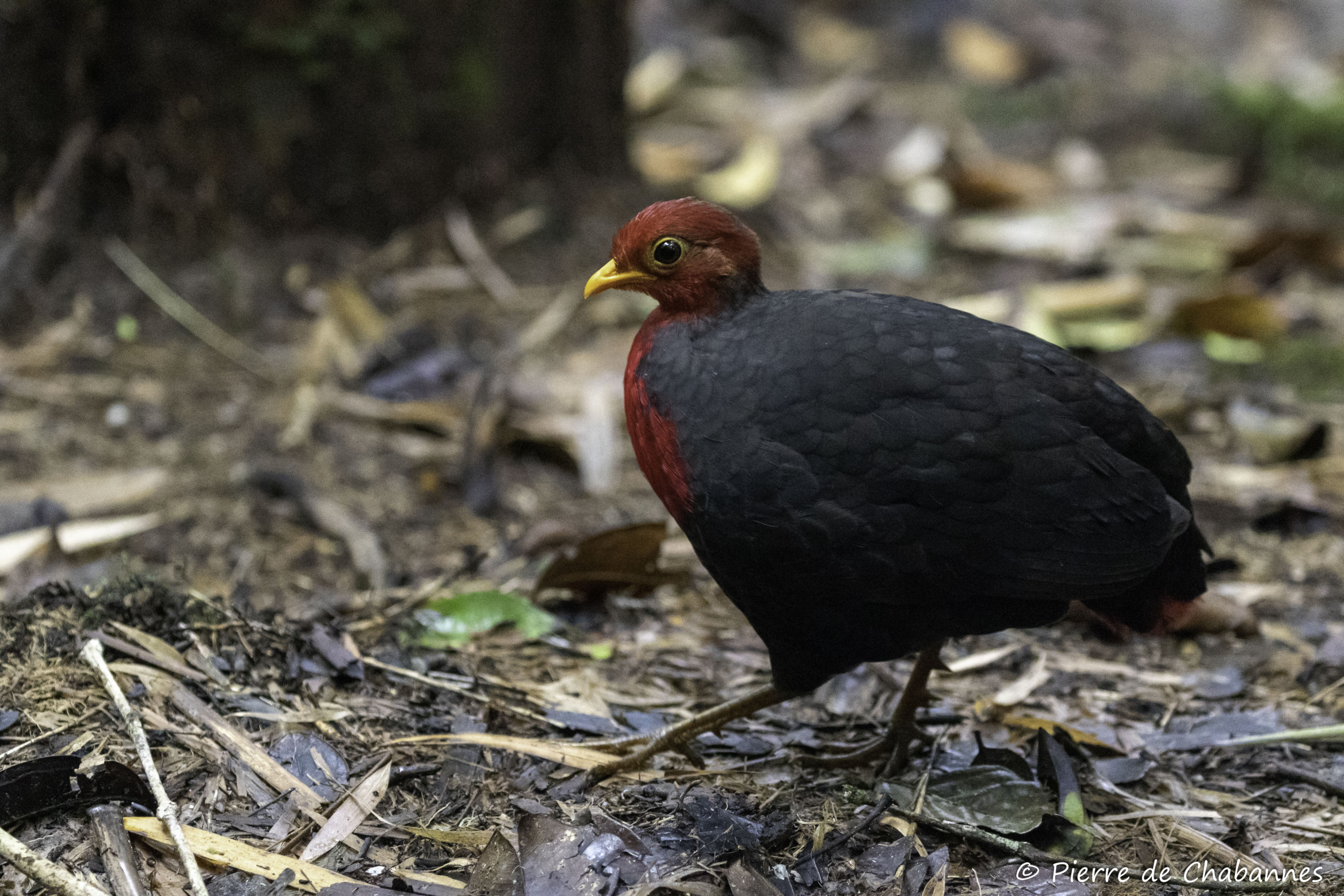
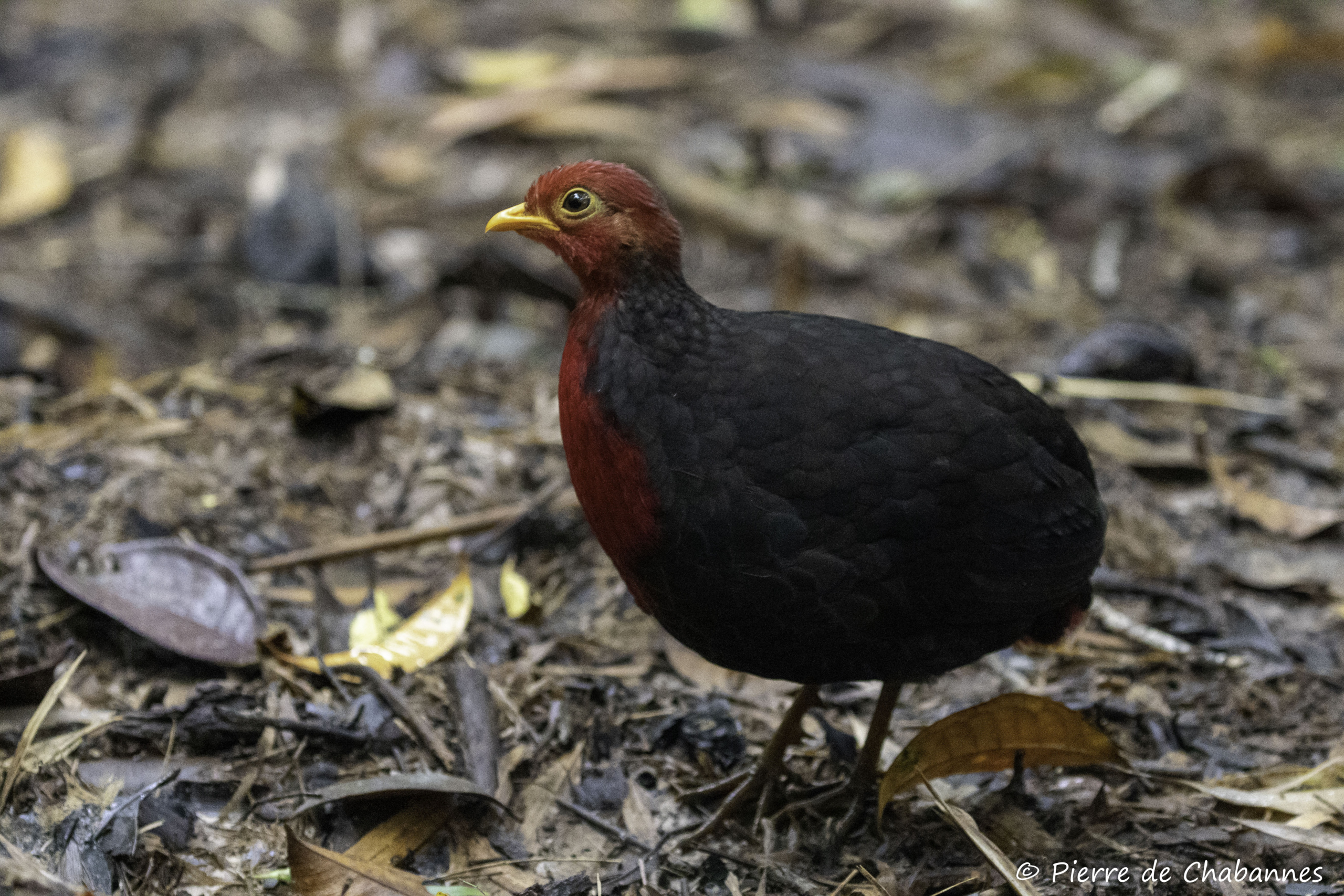
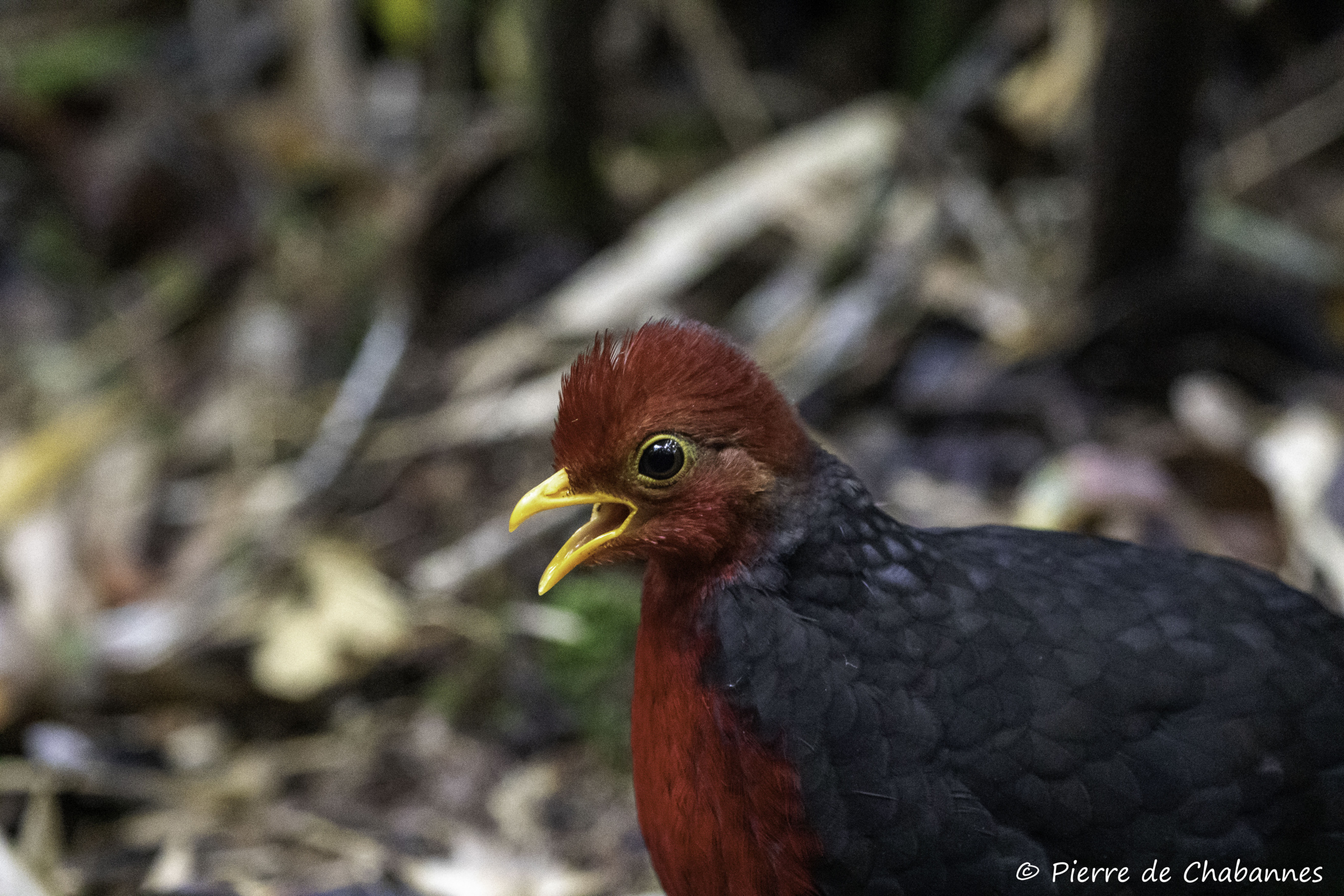
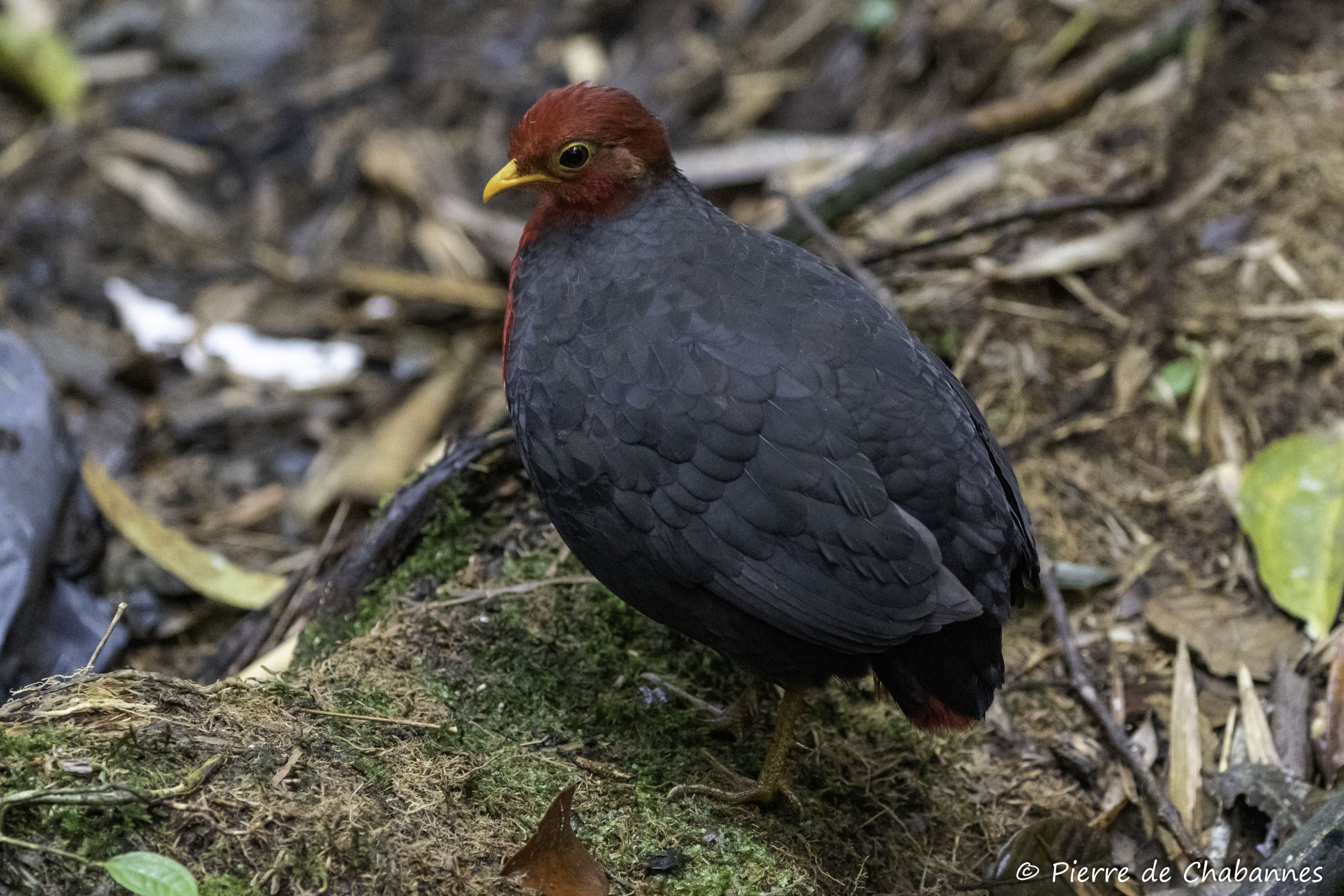
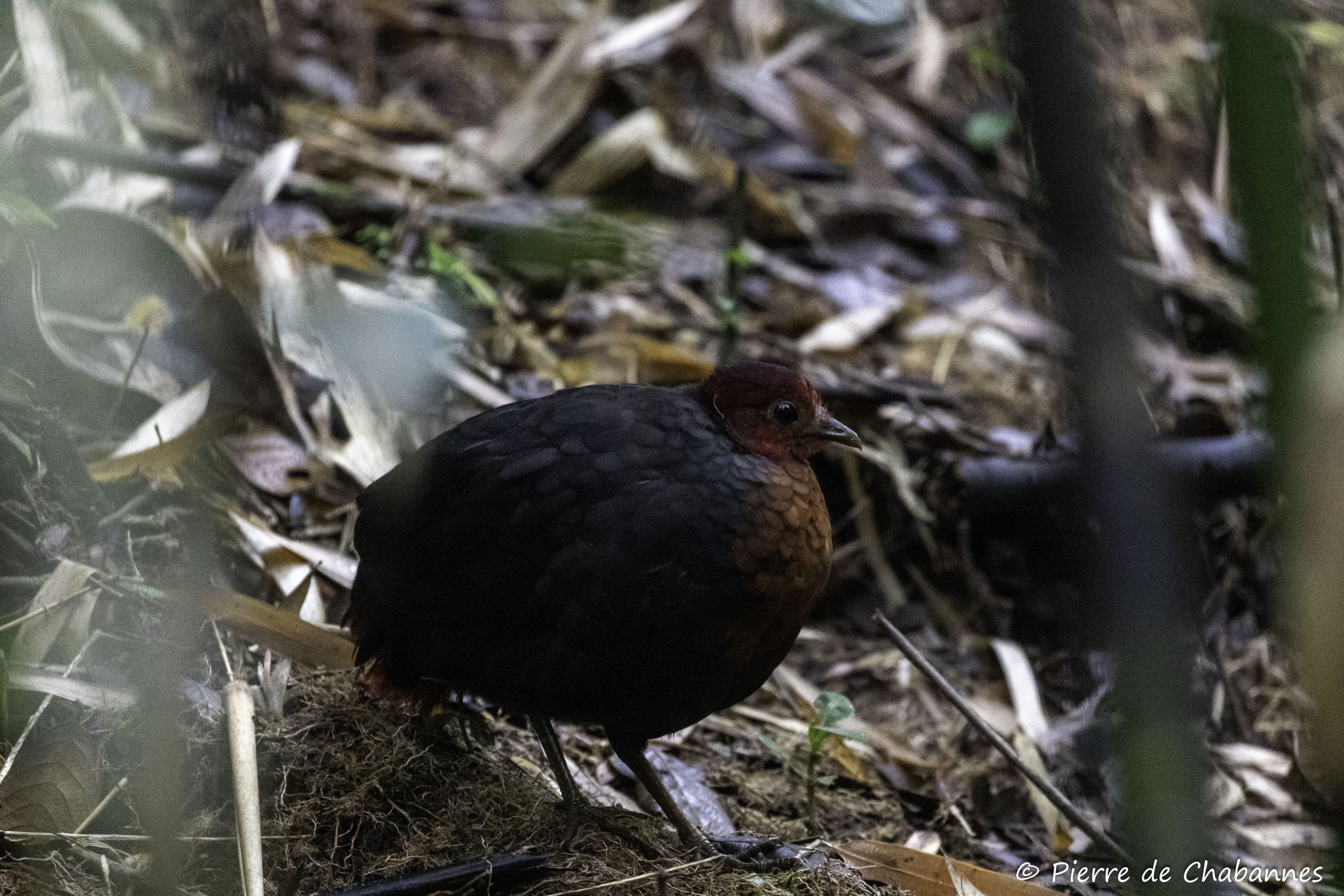
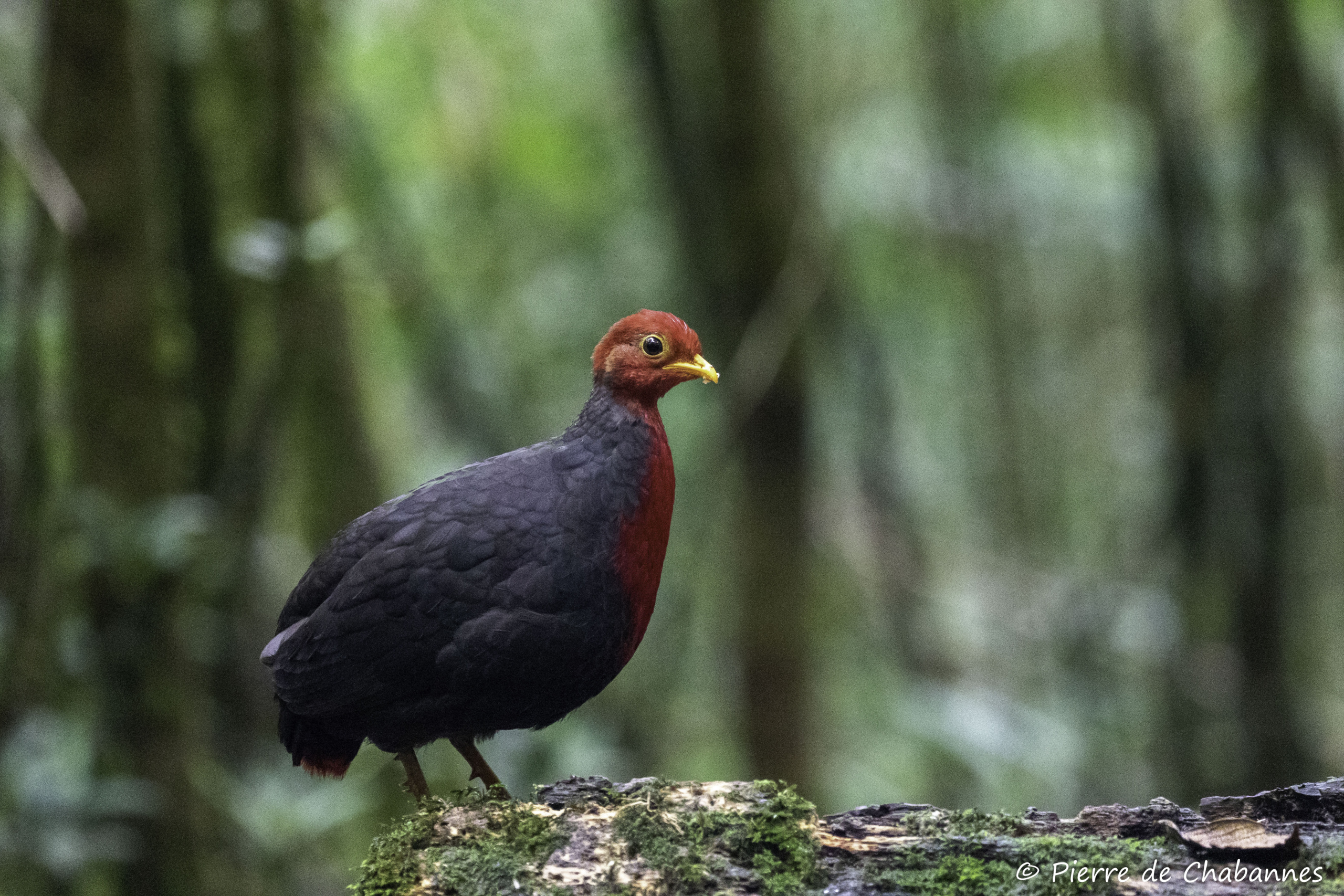
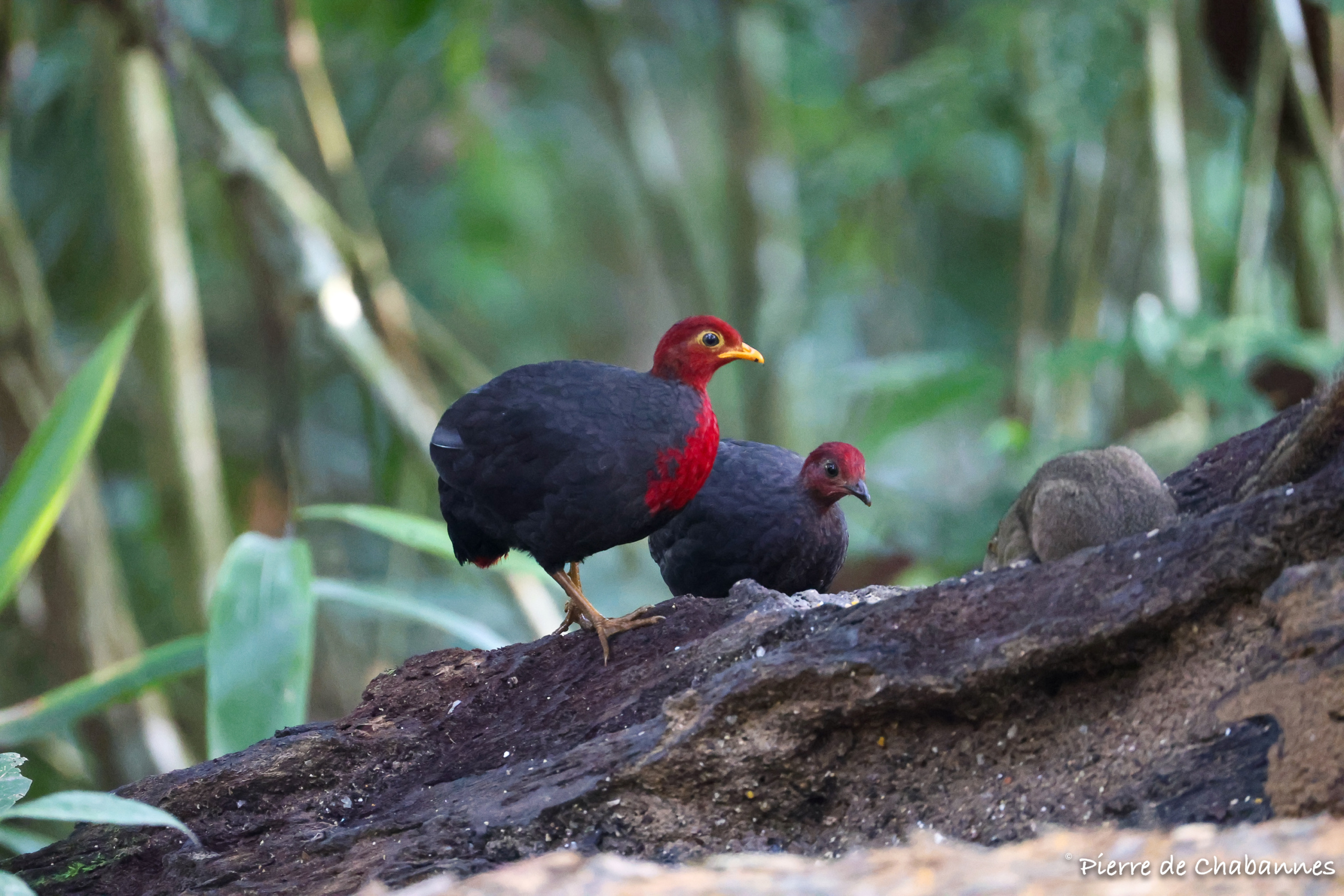
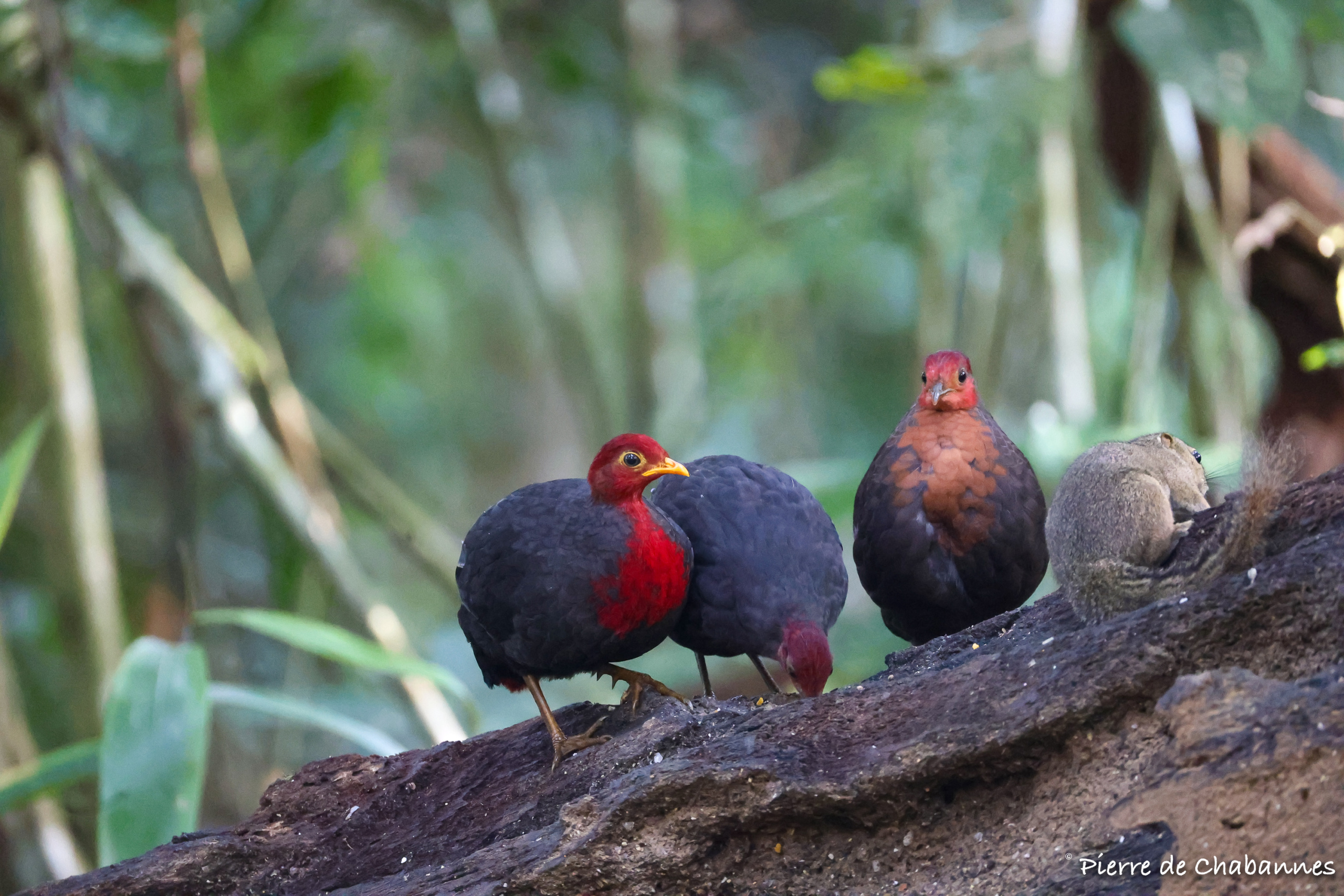
This partridge species is unmistakable with its black plumage and bright red coloration. Males are particularly colorful with bright red breast and head, bright yellow bill and eye contour. Females are a bit duller but both sexes show a bright red tail tuft.
The species is usually quite silent and can be tricky to locate in forests. I had to wait 5 years after seeing my first specimen in Kinabalu Park’s forests to finally get a good photo of this species at the bird hide located near the top of Gunung Alab.
Males can make surprisingly loud calls in the morning as I experienced the first time I went to Gunung Alab’s hide. I also noticed that, once used to feeding near the hide, both sexes became remarkably tame and confiding, even coming inside the hide to browse for food between my feet.
Key facts
The Crimson-headed partridge is the sole member of the genus Haematortyx. It is endemic to Borneo and occurs in the montane forests of the northern half of the island, at altitudes between 1000 and 1700 meters above sea level although it has been recorded as low as 150 meters asl and as high as 3050 meters asl.
The species can often be seen scratching the forest’s leaf litter, turning leaves around to look for fallen berries and invertebrates. Sometimes, they will feed on small terrestrial crustaceans.
At this time, the species remains understudied and hardly anything is known about its nesting and breeding behavior.
Conservation
The species is currently listed as Least Concern on the IUCN Red List. It was previously assessed as Near Threatened because of loss of its habitat through deforestation.
This species has a patchy and restricted range because of its habitat preferences. It is found in at least 15 localities within its range, most of them in Sabah (Malaysia) and one of them in Kalimantan (Indonesia).
So far, its populations in protected areas seem to be stable and the species can be locally common in places like Mt Trusmadi and Mt Kinabalu. However, no comprehensive assessment of population trends has been conducted so far.
More photos from this observation
Other species from Kinabalu Park can be found by browsing my Education resources.
Back to Mt Kinabalu ←Previous species Next Species →
“A long-term project documenting biodiversity across the world through fieldwork, zoological observations and educational content.”