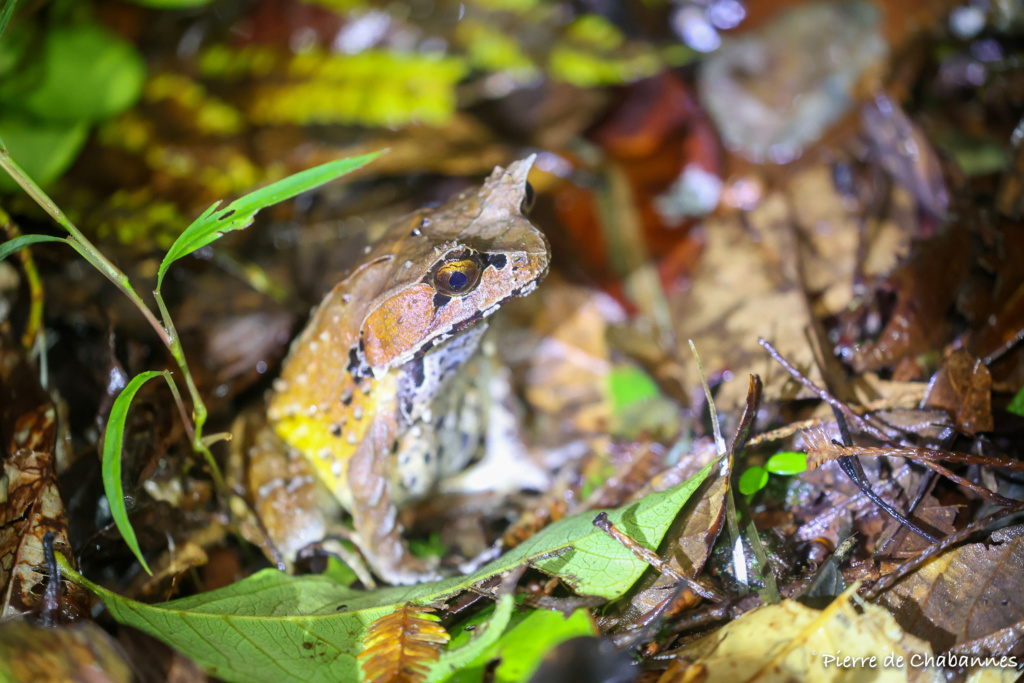
Kobayashi’s horned frog (Pelobatrachus kobayashii)
A little-known horned frog endemic to northern Borneo, perfectly adapted to life among the leaf litter of montane forests.
Context
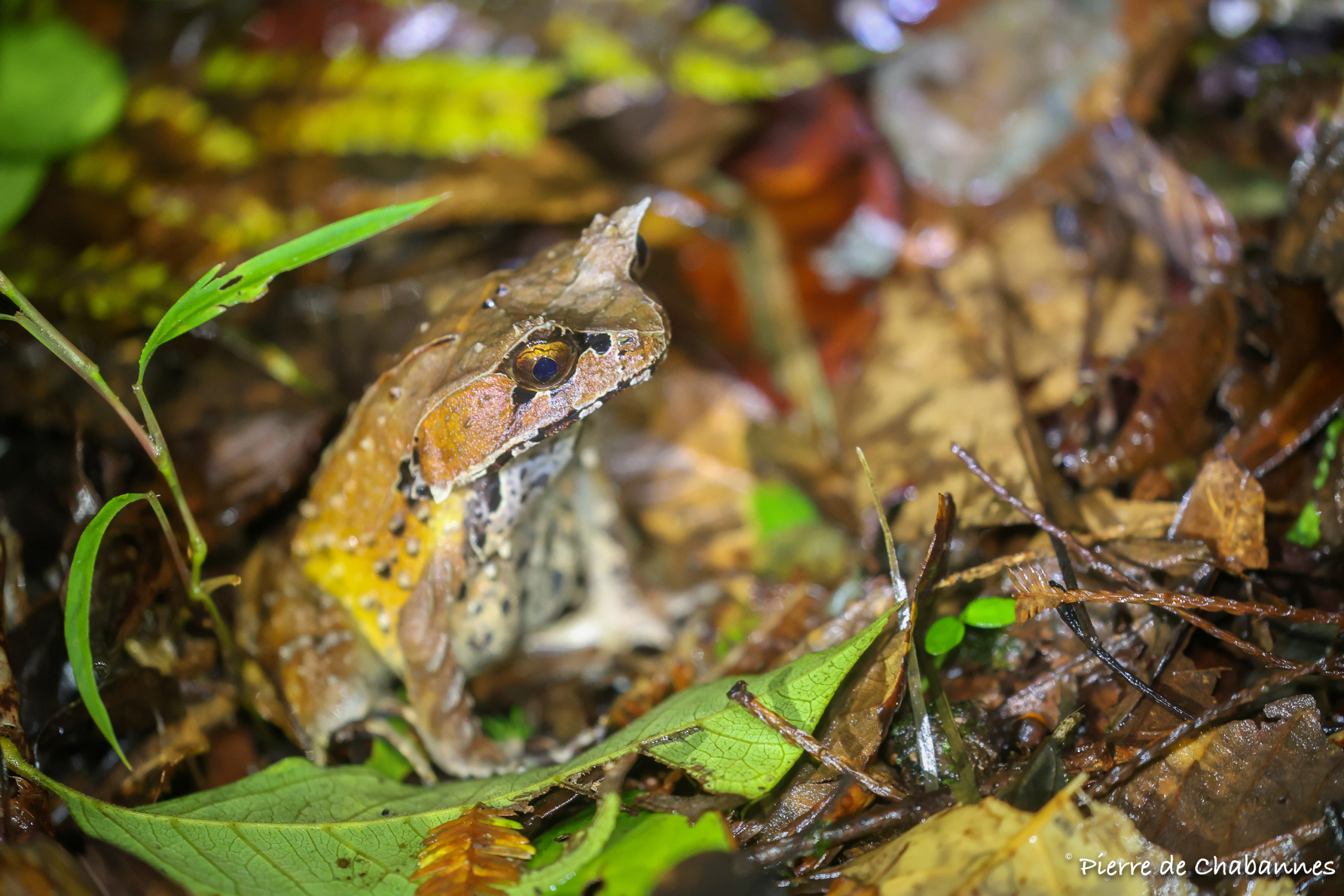
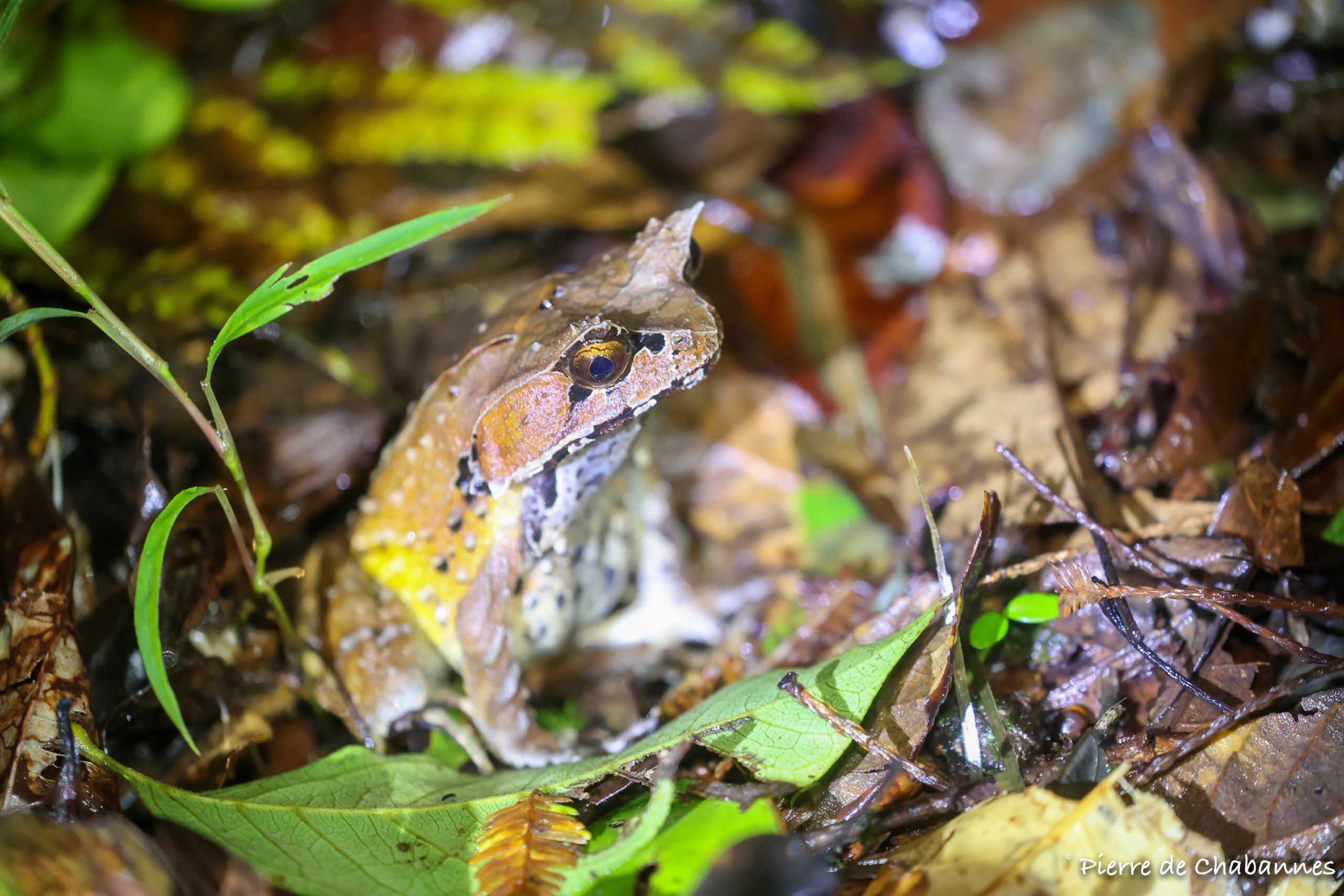
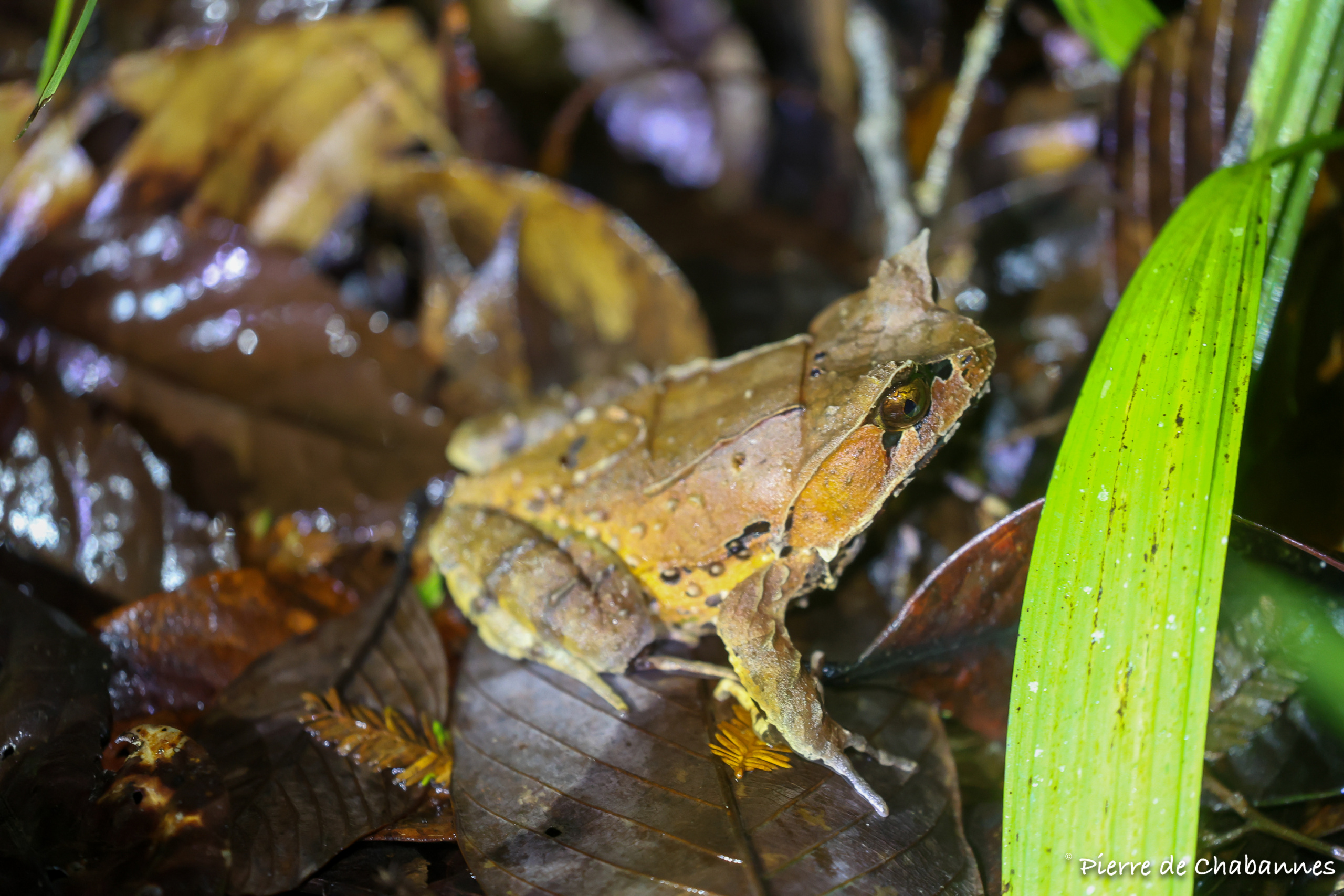
A single specimen photographed near Kinabalu Park’s main road at 1400 meters asl, in the leaf litter of primary montane forest, in Sabah, Borneo (Malaysia).
Field notes
This frog species is one of the most sought after amphibian species in Borneo for its size, its impressive and unique aspect and the fact that it is only found in two protected areas and nowhere else.
A night hike in Kinabalu Park is only authorized with accredited rangers. On this particular tour, we didn’t spot any snakes but we got lucky to spot all three horned frog species found in Kinabalu Park, including the “star of the show” : Kobayashi’s horned frog.
Horned frogs rely on their camouflage and can be very difficult to detect for the untrained eye, in the montane forest’s leaf litter. Despite being common in Kinabalu Park, the species hasn’t been studied and hardly anything is known about its life history and behavior.
Key facts
The species appears to be endemic to Sabah, where it is known from Kinabalu Park, the Mount Trus Madi range, and the Crocker Range. There are reports from nearby northern Sarawak but they seem to be belonging to another species (to be confirmed).
Its broad head, flattened body, and cryptic coloration provide excellent camouflage among fallen leaves. When threatened, the frog often remains perfectly still, relying on its disguise rather than attempting to escape.
The Kobayashi’s horned frog seems to be a true montane primary humid forest specialist and its range is very restricted, with an estimated extent of occurrence of only 5,133 square kilometers.
Conservation
The species was previously listed as Near Threatened given its very small range and habitat specialization but it has been downlisted as Least Concern as its populations are stable and mostly found within strictly protected areas.
This frog species is said to be very sensitive to habitat disturbance and hasn’t been spotted in degraded forests so far. This means that habitat protection is the main requirement for this species’ long term survival.
So far, we are waiting on studies and scientific work to tell us how climate change is likely to affect Bornean montane forests in the long term and how vulnerable species such as Kobayashi’s horned frog may become in the short or middle term.
More photos from this observation
Other species from Kinabalu Park can be found by browsing my Education resources.
Back to Mt Kinabalu ←Previous species Next Species →
“A long-term project documenting biodiversity across the world through fieldwork, zoological observations and educational content.”