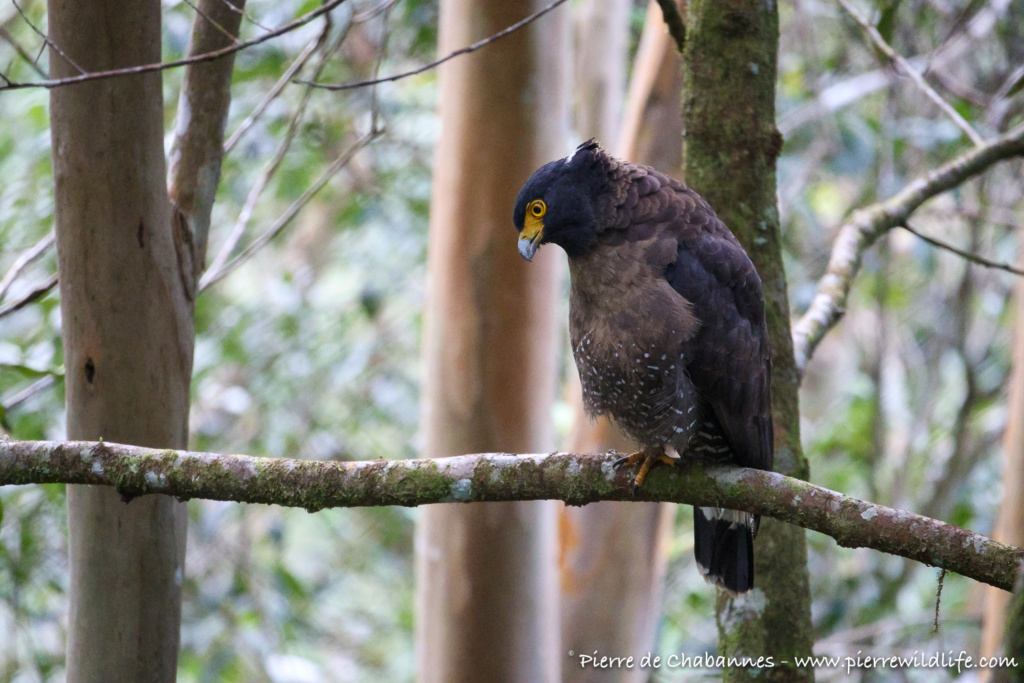
Mountain serpent-eagle (Spilornis kinabaluensis)
A powerful forest raptor endemic to Borneo, restricted to
the island’s montane forests.
Context
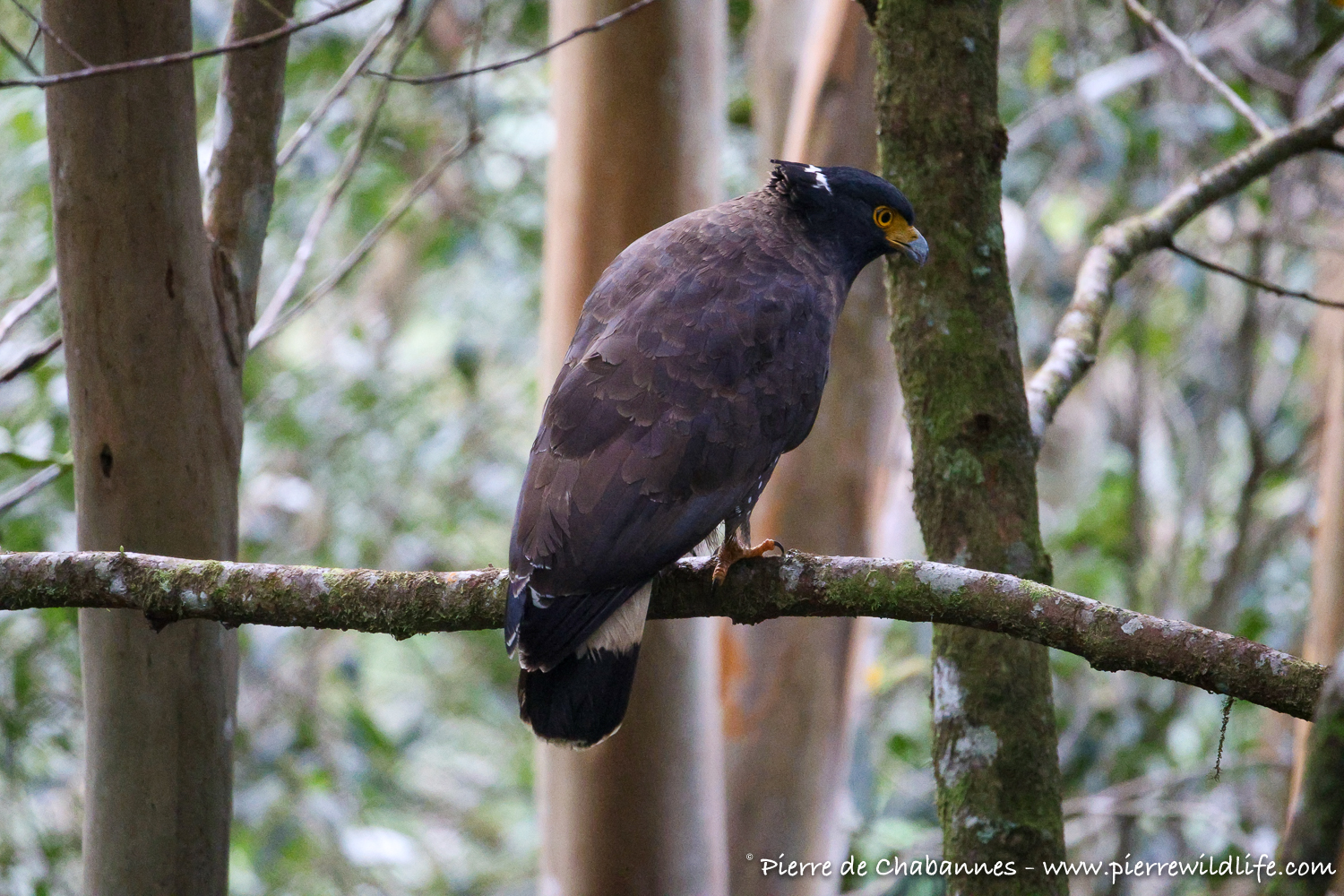
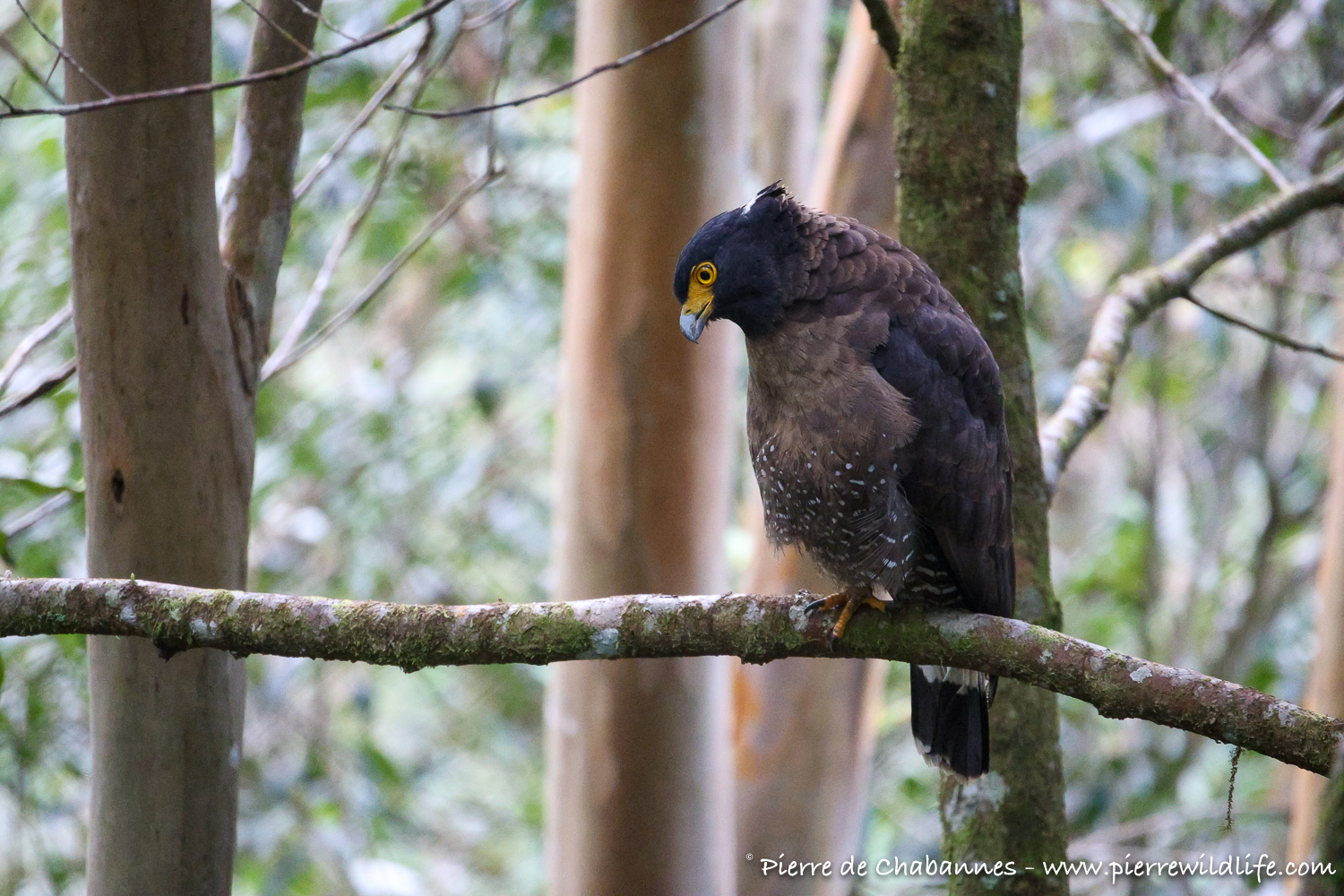
A single individual observed perched inside montane forest at approximately 1,800 m asl, not far from the climber’s gate at the upper end of Kinabalu Park’s main road.
Field notes
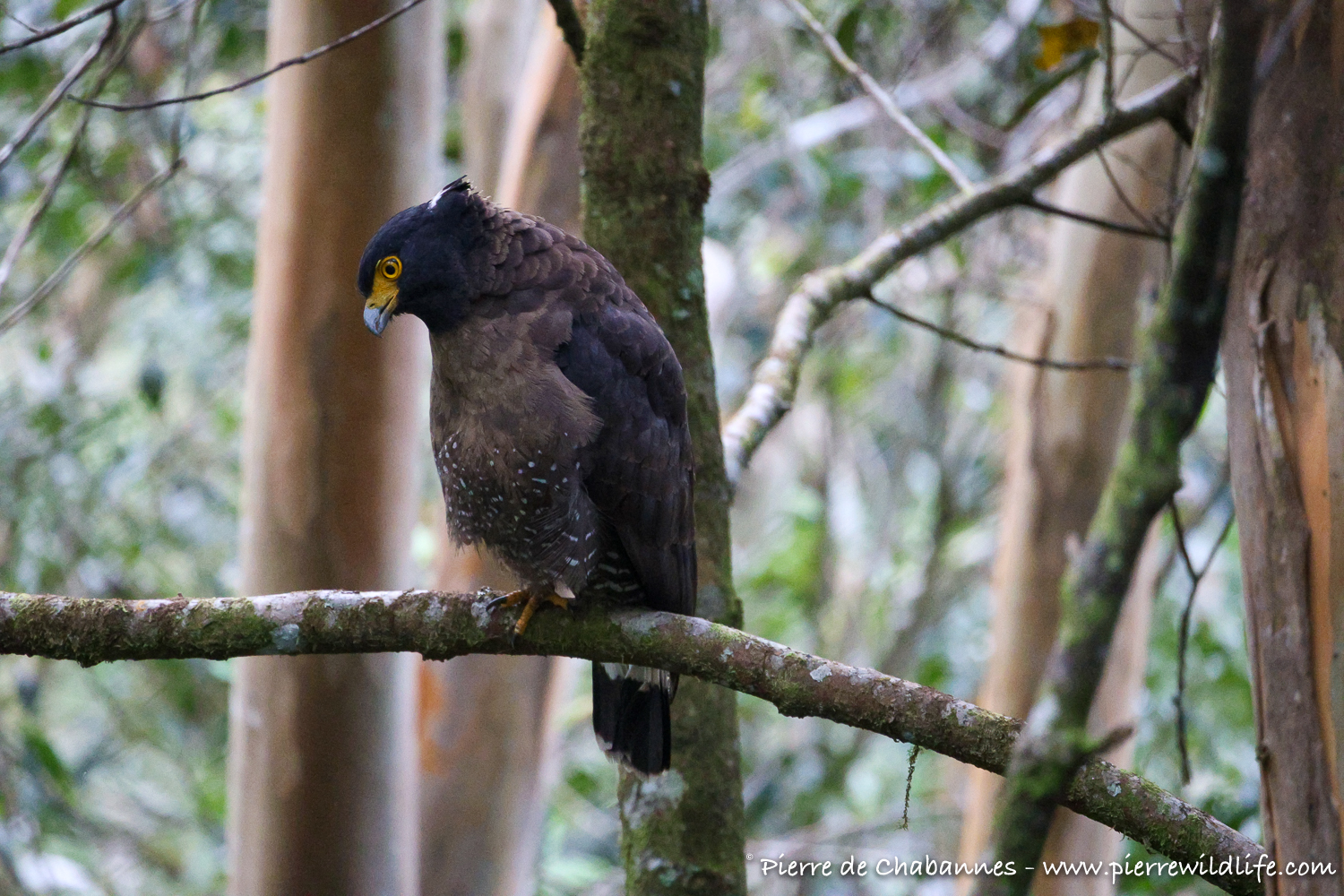
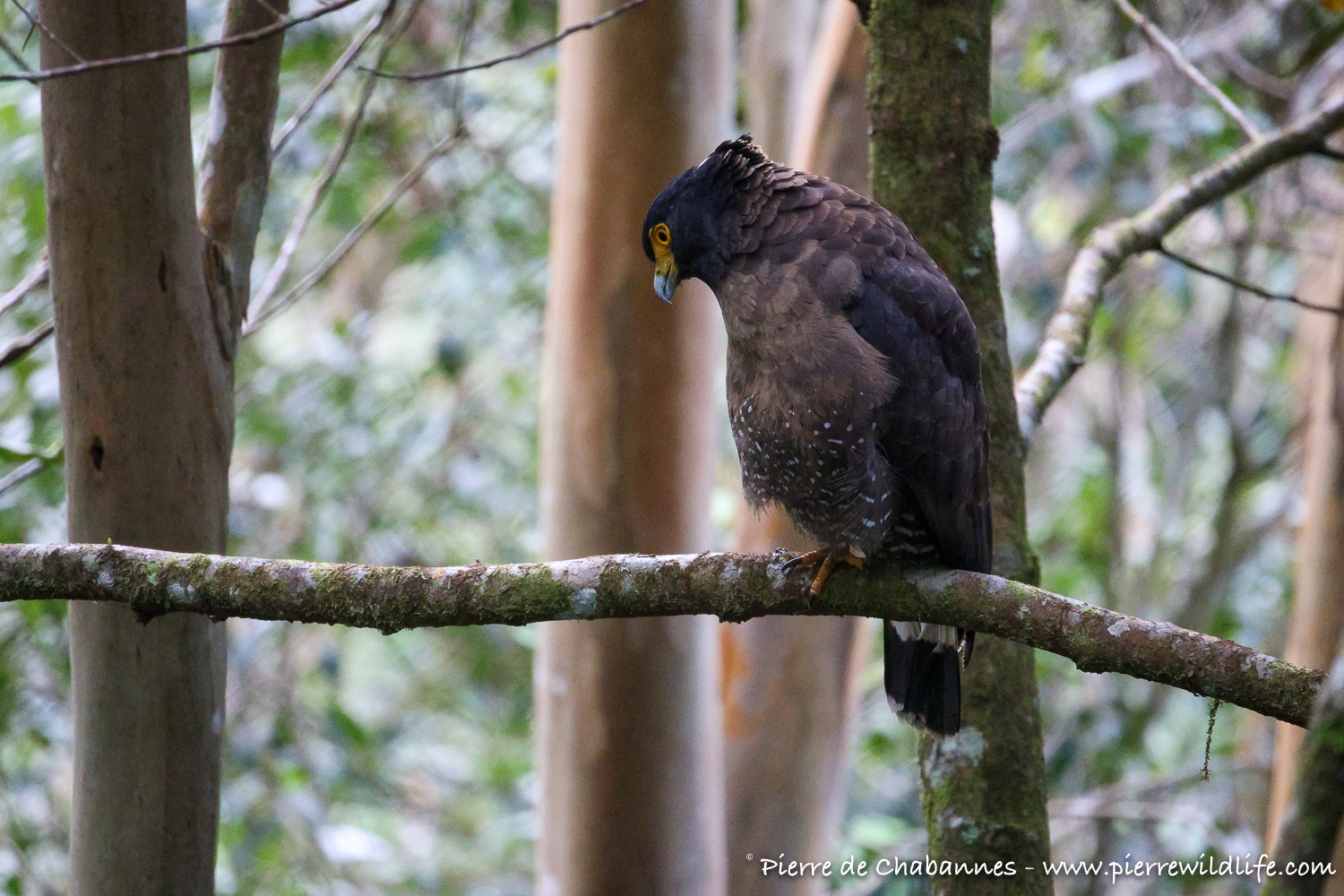
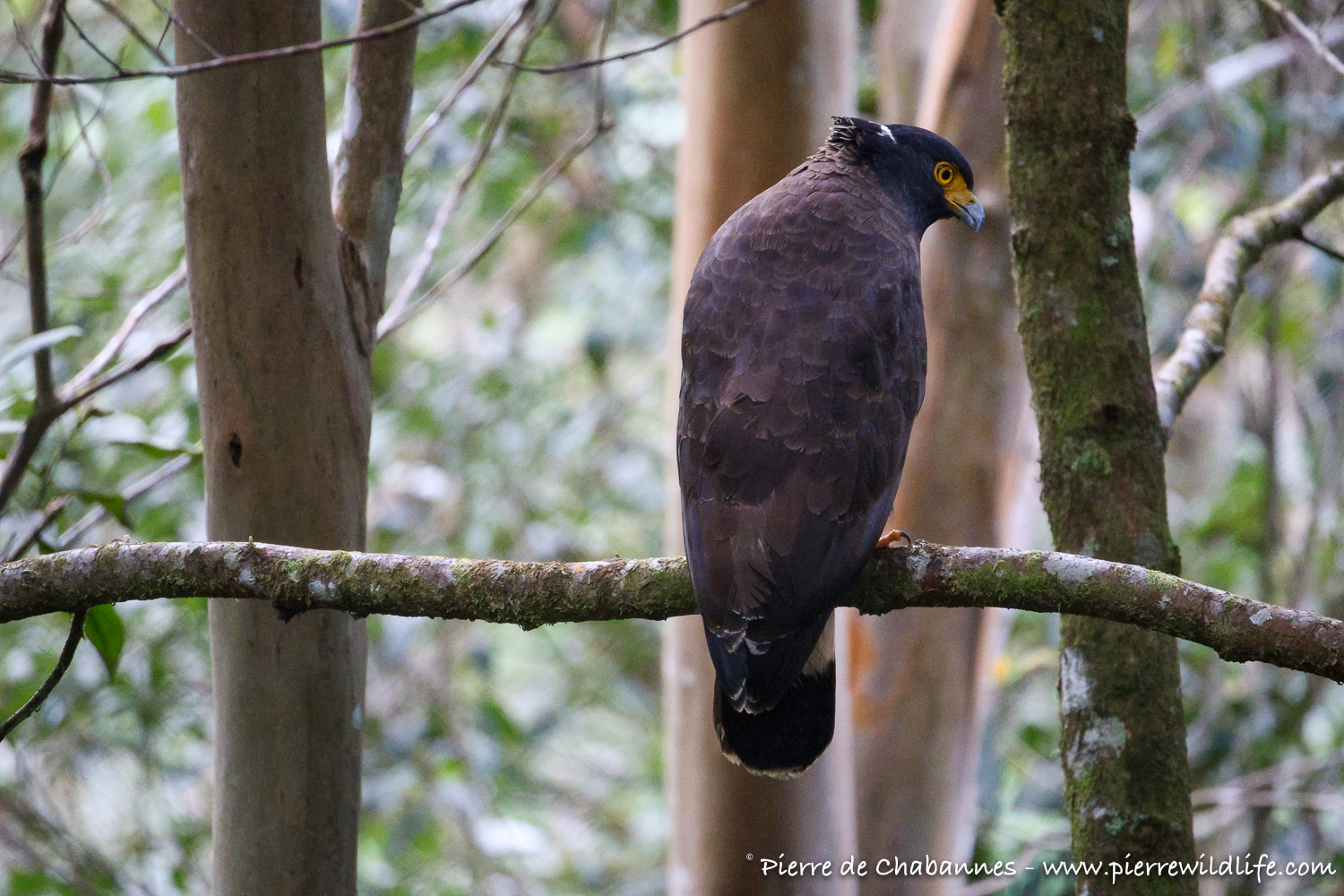
For years, very few photos of this species were known and nearly all of them were poor quality photos of the bird in flight. The photos I took of this bird perching are amongst the first known good quality shots of the species.
This observation was a very lucky moment as this individual chose to perch at eye level, close enough to the trail so we could have a good look at it and get open shots. It stayed there for about two minutes, scanning the surrounding forest for prey before taking flight again.
In Kinabalu Park, the species is recorded nearly daily in flight above the forests but good views are very difficult to get. After 10 years of exploration in Borneo, 2023 finally rewarded me with an exceptional close encounter with this bird.
Key facts
The mountain serpent-eagle is endemic to the mountains of northern Borneo and occurs mainly in montane forests, generally between 750 and 2,500 meters asl although it is most often found above 1500 meters asl.
For many years it was considered a subspecies of the widespread Crested Serpent Eagle (Spilornis cheela), but differences in morphology, vocalizations, and genetics have confirmed its status as a distinct species.
Its broad wings and relatively short tail are adaptations for soaring above forested mountains and maneuvering through dense woodland habitats. It feeds mostly on snakes and lizards.
Conservation
The species is currently listed as Near Threatened on the IUCN Red List because of its very small range.
The species seems to be quite scarce although possibly under-recorded as most of its habitat remains hardly accessible.
The species depends on extensive tracts of intact montane forest for its survival. Expanding and strengthening the protection of high-elevation forests throughout its range will be essential for its long-term conservation.
More photos from this observation
Other species from Kinabalu Park can be found by browsing my Education resources.
Back to Mt Kinabalu ←Previous species Next Species →
“A long-term project documenting biodiversity across the world through fieldwork, zoological observations and educational content.”