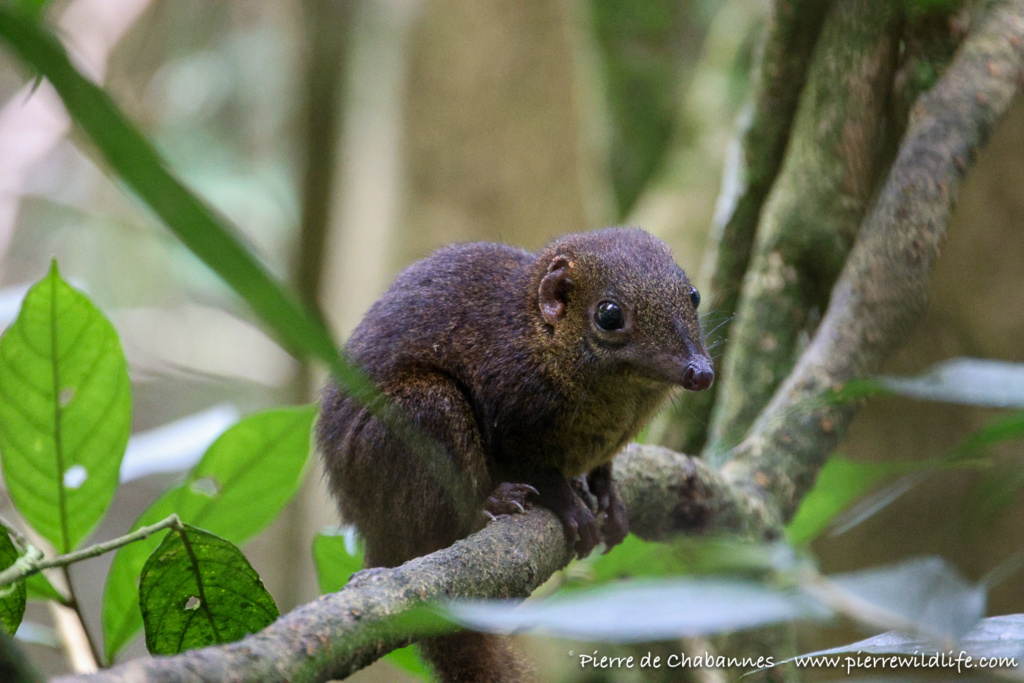
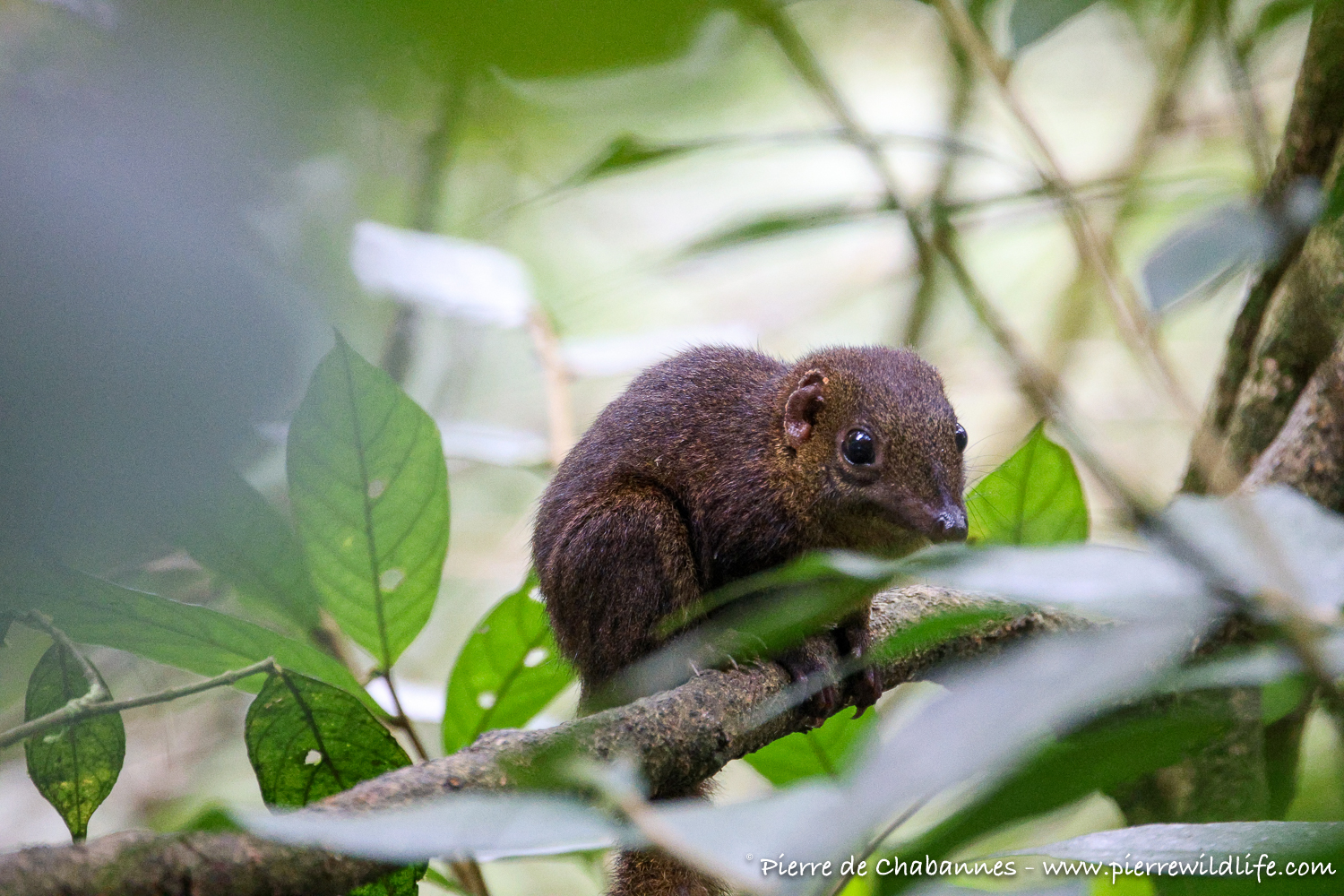
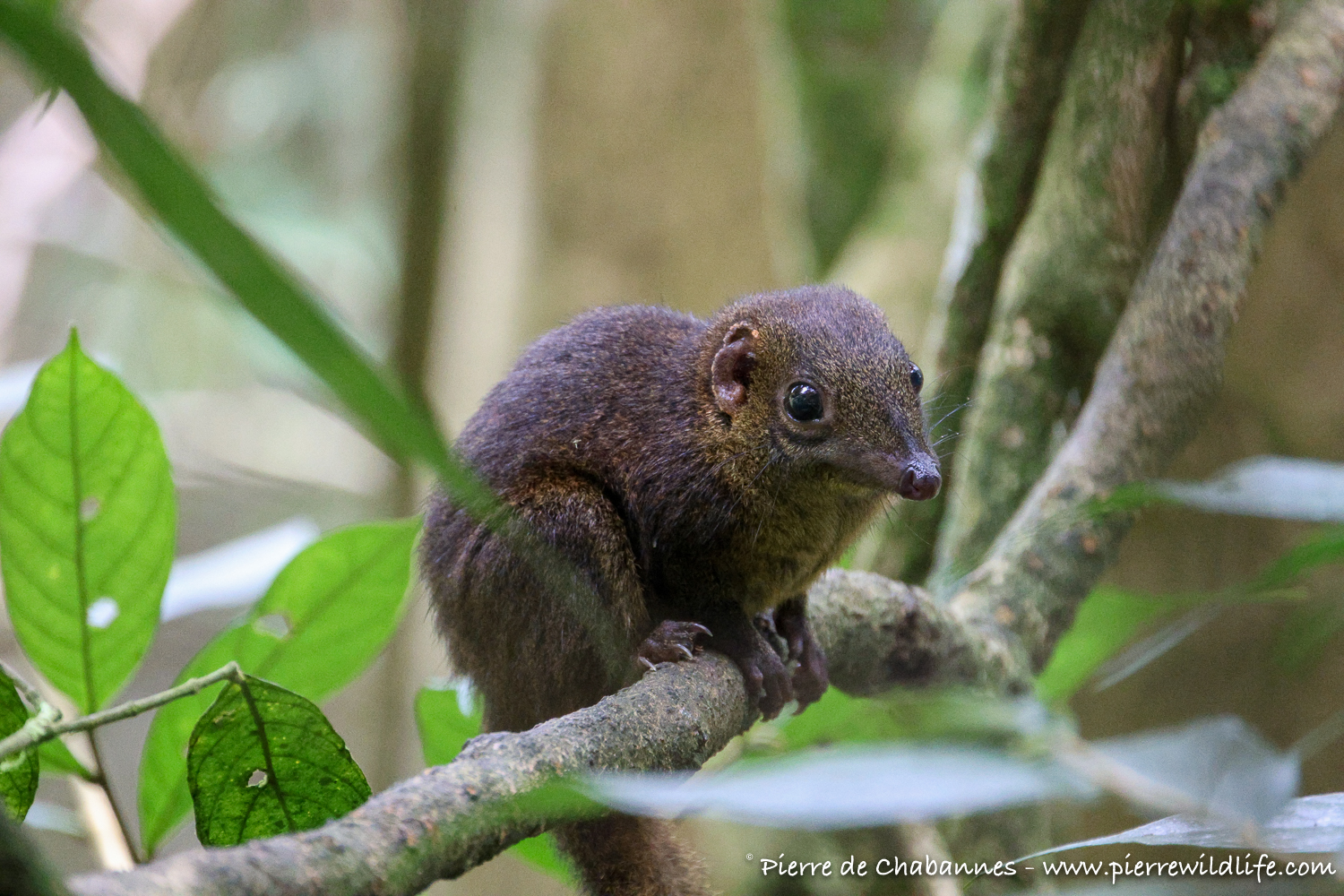
Kinabalu tree shrew (Tupaia montana baluensis)
A small fast-moving insectivorous mammal found in Bornean montane forests.
Context
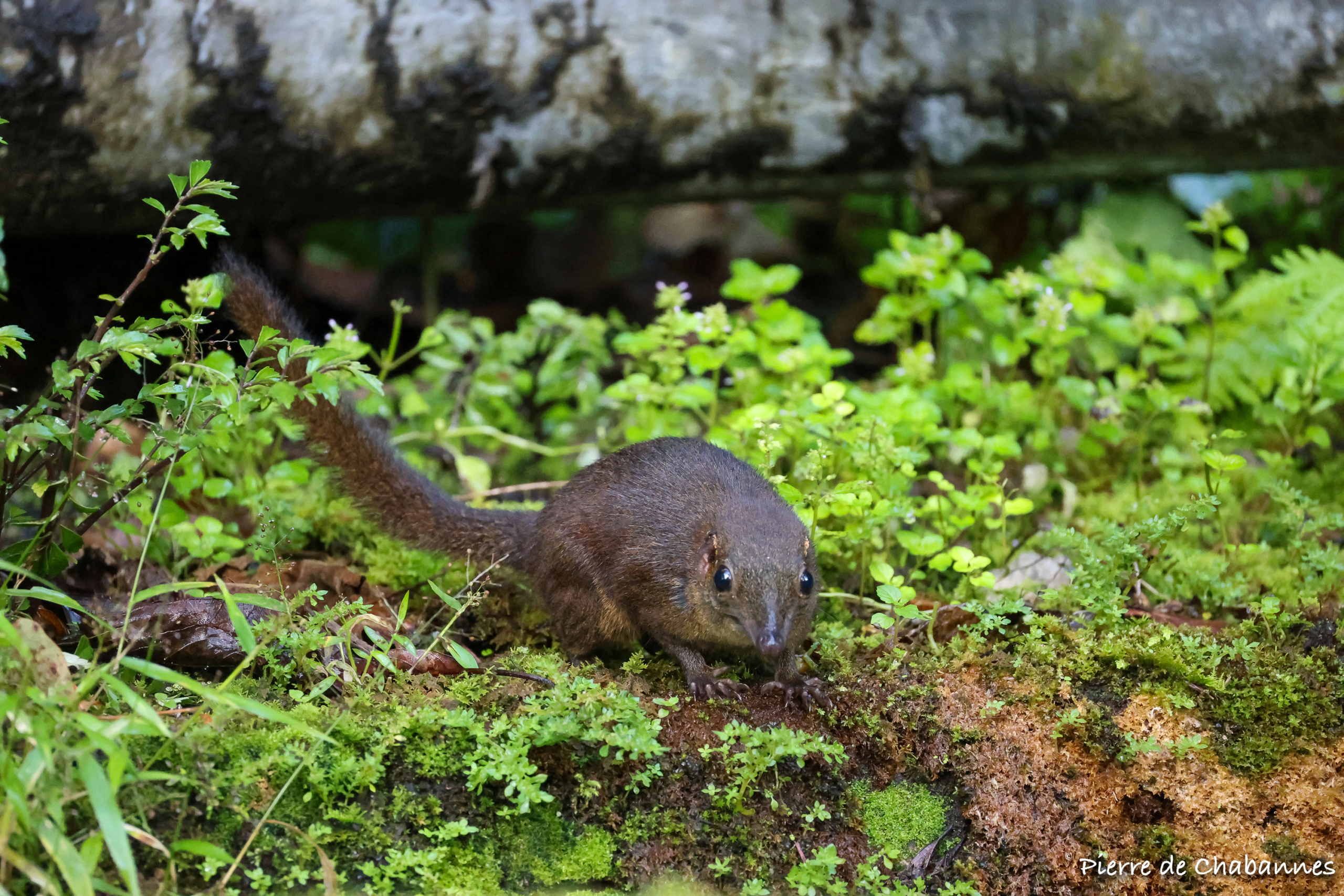
Single individuals observed and photographed near the top of the main road inside Kinabalu Park, as well as near the bird feeders of Gunung Alab bird hide in Sabah (Malaysia).
Field notes
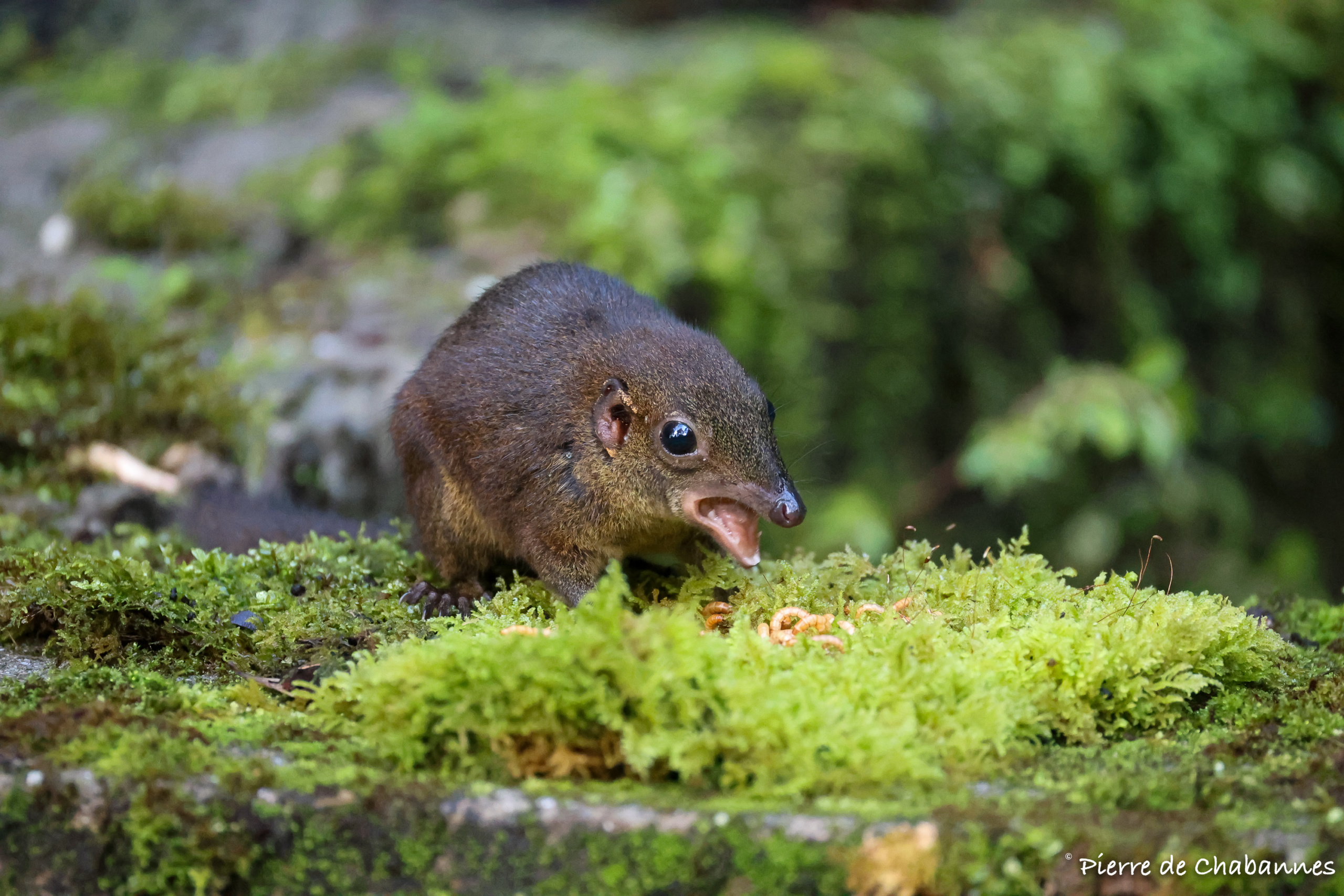
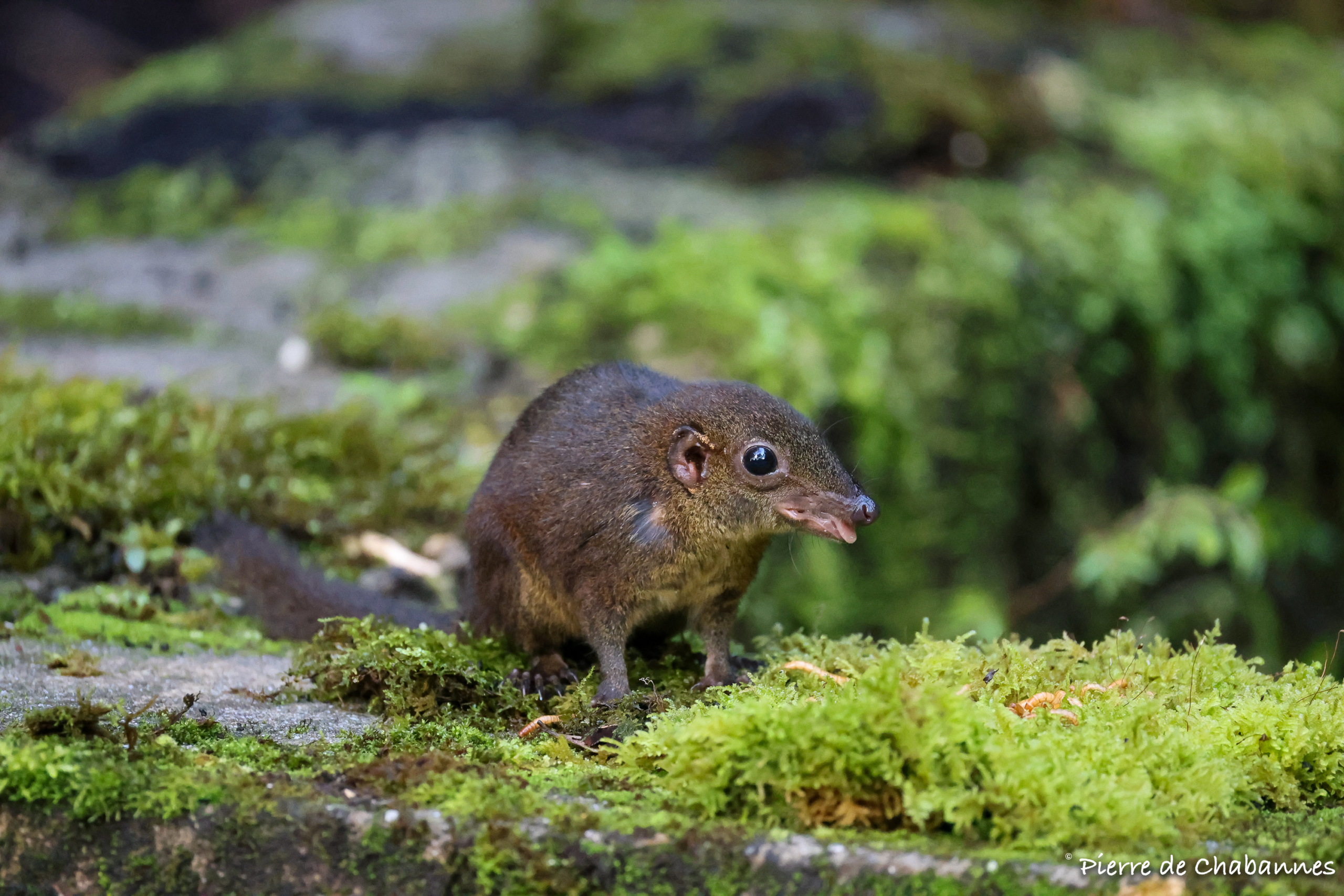
Tree-shrews are usually moving very fast and rarely staying still for long, making photography very difficult. Bird feeding stations like Gunung Alab bird hide sometimes allow for prolonged observations but they never last very long.
Most tree-shrew species are alert and shy creatures, rarely coming in the open in areas where humans come regularly, except at a few bird hides where they have slowly been habituated. Tree shrews are mostly forest-dwelling creatures found from lowland to mid and high elevation areas
In Kinabalu Park, the species is often attracted to the garbage dump hut located very close to the climber’s gate. There, it is reliably seen on a daily basis but rarely stops foraging for photos. I got lucky once out of more than 10 years of regular explorations.
Key facts
This species is endemic to Borneo and occurs in montane forests in the northern half of the island, mostly above 600 meters asl.
This subspecies, baluensis, is endemic to Mt Kinabalu and nearby montanous areas of Sabah.
The species feeds mainly on insects and small invertebrates, collected on the ground and amongst low vegetation. They will sometimes eat berries and fruits but this isn’t the main component of their diet.
Conservation
The species is currently listed as Least Concern on the IUCN Red List, subspecies have not been assessed at this time.
The species is commonly seen in montane forests but has a disjunct range. Although it is adaptable, it needs forests for its survival.
So far, besides the protection of national parks and other preserved areas, no conservation measures are in place for this species’ conservation.
More photos from this observation
Other species from Kinabalu Park can be found by browsing my Education resources.
Back to Mt Kinabalu ←Previous species Next Species →
“A long-term project documenting biodiversity across the world through fieldwork, zoological observations and educational content.”