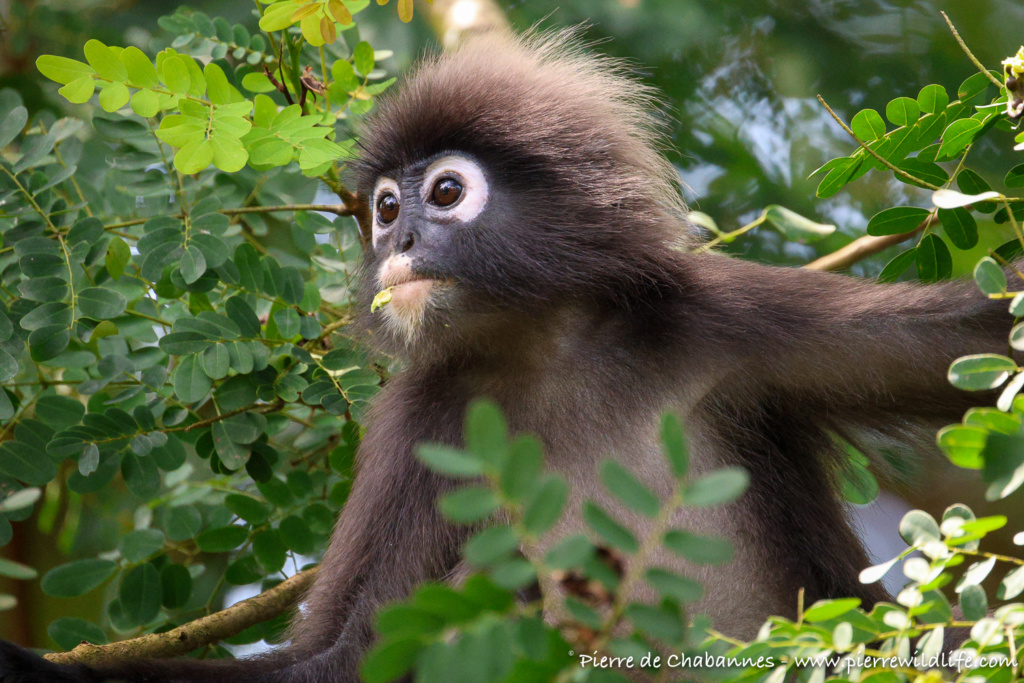
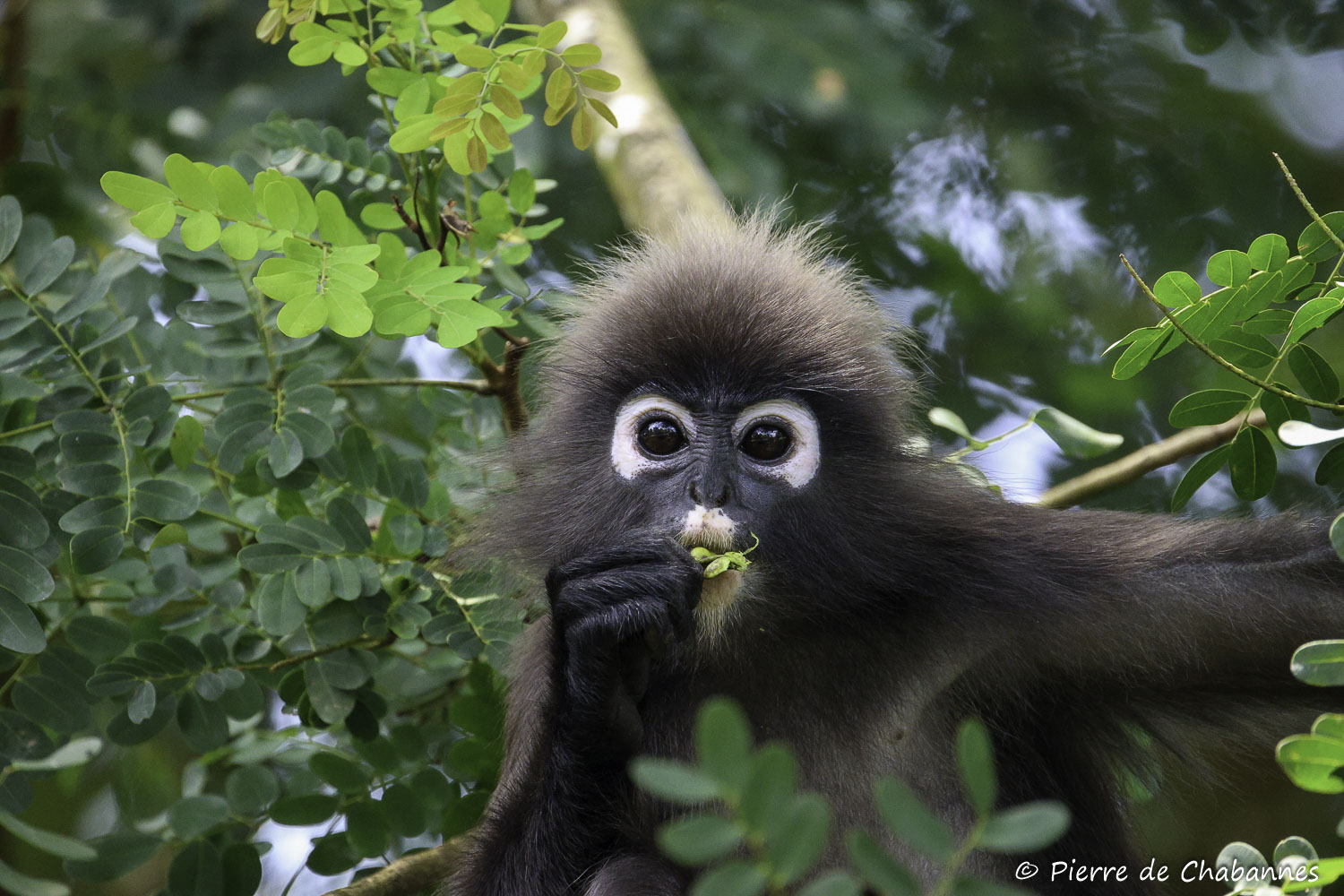
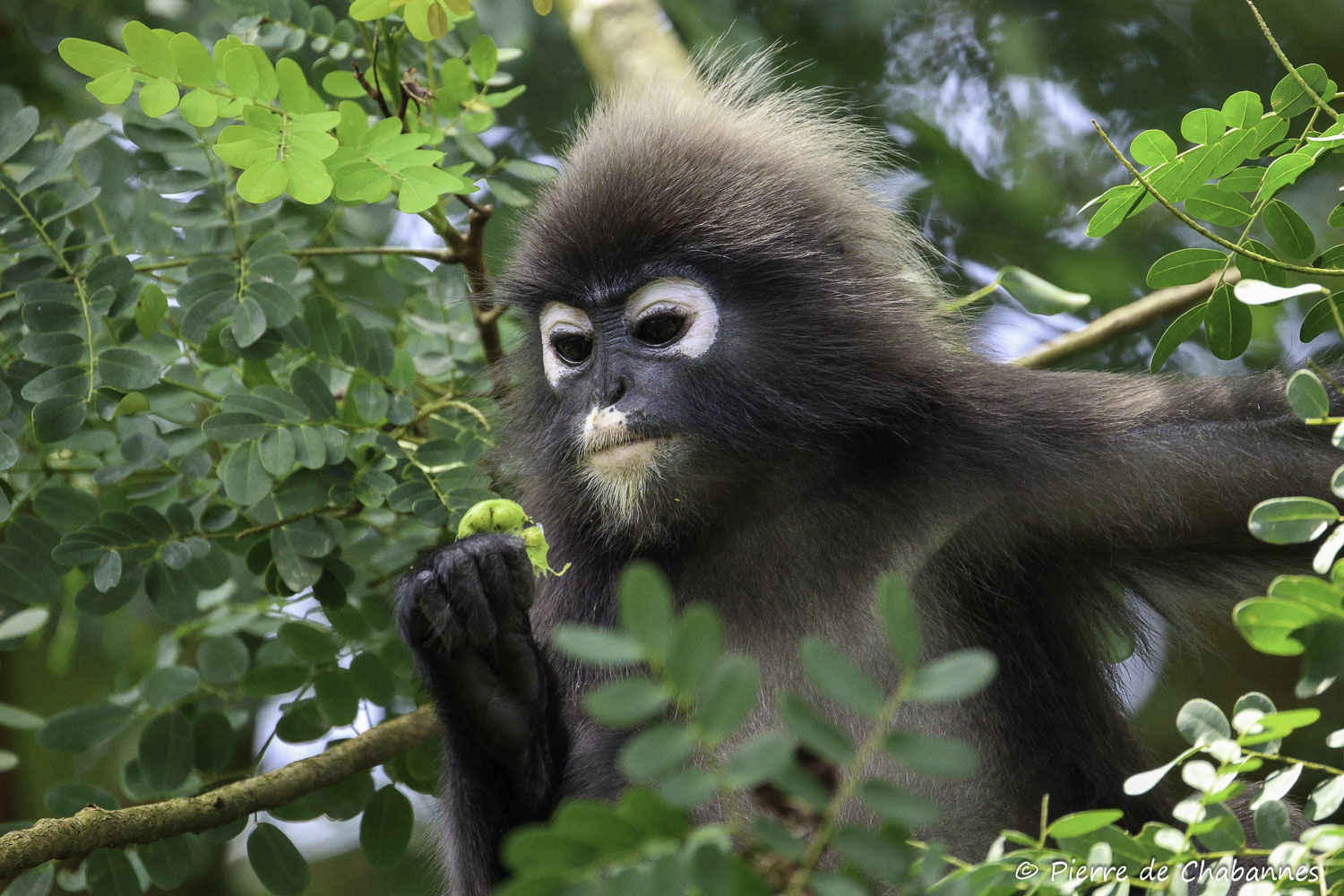
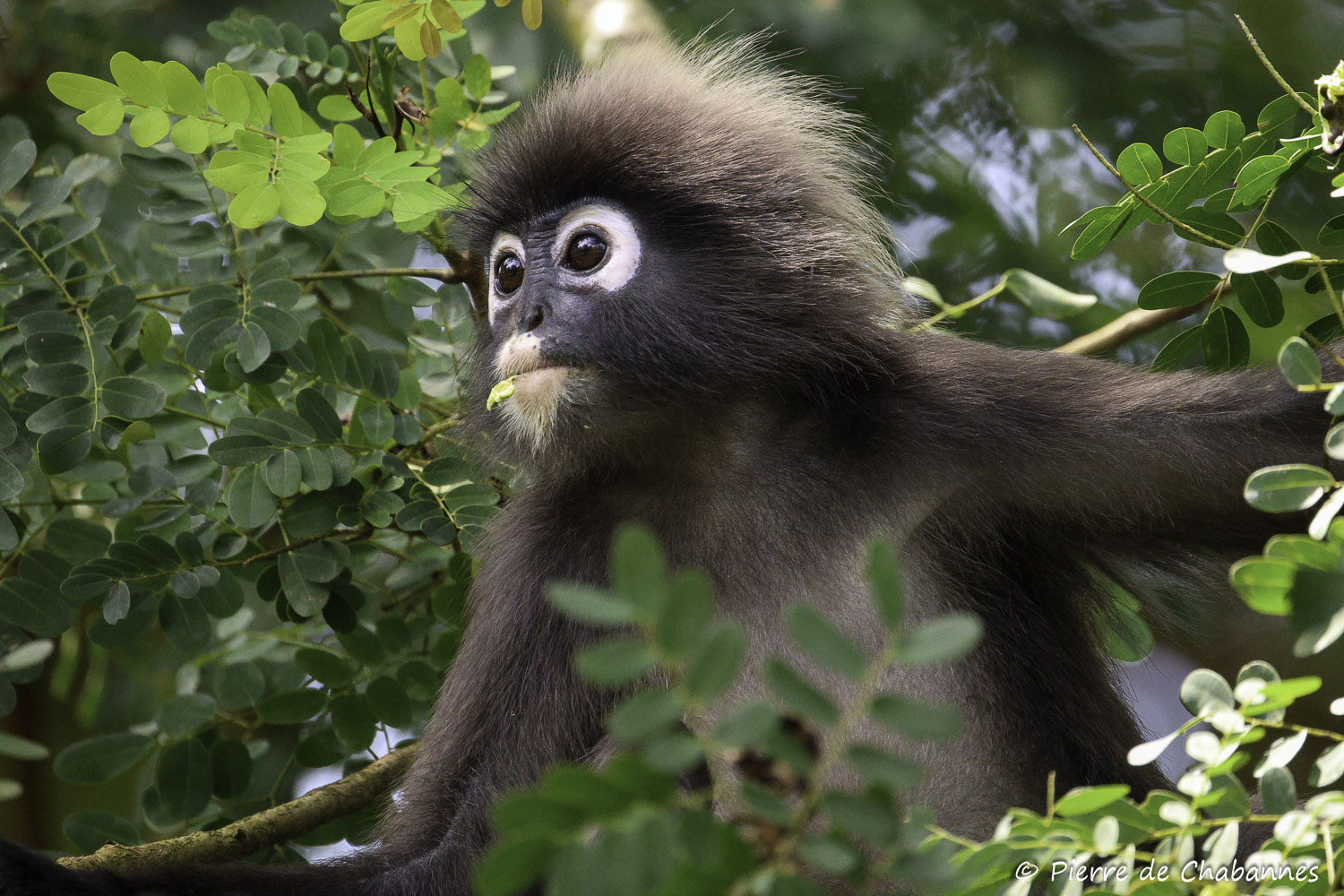
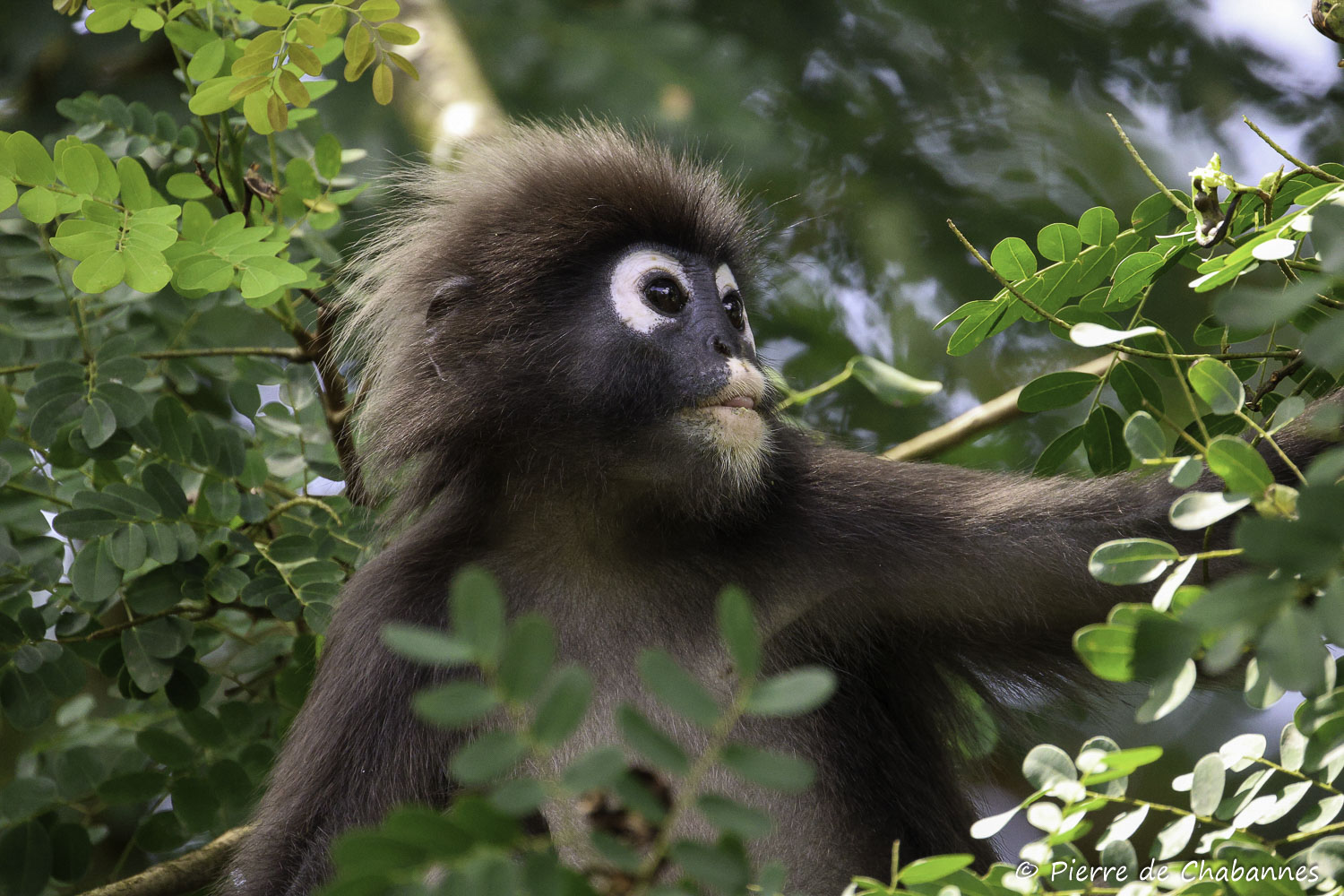
Dusky langur (Trachypithecus obscurus obscurus)
One of Southeast Asia’s most recognizable leaf monkeys, often encountered in urban parks throughout Peninsular Malaysia but still threatened with extinction.
Context
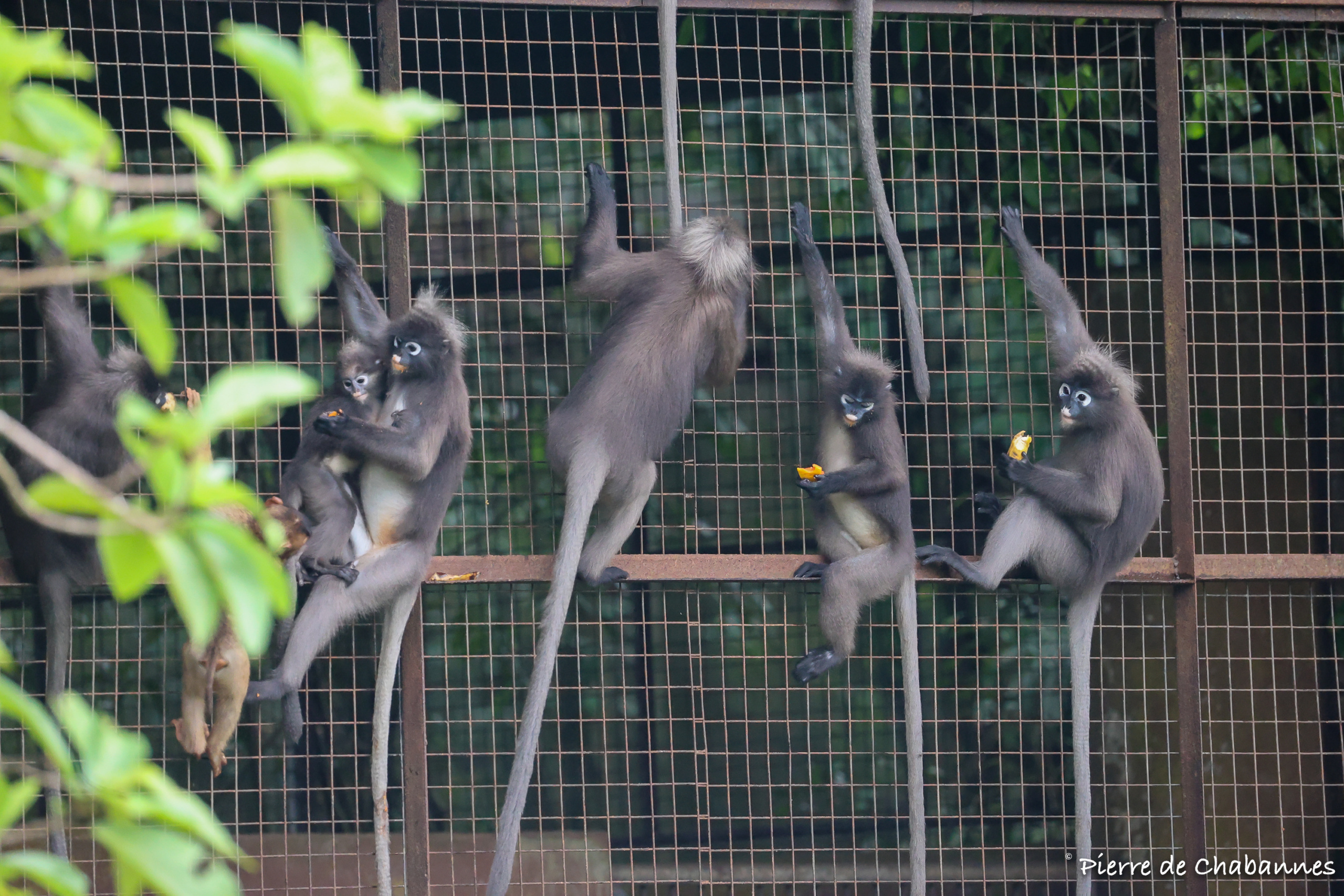
Large family groups photographed around Taiping Zoo, Melaka Zoo, Zoo Negara and in the forest path at the bottom of Bukit Larut in Taiping, Malaysia.
Field notes
In Peninsular Malaysia, this is the commonest leaf monkey species around cities. It can be found in many urban parks, especially zoos that still have a bit of forest cover and food easily available.
Zoo Taiping is one of the best places I know to watch and photograph family groups at close range. Everyday, big numbers of langurs gather inside the zoo to rest and look for food. They are often seen around the giraffe enclosure when looking for food and near the wallaby’s lake when resting.
In other places such as Melaka Zoo or Zoo Negara Malaysia in Kuala Lumpur, the species will often travel in mixed species groups together with the much rarer Pale-thighed langur (Presbytis siamensis). The two species can be distinguished by the absence of conspicuous white eye-rings in the Pale-thighed langur, which also has a browner overall coloration.
Key facts
The Dusky langur occurs throughout parts of southern Thailand, Peninsular Malaysia, and nearby islands. The nominate subspecies, pictured here, is found throughout Peninsular Malaysia and Singapore.
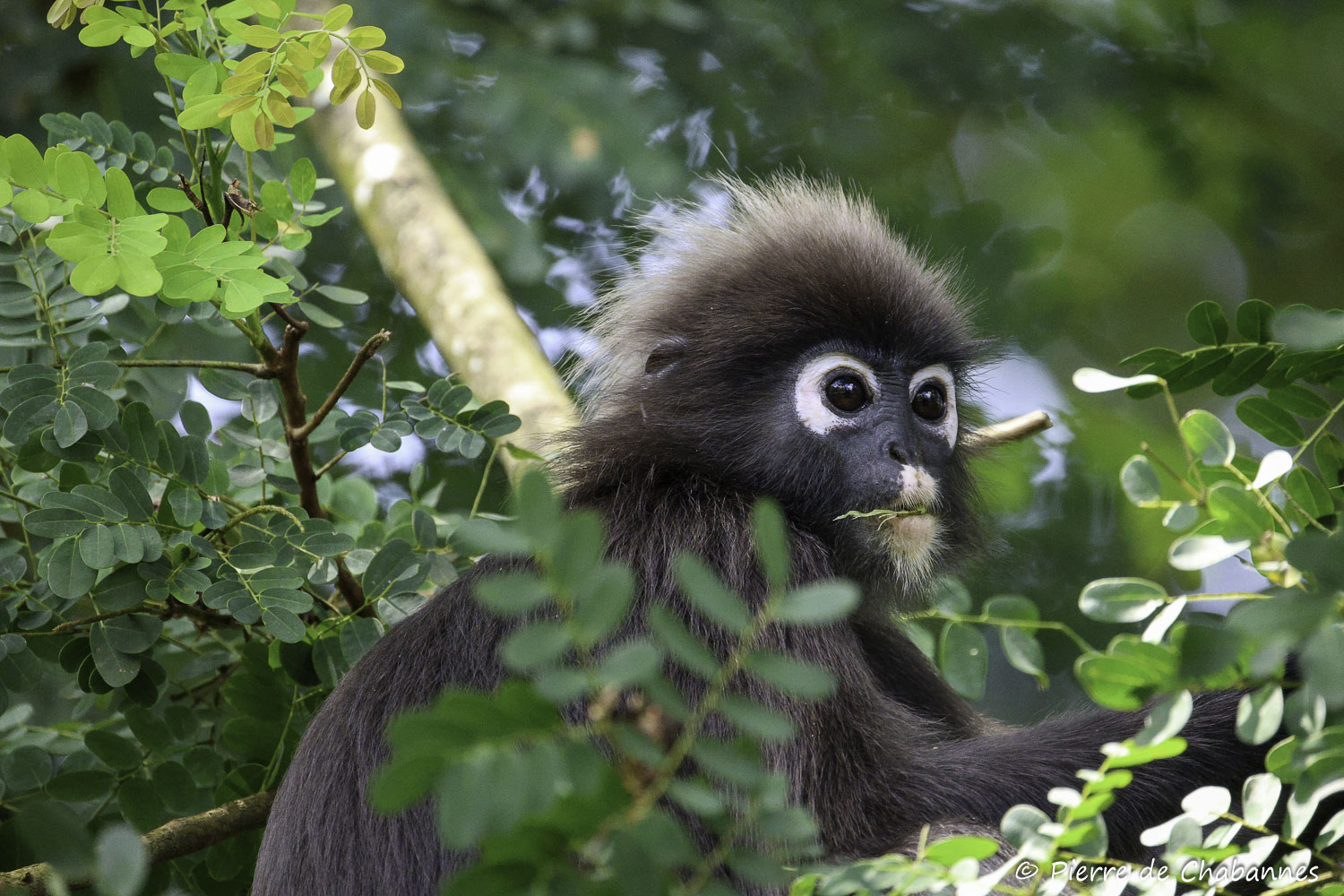
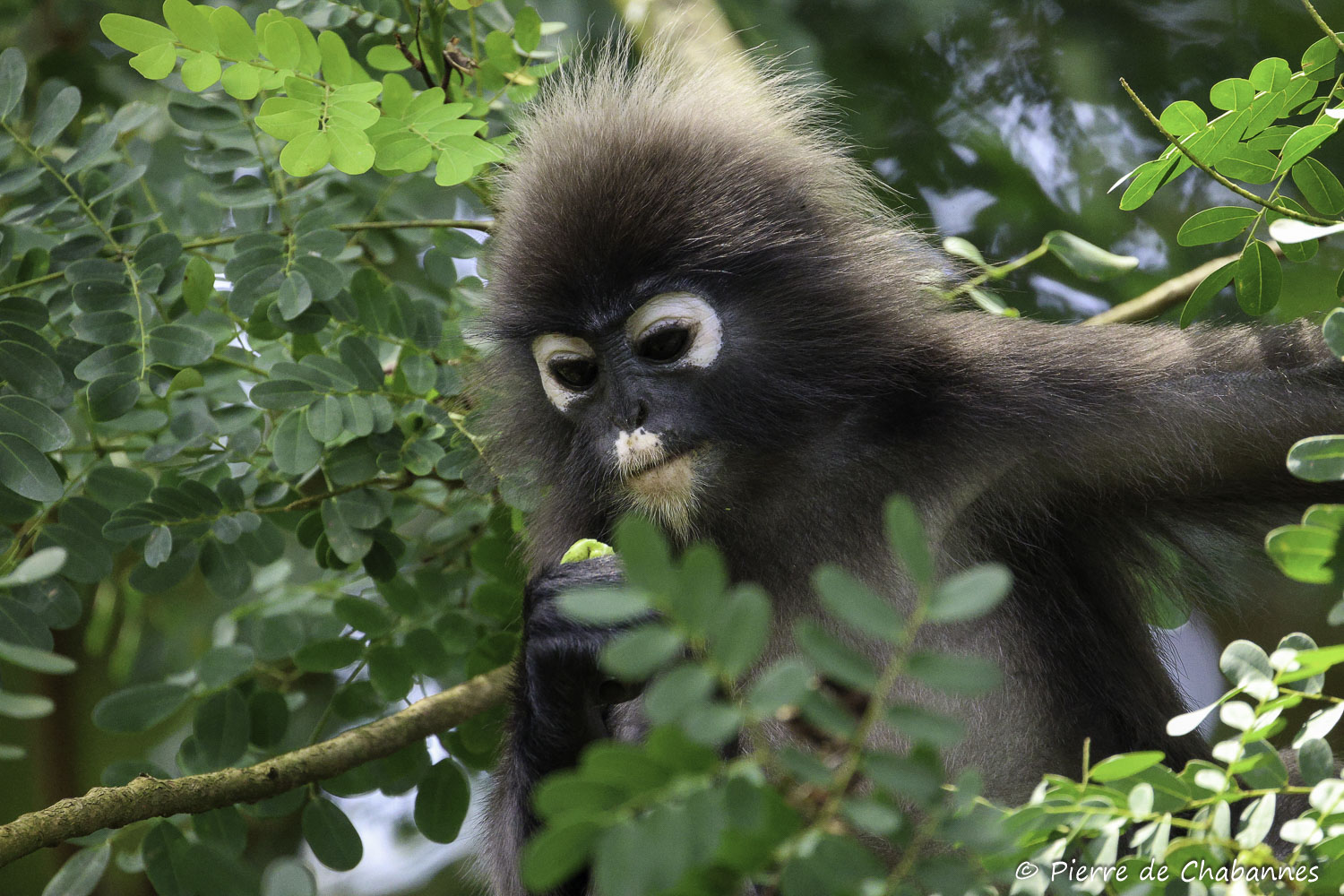
Like all leaf monkeys, Dusky langurs belong to the colobine primates and possess a specialized multi-chambered stomach that allows them to digest leaves efficiently. Young leaves form the bulk of their diet, although fruits, flowers, and seeds are also consumed.
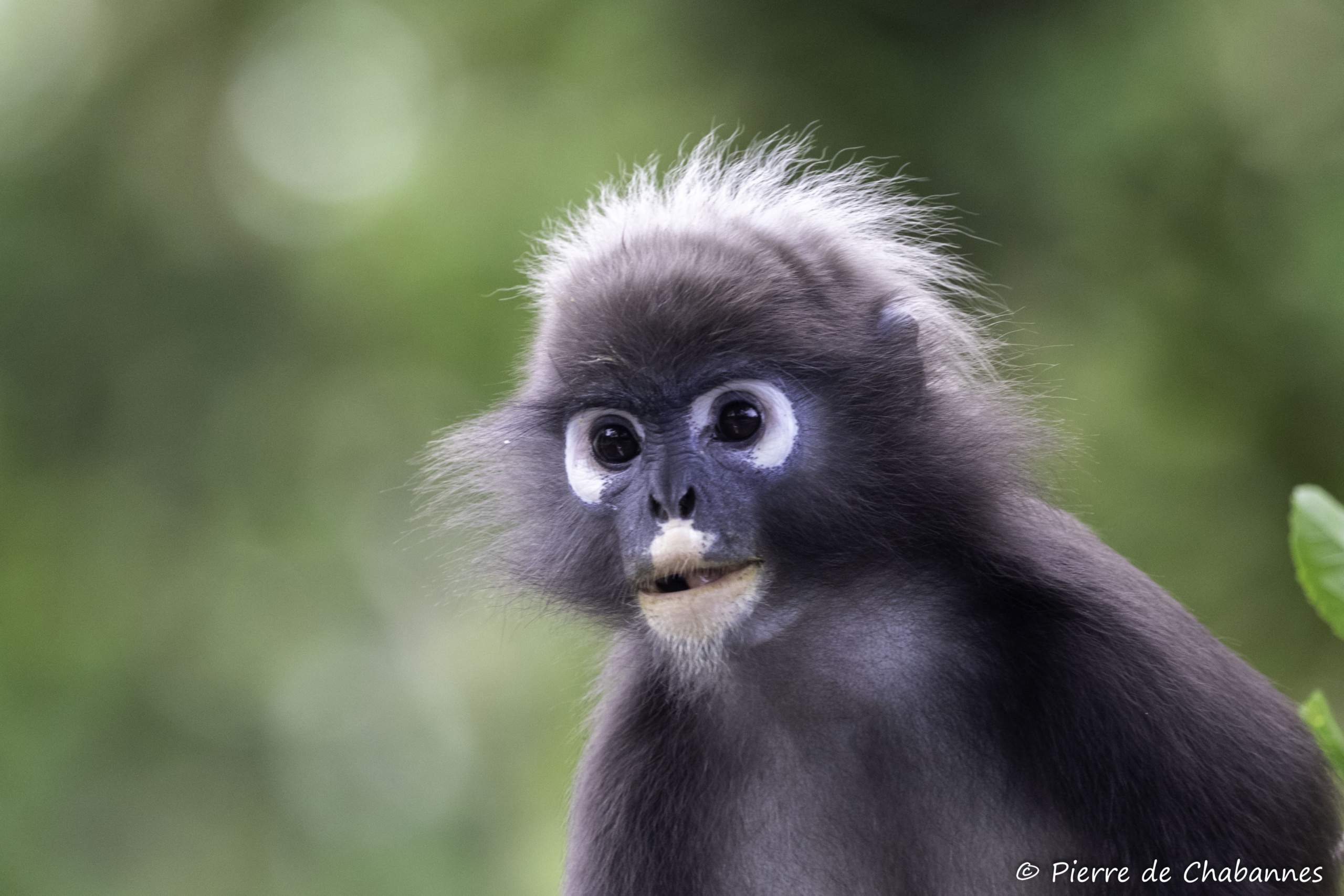
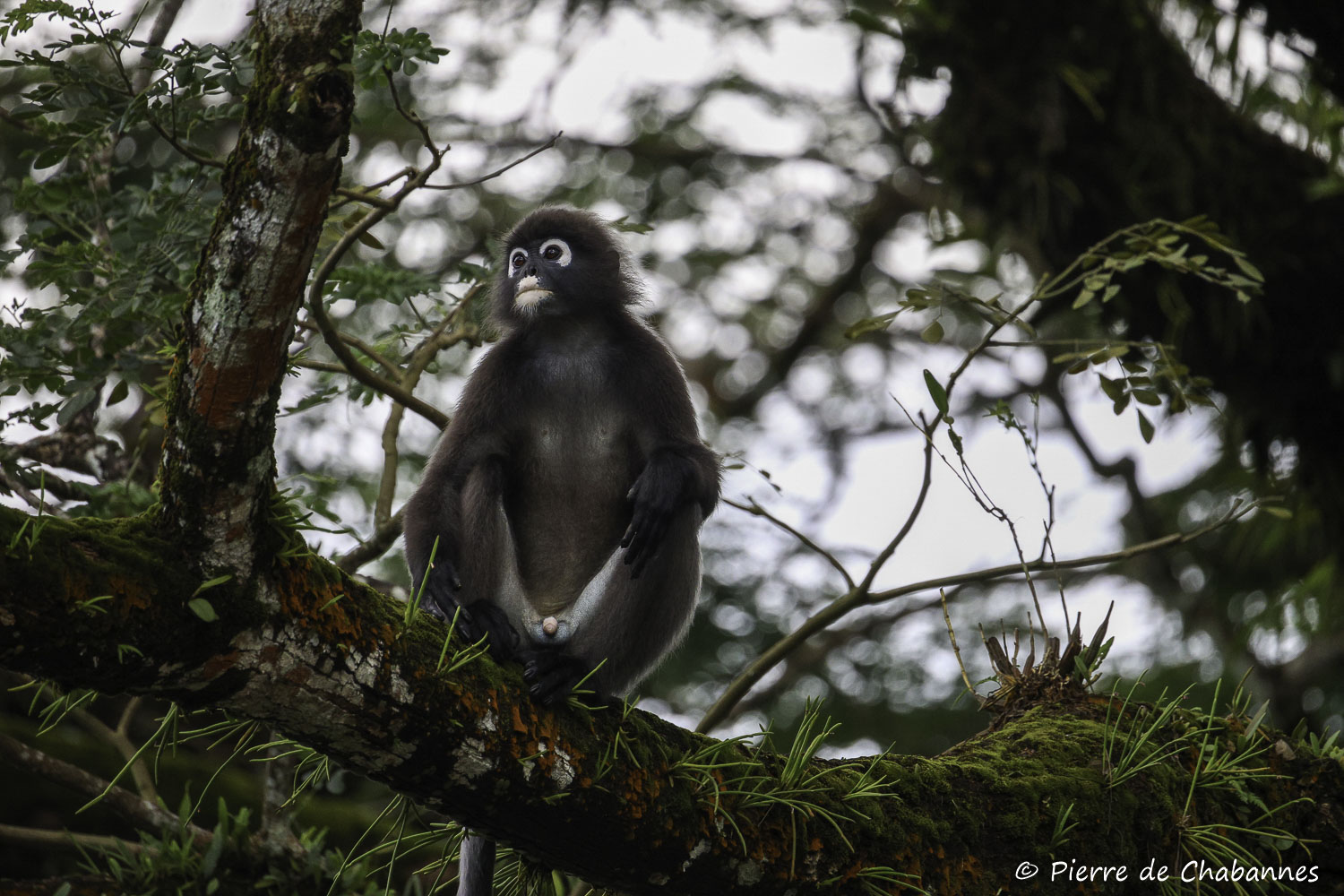
The species is easily recognized within its range by its grey body, pale underparts, white facial markings, and distinctive eye-rings that often give it a “spectacled” appearance. Newborns possess a striking bright orange coat that contrasts dramatically with the grey coloration of adults. Over the following months, this orange fur gradually darkens until the young resemble mature individuals.
Conservation
The species is currently listed as Endangered on the IUCN Red List. Although it is common in most of Peninsular Malaysia and even expanding its range by colonizing Singapore, the species has suffered from habitat loss because of deforestation and, locally, persecution and hunting.
Insular subspecies on Langkawi, Penang and other islands are likely much more threatened than the mainland subspecies. So far there are no population estimates available for these isolated and endemic subspecies.
The protection of forests remains the best way to protect most of Southeast Asia’s primates. Many species can thrive in secondary forests and even suburban parks for the Dusky langur. Capture of juvenile and adult specimens for the pet trade is a big problem, particularly in Indonesia where the pet trade is unmonitored and unsustainable.
More photos from this observation
Other species of primates can be found by browsing my Education resources.
Back to Primates of Southeast Asia ←Previous species
“A long-term project documenting biodiversity across the world through fieldwork, zoological observations and educational content.”