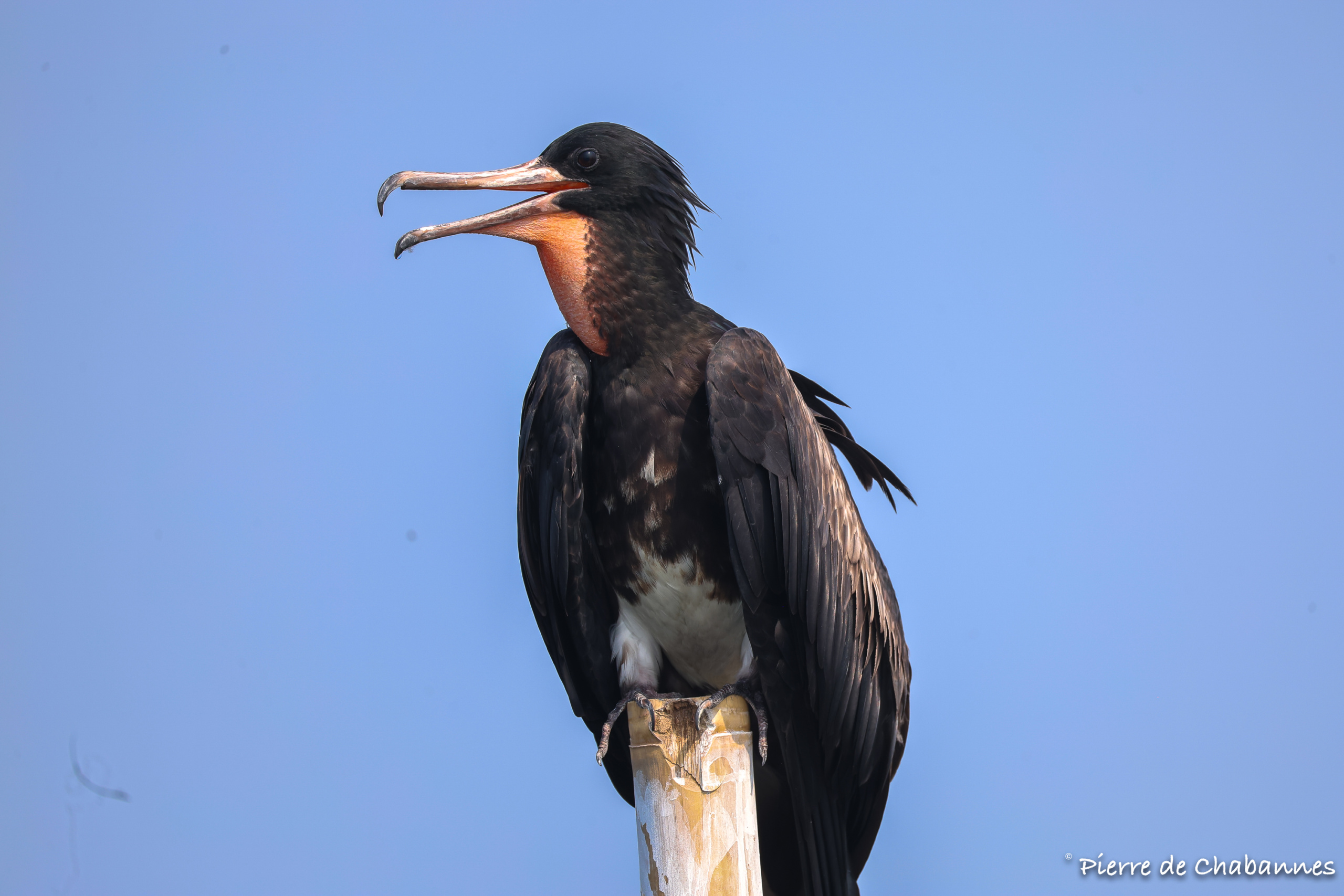
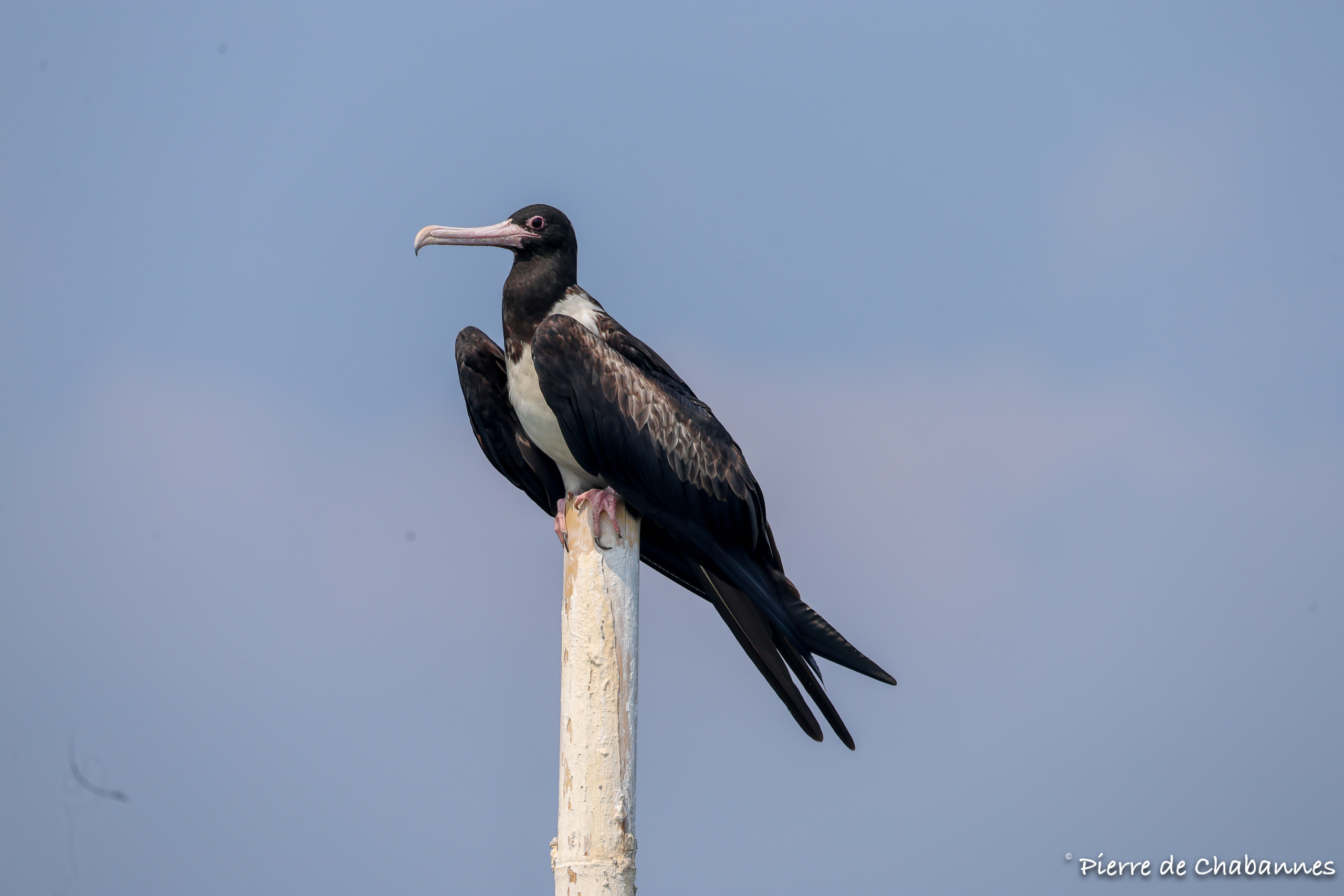
Christmas Island frigatebird (Fregata andrewsi)
One of the world’s rarest seabirds, breeding exclusively on a single island in the eastern Indian Ocean.
Context
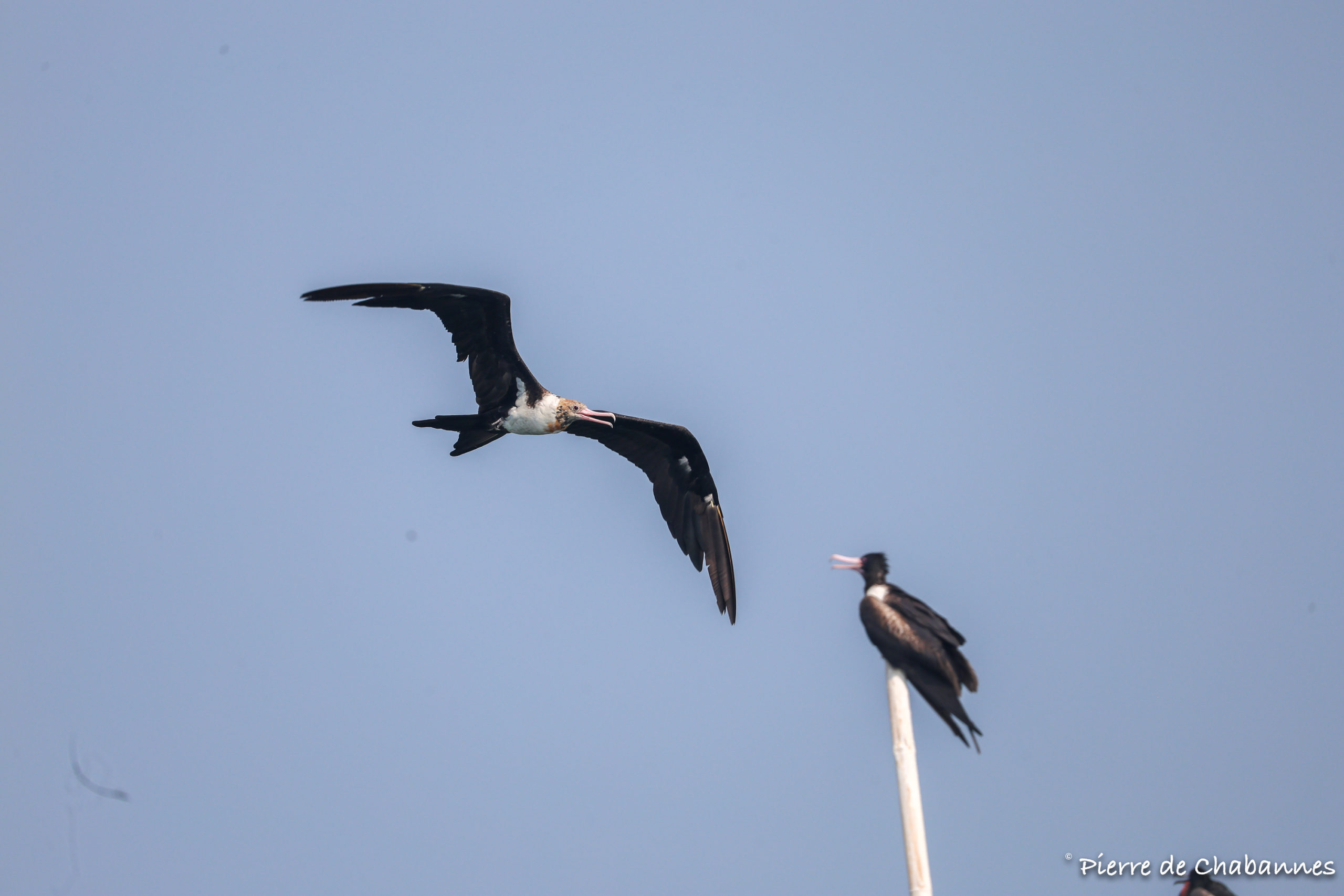
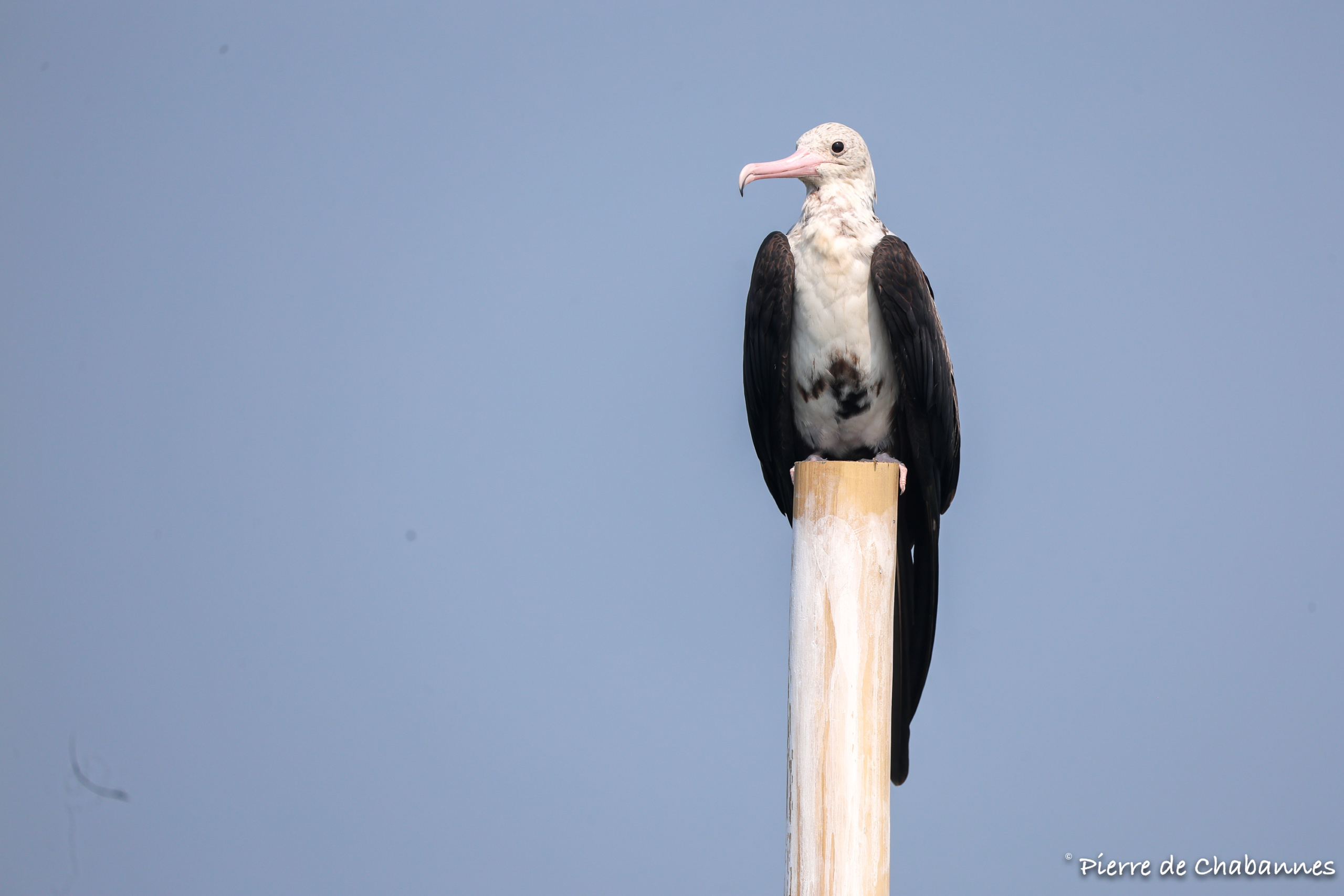
This individual was observed alongside around thirty frigatebirds of two species on its wintering grounds in Jakarta Bay, Indonesia.
Field notes
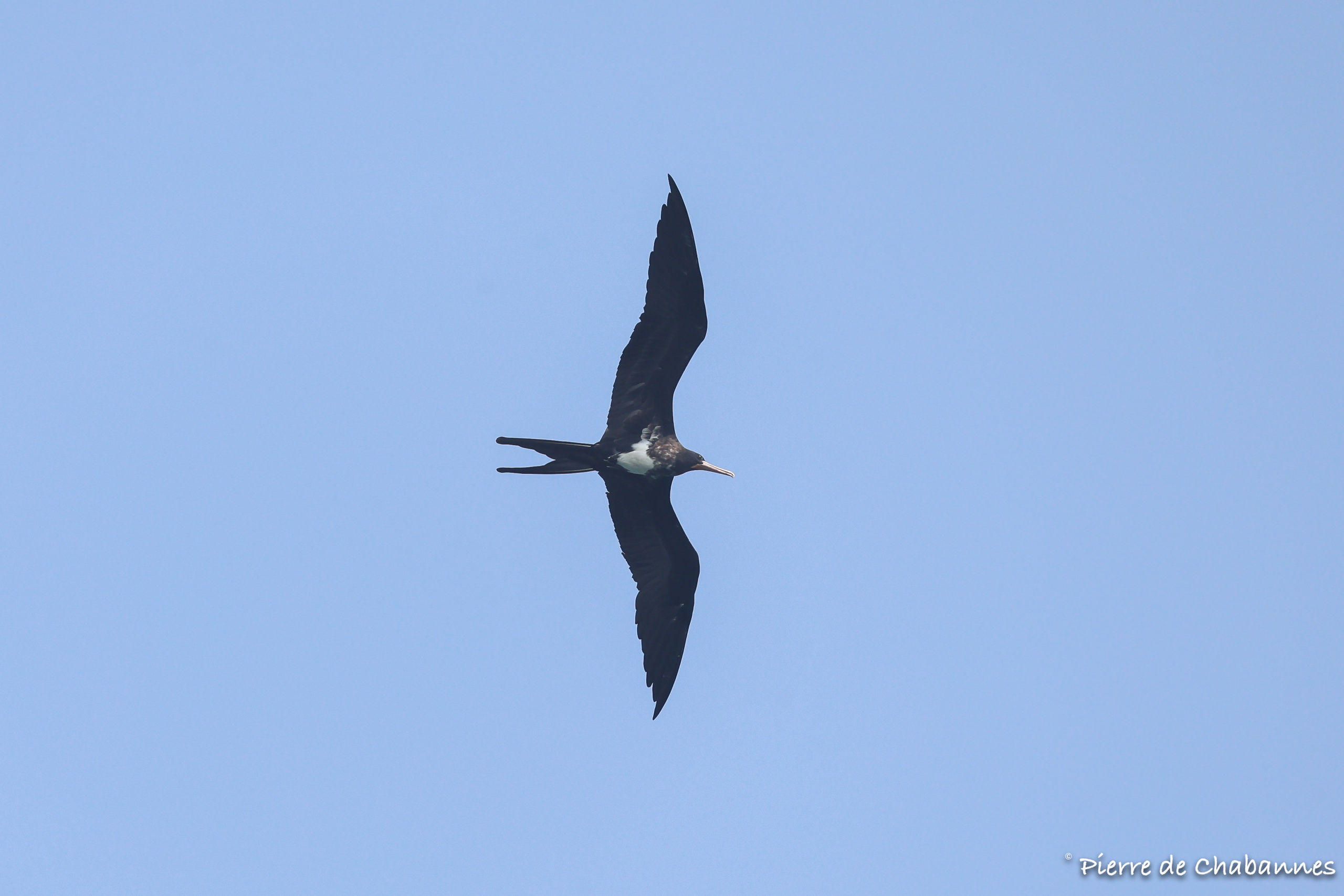
Christmas Island frigatebirds are highly aerial birds, often remaining in flight for extended periods while patrolling coastlines and offshore waters in search of food.
Outside the breeding season, individuals disperse thousands of kilometers away from Christmas Island, reaching areas such as the Philippines, Malaysia, and western Indonesia. Jakarta Bay is one of the best-known wintering sites for the species and remains a favored location for birdwatchers hoping to observe this endangered seabird.
Reaching the wintering area requires approximately 1.5 hours by boat from the mainland. Frigatebirds are often visible from great distances due to their large size and unmistakable silhouette in flight.
Key facts
The Christmas Island frigatebird is endemic to Christmas Island and breeds nowhere else in the world. It is considered the rarest frigatebird species.
Frigatebirds are exceptionally adapted for aerial life thanks to their lightweight bodies and long wings. In strong winds, they can take off simply by spreading their wings, without the need for flapping.
During the breeding season, adult males display by inflating their bright red throat pouch. The species nests colonially, building nests high in forest trees.
Conservation
The species is currently listed as Vulnerable on the IUCN Red List. Although populations appear relatively stable at present, they remain threatened both on breeding and wintering grounds.
On Christmas Island, introduced species such as the yellow crazy ant have severely impacted native wildlife, particularly endemic crab populations that play an important ecological role in the island’s forests.
Nesting colonies are also vulnerable to cyclones and wildfires, while phosphate mining continues to threaten habitats through deforestation and pollution.
More photos from this observation
Other insular species can be found by browsing my Education resources.
Back to Island life ←Previous species Next Species →
“A long-term project documenting biodiversity across the world through fieldwork, zoological observations and educational content.”