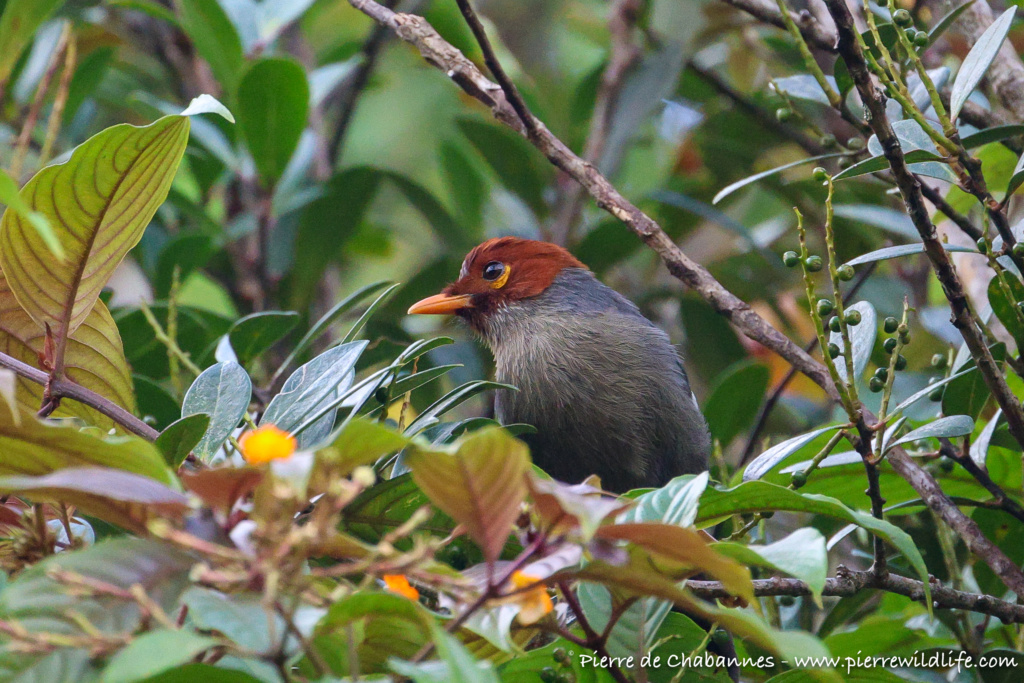
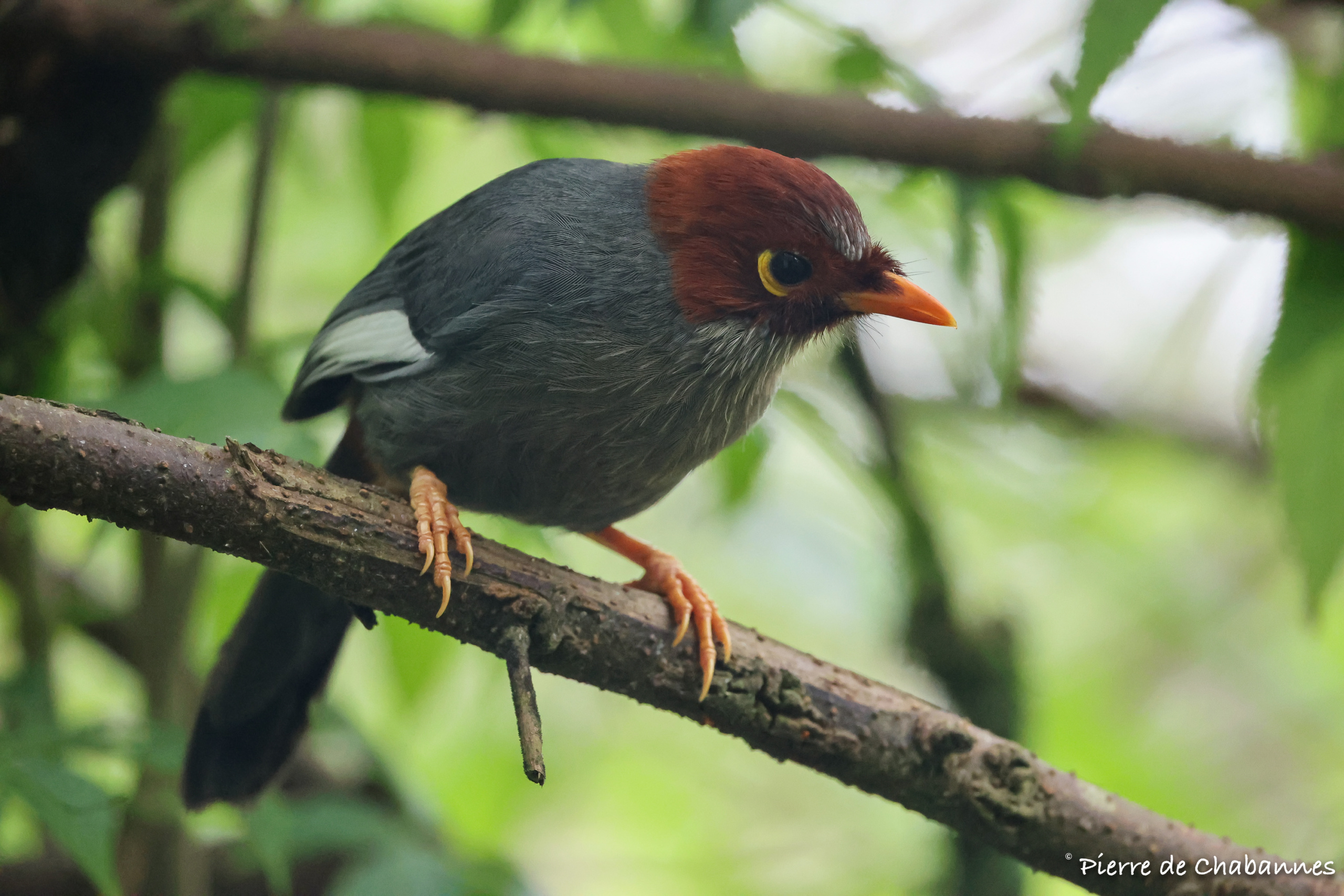
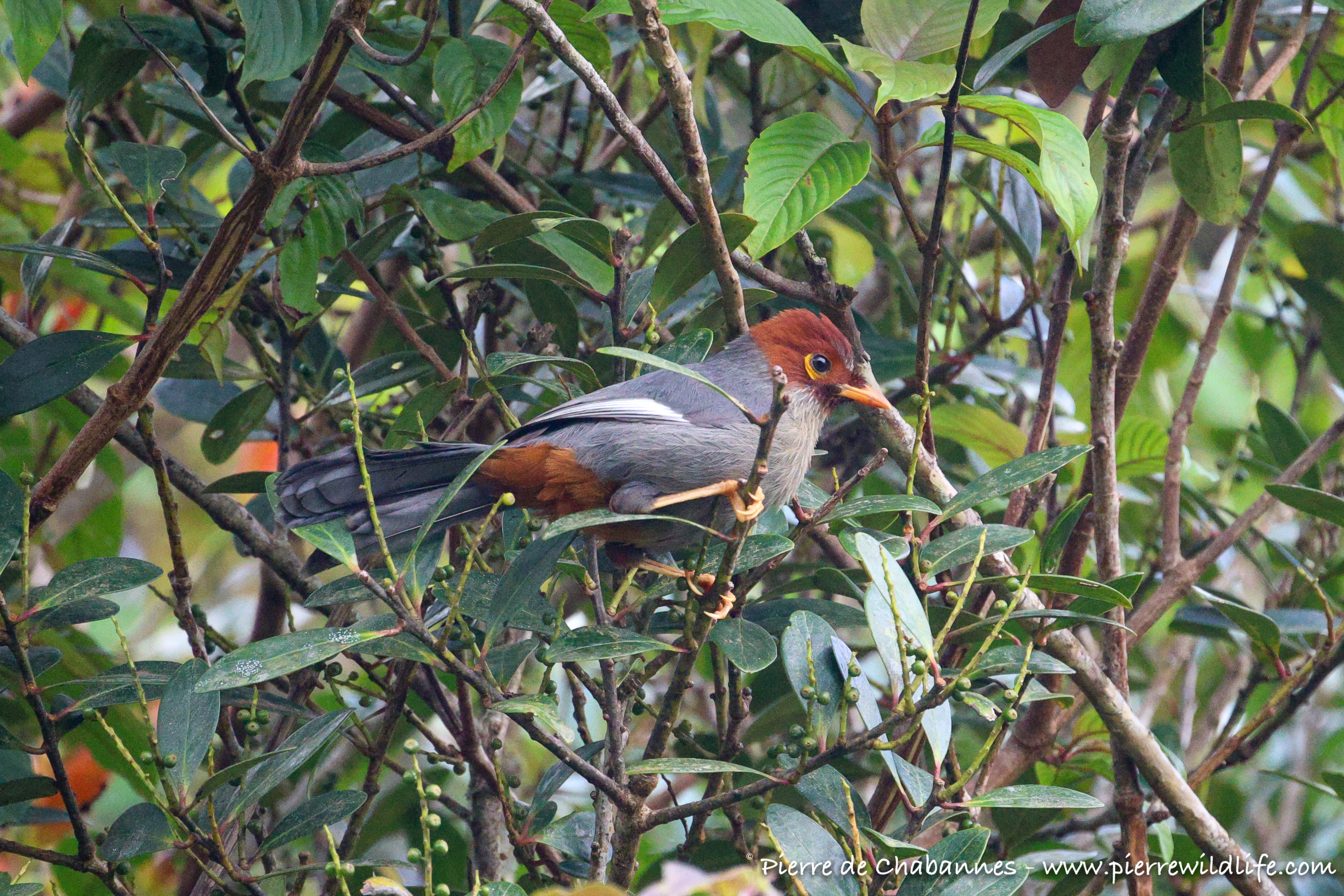
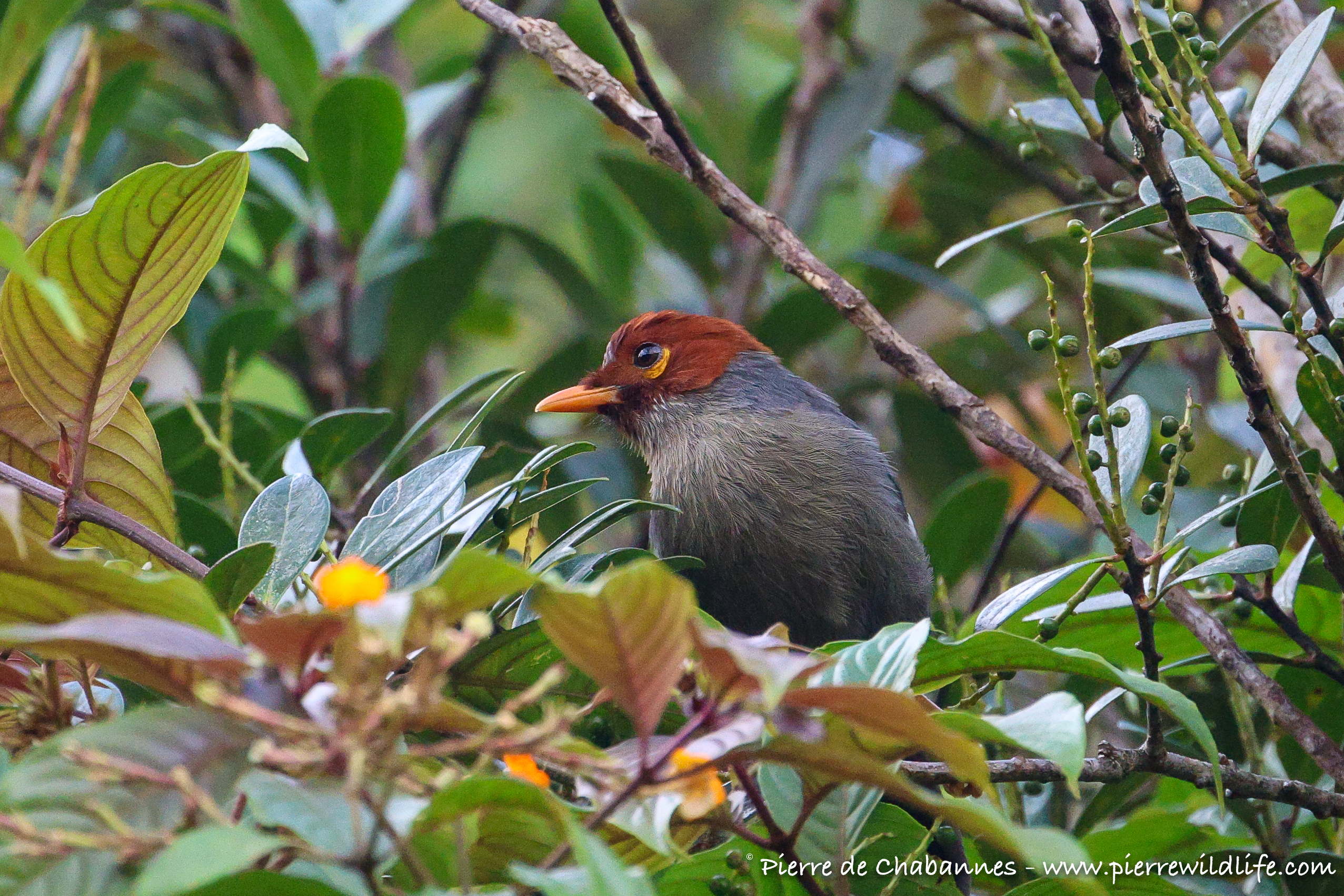
Chestnut-hooded laughingthrush (Pterorhinus treacheri treacheri)
A noisy and highly social bird endemic to the montane forests of northern Borneo.
Context
Observed in the cloud forests of Kinabalu Park, Sabah (Borneo), where small groups up to 5 birds regularly move through dense vegetation near forest trails and clearings.
Field notes
Chestnut-hooded laughingthrushes are usually encountered in noisy and restless groups moving rapidly through the understory and lower canopy. Their constant calls and social interactions often reveal their presence long before the birds themselves become visible.
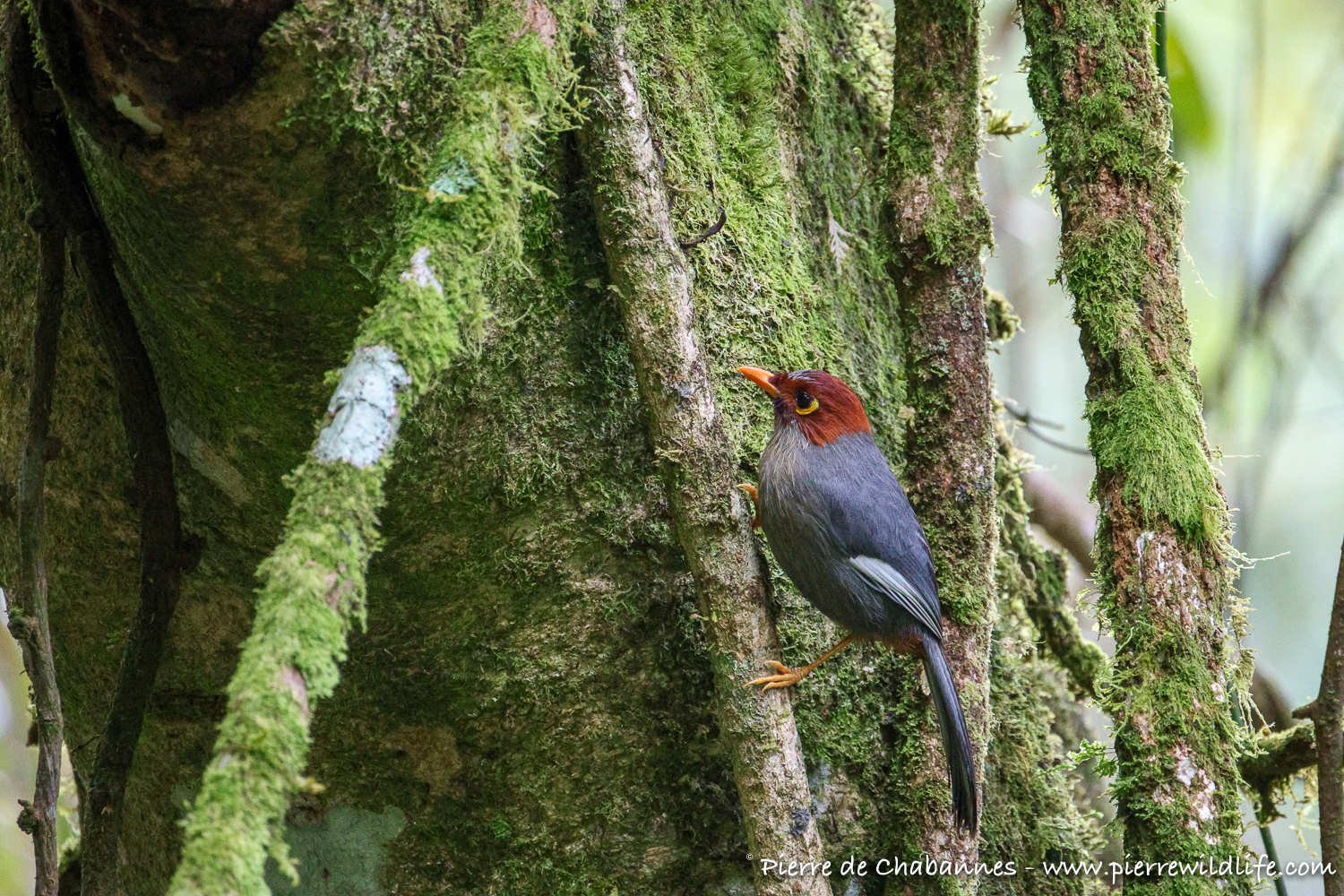
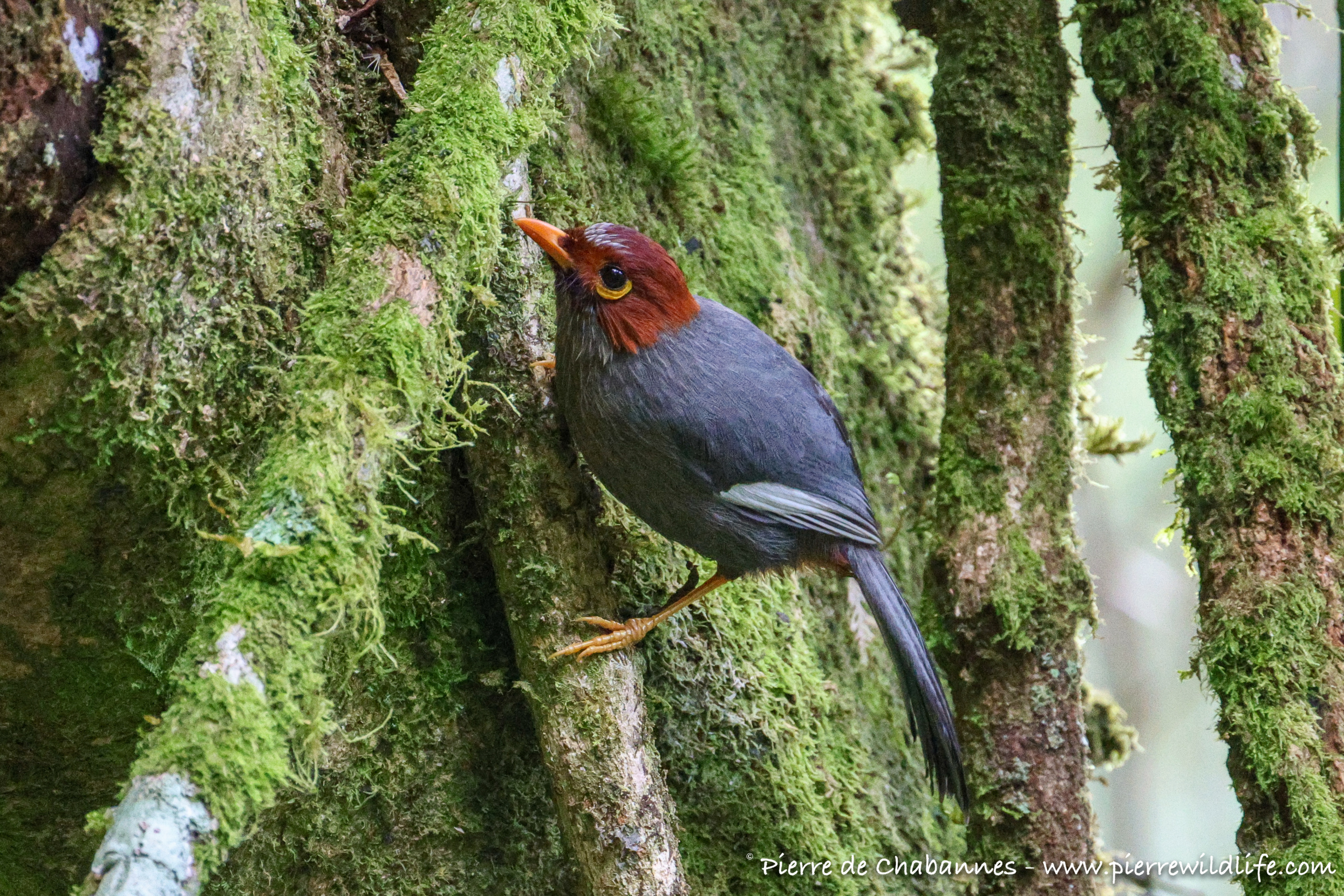
The species often forages in mixed groups alongside other birds, moving either across the forest floor or between branches, moss-covered trunks, and dense tangles of vegetation in search of insects, larvae, fruits, and other small food items.
This laughingthrush is one of the most charismatic and reliable bird species observed around Kinabalu Park. Although locally very common, it moves rapidly and rarely remains exposed for long, making photography difficult.
Key facts
The chestnut-hooded laughingthrush is endemic to the highlands of northern Borneo and is primarily associated with montane and mossy forests up to approximately 3,300 m asl. The nominate subspecies pictured here is restricted to the mountains of Sabah, including Mount Kinabalu.
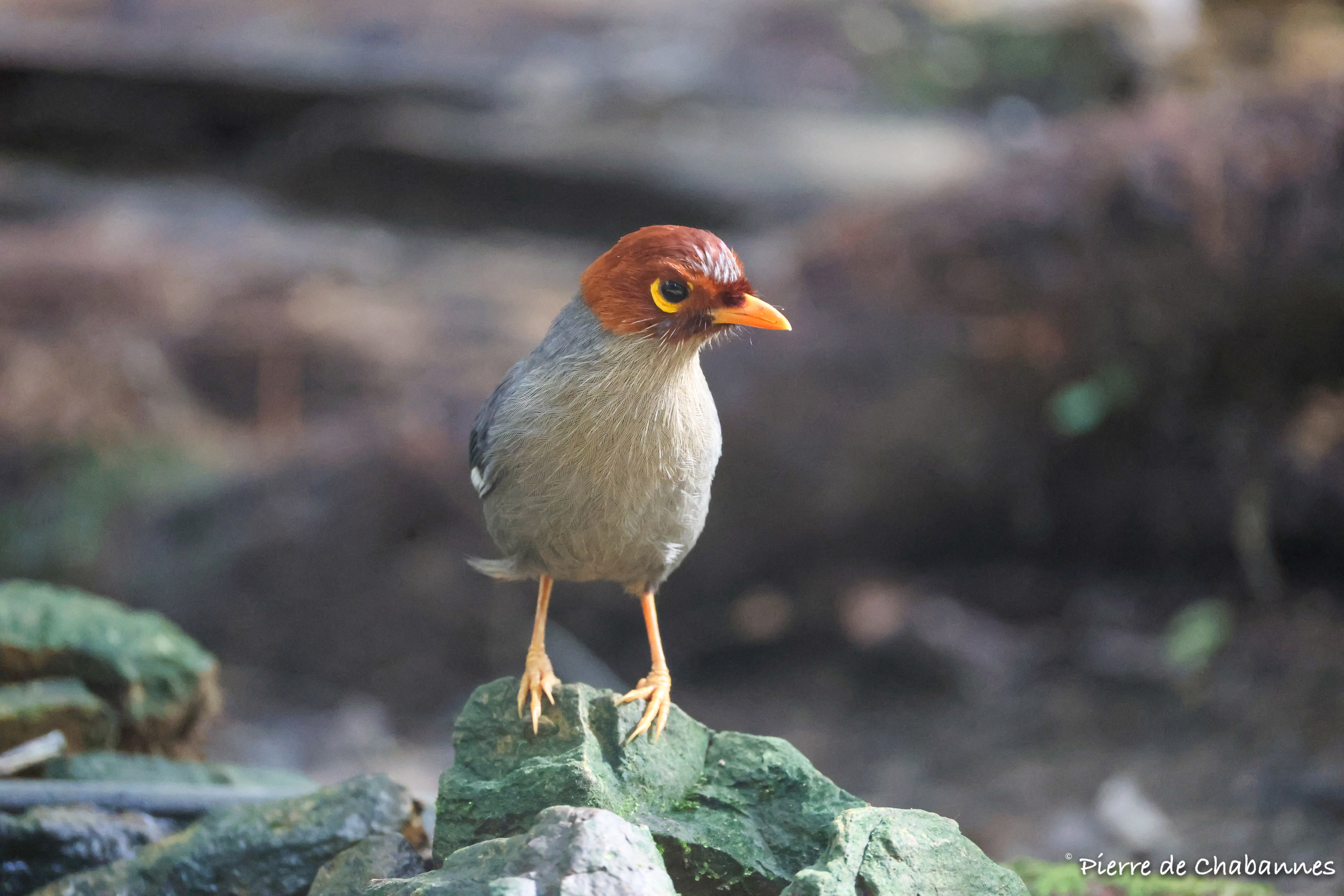
It can easily be recognized by its chestnut-colored head, bright yellow wattle around the eyes, orange bill, and contrasting grey body plumage. It is closely related and superficially similar to the chestnut-capped laughingthrush found in Sumatra and Peninsular Malaysia.
A recently discovered population from the Meratus Mountains of southern Kalimantan displays a distinctly more yellowish breast and belly coloration and has turned out to be a new undescribed species.
Conservation
The species is currently listed as Least Concern on the IUCN Red List and remains locally common in montane forest areas such as Kinabalu Park, Gunung Trusmadi, and Gunung Alab.
The species can use secondary and disturbed habitats such as old overgrown rice fields and cultivated lands but it also needs forest nearby.
The protection of extensive and connected forest habitats across Borneo remains essential for the long-term survival of this species and many other endemic animals.
More photos from this observation
Other species from Kinabalu Park can be found by browsing my Education resources.
Back to Mt Kinabalu ←Previous species Next Species →
“A long-term project documenting biodiversity across the world through fieldwork, zoological observations and educational content.”