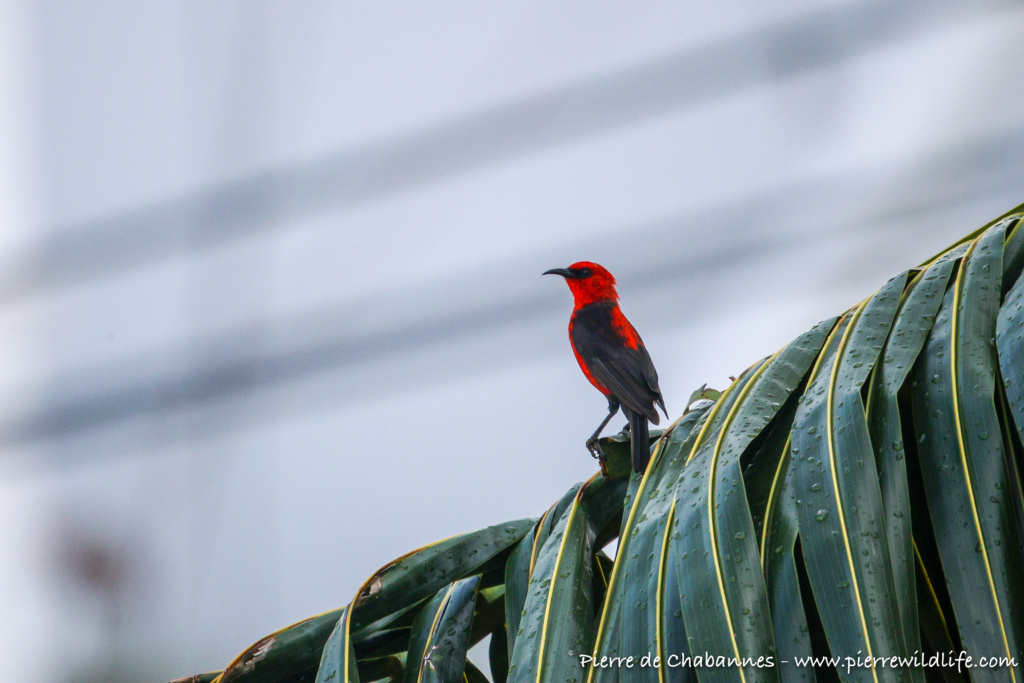
Micronesian myzomela (Myzomela rubratra dichromata)
A tiny nectar-feeding bird widespread across Micronesia, playing an important role in the pollination of many island plants.
Context
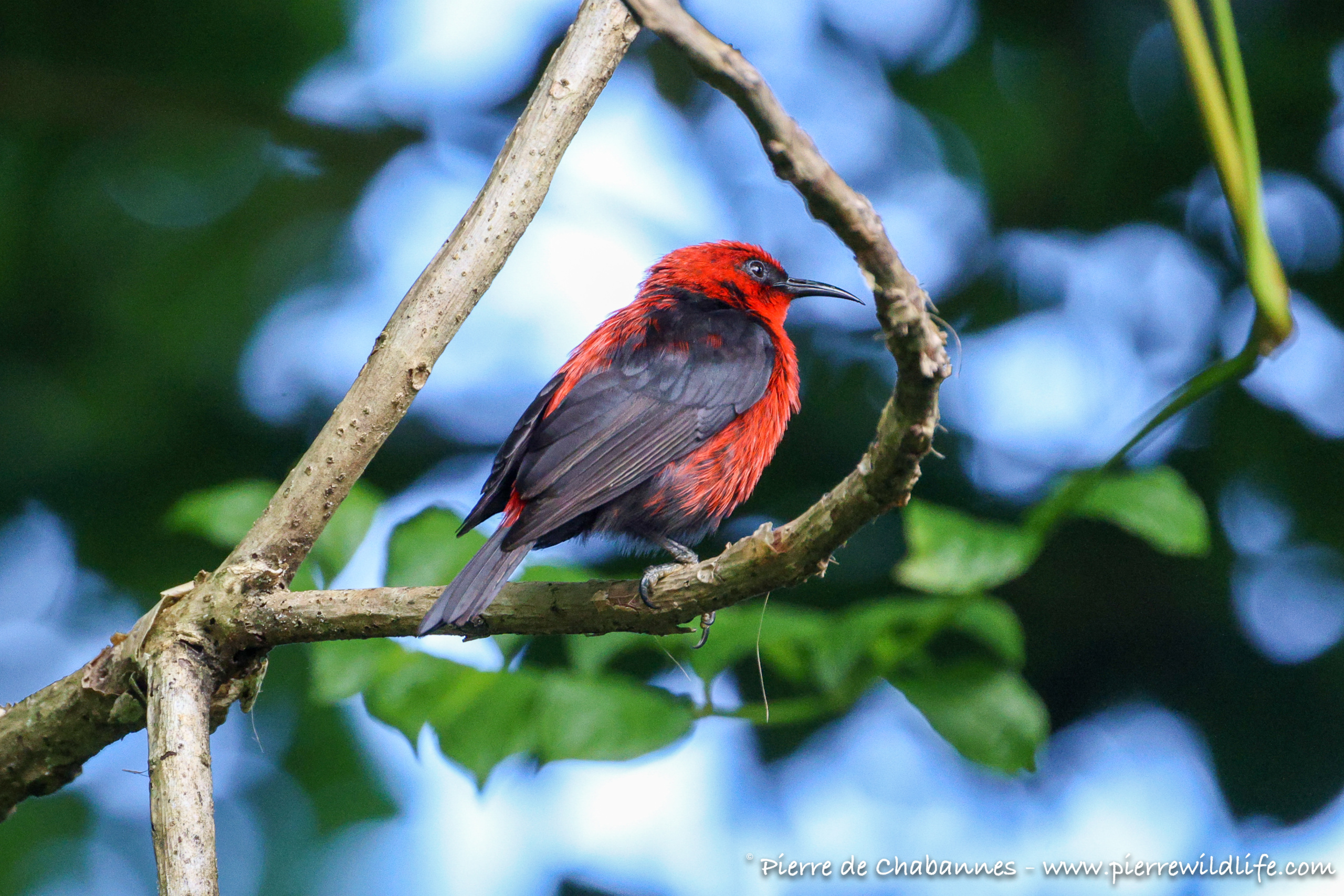
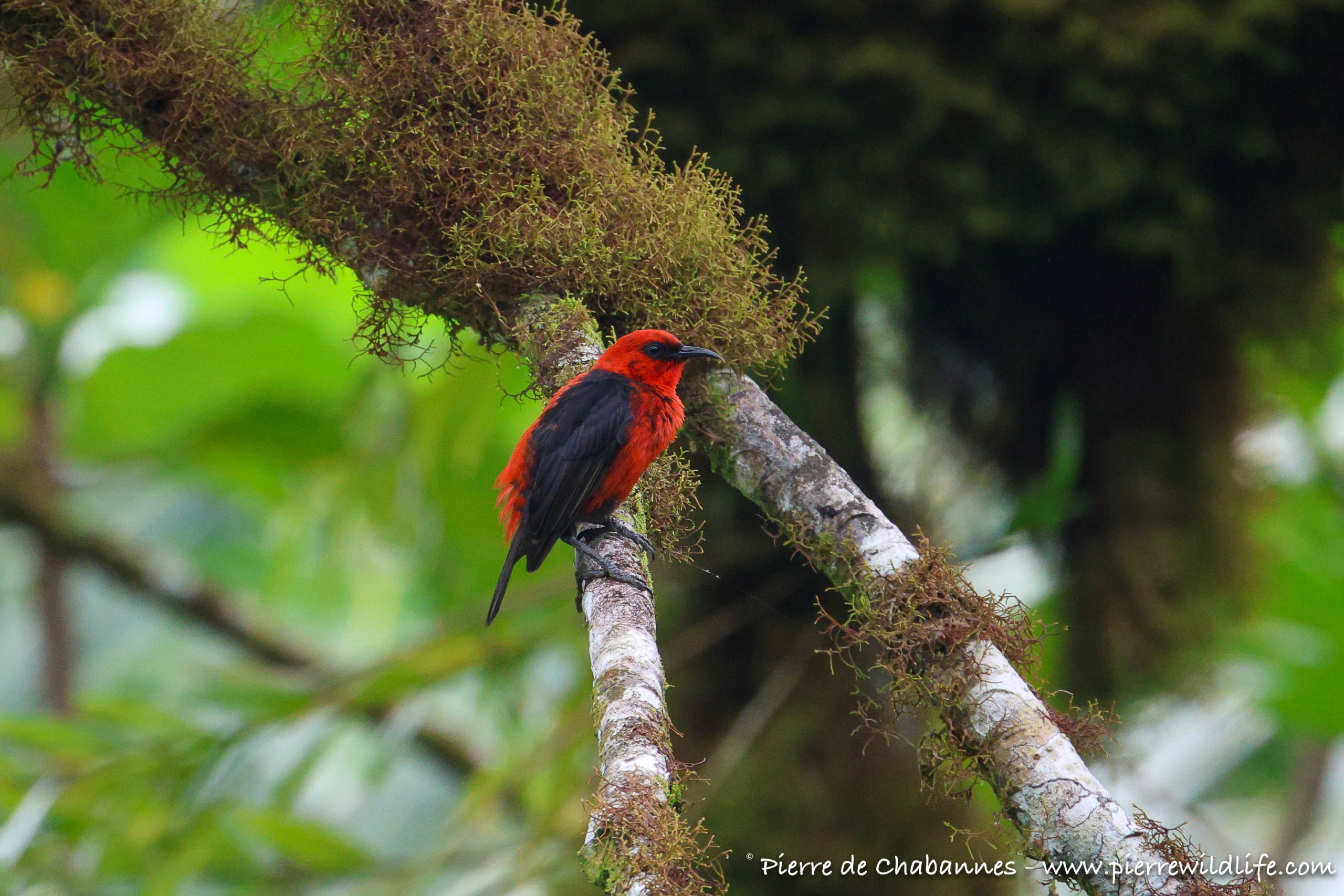
Pairs and isolated males observed in a variety of habitats, from coconut plantations near the airport to pristine native forests around Liduduhniap Waterfall in the highlands of Pohnpei.
Field notes
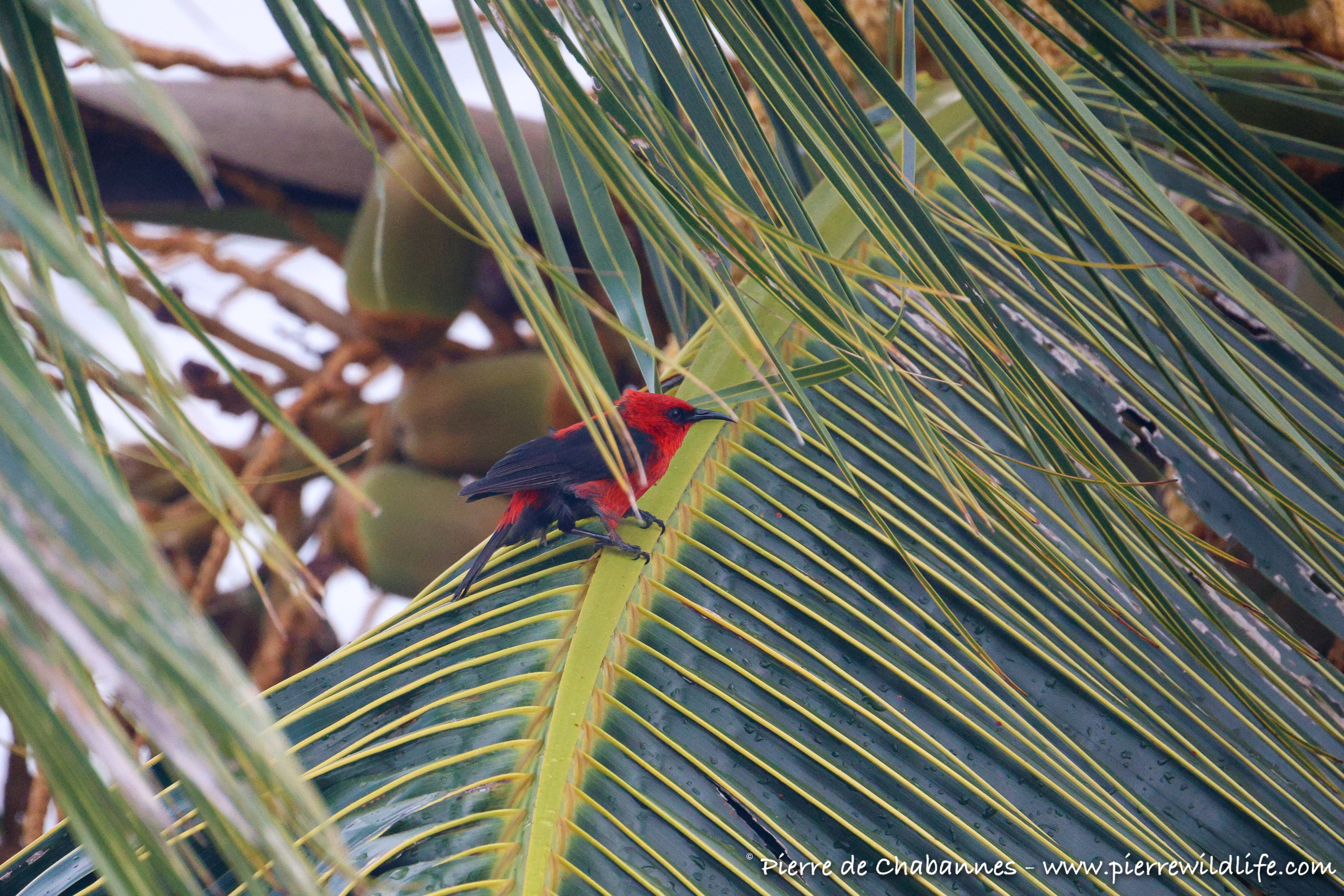
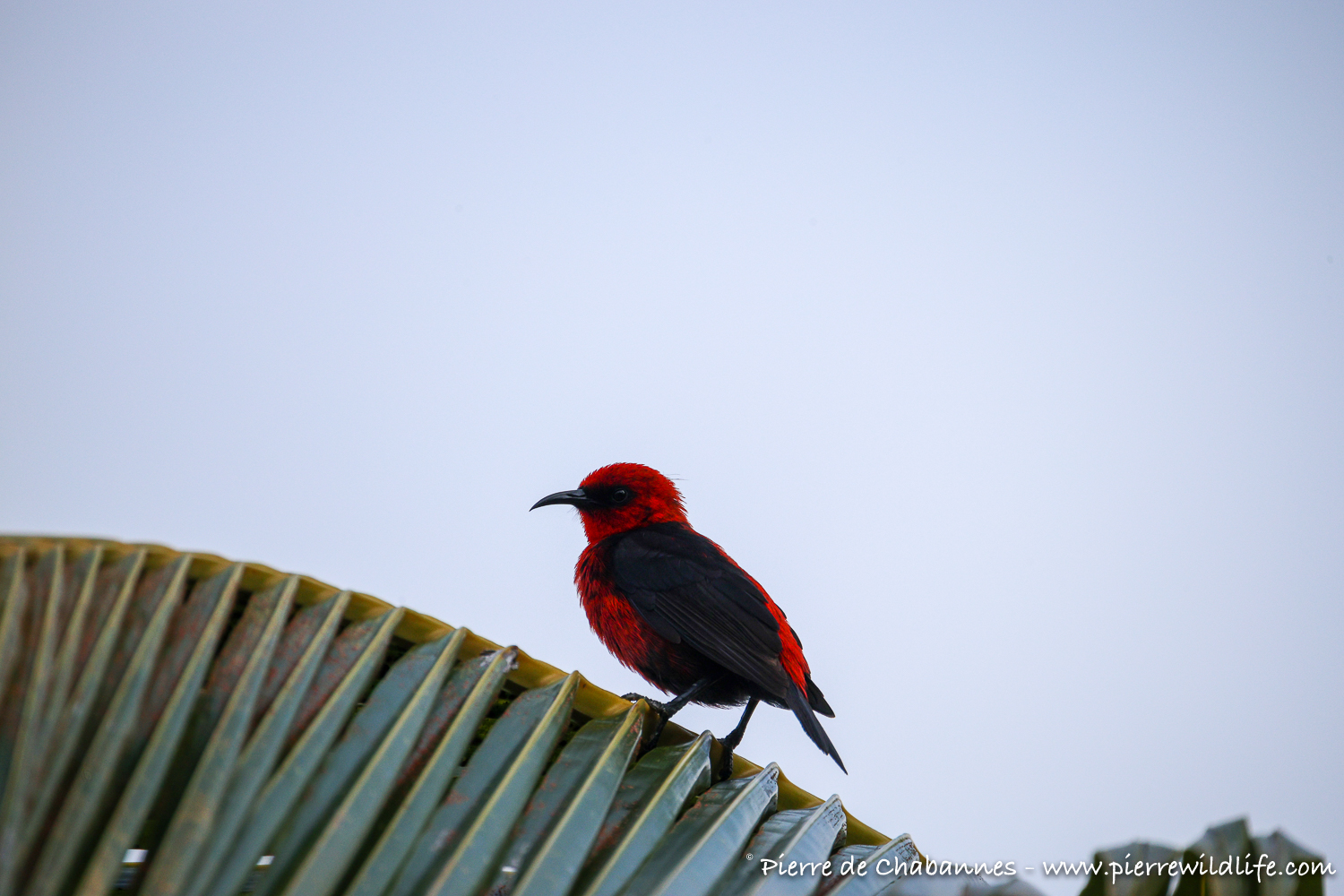
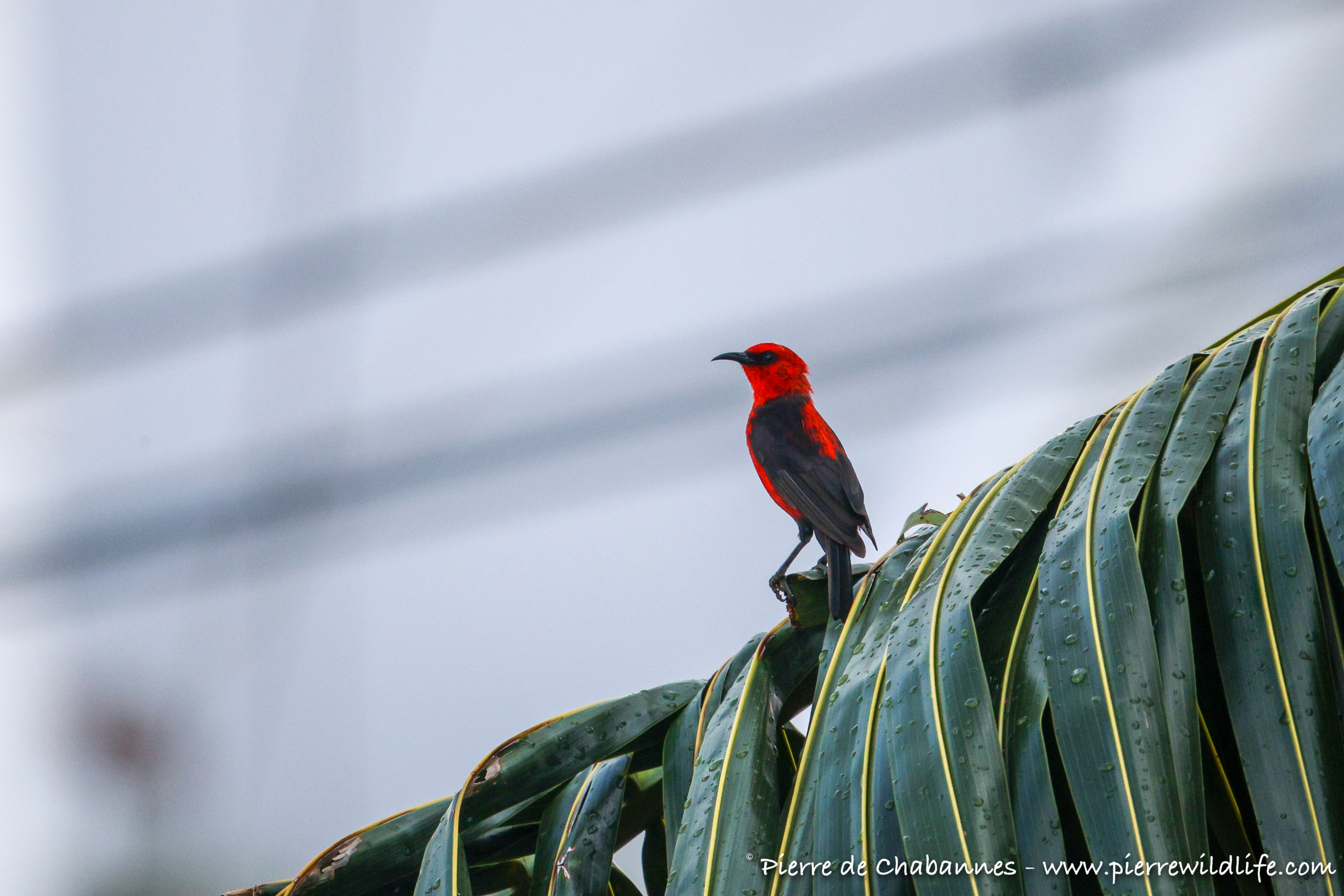
This bird is the first bird I saw and photographed when arriving in Pohnpei. They appear particularly fond of coconut flowers and I was lucky to see this male come to the coconut trees in front of my hotel (located next to the airport) on a daily basis.
This species seems to be one of the commonest native birds on the island at this time. I observed specimens in many different kinds of habitats at different elevations, from coastal mangrove forests to coconut plantations, primary forest edges and gardens.
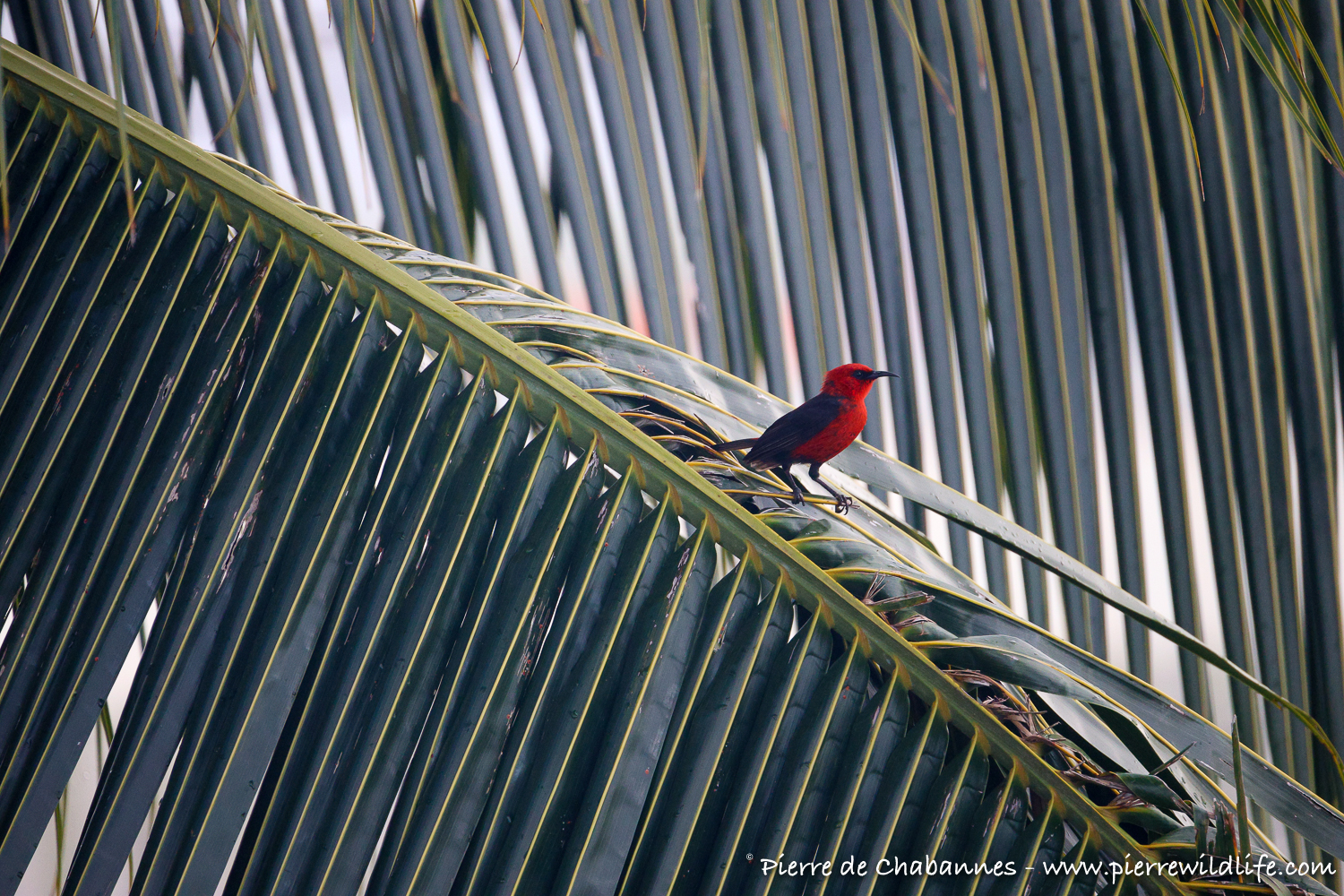
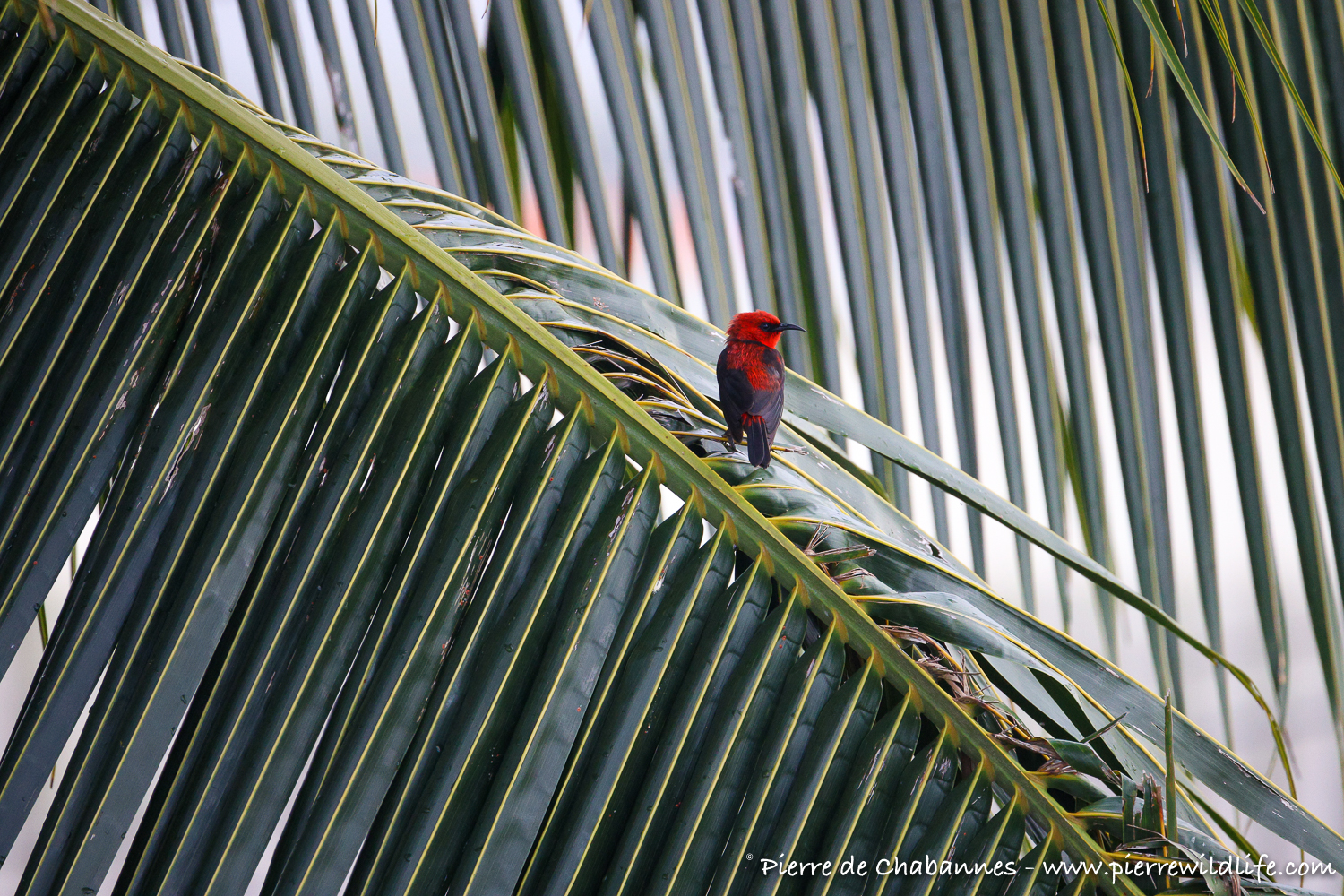
Males are very conspicuous with their bright scarlet color and will often perch in the open between two feeding bouts. Females, by contrast, seem to be much more difficult to photograph as they tend to perch in less exposed areas and are not brightly colored.
Key facts
The Micronesian myzomela lives in Micronesia where it is found on most big islands, from the Mariana and Caroline Islands, eastward to Kosrae. Subspecies dichromata is endemic to Pohnpei and nearby atolls. Six other subspecies are known.
The Pohnpei subspecies is recognizable because of the female’s plumage being much less red and more grey than other females of different subspecies.
Although nectar forms a large part of their diet, these birds also feed on small insects and spiders, particularly during the breeding season. By moving between flowers throughout the day, Micronesian myzomelas play an important role as pollinators for many native and cultivated plant species.
Conservation
The species is currently listed as Least Concern on the IUCN Red List and remains common throughout much of its range.
On Pohnpei, although it is still common, significant population declines have been observed because of deforestation and transformation of native forest into cultivated areas. Since there are no introduced predators on Pohnpei, it seems that deforestation is likely the biggest threat to this species’ survival at this time.
Subspecies saffordi of the Micronesian myzomela used to be found in big numbers on Guam but the introduction of the Brown tree snake has devastated native bird populations on the island. This subspecies is now extinct on Guam and was last documented there in 1984.
More photos from this observation
Other insular species can be found by browsing my Education resources.
Back to Island life ←Previous species Next Species →
“A long-term project documenting biodiversity across the world through fieldwork, zoological observations and educational content.”