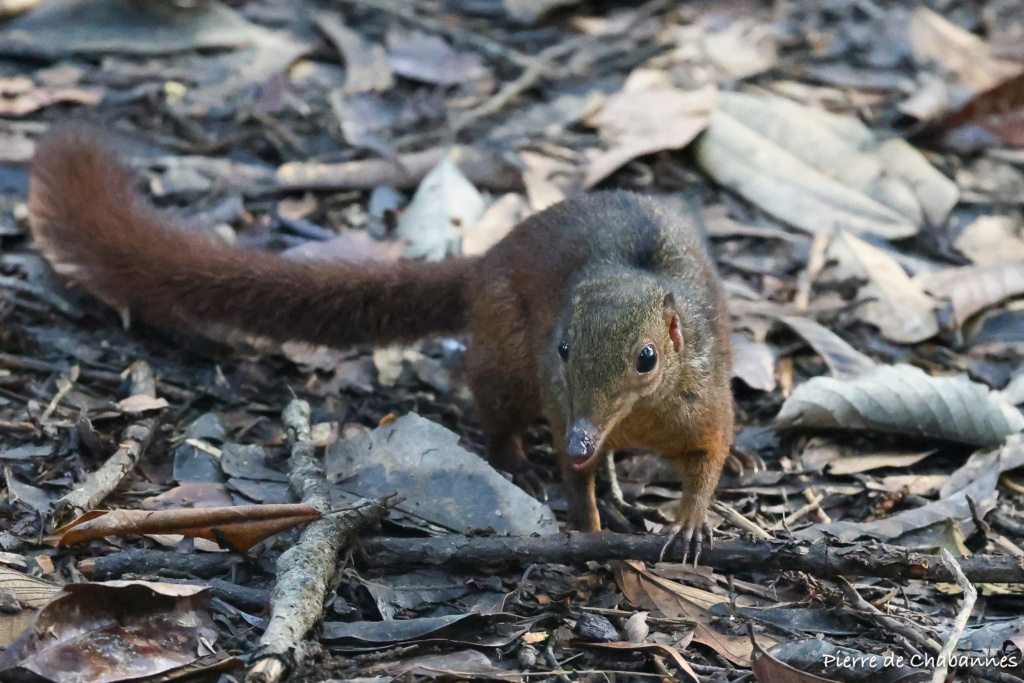
Large treeshrew (Tupaia tana paitana)
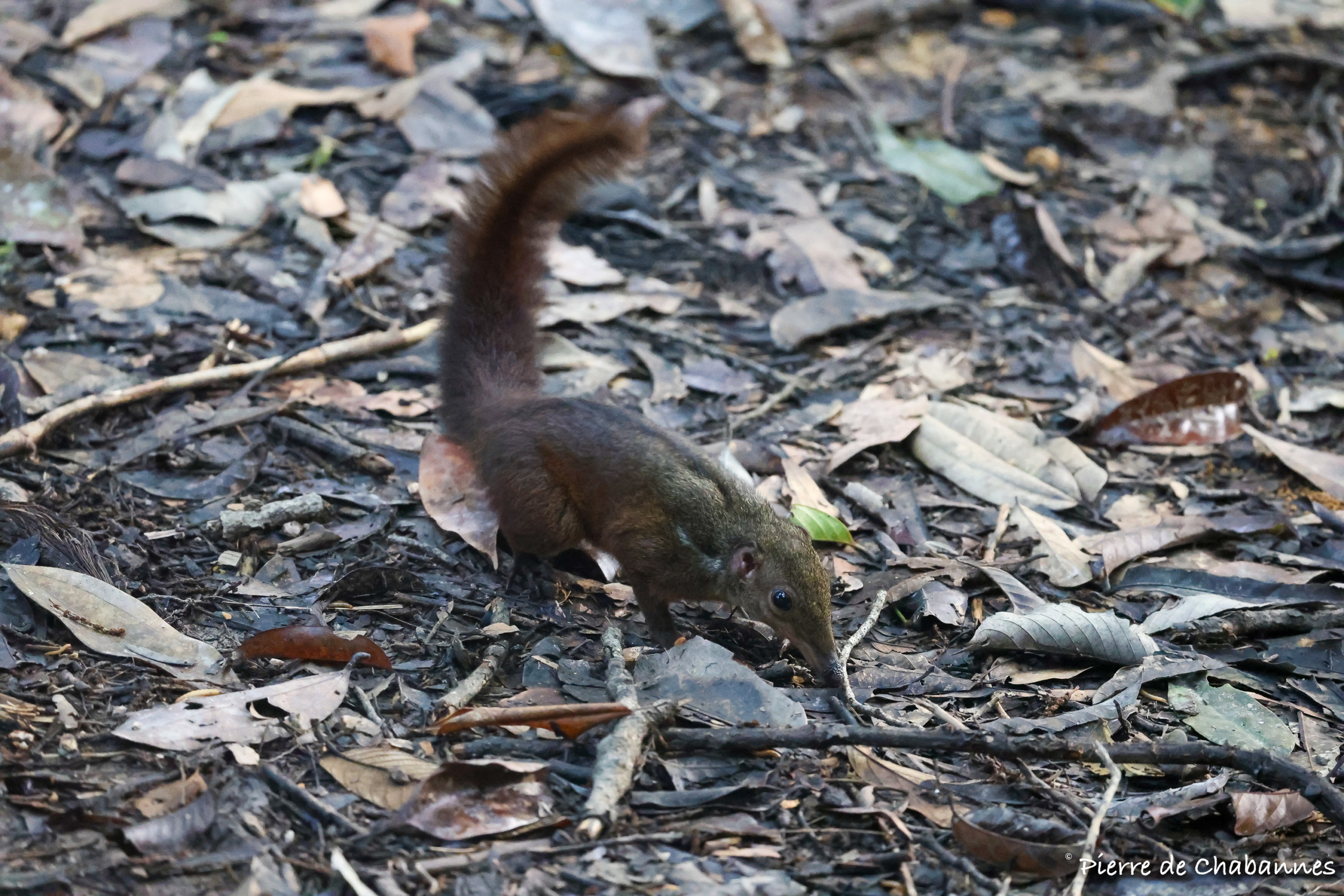
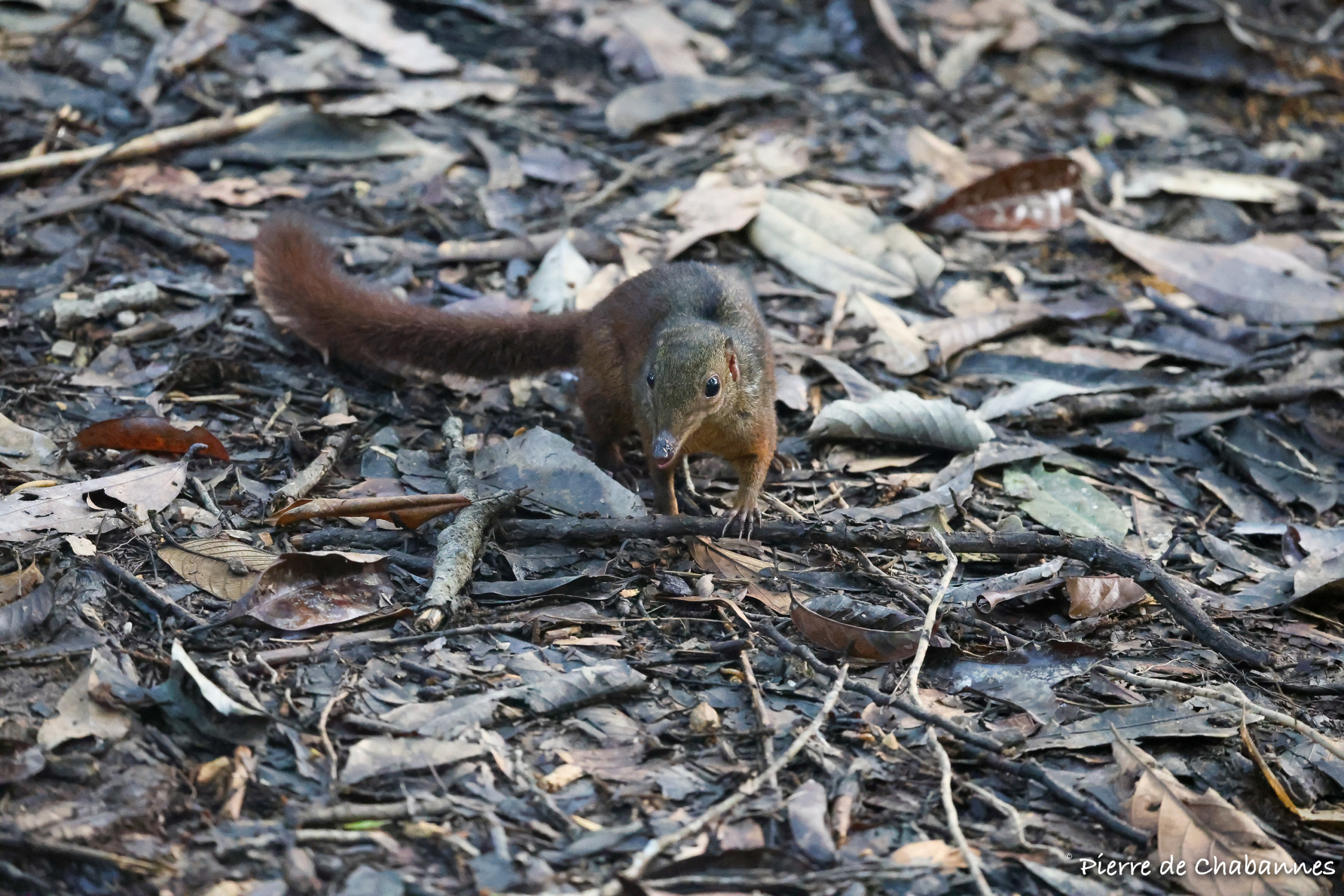
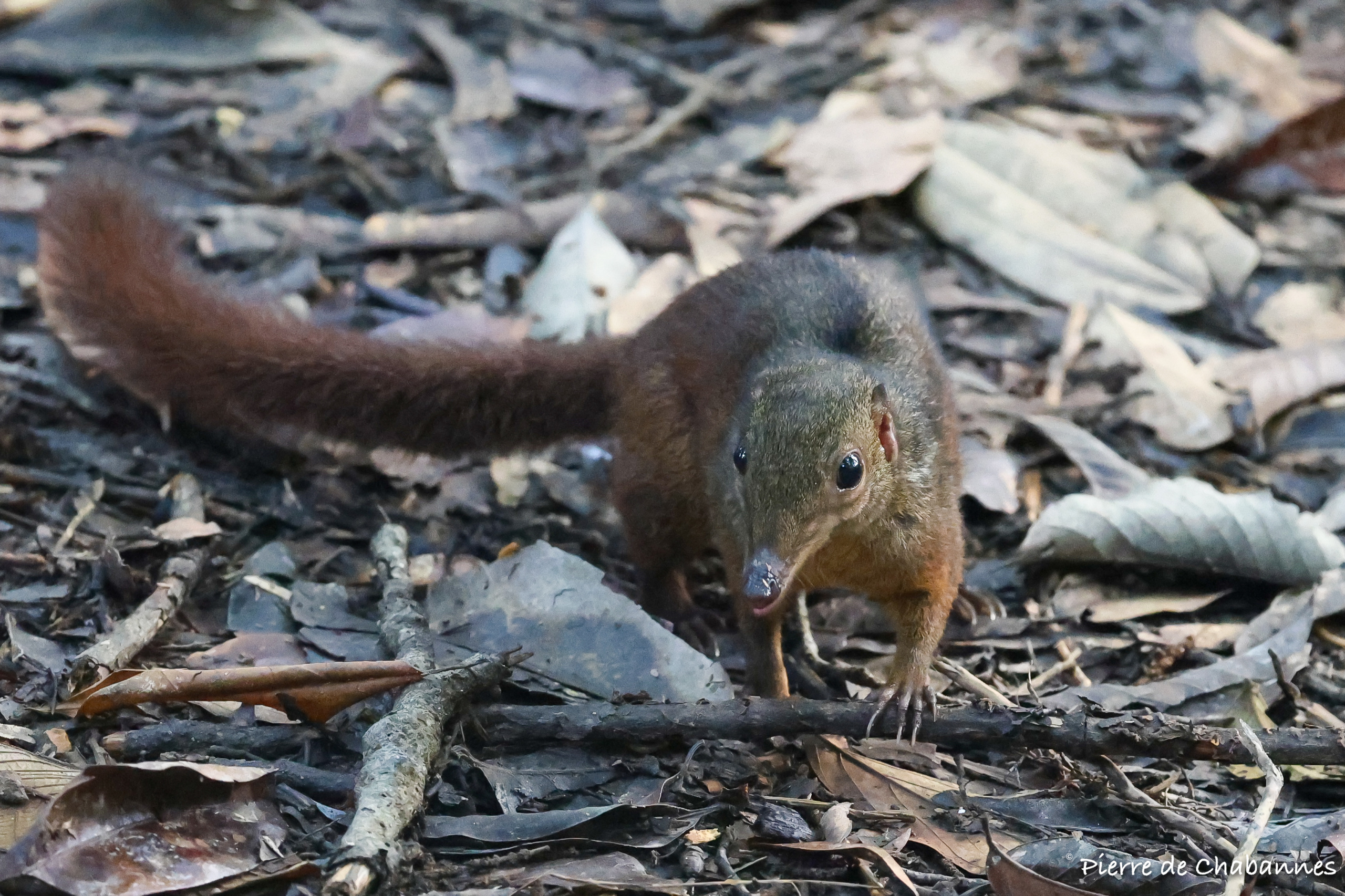
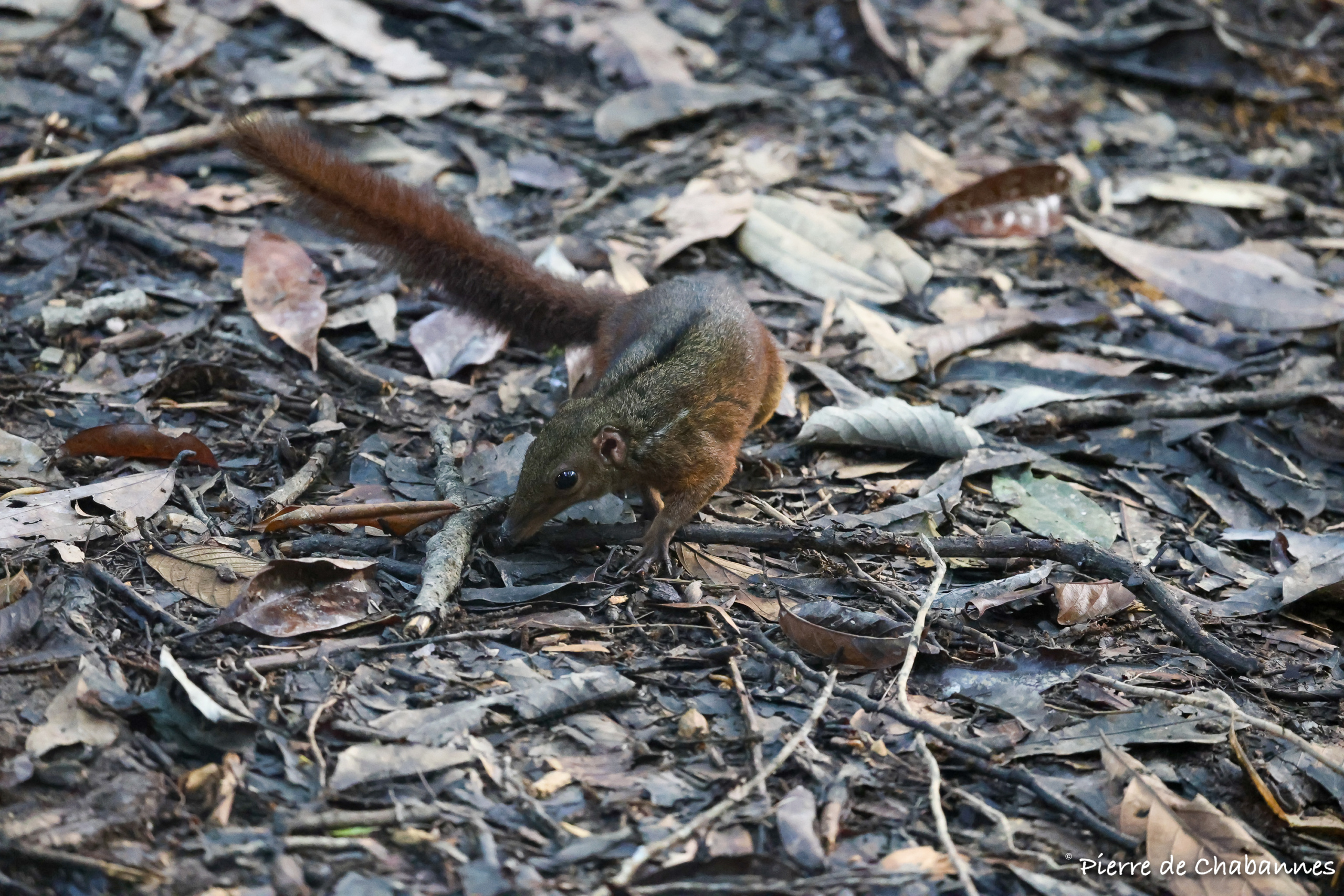
One of Borneo’s most distinctive small mammals, this large terrestrial treeshrew spends much of its time searching the forest floor for insects and fallen fruits.
Context
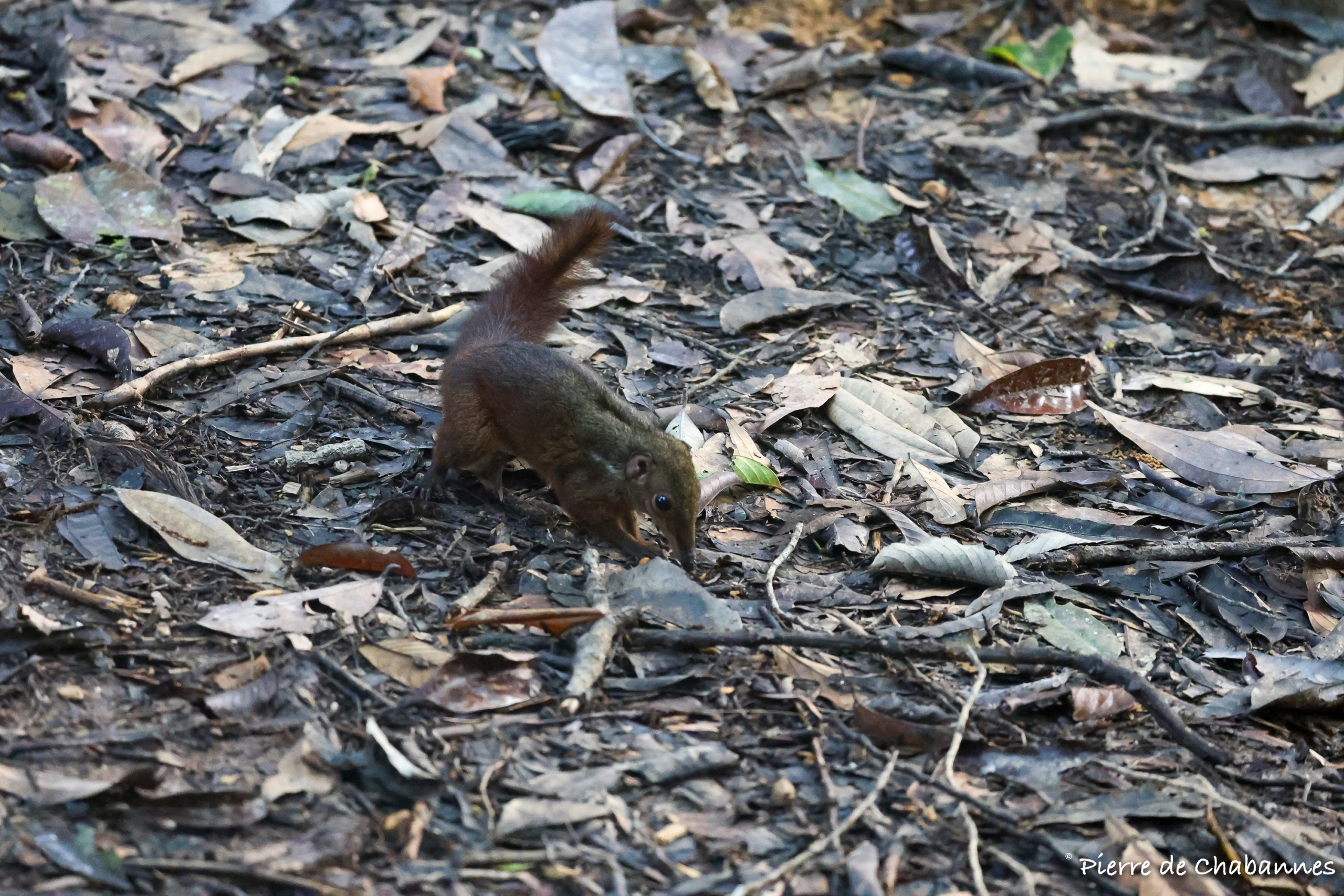
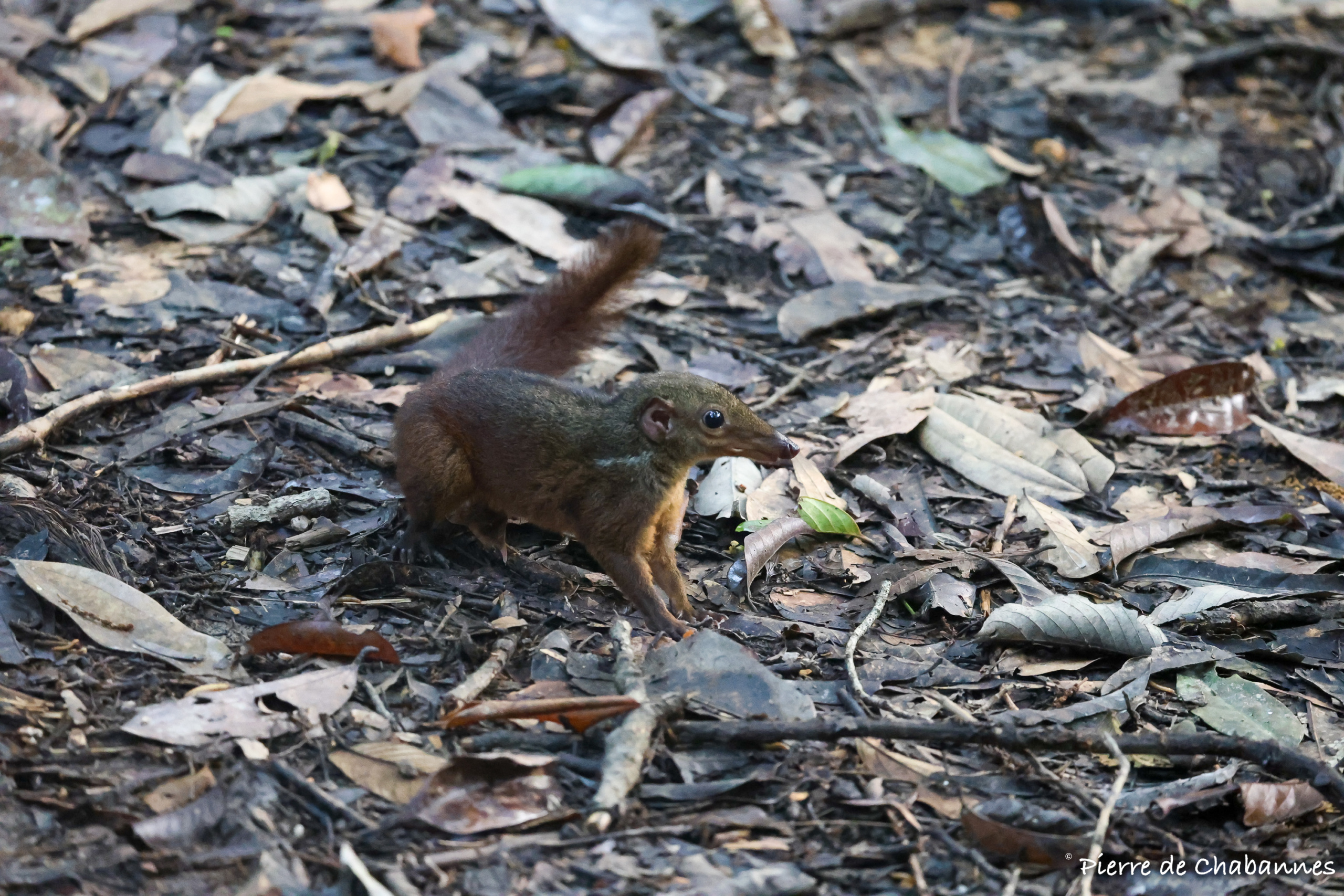
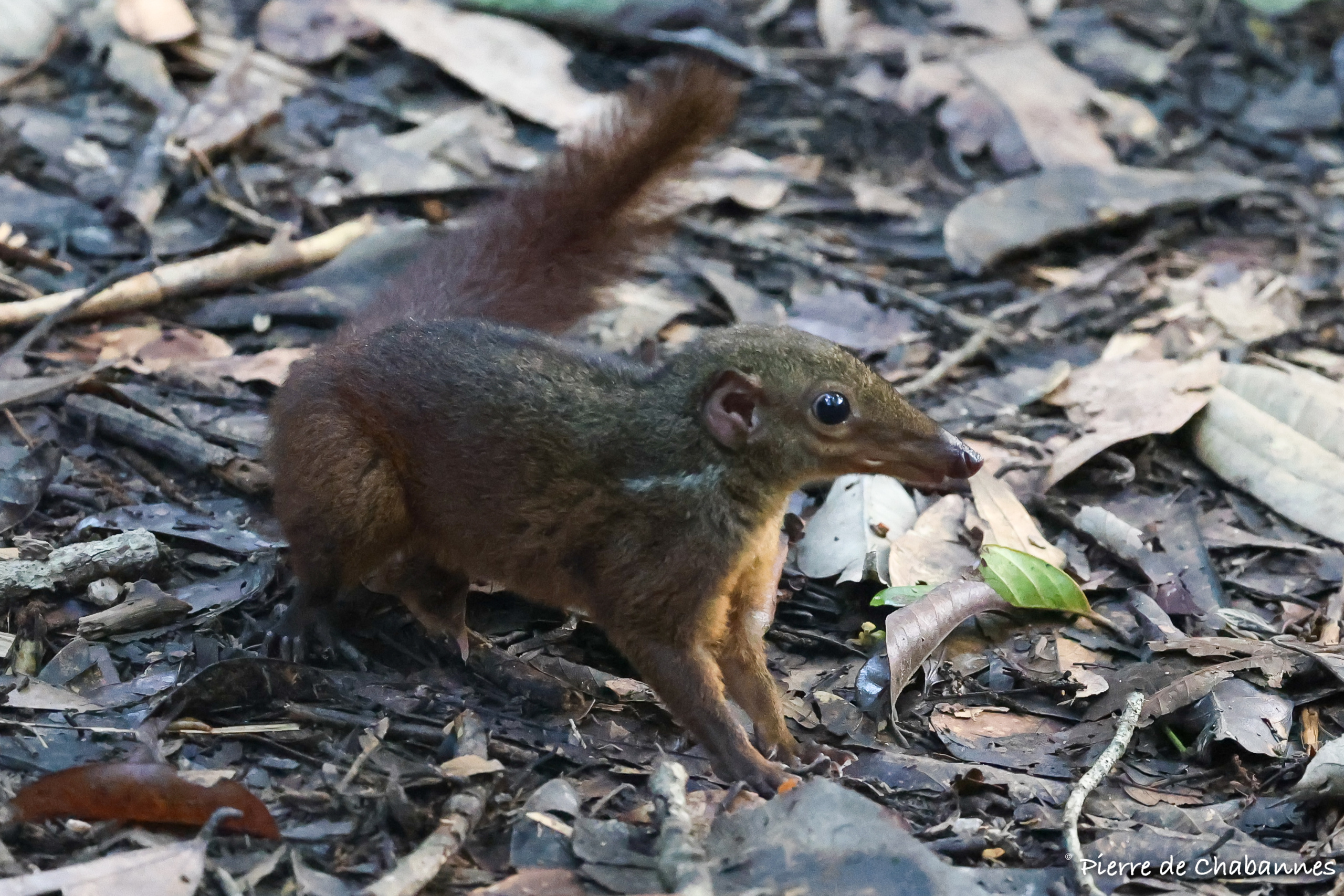
A single individual photographed browsing for food on the forest floor at CP Song’s bird hide in Mt Trusmadi area.
Field notes
Tree-shrews move very fast and can be very shy, making them very difficult photography subjects in the wild. A few species have learnt to come to bird hides to feed around Southeast Asia, giving photographers good opportunities to photograph otherwise elusive species.
I photographed this species twice in bird hides around Borneo, once very briefly in a bird hide near the Kinabatangan river, the other time (documented here) for a longer moment at Trusmadi bird hide.
Trusmadi bird hide is one of the best places I know for small mammals photography in Borneo. In a full morning, I documented five squirrel species, all of them endemic, as well as two different tree-shrew species at least.
Key facts
The Large treeshrew occurs in Sumatra, Borneo and a few small islands nearby. It lives in a variety of forest habitats from lowland rainforest to montane forests up to 1500 meters above sea level.
Fifteen subspecies of large tree-shrew have been described and at least three of them occur in Borneo, including two or more in Sabah. Recording the location where the species was seen or photographed is the best way to identify subspecies as the physical differences are very hard to catch.
The Large treeshrew is the largest species of treeshrew. It is more terrestrial than most other tree-shrews and is easily recognized by its very long snout and overall darker and redder coloration.
Conservation
The Large treeshrew is currently listed as Least Concern on the IUCN Red List and remains relatively widespread across much of its range although it is declining because of habitat loss on Sumatra.
The species can withstand a degree of habitat modification and can be particularly common in fruit orchards, secondary forests and degraded forests with dense understorey.
Although not considered threatened at present, the Large treeshrew serves as a reminder that even common forest mammals ultimately depend on the long-term preservation of Borneo’s remaining ecosystems.
More photos from this observation
Other species from Borneo can be found by browsing my Education resources.
Back to Borneo hides ←Previous species Next species →
“A long-term project documenting biodiversity across the world through fieldwork, zoological observations and educational content.”